
Cultural story · Food and local life
Meinong through the seasons: a field, a radish and a shared table
Harvest visits and flower fields grow out of a farming town’s changing work, food and ways of welcoming people.
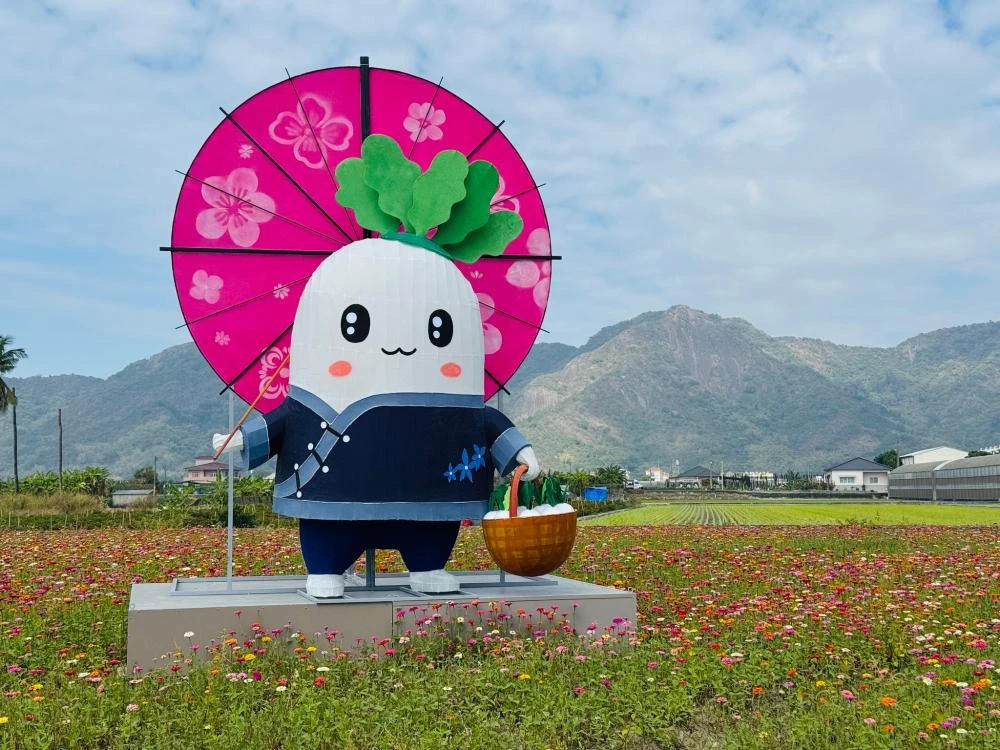
Radish experiences are mainly around November–December; flower displays gather around Lunar New Year.
The farmers’ association supermarket offers a year-round starting point for food and local information.
After tobacco, the fields keep changing
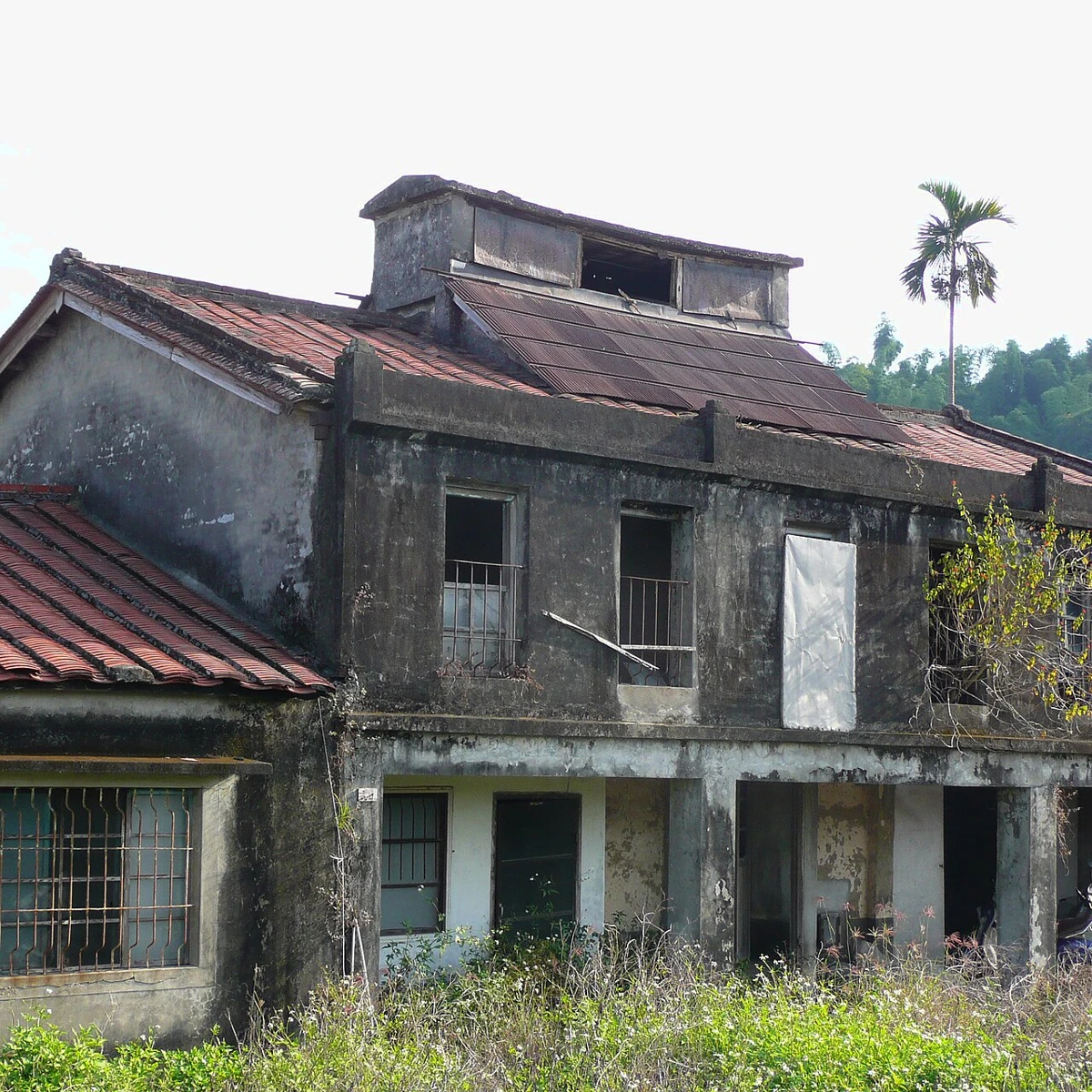
A tobacco barn’s raised roof is a reminder that a Meinong field once served a different economy. As tobacco declined, farmers needed crops that could fit existing land, labour and skills. The small white radish was already familiar: Wen Chung-liang of the local rural field-study association recalled it growing in spare corners during the tobacco years. Its short growing cycle made it useful in rotation, giving an ordinary household food a larger role in the town’s future.
The rhythm is visible between rice harvest and winter planting. Fields begin another growing cycle after the autumn rice crop is stored. Selling the root fresh, however, creates a narrow window; families have long used drying and pickling to keep food beyond it. A bag of fresh radishes and a jar of preserved ones therefore record two different relationships with time.
Harvest does not finish when the radish leaves the soil. The agricultural account follows washing each root, sorting, drying and boxing the fresh-market selection; other roots are cut for pickling or drying. The same field can therefore supply different forms of food according to what happens immediately after pulling. A visitor's bag of muddy radishes is only the beginning of work that producers must complete quickly.
Opening a field requires more than an invitation
Turning harvesting into a visit required practical choices. Growers and the farmers’ association had to explain which fields were receiving people, how to move without damaging neighbouring plants and how the produce would be paid for. Selling by the bag gave a session a manageable shape. A family’s enjoyable hour in the soil rested on preparation by people for whom that soil remained a workplace.
The relationship also continues beyond harvest day. A 2012 account described families following their adopted plot through online growing records before arriving to collect the crop. By November 2025, the annual radish-and-bean season again connected harvesting with learning about local food. Following a plant’s growth changes the meaning of bringing it home: its value includes the waiting and care that a supermarket shelf rarely makes visible.
The town brings its seasons indoors
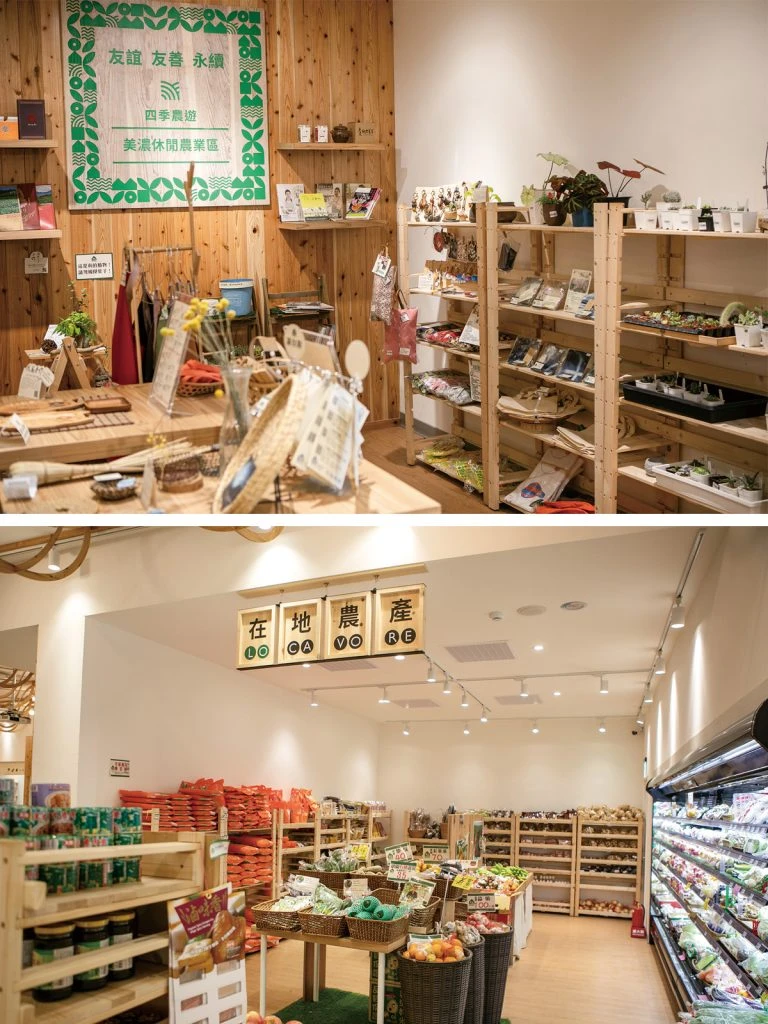
The Future Supermarket reopened in 2021 with local cedar in its interior and a suspended form recalling a farmer’s broad hat. Fan Ya-chun and architect Fang Hsin-chiao helped rethink the space, while shelves brought produce, crafts, seeds and visitor information together. Someone arriving to buy food could also discover where it grew or how to join a local activity; ordinary shopping became another way into Meinong.
Outside, seasonal gatherings give the same food landscape a different scale. The 2026 flower programme used radish, tomato and local ecological motifs, while concerts took place at the cultural centre on 7–8 February. A walk from a flower field to a meal need not end at a photograph. Comparing the crops represented in an installation with what is being cooked or sold nearby returns the colourful scene to the people and work that sustain it.
The leaves continue the story above ground. They too may be cooked or preserved, and the account describes radish roots and leaves drying around homes in Meinong. In that domestic setting, preserved foods were also kept for a family's own meals or given to relatives and friends. Seeing a jar only as a souvenir misses that earlier circulation. Ask a receiving farm which preparation it actually teaches; a private courtyard with drying racks is not automatically a visitor workshop.
Look closer
Compare fresh and preserved radish products, looking at how preparation extends the harvest.
Follow the farmer’s paths in an activity field and distinguish the harvest plot from neighbouring crops.
Visiting information
- Usual seasons
- Radish and bean experiences are mainly around November–December; flower displays are around Lunar New Year. These are separate seasonal programmes across Meinong.
- Year-round food stop
- Future Supermarket, 1-17 Shuangfeng Street, Meinong, Kaohsiung; 08:00–20:30. Future Kitchen: 10:30–18:00. Telephone 07-6815001.
- Activities
- Reserve harvesting and food-making with the receiving farm or the farmers' association, confirming the crop, meeting point and work permitted to visitors. Field access and a cooking session are separate arrangements; past flower-concert dates do not establish a standing attraction.
- Arrival and return
- Take an E01 Qimei express service continuing to Meinong from HSR Zuoying; check the destination because some services terminate at Qishan. Arrange local transport for fields outside the centre and return from the agreed stop.