
Annual event
Matsu’s Baiming: a house that becomes the village’s gathering place
Lanterns, shared food and burning “horse fodder” connect a village procession with family blessings and homecoming.
Villages follow their own lunar dates; Banli in Beigan celebrates on lunar 1/13, or 1 March in 2026. The 2026 edition has ended.
This story focuses on Banli House and the thirteenth night; Qiaozi and Tangqi have separate rites on the fourteenth and fifteenth.
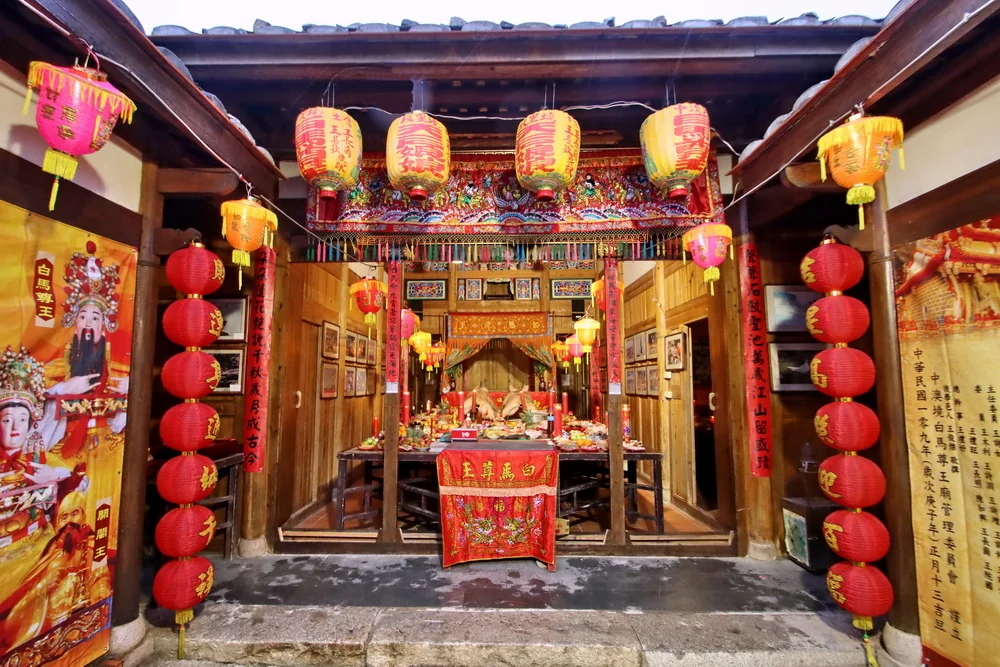
A family house becomes a temporary temple
Banli’s Baima Zunwang Temple once lacked room for Baiming, so larger houses took turns hosting. In 1919 the owner of Banli House fulfilled a vow following a grandson’s birth by making the house a regular ritual venue. On lunar 1/13, offerings fill tables and lanterns hang beneath the eaves. A domestic courtyard temporarily receives the movement of an entire village.
The arrangement did not continue without interruption. After using the house from 1919 to 1993, the rites moved at different times to an agricultural-products hall and the temple. They returned when restoration was completed in 2009. Repairing walls and roof tiles also restored the spatial relationship among the deity’s temporary seat, household offerings and village gatherings.
Dry grass catches fire as the palanquins return
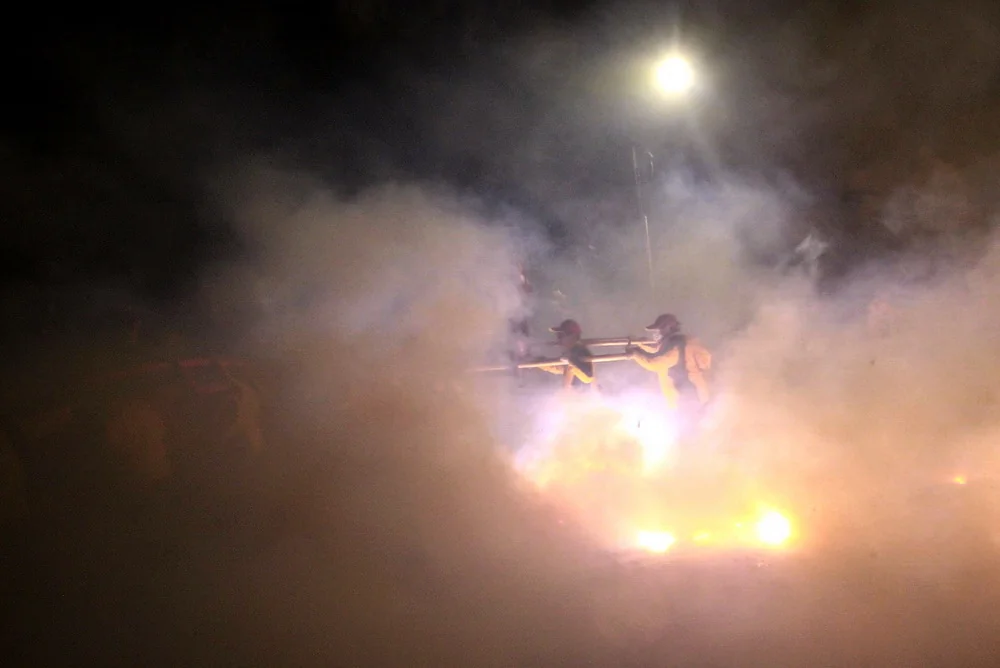
For the thirteenth night in 2025, Banli households enclosed small areas with red bricks and prepared dry miscanthus grass. As palanquins returned from visiting Baisha, families lit the grass and greeted them with incense, symbolically feeding Baima Zunwang’s horse. A larger communal fire in the square was lit from a flame brought out of the house. Household fires and the village’s shared fire occupied different places in the same sequence.
After the fire rites, a blessing party visits newly married households. Chen Gaozhi wrote congratulatory verses for Banli’s ceremony in 2019; in 2025 a blessing woman still addressed newlyweds in the Fuzhou language, accompanied by a tray of flowers, lanterns and an incense burner. The village procession narrows into attention to one household, with language spoken directly between generations.
The household meal is part of a ritual association
Matsu’s tourism authority describes each temple’s she, a ritual association, and its annually chosen leader, the shetou. Before Baiming, that person visits households to collect celebratory contributions and allocate procession work. This gives the visible offerings an organisational background: lamps, carrying teams and shared food depend on named responsibilities within the community. Banli’s use of a large house belongs within this wider network of households preparing a common occasion.
The meal has a further ending beyond clearing the tables. In the authority’s general account, households take home a bag of fupin containing offered meat, oranges, eggs and buns. It also notes that many communities now hold the meal in restaurants, supported by association members’ contributions. The venue can change while the offering still returns to households as shared food. Individual villages keep their own arrangements; Banli’s host decides how its particular meal and blessing visits proceed.
The timetable has also been adjusted around the people who do the work. A 2017–2018 field survey of Banli records that the communal meal, once held at noon on the fourteenth lunar day, was moved to the thirteenth evening because many relatives living on Taiwan’s main island left on the following morning. The congratulatory household visits were also brought forward from the fourteenth’s early hours to after the thirteenth’s procession. The change preserved a place for people whose journey home had a departure time.
The same survey describes a tray carrying the incense burner, floral ornaments and ceremonial candles into the receiving household. When several families each prepared a late-night banquet, hosts and visiting temple workers faced a repeated burden. The record notes a move towards combining that hospitality with the communal meal. Ritual continuity here includes a practical decision about kitchens, labour and sleep, while entry into a family home remains for its hosts to decide.
Shared food brings the offering table back to daily life
Offerings later supply ingredients for communal meals. Residents cook, serve and clear tables while relatives and friends move among households. In Qiaozi in 2025, people from neighbouring villages helped prepare the food. Such a meal requires kitchens and time as well as ingredients; for returning islanders, moving between tables can renew relationships as much as attending a performance.
Qinbi’s Tianhou Temple hosted Beigan’s 2026 series, beginning with lanterns on 27 February. Banli celebrated on 1 March, followed by Qiaozi and Tangqi on their respective dates. Different responsibilities and calendars let villages take turns becoming the island’s centre. Staying on Beigan gives an evening at Banli the time it needs, with a room on the same island after the rites.
Look closer
Notice offering tables, hanging lanterns and household fire areas to see how domestic space hosts communal rites.
Listen for Fuzhou-language blessings and notice the shared work of preparing food.
Visiting information
- Timing
- The main season follows the first lunar month: Banli on the thirteenth, Qiaozi on the fourteenth and Tangqi on the fifteenth. Banli’s 2026 observance was on 1 March; that edition has ended. Confirm the next edition’s village schedule, hosting and transport separately rather than reusing its 2026 times.
- Venue
- Banli House and Baima Zunwang Temple in Banli Village, Beigan, Lienchiang County. The evening procession also visits Pingshui Zunwang Temple in Baisha.
- Stay and participation
- Arrive in the afternoon and stay for the evening fire rite. Household blessings and meals are arranged by hosts; public viewing is along village streets and in the square.
- Arrival and return
- Fly to Beigan or take an inter-island ferry to Baisha, then continue to Banli by island transport. Arrange accommodation and a return transfer on Beigan for the evening rather than an onward ferry after the ceremony.