
Cultural story
Before the reunion dinner: how a market prepares for New Year
On Dihua Street, the holiday begins with ingredients being weighed, carried and turned into dishes at home.
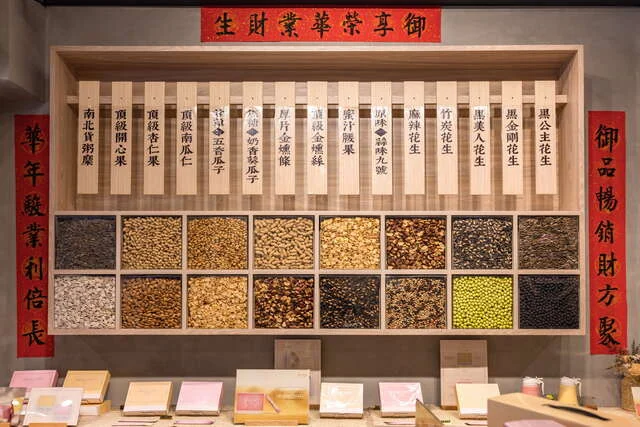
Follow the journey from preserved ingredients to a reunion meal.
A cake’s split top carries both a cooking process and an auspicious wish.
A feast begins before people sit down
Before Lunar New Year, Dihua Street’s shops bring dried mushrooms, tea, sweets and preserved foods close to the street. The temporary bustle grows out of an existing trading district: many of the same shops sell ingredients throughout the year. A shopping bag connects the commercial street with a household kitchen, where soaking, cutting and cooking will continue after the visitor has gone home.
A visitor’s 2018 shopping record follows shops beyond the busiest festival stretch and distinguishes supplies for the holiday from foods kept for later. That small distinction explains why a New Year market is more than a night out. Families bring different lists, storage space and journeys home; the same street serves those practical needs while making the approaching holiday visible.
Read the surface of a rice cake
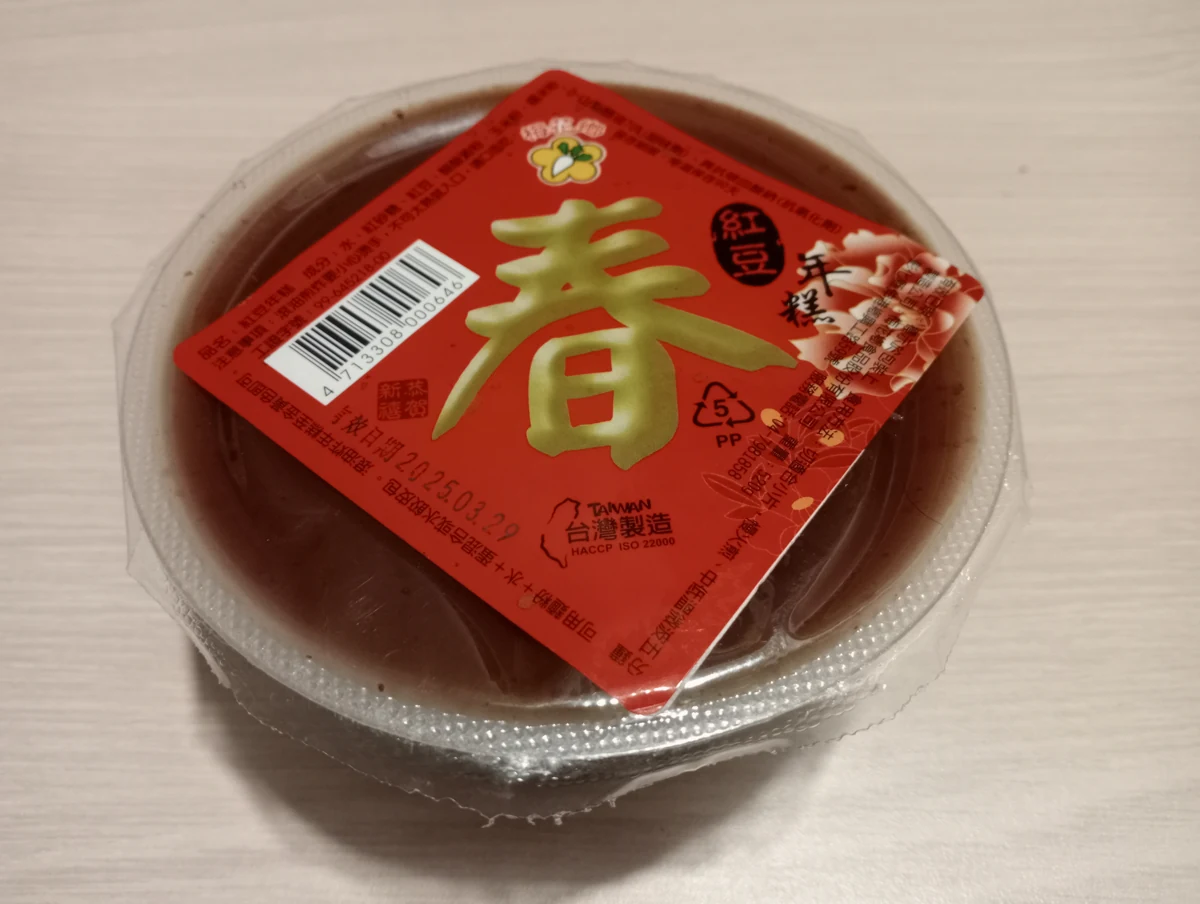
Sweet rice cake and fa kueh do different work on the New Year table. The sweet cake offers a dense, sticky slice; fa kueh opens into a split crown as it steams. Its name and rising form make it a wish for prosperity. Cooking and language reinforce one another: people can see the auspicious opening before the cake is shared.
The Taiwan Historica dictionary records Hakka fa ban made with a fermented rice mixture, including thinner- and thicker-batter versions. Grinding, fermentation and steaming give the split top a material history. The different names and recipes matter because one festive wish can live in several household traditions, each with its own way of handling rice and judging the finished cake.
A collected cake mould makes the relationship between a wish and a tool tangible. Tainan's cultural collection records a brick-red wooden mould carved on its two broad faces and two sides. One broad face carries a peach with leaves and layered decoration, while a side carries a fish. Turning one handled block changes the impression it can give a cake. Several forms of blessing can thus share a single working tool.
The street returns to the table
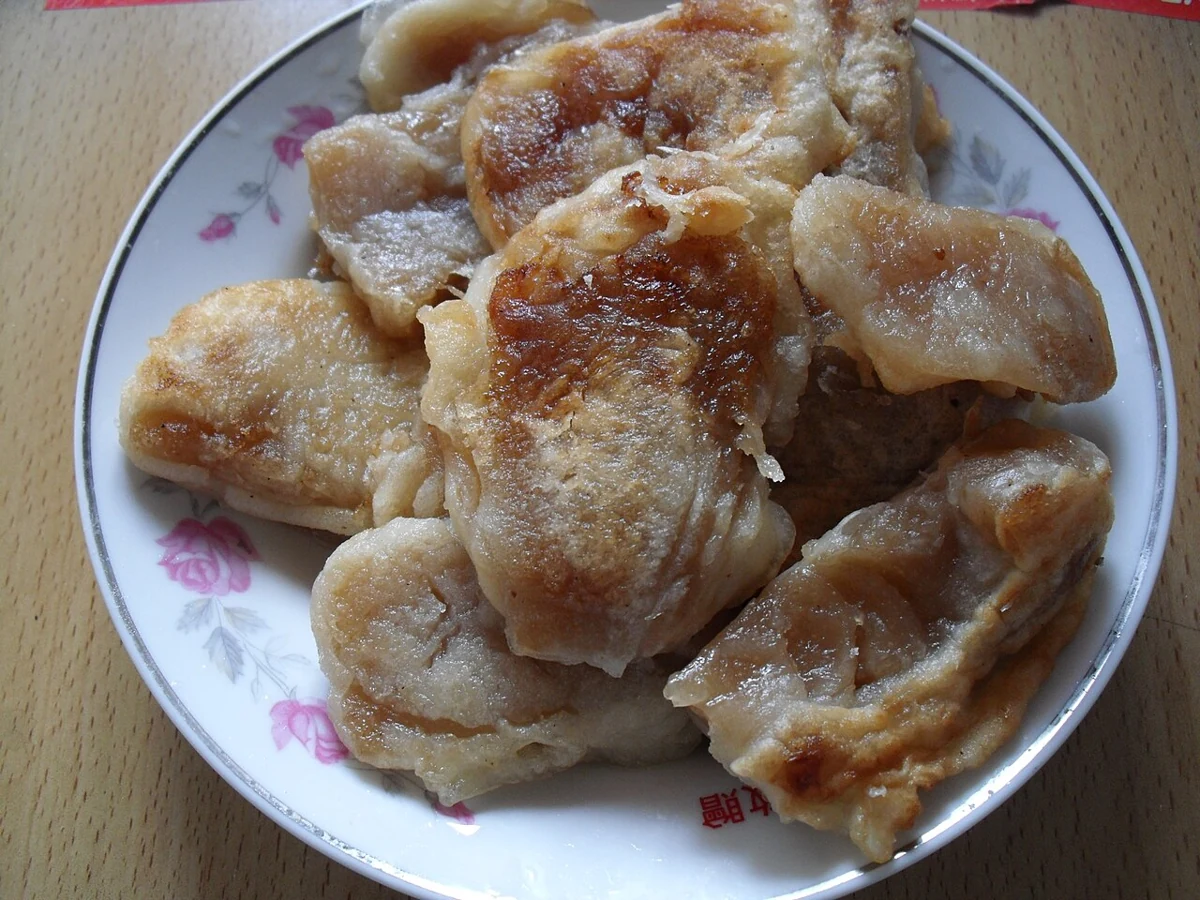
The reunion dinner draws the purchases together, but its work is distributed over time. Some foods are bought ready to serve; others require preparation that a short shopping trip does not reveal. Looking at a cake shop or dry-goods counter through that sequence brings the cook, the seller and the person carrying food home into the same story.
A visit works best as a small, deliberate circuit: compare a dry ingredient with its intended dish, then a sweet cake with a risen one. The market offers access to these public exchanges; the meal itself remains shaped by each household. The holiday’s shared vocabulary gains its richness from those different choices rather than from a single compulsory menu.
The catalogue notes wear at one corner but gives no date or individual maker. Its discussion connects fish with abundance and peach and tortoise forms with long life; such meanings also belong to occasions beyond New Year. The object can enrich a comparison of festive foods without proving which family used it or which feast it served. It is a digital collection in Tainan, not an object promised on display during the Dihua Street walk.
Look closer
Compare ingredients sold loose, ready-made cakes and the foods people buy to carry home.
Visiting information
- Place
- Dihua Street Section 1 and Yongle Market, 21 Dihua Street Section 1, Datong District, Taipei.
- Visit
- Walk the public shopping street and market. Visit before Lunar New Year for seasonal preparations; the formal market event has its own annual dates.
- Transport and return
- Use Beimen MRT station for the southern end or Daqiaotou for the northern stretch. Finish at the station nearest the end of your shopping walk.