
Annual festival
Liufang Mazu: a goddess moves, a community takes its turn
A red altar is built for a year of care. The annual move makes that care visible across Yunlin’s villages.
Liufang Mazu: A Village Takes Its Turn
90 seconds. English captions are part of the film. Optional Traditional Chinese subtitles are available in the player.
Selected coverage of the transfer on 31 May 2026, ending at Wujianchu’s temporary red altar that night. The separate formal-altar entry on 2 June and other years are excluded. This edition has ended; the film is not an announcement of future dates.
Read the complete five-chapter article → · 繁體中文
Complete English captions and Traditional Chinese translation
00:00:00,000 --> 00:00:06,000
Liufang Mazu, Yunlin.
31 May 2026.
雲林,六房媽過爐。
2026年5月31日。
00:00:06,000 --> 00:00:14,000
Without a permanent temple,
Mazu is cared for by turns.
沒有固定廟宇,
六房媽由各股輪流奉祀。
00:00:14,000 --> 00:00:18,000
The decorated canopy.
A palanquin ready to leave.
裝飾華麗的轎頂,
神轎已準備出發。
00:00:18,000 --> 00:00:24,000
The way opens
for the procession.
為隊伍,
留出一條路。
00:00:24,000 --> 00:00:30,000
Make room.
The palanquin is coming.
讓出空間,
神轎正慢慢走來。
00:00:30,000 --> 00:00:36,000
Bearers move together
through the crowd.
轎班共同配合,
穿過人群。
00:00:36,000 --> 00:00:42,000
Through the gate,
the journey begins.
穿過牌樓,
旅程展開。
00:00:42,000 --> 00:00:54,000
From Tuku to Wujianchu,
villages share the welcome.
從土庫到五間厝,
庄頭接力迎接。
00:00:54,000 --> 00:01:00,000
That night, Wujianchu
receives the procession.
當晚,五間厝
迎接隊伍到來。
00:01:00,000 --> 00:01:12,000
The palanquin reaches
the temporary red altar.
神轎抵達
臨時紅壇。
00:01:12,000 --> 00:01:18,000
A new community takes its turn
to care for Mazu.
新一個庄頭,
接下奉祀六房媽的責任。
00:01:18,000 --> 00:01:27,000
For future visits,
check the latest festival notice.
下一次到訪,
請先核對最新活動公告。
00:01:27,000 --> 00:01:30,000
Taiwan, Layer by Layer.
Keep exploring.
島嶼年輪。
繼續,走近台灣。
Annual transfer is usually in the fourth lunar month.
The 2026 host altar is in WujianCuo, Dounan.
A temple that moves with its hosts
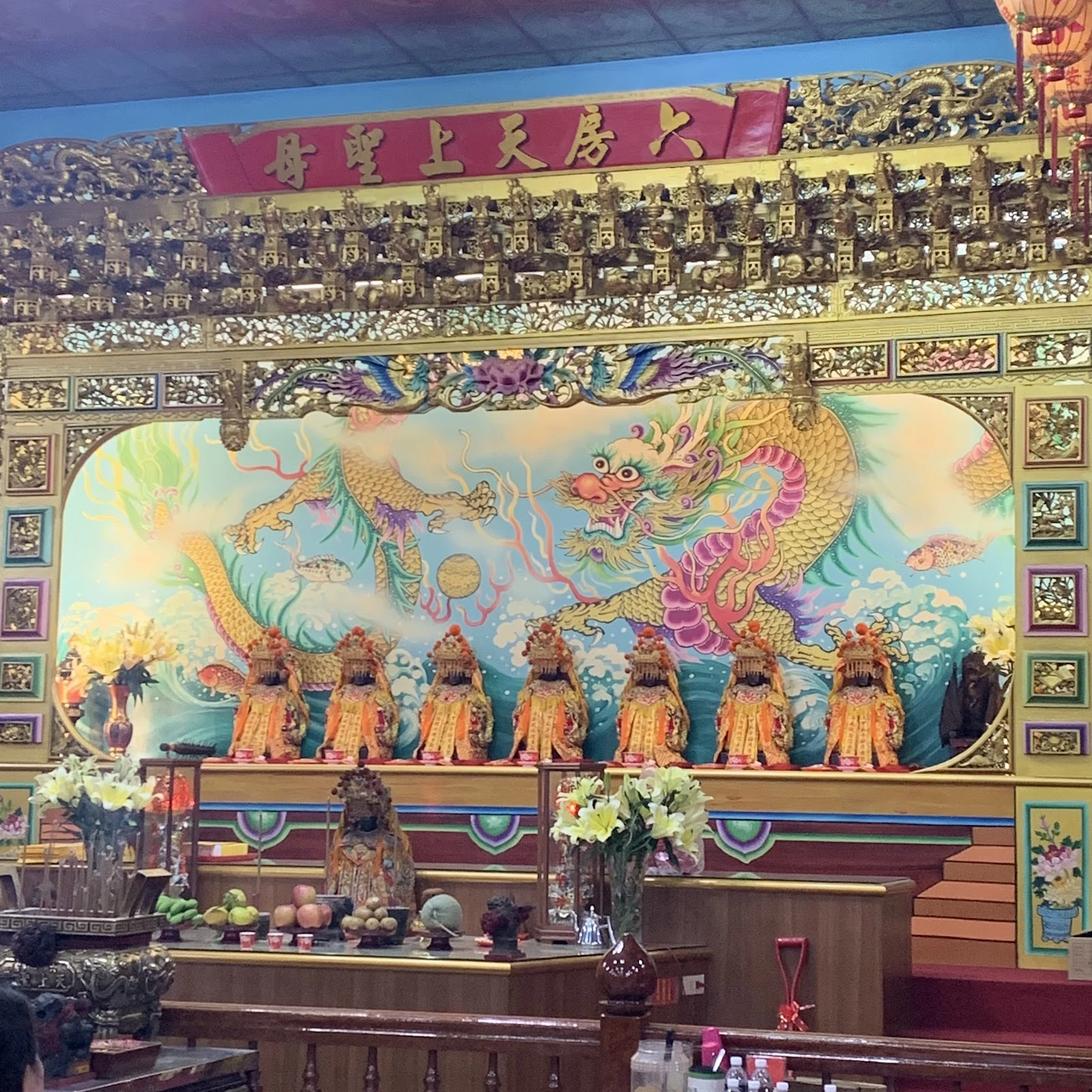
Liufang Mazu has no single permanent temple for her principal image. Five groups—Dounan, Tuku, WujianCuo, DabeiShi and Guoxi—rotate responsibility, and smaller communities within each group take their own turns. They build a red altar, receive the image and care for it until the next transfer. A building may be temporary, but the commitment is organised over years.
In 2026, responsibility passed to WujianCuo village within WujianCuo group, with Yen Hsu Su-fen as the furnace host. The village had waited thirty years for this turn. Ground preparation and the July 2025 groundbreaking were already part of the work, long before the arrival-day procession filled the road.
The building has not always taken the same form. Research on the hongtan traces a change from worship in a family house to sheet-metal structures with temple-like entrances. A temporary address therefore does not mean an unplanned space. The changing building accommodates the work of receiving worshippers while the annual rotation continues.
One demanding decision comes even before a person is chosen as the next luzhu. The study records prospective hosts arranging land for both the hongtan and its temporary reception altar, using their own land or renting it. After selection come site inspection, ground preparation and construction. Choosing to take the role also means finding somewhere that a large body of people can use for the coming year.
What moves on the road
The 2026 transfer left Tuku’s Guogang altar on 31 May. Banners, ritual attendants, incense vessels and the main palanquin did not all travel as one indistinguishable crowd. Each had a place and responsibility, while people along the route prepared food, drinks and passages through their neighbourhoods. The procession linked hosts and guests through work as much as devotion.
The image reached WujianCuo’s temporary altar around eleven that night. A further village circuit on 2 June preceded entry into the formal altar. Arrival was therefore not a single finish-line moment: the host community still had its own streets to visit and its own reception to complete.
Sharing the meal also shares the responsibility
Before the move, the association and the incoming host coordinate the walking route, temple visits and separate handover and seating rites. The cultural-heritage record calls the allocation of hospitality fen qijiao: villages in the host group receive the other groups’ troupes in agreed proportions. Those shares are also linked to how often the smaller communities receive a turn as host. Feeding a procession therefore belongs to a continuing arrangement of duties and entitlements, rather than a spontaneous meal offered only on that day.
The present association describes another layer of work behind that arrangement. Village representatives relay information, raise contributions and mobilise local troupes; the furnace host oversees construction, routine rites, visitor services and safety during the year of residence. Reading these jobs alongside fen qijiao makes the distinction between a group and a village important: a large regional turn still has to be divided among particular communities and people willing to carry it out.
The quiet work of keeping an altar
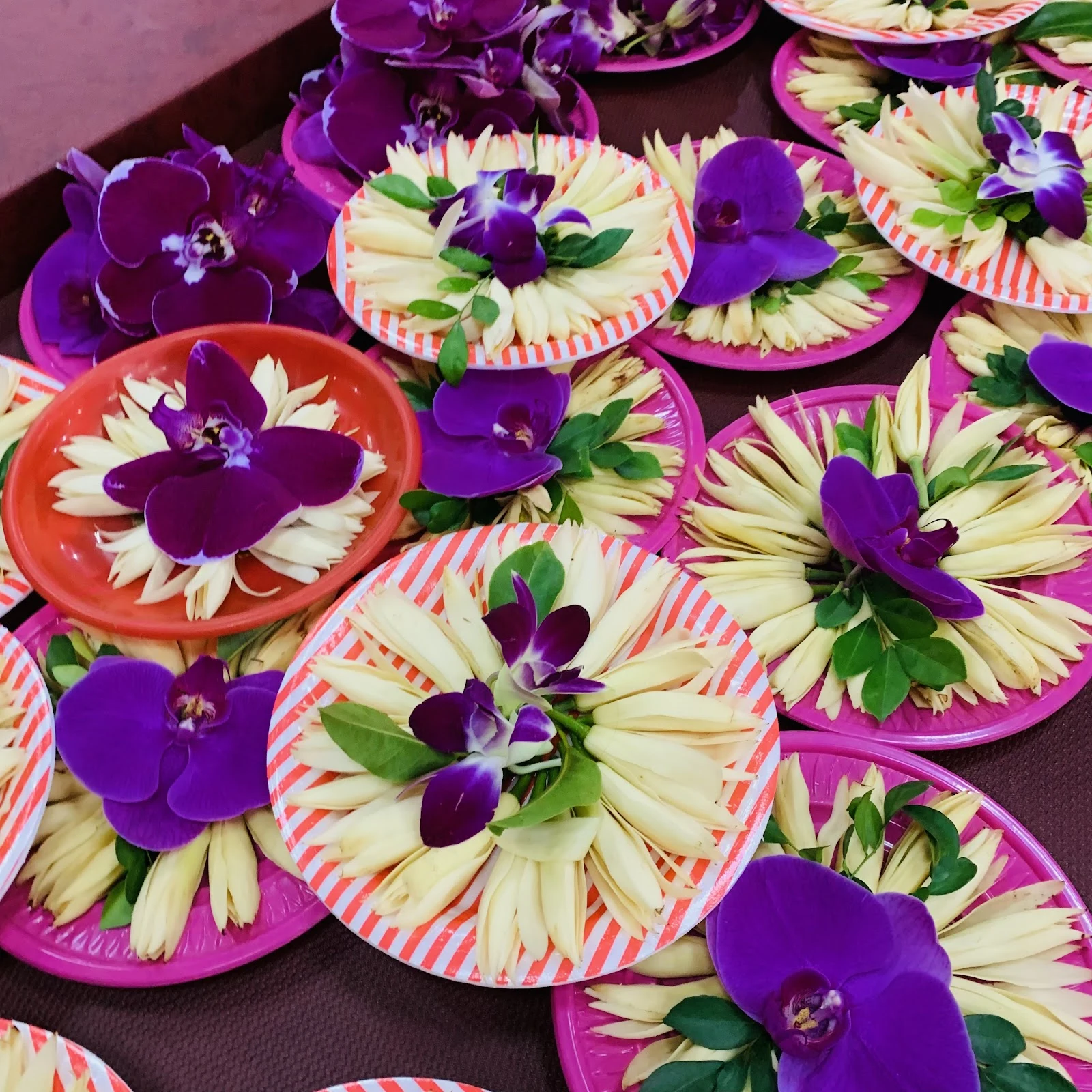
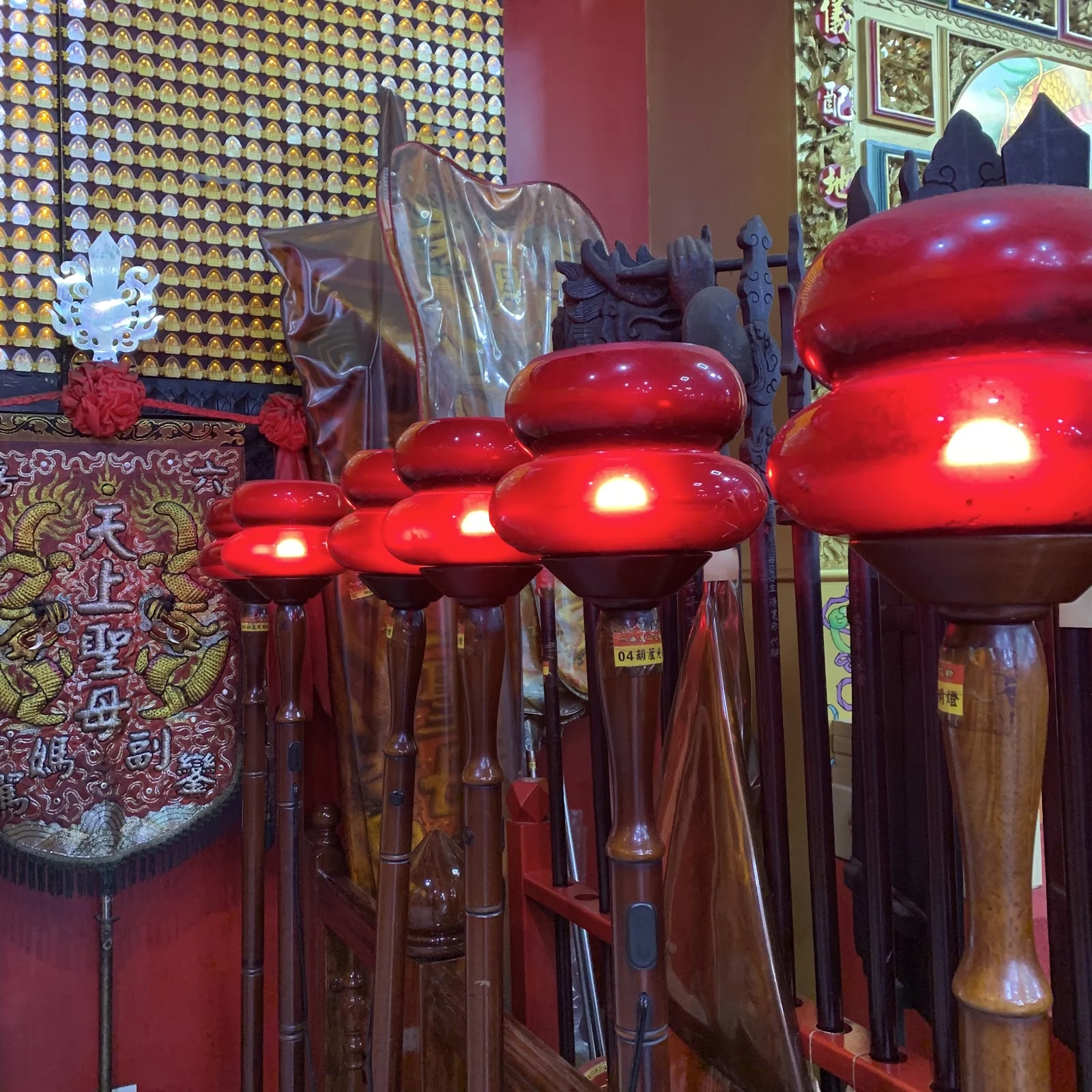
Inside a red altar, lamps, ceremonial equipment and offerings give temporary architecture the density of a lived religious place. Fresh arrangements have to be prepared; people receive visitors and keep the space usable. These ordinary tasks explain how a mobile institution remains familiar even as its address changes.
A visit outside transfer day offers time to read the name of the host group, see how the altar is arranged and understand the scale of the responsibility. The annual move shares more than the honour of hosting Mazu. It also shares the work of making a place ready for others, then handing that work onward.
The spaces inside tell us what that responsibility includes. A plan of the 2021 Xiabitou hongtan separates the inner altar, visiting deities’ flowers, offerings and spirit money from the service desk, divination interpretation and office. It records that particular altar, rather than the layout of every future one. On a visit, recognising the difference between worship and service areas helps you find assistance while leaving ritual work its space.
Construction itself has a ritual sequence. The association distinguishes establishing the site, breaking ground and raising the main beam: location and orientation are settled, work begins with prayers for safety, and the completed frame receives its beam before interior fitting and altar arrangement. These are preparations for the handover, not three extra procession days. They explain why the new host’s year of work starts well before the public sees the palanquin arrive.
Look closer at the places in the film
A community takes its turn
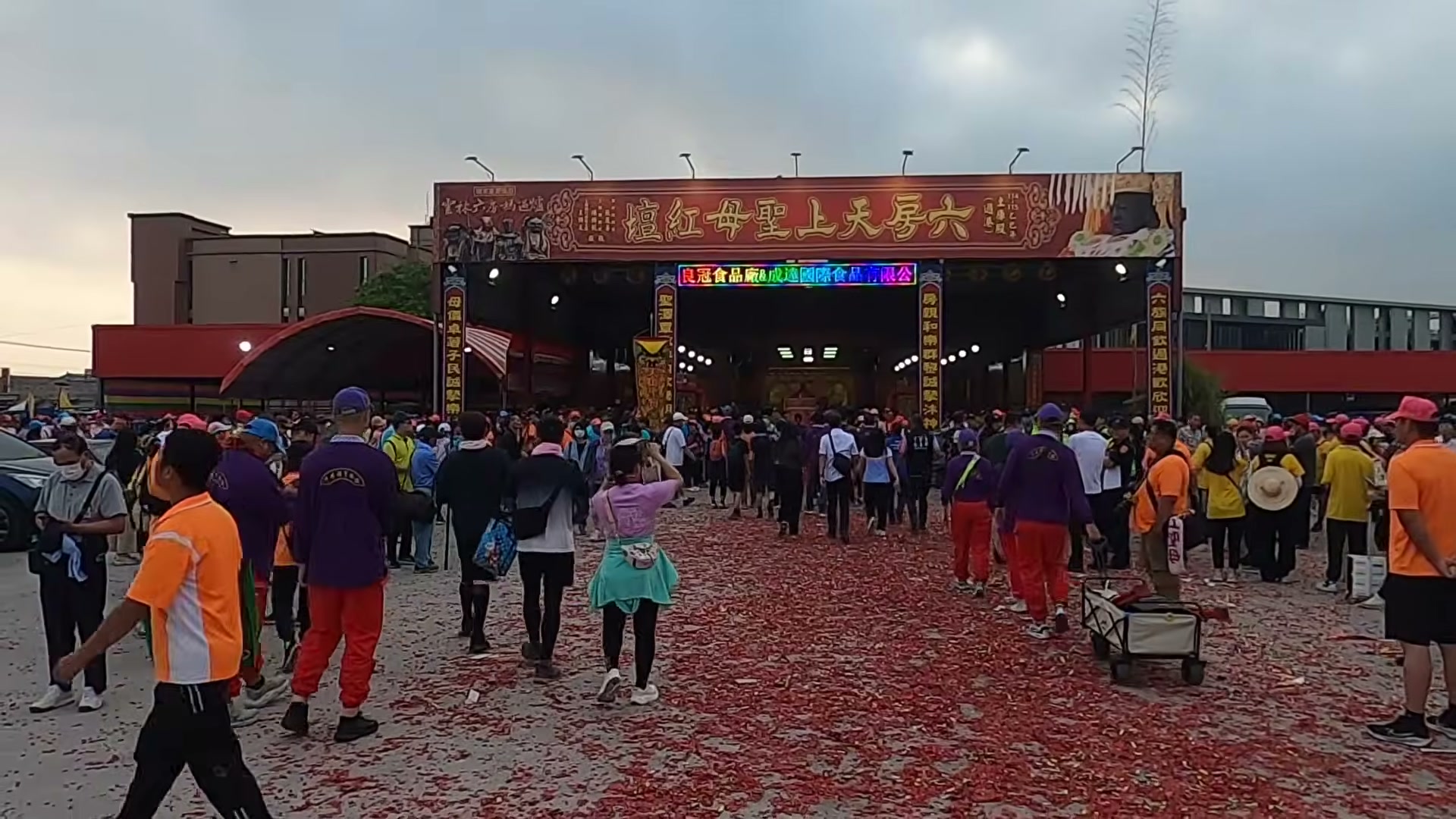
People gather outside the old red altar in Tuku before dawn has fully lifted. Liufang Mazu has no permanent temple: the participating communities take turns caring for her. The annual transfer is therefore also a change of responsibility. Begin with the whole altar, forecourt and gathering crowd before looking closer at the procession. This film follows selected scenes from 31 May 2026, from the departure in Tuku to that night’s welcome in Wujianchu.
Leave a way through
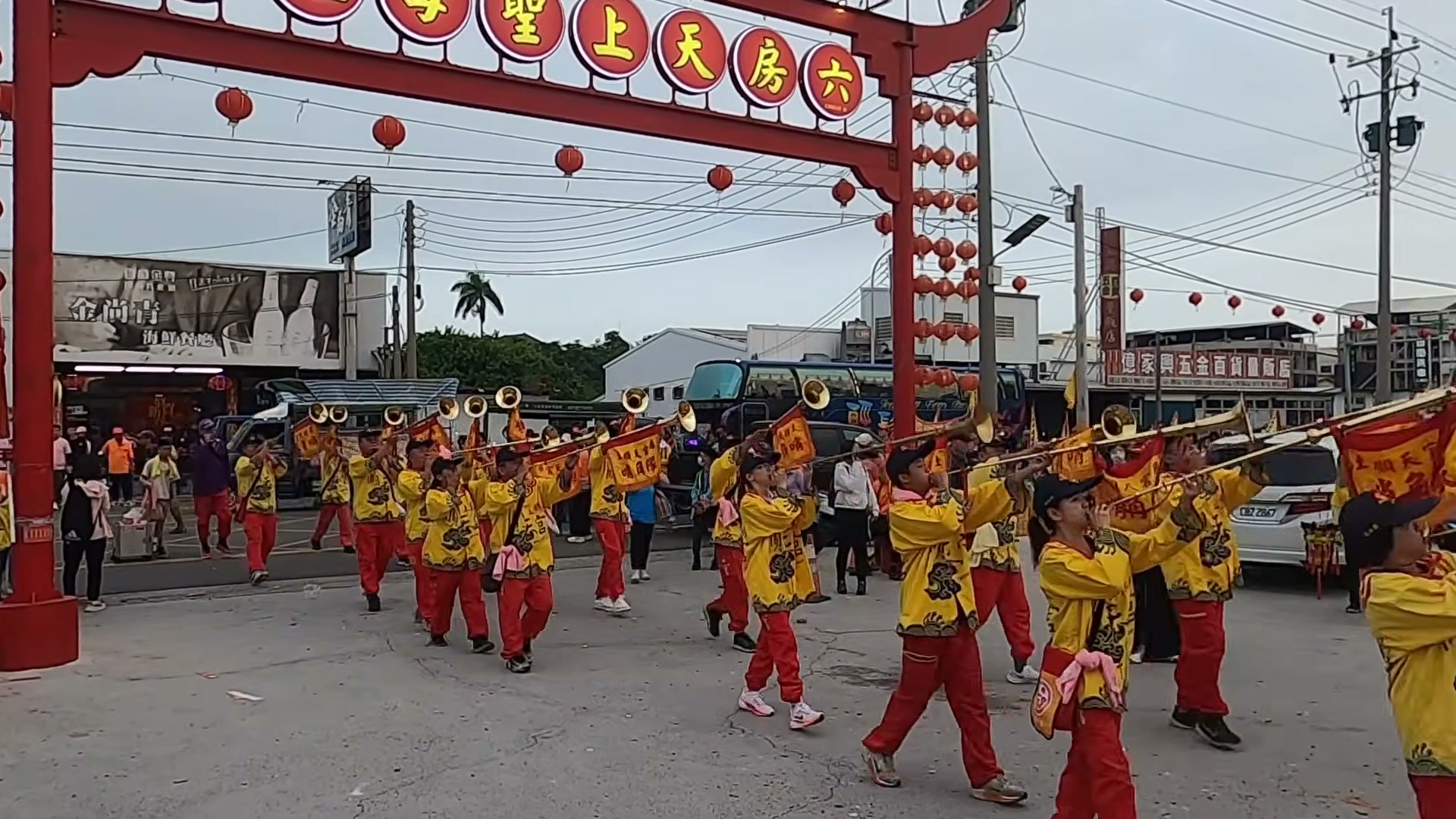
The long-horn team enters beneath the gate before taking positions along a passage, while helpers and participants adjust their positions in a crowded space. Preparation has its own movement: making room, waiting for the group ahead and attending to the sacred images and palanquins. The wider frame keeps these relationships visible. The instruments belong to the actual procession; the film uses the separate instrumental track “Across the Sea,” with the original location audio muted.
Beyond the gate
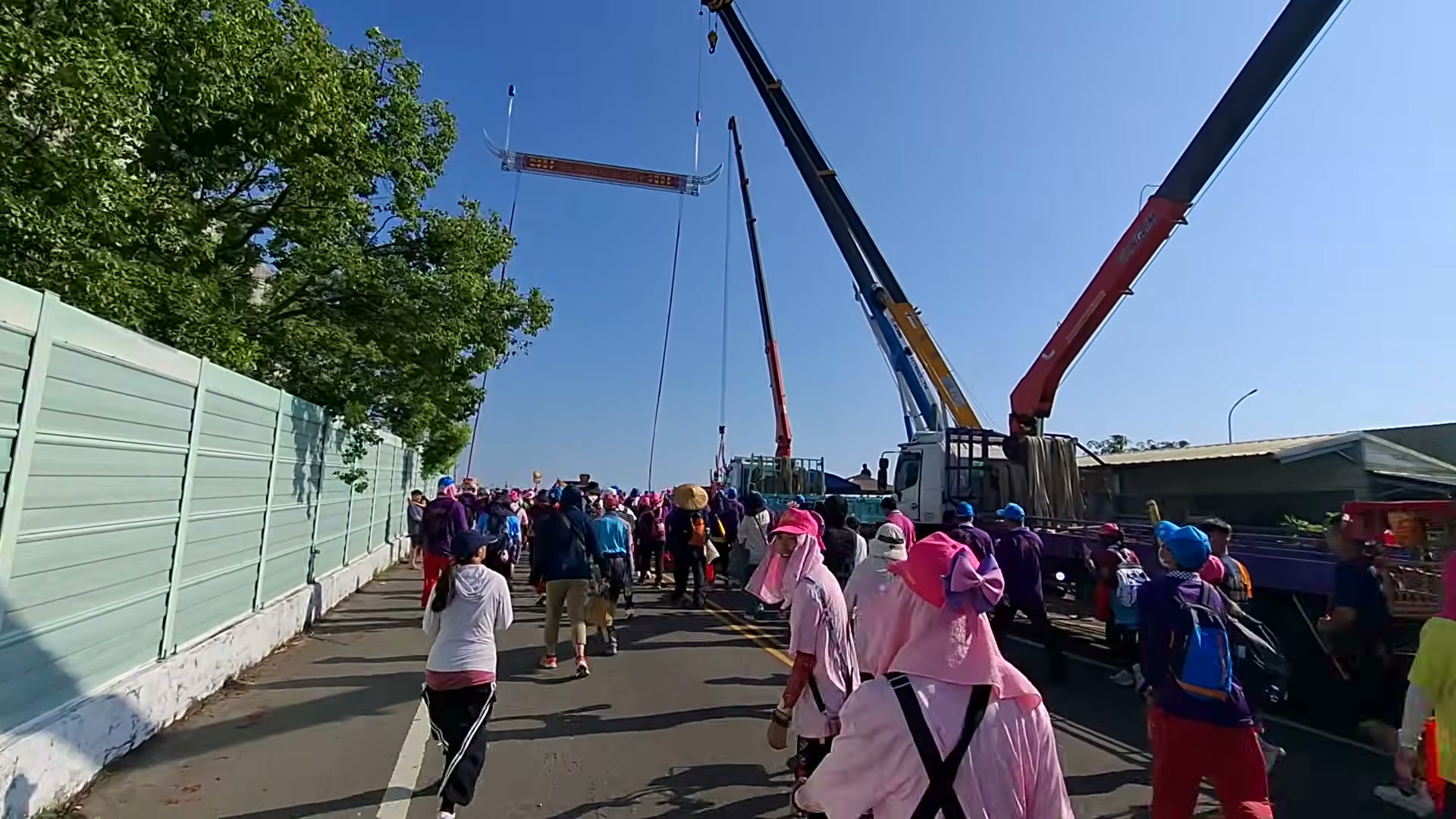
The palanquin passes through the crowd and the red gate; the road procession continues beyond it. This edition moved from Tuku to Wujianchu, accompanied by bearers and participants carrying lanterns and flags. A view from behind reveals how many people share the route. The film selects different moments at their original speed to condense the day’s journey; it is not a continuous 90-second record of the transfer.
That night, a temporary altar
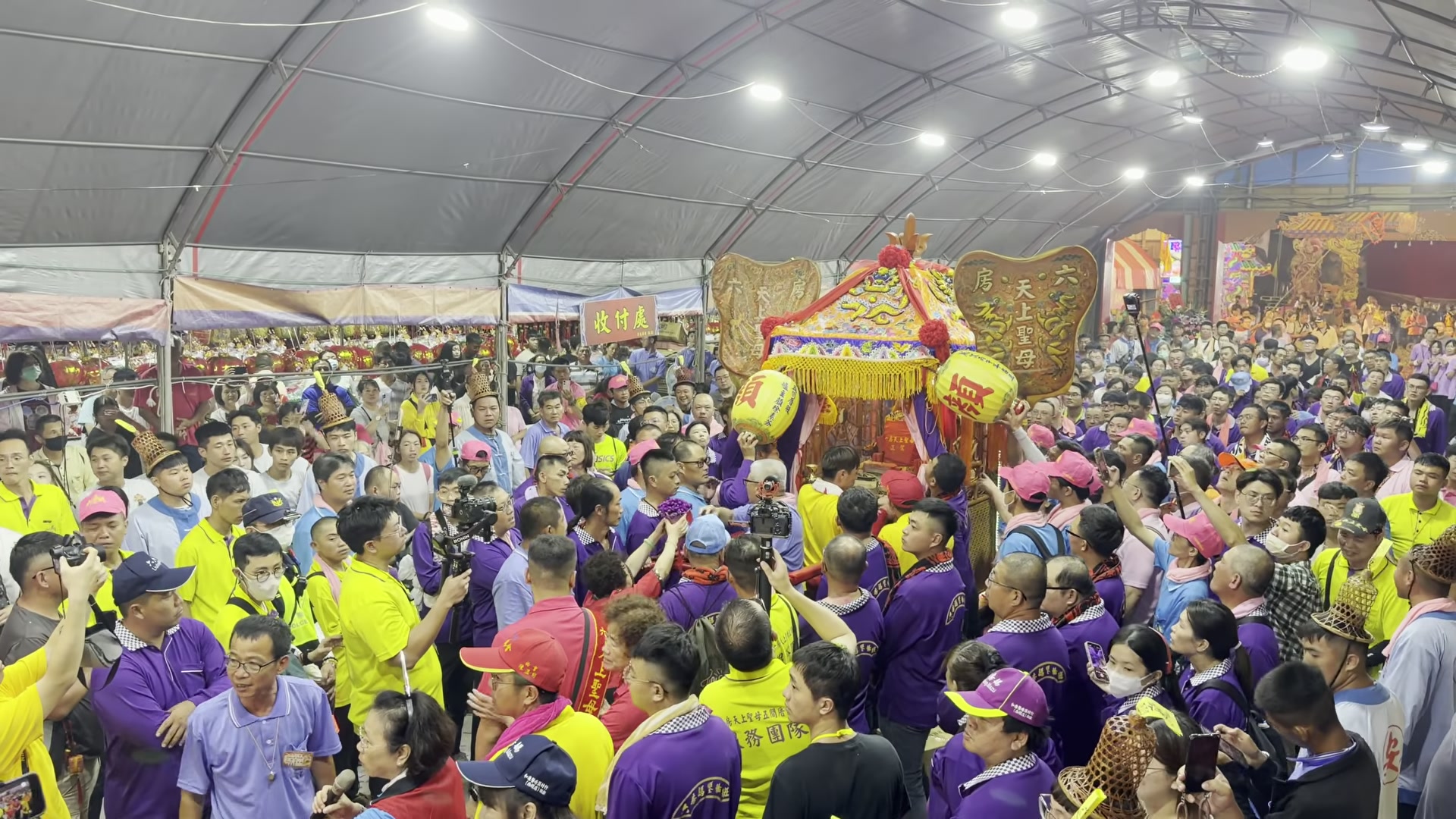
After dark, people wait inside the receiving space in Wujianchu. The palanquin enters the covered hall, accompanied by bearers and participants. These scenes bring the day’s departure and welcome into one visible sequence. This was the temporary red altar on 31 May. Entry into the formal altar on 2 June was a separate event and is not included in the film. The distinction keeps the welcome grounded in the day actually shown.
Find the next place to gather
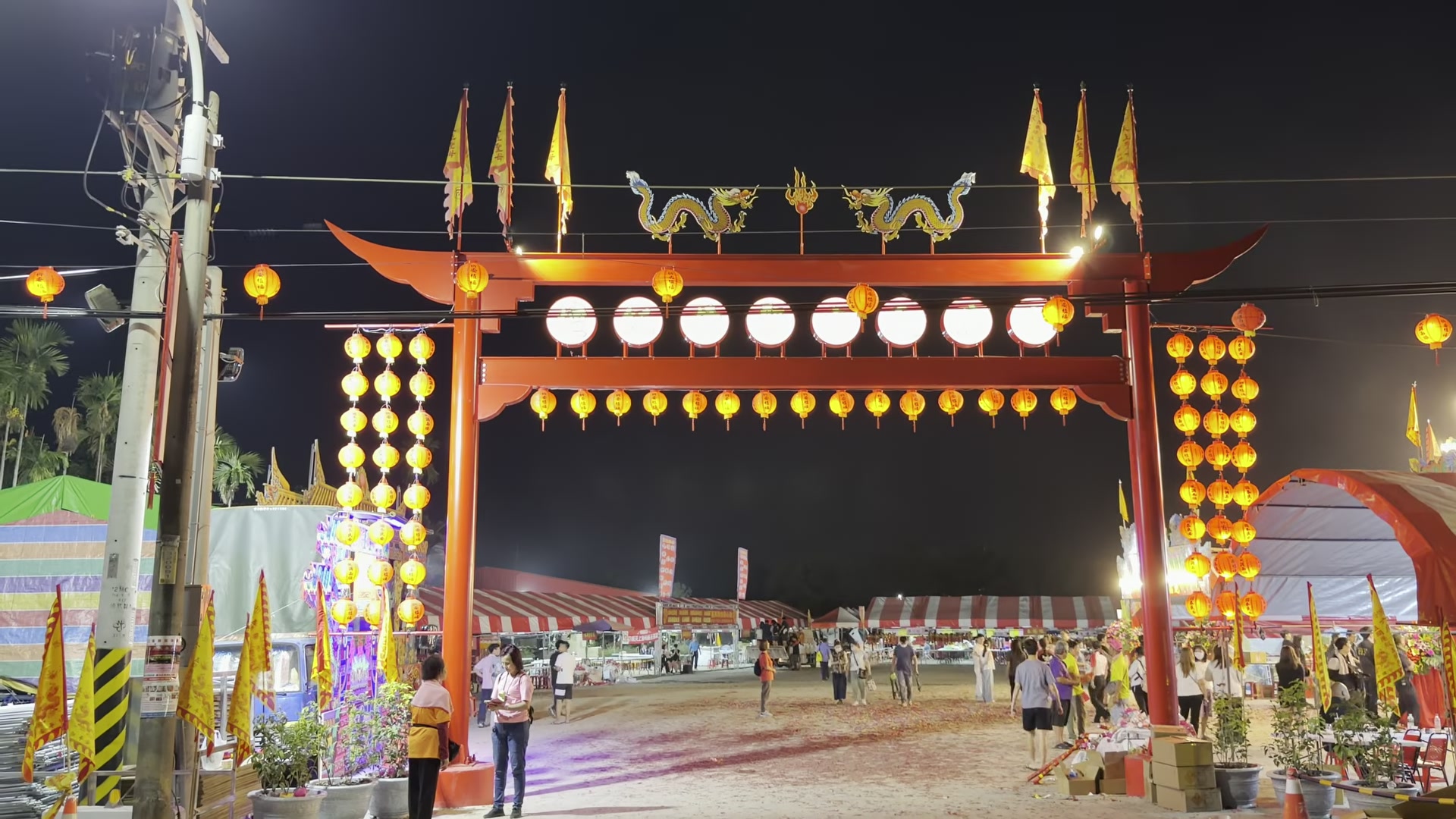
The appeal of the transfer lies in a community taking responsibility and many people preparing a place to welcome Mazu together. The 2026 event shown here has ended, and this temporary altar is not a permanent address for future visits. Before planning a trip, check the Liufang Mazu association’s latest notice for the current altar, dates and transport arrangements. Follow guidance on site, leave the procession route clear and allow time to notice the people waiting to receive it.
Film, article and image sources
Selected coverage of the transfer on 31 May 2026, ending at Wujianchu’s temporary red altar that night. The separate formal-altar entry on 2 June and other years are excluded. This edition has ended; the film is not an announcement of future dates.
- 2026雲林六房媽過爐,傳奇媽每年搬家一次,無固定廟宇!
- 2026/5/31雲林六房媽過爐,信徒太熱情吊車高掛鞭炮迎六房媽!
- 國家重要民俗 雲林六房媽過爐 入斗南五間厝股臨時紅壇2026/05/31
- 中華民國六房媽會官方網站
- 雲林縣議會:2026六房媽過爐報導
- TDN台灣生活新聞:六房媽過爐圓滿,晚上11點抵五間厝臨時紅壇
- 華視:2026年6月2日六房媽進正式紅壇
1. E 筆E original footage; information in the collapsed source section. · recording year unstated
2. E 筆E original footage; information in the collapsed source section. · recording year unstated
3. E 筆E original footage; information in the collapsed source section. · recording year unstated
4. Angel 志 original footage; information in the collapsed source section. · recording year unstated
5. Angel 志 original footage; information in the collapsed source section. · recording year unstated
Music: 跨海的一段路 (AI-generated instrumental).
Look closer
Read the current group and host names on the altar.
Keep entrances and ritual routes clear.
Visiting information
- When
- Usually the fourth lunar month; the 2026 transfer was 31 May, with the host-village circuit on 2 June. Those processions have ended; the host altar remains within its 2026–2027 period.
- Current altar
- WujianCuo group, opposite No.196 Mingchang Road, Dounan Township, Yunlin; 2026–2027 host period.
- Arrival and return
- Use Dounan Railway Station, then a taxi to the WujianCuo altar on Mingchang Road. Arrange a pickup point away from the ritual entrance.
- Visit
- Plan a daytime altar visit for a quieter introduction. During a procession, follow the stewards’ directions around the palanquin and incense vessels.