
Cultural place
Liudui Hakka Cultural Park: a rice mill’s second working life
Follow a donated rice mill from the grain to the table, then step outside to see the agricultural landscape around it.
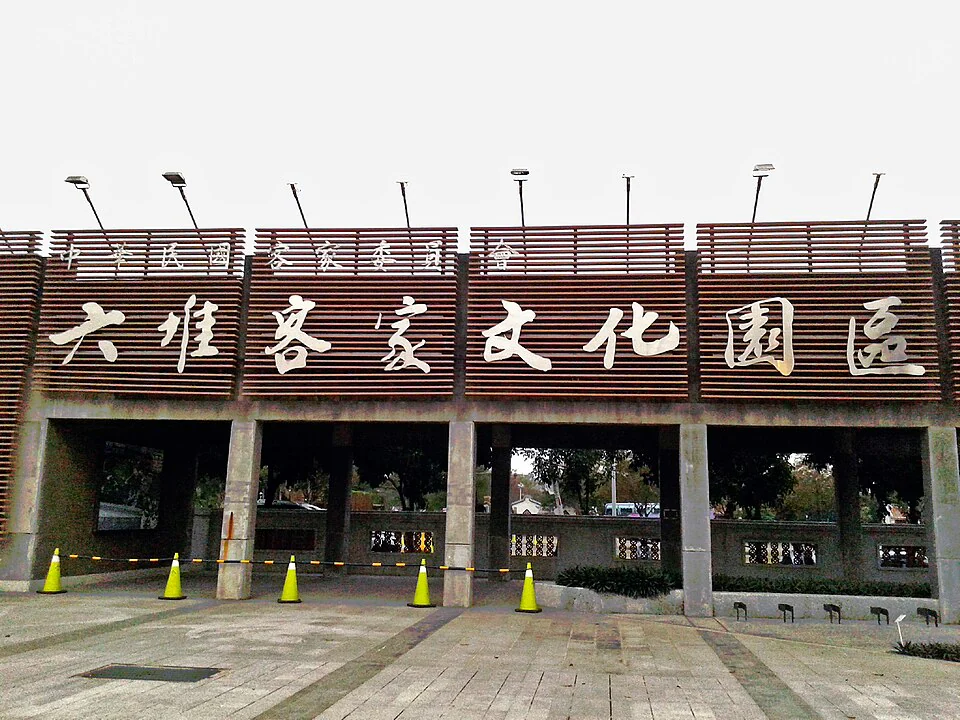
Focus on the rice mill, grain-processing sequence and the park’s agricultural landscape.
Allow time to move between indoor displays and shaded outdoor spaces.
A retirement that did not end the story
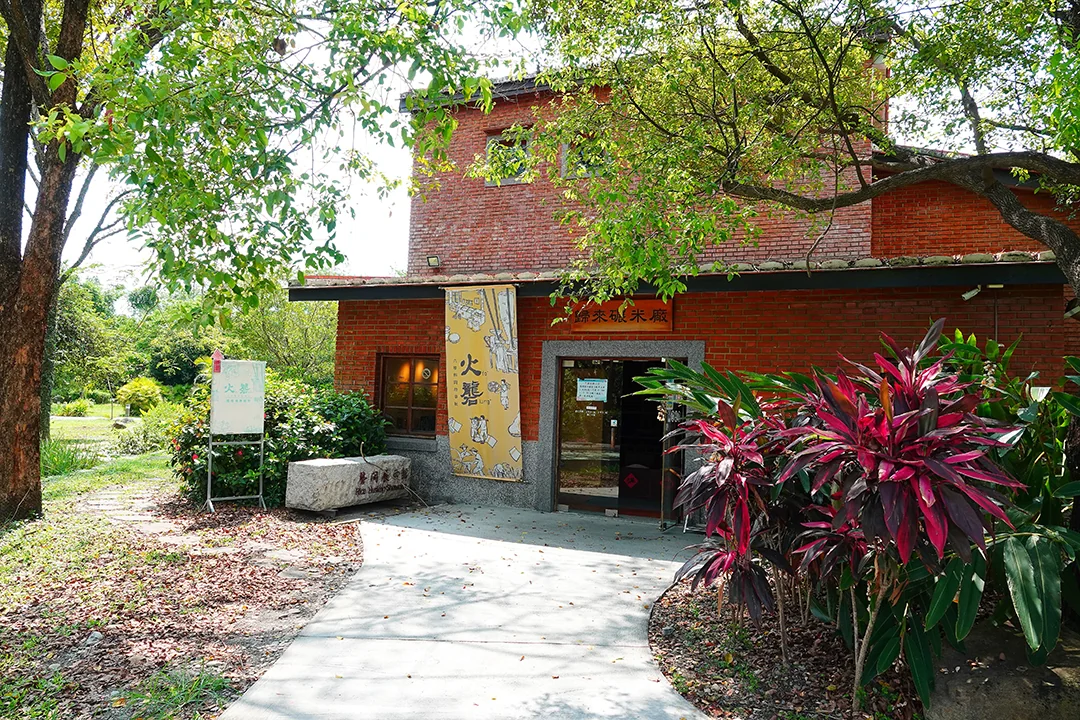
When Shih Hsin-te retired in 1994, the machinery in his family’s rice mill in Guilai, Pingtung, stopped working too. As its third-generation operator, he knew the equipment through years of use. Rather than discard it, he donated it in 2007. Dismantled, repaired and reassembled at Liudui Hakka Cultural Park in 2009, the installation moved from a workplace into a public collection.
That move preserved more than a large machine. The mill brings several operations into one connected system, showing that rice production depended on the relationship between parts. A belt, chute or storage container has meaning because something arrives from one stage and must leave for the next. The exhibit turns those connections into a story visitors can follow.
The difference between a husk and a bran layer
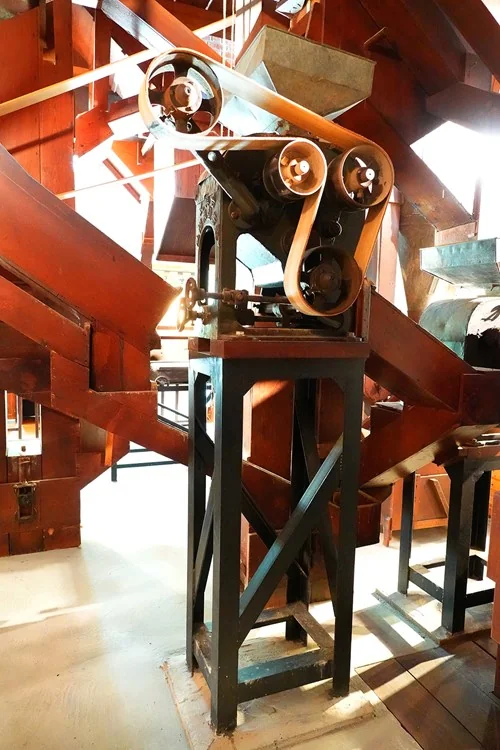
Begin with the grain itself. Removing the husk produces brown rice; polishing removes the bran layer to make white rice. These are separate changes to the material. Reading the exhibit in that order helps explain why milling needed more than one piece of equipment, and why the colour and surface of rice are signs of work already performed.
For a close look, choose one transition rather than trying to identify every component. Where does material enter, what is separated, and where does it go next? Then compare that part with the overall display. This simple change of scale makes a technical installation easier to read and keeps the person operating it within the story.
The fields continue outside
The park’s agricultural landscape places the mill beside a wider story of crops, irrigation and rural work. Its tobacco-curing building and fields offer different examples of how a harvest becomes a usable product. Walking between them connects the indoor collection with land, weather and the time required for production.
Six large umbrella structures provide the park’s best-known silhouette. Their design draws on Hakka hats and paper umbrellas while creating shade in southern Taiwan’s sun. Pause beneath one before returning to another gallery. The contrast between contemporary shelter and older working equipment shows two ways of responding to everyday needs, both shaped by the place in which people live.
A drying room moved with a family’s working history
The park’s tobacco barn came from the family of Liang Kun-ho in Gaoshu. Its official account dates its construction by Liang Lian-ding and Liao Hui-mei to 1961 and records its move to the park in 2009. Unlike the rice mill’s sequence of separating layers from grain, the barn changed the moisture of a harvested leaf. Two large exhibits preserve different kinds of post-harvest work.
The central drying chamber is called the benzao: an earth-brick body with internal racks and a smaller roof above. The park identifies it as an Osaka-type barn, distinguishing barn types partly through their skylight forms and response to weather. New drying machinery introduced in 1982 gradually displaced the older building’s work. Read the chamber, racks and roof together to understand a processing space whose use ended before its fabric was preserved.
The umbrella is an environmental structure as well as an image
The umbrella landscape’s design statement uses the Hakka hat as its image, while describing a practical aim: recreating the shading role of a rainforest canopy for plants and people. It also specifies components that can be dismantled, replaced and assembled again. The silhouette carries cultural associations, but its joints, shelter and capacity for change explain how it is intended to work.
The planted areas offer another way of reading that design. The Jiuxiang Garden is arranged around Bogong, drawing on the practice of offering arranged flowers, while the agricultural landscape is planned around rice, tobacco and other useful plants. These are designed interpretive spaces rather than an untouched historic village. They place worship, cultivation and contemporary public shelter beside one another without making every feature an original object from the same period.
Look closer
Follow one grain-processing sequence, then compare the mill with the fields outside.
Visiting information
- Address
- 588 Xinyi Road, Neipu, Pingtung.
- Opening
- Exhibition halls 09:00–17:00; enter before 16:50. Closed Tuesdays except national holidays, Lunar New Year’s Eve, announced closure days and days when work is suspended for natural disasters. Outdoor hours differ by season; gallery access still follows its own hours.
- Transport
- Use Pingtung Bus 8230 where its timetable fits your trip; check the park stop and return service before departure.