
Cultural story · Food and local life
Lieyu’s taro season: a harvest between soil and table
A taro’s value is more than its weight. Harvesting work and changing ways of cooking have brought Lesser Kinmen’s crop into new everyday settings.
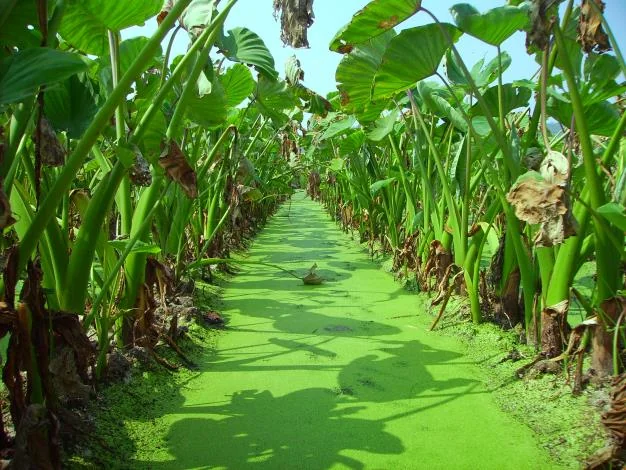
Usually in autumn; the 2026 main programme ran on 9–10 October at Donglin Multipurpose Sports Ground. The 2026 edition has ended.
Allow time to travel between the main venue, participating fields and restaurants, and plan the return separately.
A season’s work beneath the leaves
Broad leaves are a visitor’s first view of a Lieyu taro field, while the harvest lies underground. Farmers bend, loosen the soil and lift the mud-covered corms. Marks left by leaf stalks and freshly turned earth turn an even green landscape into individual pieces of food that must be cleaned and sorted. The taro season brings this usually less visible stage of work closer to visitors.
Cultivation begins in spring and moves toward an autumn and winter harvest, while the festival gathers in autumn. In 2024, digging sessions took place in Dongkeng, with gloves and tools provided in working fields. The 2026 programme retained digging activities while placing its main venue in Donglin. A stage follows a programme; a field follows crop and ground conditions. The festival therefore connects two distinct settings.
A good harvest also begins with deciding what to plant. During a 2024 visit to Lieyu, seed-station director Chang Ting-lin explained participatory selection: breeding specialists and experienced producers identify desirable stock, disease testing screens plants, and tissue culture helps multiply the selected material. The sequence adds another scale to the digging experience. Before a visitor lifts a mature corm, someone has had to judge the next generation's planting material.
One crop, several lives beyond the field
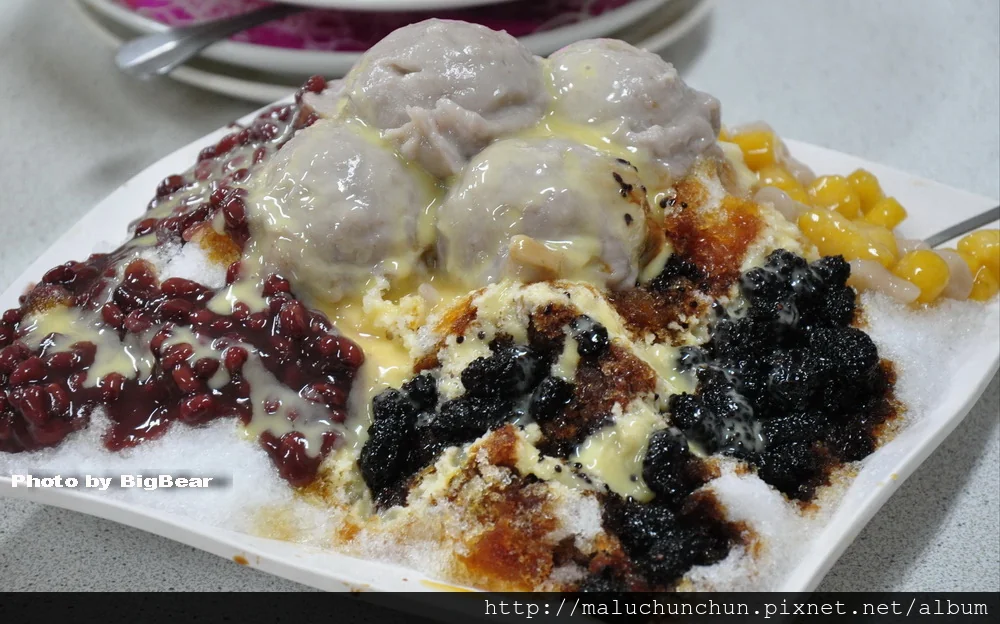
In Huangcuo, Hung Mu-sheng and his wife developed a meal around taro, offering visitors an alternative to carrying whole corms home. A 2013 account records fried mashed-taro balls around salted egg yolk and taro mixed with braised pork. Steaming, combining and frying gave one ingredient several textures. The restaurant turned a crop into a shared meal and created another route from the island’s fields to its visitors.
The meal ended with taro ice, combining mashed taro, red beans, mulberries and handmade taro and sweet-potato balls for people to share. By 2026 the festival also included a branded taro-and-braised-pork-flavoured snack. Home food, a restaurant meal and a portable package give the crop different ways of reaching people, while keeping taro central to how Lieyu presents its local produce.
Beyond the largest taro: a harvest becomes a gathering
The taro-king contest turns weight into an easily understood spectacle, while a farmers’ market presents harvests of many sizes and uses. Produce stalls, meals, workshops and performances bring different visitors past one another: concertgoers encounter the crop, and shoppers may stay to eat. For an island of settlements and fields, the festival is a time when dispersed parts of everyday life meet in one place.
The 2026 two-day programme used Donglin Multipurpose Sports Ground. Opening events took place on 9 October, with digging from 10:00 to 16:00; the following day included workshops, afternoon awards and an evening concert. A visit can move from daytime farm experience to a meal in a settlement and back to Donglin. Buses now cross Kinmen Bridge between the two islands, but an evening stay still needs a planned return.
The described system then uses isolated seed fields for multiplication and renewal of mother stock, before seedlings return to production fields. This addresses the risk of passing plant disease through retained planting material. The report records a technical exchange and a method promoted nationally; it does not establish that every Lieyu field has adopted it. Recognising that limit still makes soil care, seed selection and growers' decisions visible beside the easily measured weight of a prize taro.
Look closer
During harvesting, follow the farmer’s sequence of loosening, lifting and sorting, and their guidance on tools and where to step.
Compare mashed taro, chunks and taro balls to distinguish how preparation changes one crop’s texture.
Visiting information
- Dates
- Usually in autumn, with harvesting extending into winter. Main 2026 dates: 9–10 October; digging on 9 October, 10:00–16:00; workshops at 11:00, awards at 16:00 and concert at 18:00 on 10 October. The 2026 edition has ended.
- Venue and fields
- The 2026 main venue is Donglin Multipurpose Sports Ground, Lieyu, Kinmen. Digging takes place in designated fields reached through the activity reception point, separately from the sports ground; register for a session first.
- Food stop
- Huangcuo San Ceng Lou Taro Restaurant is at 23-1 Huangcuo, Lieyu; telephone 082-362415. Call ahead for a full taro meal or group booking.
- Transport and return
- Kinmen bus 15 runs from Jincheng across Kinmen Bridge to Lieyu via Donglin. Check both the Donglin stop and return departures before setting out. Arrange local travel for the field activity and Huangcuo meal; a reserved pickup is useful after evening performances.