
Cultural story
Beipu lei cha: a changing town in a bowl of tea
Grinding, recipe choices and a remembered street number tell a story of hospitality becoming a visitor experience.
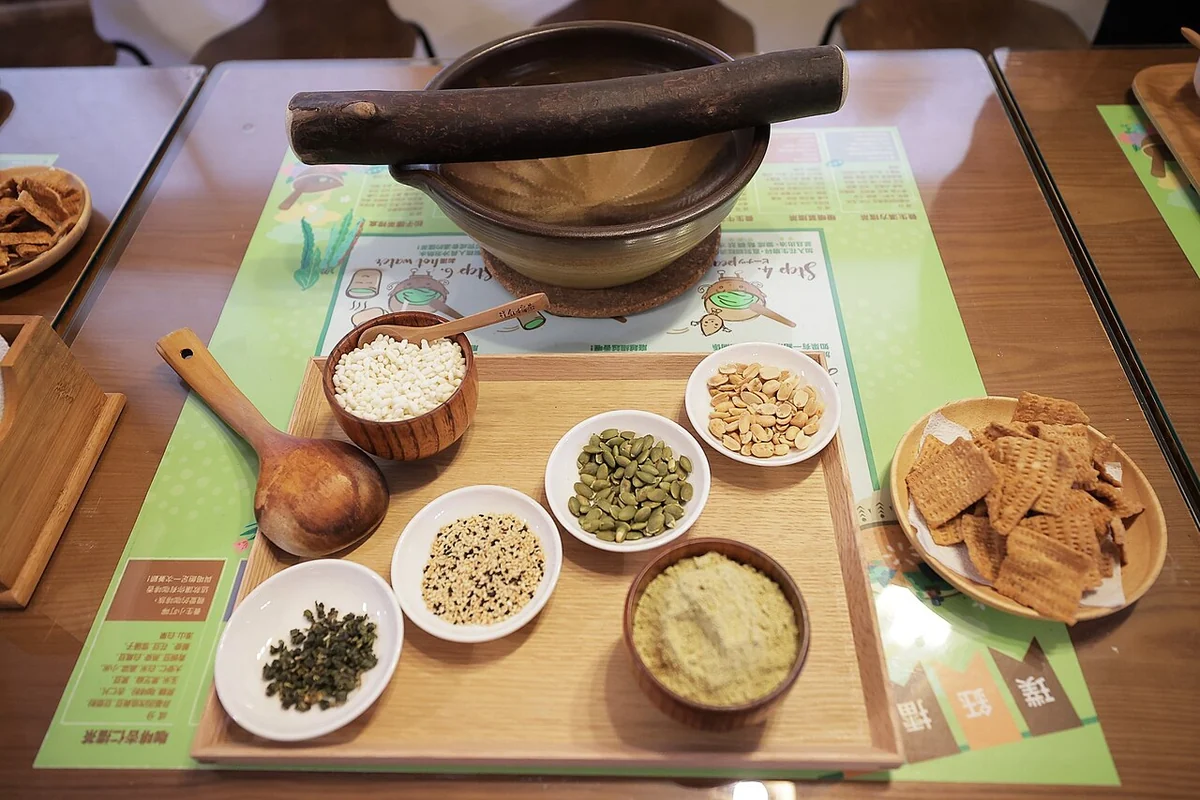
Compare whole ingredients, the ground mixture and the finished drink.
Follow a shop’s changes in taste and name alongside Beipu’s visitor economy.
Listen before taking the first sip
Lei means to grind. In a hands-on session, the bowl and pestle put preparation on the table: ingredients break down, combine and change texture before water makes them a drink. Watch the mixture rather than only waiting for the cup. The work gives a familiar food act—making tea—a different scale and rhythm. The mortar, pestle and ingredients photographed at Puyu Lei Cha in Beipu offer another view of this work at the table.
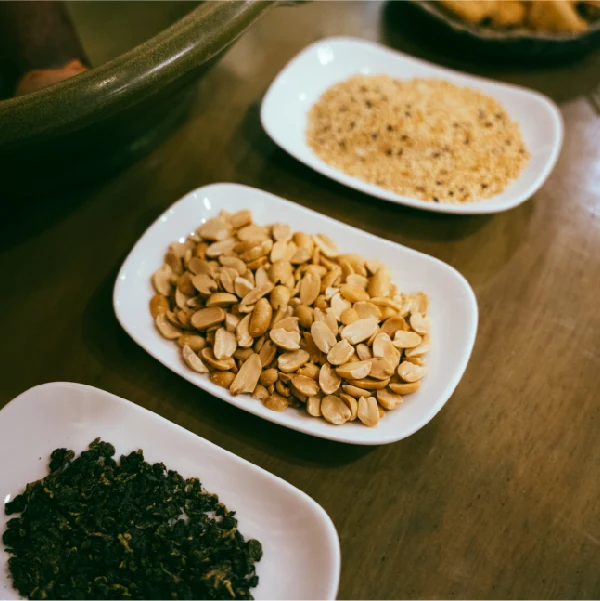
At No. 39 Beipu Lei Cha, peanuts, sesame and tea are part of that preparation, followed by the shop’s blended ingredients and hot water. Ground ingredients and a finished powder play different roles. Ask how the sequence works; understanding a particular recipe is more useful than expecting every host to make the same bowl.
The bowl’s inner surface helps explain the motion. An agricultural teaching guide describes grooves radiating from the centre, providing friction against the wooden pestle; different groove sizes suit different particle sizes. It identifies guava or oil-tea wood as common pestle materials, while No. 39 specifies guava branches for its own sessions. Material and surface texture are therefore part of the tool, not decoration added around the food.
No. 39 asks participants to grind peanuts, sesame and tea until the mixture releases oil and becomes a fine paste before combining it with its prepared powder. Fried rice is scattered on after hot water is added. These stages leave different textures in the same bowl: a ground base and a final dry topping. Follow the shop’s own sequence and ingredient information; another household’s savoury tea need not use this recipe.
A house number becomes a name
The business began experimenting with a commercial lei-cha drink in the late 1990s. Its account describes moving from a savoury version to a sweeter preparation after observing customers’ response. Taste was not merely inherited unchanged: it was worked on through the practical question of what people would return to drink.
As similar shops appeared, some returning visitors remembered the address more clearly than the name. In 2007 the shop adopted No. 39 in its identity. A small navigational detail became part of the brand: the doorway people were trying to find carried a memory of a previous visit and a taste they wanted again.
A shared table, a new local industry
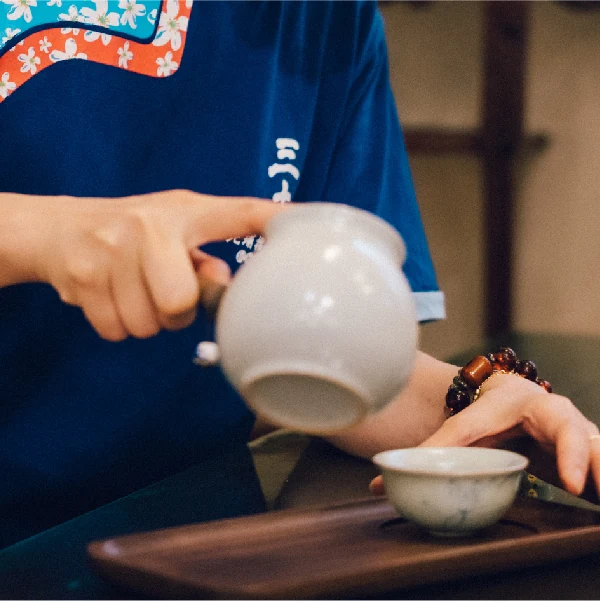
Research on Beipu’s lei-cha economy describes how a food practice developed into a recognisable visitor activity through local enterprise and cultural presentation. The mortar invites several people to share one process. Changing hands, comparing the mixture and talking while grinding make time at the table part of what a visitor takes away.
That experience sits beside Beipu’s other tea histories rather than replacing them. A shop’s own account can explain its recipe, while the old street reveals different businesses adapting to visitors. When you leave, notice what is being offered: a drink, a prepared product, a meal or a lesson. Each choice connects local work with the way a visitor spends an afternoon.
The shop also sells powder, single-serving packs and do-it-yourself gift sets alongside drinks. Each format moves a different amount of preparation into the customer's day: a finished drink, a mixture to reconstitute, or ingredients to work with. Looking at those formats after a grinding session shows how a local food can travel beyond the shared bowl without requiring every customer to repeat the entire process.
Look closer
Compare the ingredients before grinding, the mixture after grinding and the finished drink. Ask which stages were prepared in advance.
Visiting information
- Place
- No. 39 Beipu Lei Cha, 39 Miaoqian Street, Beipu Township, Hsinchu County.
- Experience
- Contact 03-580-3157 to arrange a grinding session and confirm group size and ingredients. Compare the whole ingredients with the mixture you have ground before adding liquid.
- Getting there
- From Hsinchu HSR station or Zhubei railway station, take Taiwan Tourist Shuttle 5700, the Lion’s Head Mountain Route, to Beipu Old Street. Continue on foot to Miaoqian Street.
- Return
- Return to Beipu Old Street stop and take the service towards Zhubei, via Hsinchu HSR station. Check the return departure before the activity.
- Ingredients
- Tell the shop about any food allergies before grinding or tasting; recipes may include peanuts, sesame and grains.