
Cultural story
One round bowl, two ways of making it
A bamboo tray and a pair of palms arrive at similar shapes by very different routes.
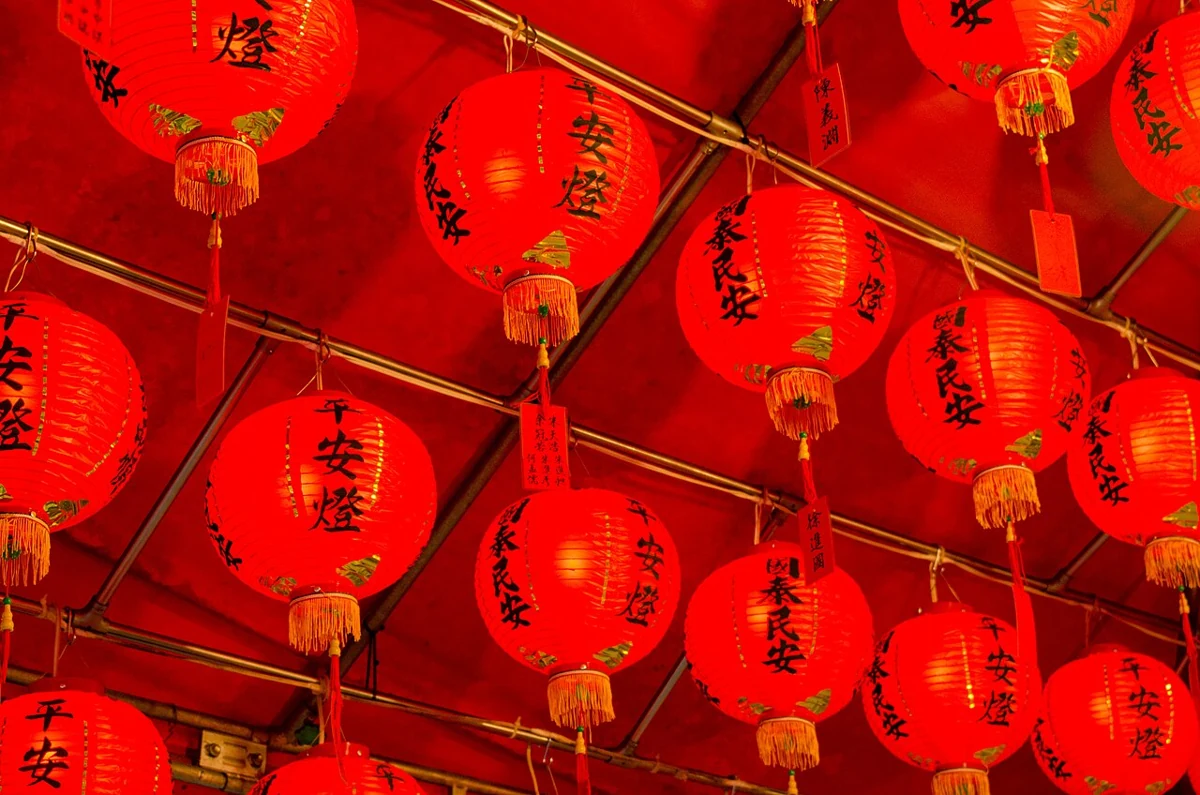
Yuanxiao is built in layers of flour; tangyuan starts with a worked dough.
Follow the craft from a seasonal order to a neighbourhood dessert shop.
The filling goes in first—or last
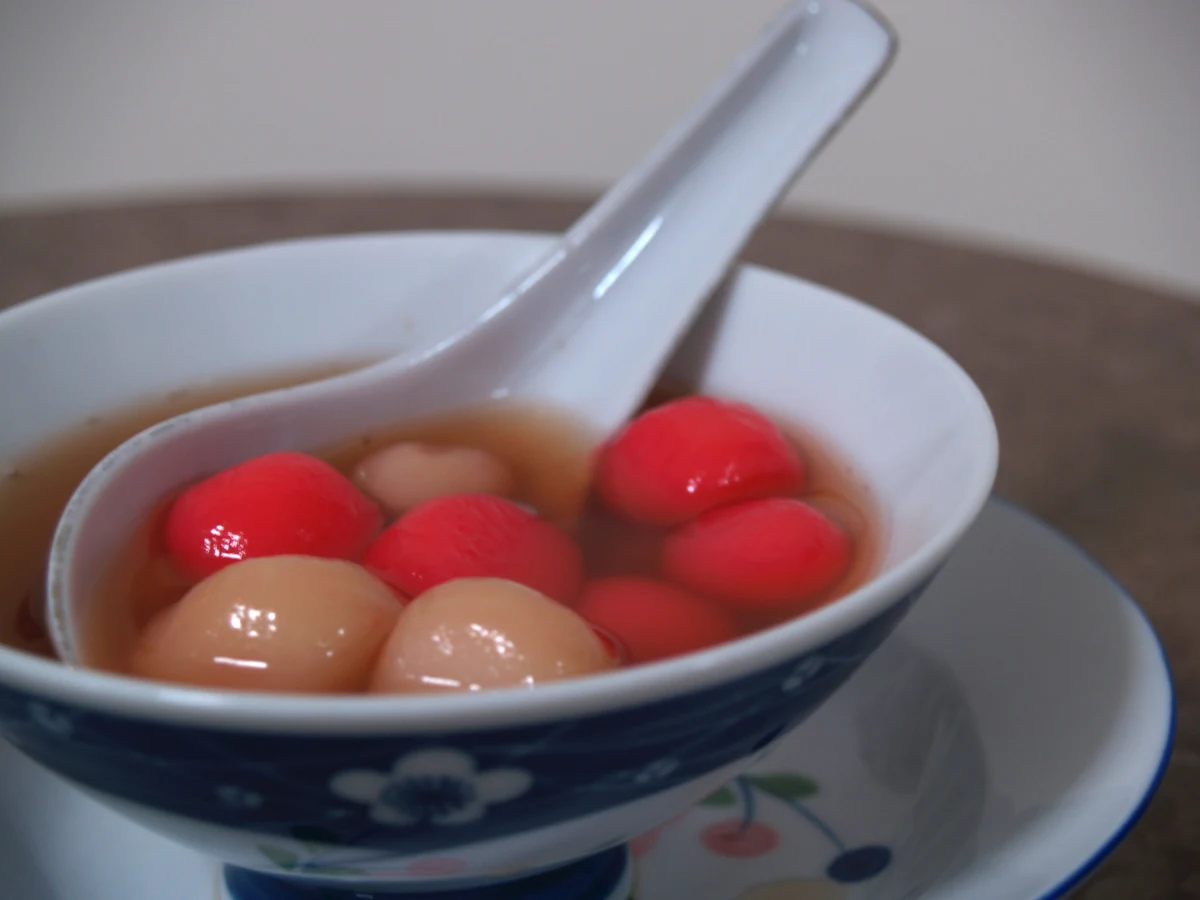
To make rolled yuanxiao, a firm piece of filling is moistened and moved through dry glutinous-rice flour. Repeated rolling and moistening build the coat outwards. Tangyuan reverses the emphasis: wet rice dough is formed first, then wrapped around a filling or rolled into small unfilled balls. The rounded appearance hides two different sequences of work.
This is why a tray of flour is more informative than a label alone. It shows where the coating is coming from and how the maker keeps the pieces moving without merging. In a bowl, thickness and texture retain traces of those choices. Comparing the two foods gives the wish for reunion a concrete material form rather than leaving it as a phrase on a festival poster.
A shell grows around the filling

The Taichung footage records yuanxiao-making outside Qin Yuan Chun’s former shopfront. A strainer carries small filling pieces through water and into a flour-filled bamboo tray. As the tray turns, dry flour adheres to the damp surface. Another dip and another roll add to the coating; the shell is built outwards from its centre.
The moving tray makes a useful distinction visible: the filling is already inside before a complete white skin exists. Later, the coated pieces are lifted, boiled and served. The old doorway belongs to the recorded scene; it is not a promise of today’s entrance. The restaurant now lists its founding branch temporarily at No. 137, Section 1, Taiwan Boulevard while the original building is repaired.
The dough closes around its centre
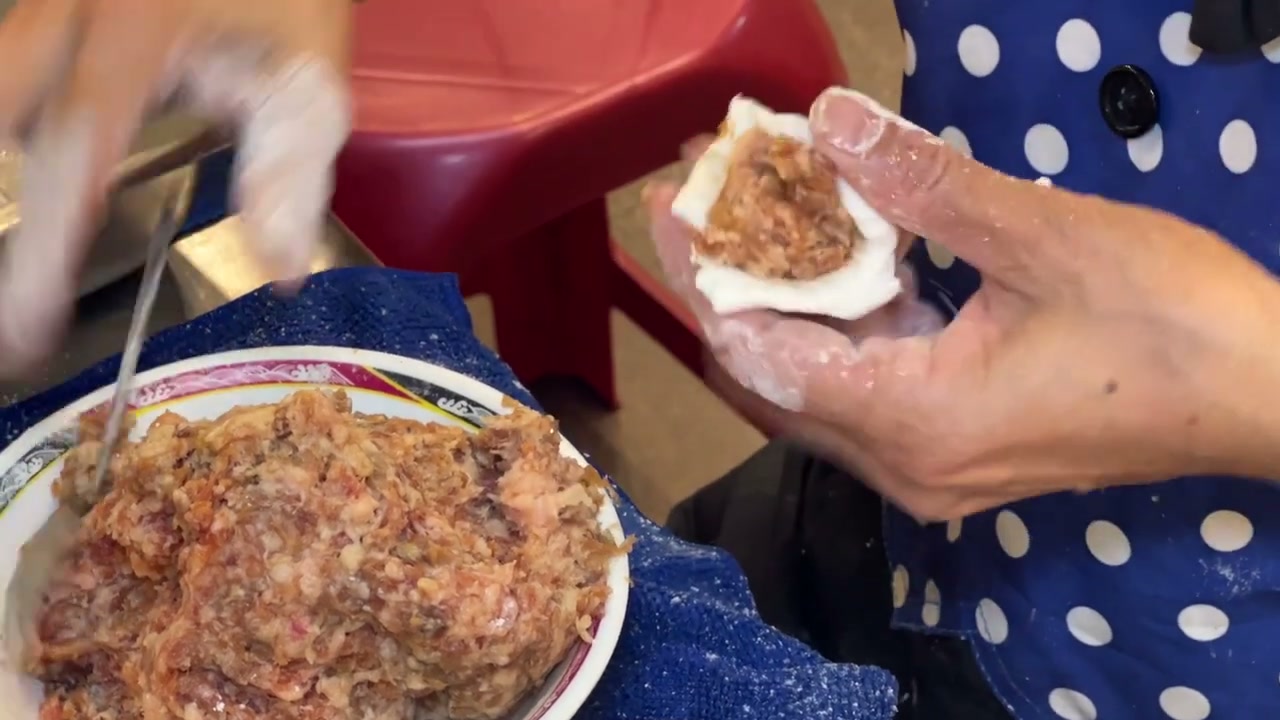
At Shuanglian Liang in Taipei’s Shuanglian Market, the footage shows dough being worked into smaller portions. The maker spreads a piece in the palm, adds savoury filling, then brings the edges together and rounds the parcel. Here the skin is prepared first, so the decisive movement is closing rather than coating.
Taipei’s Market Administration describes the shop’s rice-flour dough, pork filling and cooking sequence. After boiling, clear soup, vegetables and fried shallot complete the bowl. A spoonful with the filling exposed makes the earlier handwork readable again: a prepared skin has enclosed a centre. This is a different business from Shuanglian Sweet Rice Balls.
A holiday food has an everyday address
A 2012 Taipei Pictorial account traces Shuanglian Sweet Rice Balls to a roadside stall begun by the Yao couple in 1951. The shop later moved with changing equipment and ways of serving customers. A neighbourhood dessert business carries festival food through the rest of the year; it must offer reasons to return after the lanterns have been taken down.
Visitors have recorded both hot sweets and summer ice dishes at the shop. Those observations matter because rice balls do not belong to one night alone. Seasonal demand gathers around Yuanxiao and the winter solstice, while everyday combinations of beans, taro and other ingredients create a wider menu. A traditional food survives through this repeated use as well as through the annual celebration.
From the table into the evening
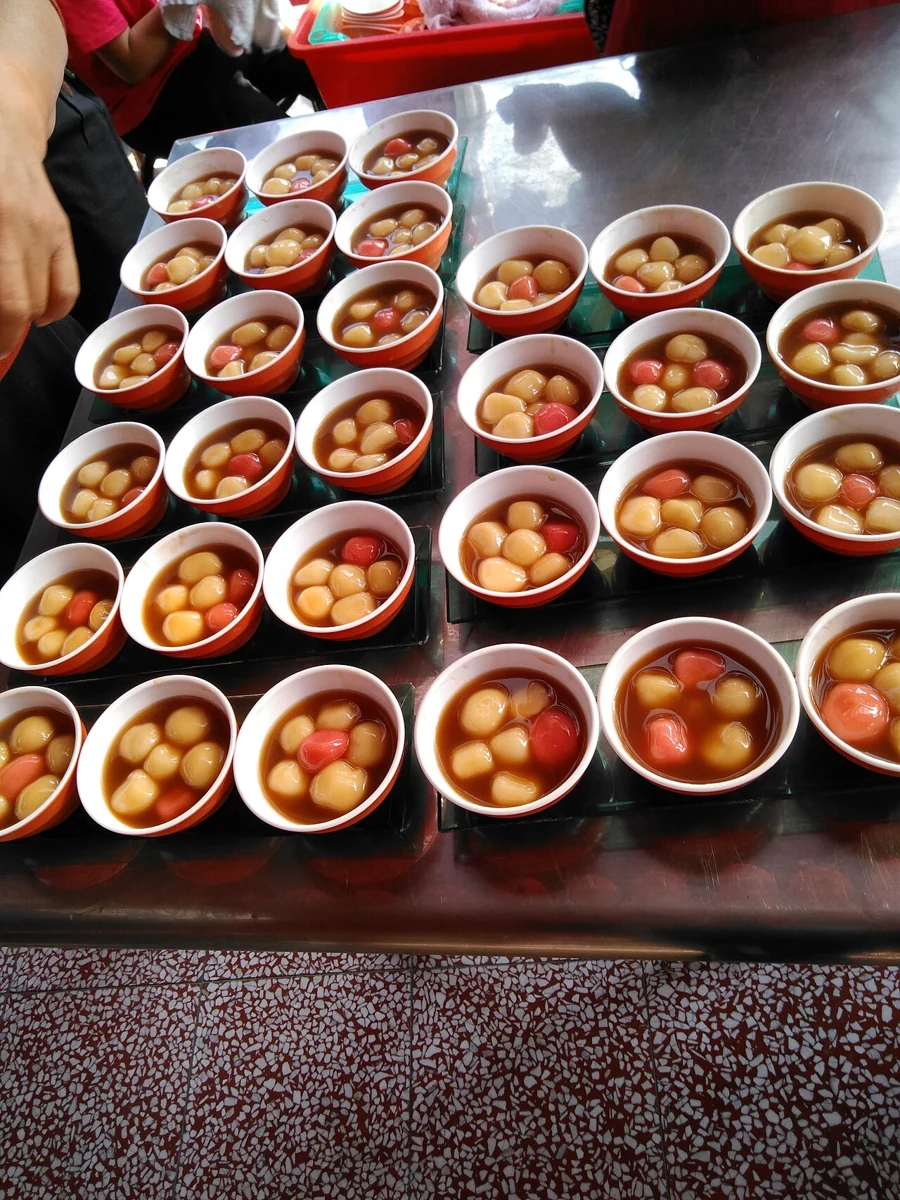
The fifteenth day of the first lunar month brings eating and going out into the same evening. Handheld lanterns give children an object to carry; temple lights give a gathering a shared centre. The scale ranges from a family’s short walk to a large public display. These are different ways of inhabiting the festival rather than interchangeable attractions on a checklist.
Begin with the food-making distinction, then carry that attention to the lanterns: how a frame supports a surface, how light changes a coloured sheet, and how an object moves with its holder. The dinner bowl and the lantern are linked by their place in the evening, but each has its own material skill. That makes a small neighbourhood visit rich enough to stand on its own.
The folk-object dictionary distinguishes two structures behind a lantern's skin. In the Quanzhou style, crossing bamboo strips are woven into a frame. The Fuzhou style, also called an umbrella lantern, joins pierced strip ends with wire and opens the framework into a cylinder, with cotton thread holding the spacing. Two lights that look similar when hanging can therefore have different ways of holding their shape.
Covering and finishing add further trades. The dictionary describes a gauze layer and then paper on the Quanzhou frame, followed by drying, painting, lettering and tung-oil finishing; its Fuzhou account instead describes gauze and agar glue. This is a useful comparison of recorded methods, not a demand that every contemporary lantern use them. A painted surname, a shop sign and a festival picture also serve different purposes: the finished light communicates who is using it as well as illuminating a street.
Look closer
Compare a flour-rolled yuanxiao with a dough-wrapped tangyuan when both are available.
Visiting information
- Place
- Shuanglian Sweet Rice Balls, 136 Minsheng West Road, Datong District, Taipei.
- Visit
- A public dessert shop for tasting; seasonal yuanxiao orders follow the shop’s arrangements. Eating here does not include a making workshop.
- Transport and return
- Walk west along Minsheng West Road from Shuanglian MRT station; return to the same station after the visit.