
Cultural story · Food and local life
Jinsha’s sorghum, old streets and wind lions: a village through its everyday objects
Sorghum has uses beyond spirits, and wind lions have lives beyond stamp collecting. Jinsha’s autumn season connects field materials, village guardians and the streets of Shamei.
Usually in autumn; the 2026 main programme ran on 3–4 October beside Jinsha Township Office and in Shamei. The 2026 main events have ended; the app campaign has its own schedule.
Shamei is walkable; visits to wind lions in villages such as Guanao need separate transport between settlements.
After the harvest, sorghum could sweep a house
Sorghum often leaves Kinmen as a bottled spirit, but its stalks had another life on the farm. At the 2012 cultural season, older farmers Chen Chang-chih and Huang Shui-chin taught visitors to bind brooms. Chen, then ninety, handled materials familiar from everyday work. This was a household necessity before it became a demonstration: a crop continued serving a family after harvest.
The broom variety known locally as beisao can grow to about two metres. Its flexible stalks and seed-head branches offer a direct encounter with the plant. As tiled floors replaced brick and cement in homes, cleaning tools changed and fewer people needed hand-bound brooms. The 2026 programme brought the craft into activities at Jinsha Cinema, restoring attention to the material and the hands that work it.
A 2014 school visit records how the familiar stems become a sweeping surface. At the agricultural institute, instructor Weng Yen-peng began with groups of four stalks, aligned their heads and bound them with wire. Splitting a bundle to insert the next gradually spread the stems into a fan. The useful shape depended on repeated alignment and binding, not simply on gathering a handful of stalks after threshing.
How village guardians became a travel map
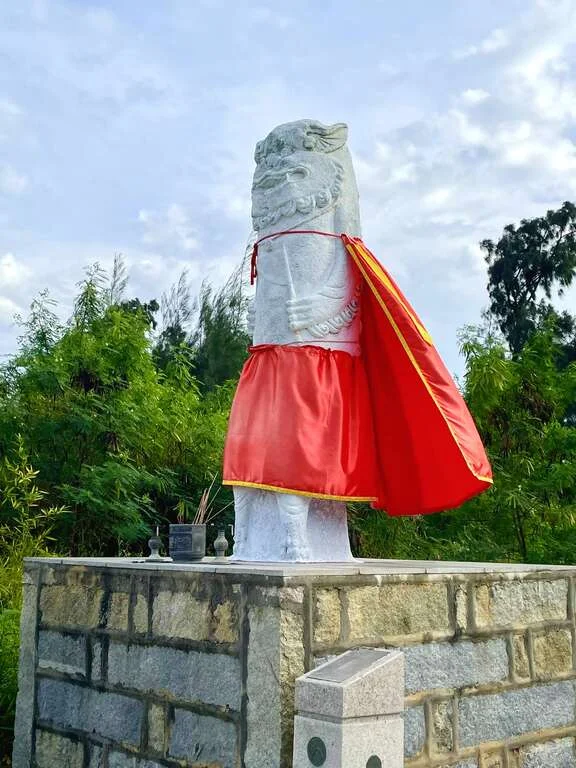
Jinsha’s wind lions stand in different settlements, each with its own appearance, setting and local devotional practices. Guanao’s standing male stone lion is 228 centimetres tall and is often dressed in a votive robe. It belongs to a village over time, unlike a temporary festival mascot. Reaching these figures takes visitors beyond the main venue, through streets and farmland, into the spaces that residents have given their guardians.
In 2012, Shamei researchers Wang Tien-yuan and his brother Wang Tien-fu shared architectural research and photographs with the festival planners. Visitors then collected a paper wind-lion passport; Wang returned to Taiwan only to discover that the passports had all been distributed and rewards were already being claimed. By 2026 an app linked location-based collecting with local businesses. The medium changed, while the journey still depended on people entering villages and stopping outside shops.
What remains in the street after the film ends
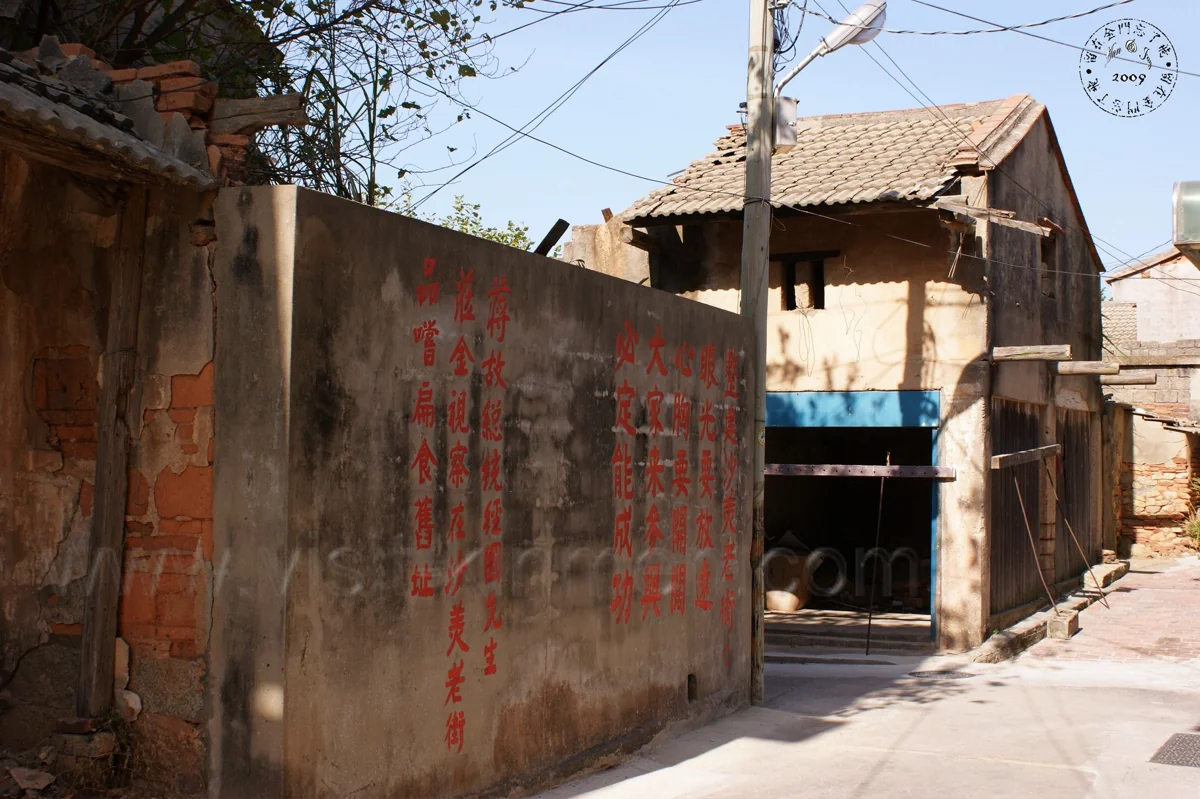
Shamei served soldiers stationed on Kinmen with shops, meals and cinema visits. After more than three decades of silence, Jinsha Cinema reopened in January 2026, and the old-street walking tour moved its meeting point there. The short distances between cinema, bus station, market and Ren’ai Road reveal how movement sustained the commercial district. Its history survives in places where people still shop, wait for buses and work, as well as in old facades.
On 3–4 October 2026, the season brought thirty-five stallholders, red-tortoise-cake workshops, broom making and performances into Shamei. Residents shopping, visitors collecting wind-lion stops and families joining workshops shared the streets. The festival used the town’s established meeting and movement points; the autumn crowd added another layer to places sustained by ordinary use throughout the year.
The Duonian Elementary School session was conducted in the local Kinmen language. Teachers learned the technique alongside pupils and then helped them, while the institute had broken production into a ten-step teaching panel. That transfer involved words as well as hands: naming the plant and explaining a movement also made space for children to hear and speak local language. This is a documented past class, not a standing workshop available whenever a traveller arrives.
Look closer
Distinguish a sorghum broom’s branches, binding and handle to see how one plant supplies different functions.
Look at a wind lion’s votive robe and offerings while leaving space for residents to worship and pass.
Visiting information
- Dates
- Around autumn annually. Main 2026 events: 3–4 October. The annual wind-lion app campaign began on 21 August and had a separate schedule. The 2026 main events have ended; the app campaign has its own schedule.
- Venue and walking
- The main venue is beside Jinsha Township Office, 112 Section 1, Huandao East Road, Jinsha, Kinmen, with workshops at Jinsha Cinema. Enter the old streets from Shamei Bus Station; arrange onward transport for Guanao and other villages.
- Beyond the festival
- The free Shamei old-street tour runs on Saturdays and Sundays, 10:00–12:00. Register at Jinsha Cinema from 09:30 to 10:00; the walking tour lasts about two hours.
- Transport and return
- Take a bus to Shamei Station and continue on foot. Check the Kinmen bus system for return services before the visit; if staying for evening performances, arrange a pickup in advance.