
Cultural story
Six dice, one bowl: how Kinmen shares a mooncake
At the table, an old vocabulary of examination ranks becomes a game of turns, laughter and changing fortunes.
A traditional set contains sixty-three cakes in six sizes or ranks.
Local rules and stories travel with the game; agree on the table’s version before playing.
The smallest prize keeps the table moving
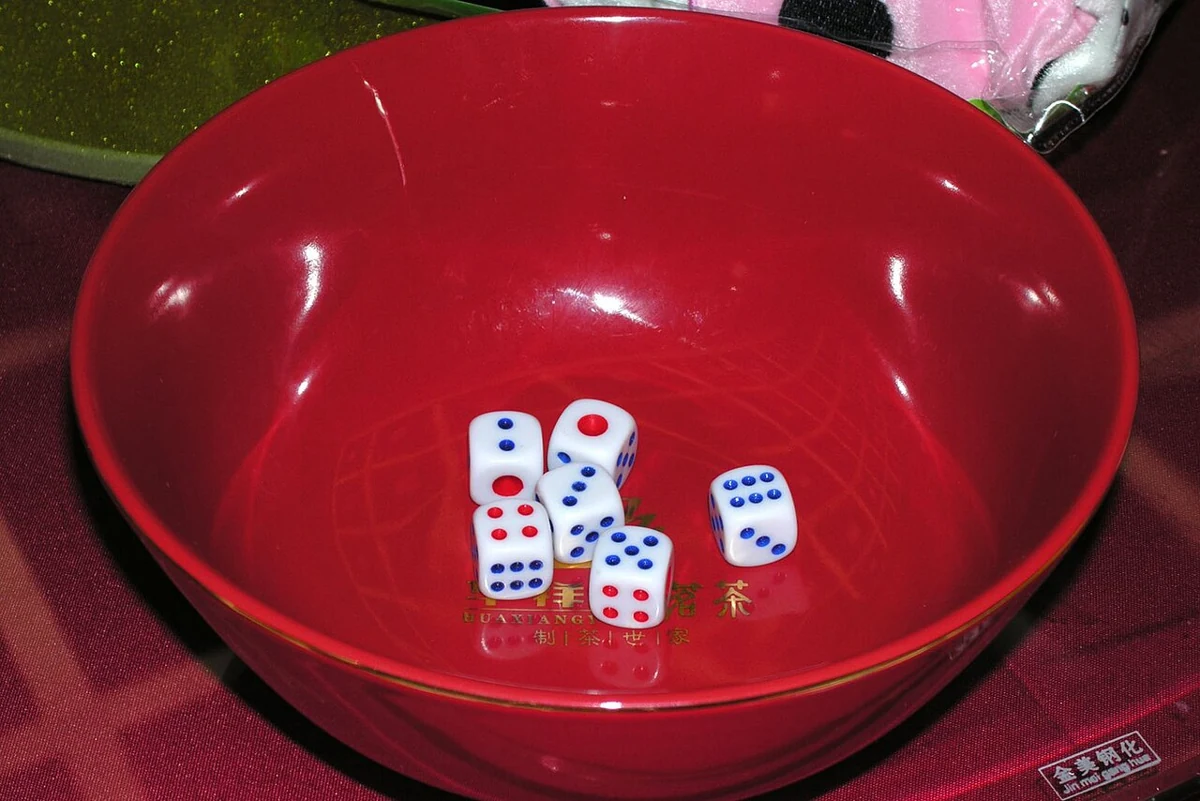
Bo bing needs six dice and a large bowl. Players throw the dice together, and combinations determine which prize they can take. A traditional set divides sixty-three cakes into quantities of one, two, four, eight, sixteen and thirty-two. The largest cake is scarce, while smaller prizes keep more people involved as the turns continue around the table.
Names such as xiucai, juren and zhuangyuan borrow the language of imperial examinations, but the game is not a diagram of the examination system. Kinmen accounts note variations in rank names and ordering. At a real table, participants need a shared rule sheet more than a supposedly universal version; the pleasure depends on everyone recognising the same result when the dice stop.
A published local rule makes the shared reading concrete. Jinning's 2026 explanation calls one red four yixiu and two red fours erju, while four matching dice that are not fours form sijin. These are examples of how a table classifies a throw, not a complete rulebook for every community. The same announcement uses its own higher-rank terminology, so participants should hear the host's full rules before the first throw rather than argue from a different table's memory.
A story carried between islands
A well-known origin story associates the game with Hong Xu, a Kinmen-born officer serving Zheng Chenggong, who is said to have used it to comfort homesick soldiers. It is a tradition about origins, not a securely dated invention record. Its enduring force lies in what it connects: military separation, longing for home and the decision to spend a festival together.
The practice travelled through Kinmen, Xiamen and other Minnan communities, acquiring local versions rather than remaining unchanged. Taiwan Historica discusses an eighteenth-century poem whose call for four red faces evokes the noise of a gaming table. The written trace gives the custom historical depth without requiring every modern rule or origin story to be projected back into that earlier scene.
The game leaves the household table
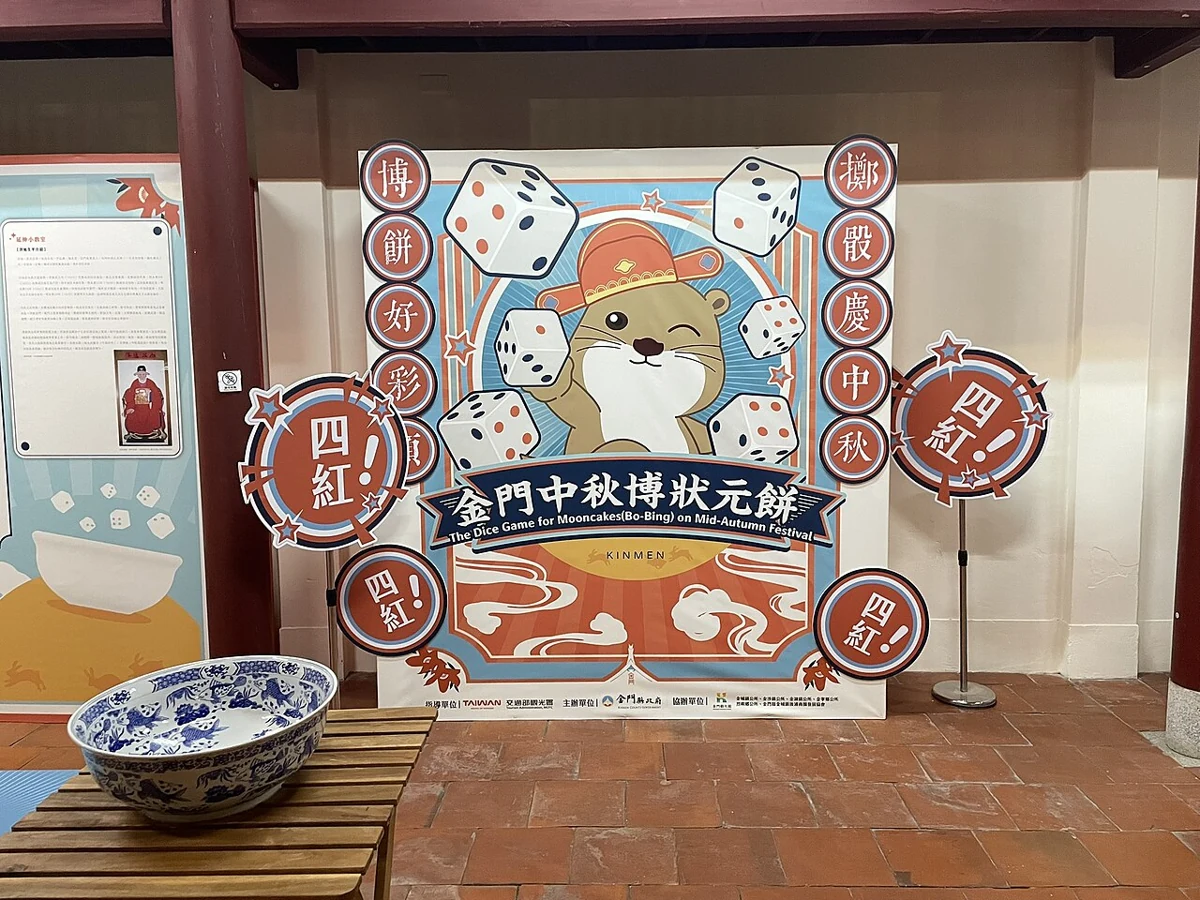
Recent Kinmen programmes bring the game into visitor experiences, township contests and shopping streets. In 2026, the former Military Headquarters in Jincheng hosted a seasonal story display, while Jinsha Theatre offered booked group tables. The settings serve different purposes: learning the background, trying a throw and joining a full shared game are distinct experiences.
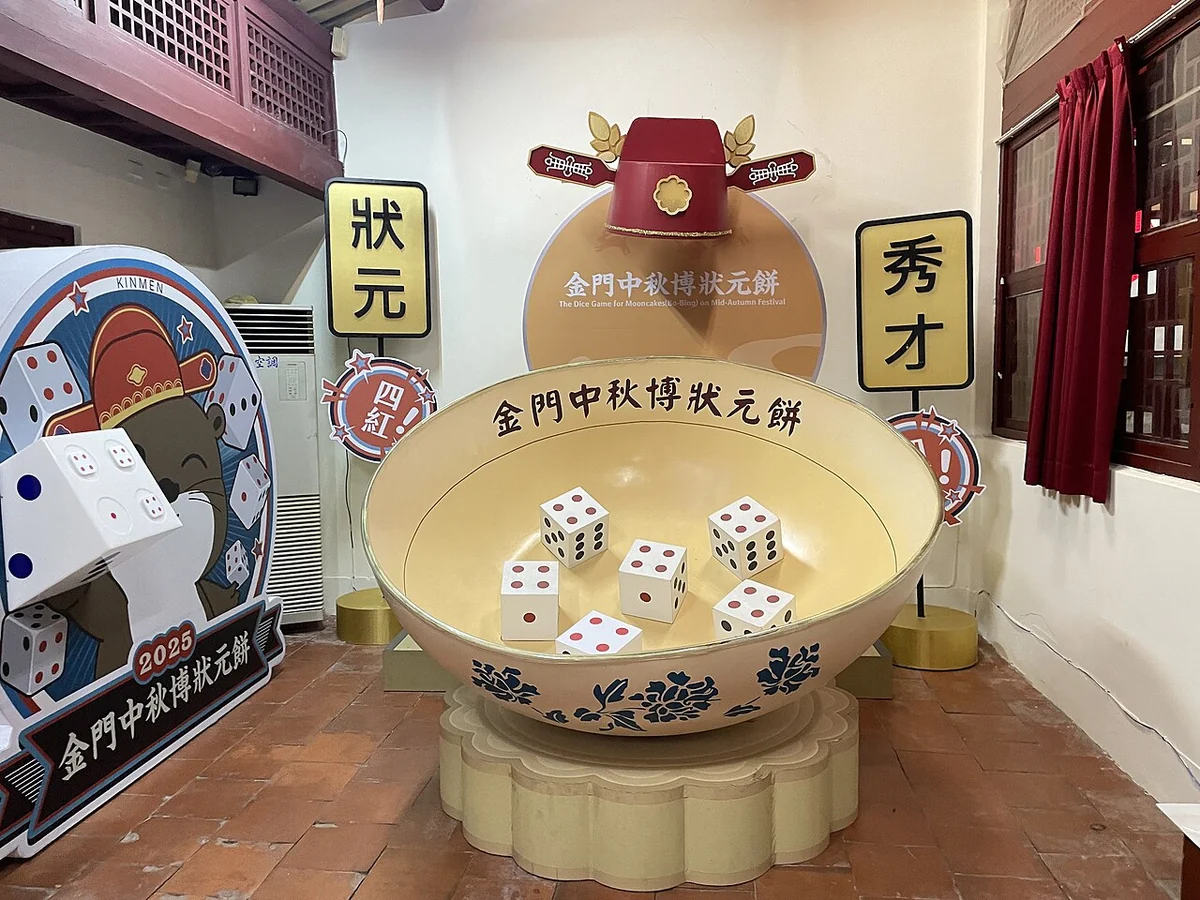
Prizes now may be local products rather than a complete set of cakes, yet the social mechanism remains recognisable. The bowl gathers attention, the turn gives each person a place, and a lucky combination changes the conversation. Following a game from explanation to the last throw makes the custom more understandable than taking a photograph beside a giant decorative die.
Access also depends on the kind of gathering. Jinning's September 2026 event limited its main registered contest to eligible local residents while separately providing a visitor quick-experience area. Thus a public festival title did not make every seat open to travellers. The edition is over, but the distinction remains useful: ask whether a future booking is an introduction, a resident competition or a full hosted table, and confirm its own entry arrangements.
Look closer
At an arranged group-table session, watch how participants settle tied results and distribute small prizes; these rules shape the pace of play.
Visiting information
- Place
- Former Kinmen Military Headquarters, 53 Wujiang Street, Jincheng Township, Kinmen.
- Visit
- The public heritage building provides a Jincheng starting point. Bo-bing displays and tables are seasonal: the 2026 programme ran in September, and a future session requires the next programme’s arrangements.
- Transport
- Take an island bus to Jincheng Bus Station, then walk through the town centre to Wujiang Street.
- Return
- Return to Jincheng Bus Station for your accommodation or airport connection. If attending an evening session, arrange the last bus or a booked taxi beforehand.