
Annual event
Keelung Ghost Festival: a paper house travels from workshop to sea
Bamboo, wiring and rotating clan associations turn the water lantern into an annual civic undertaking.
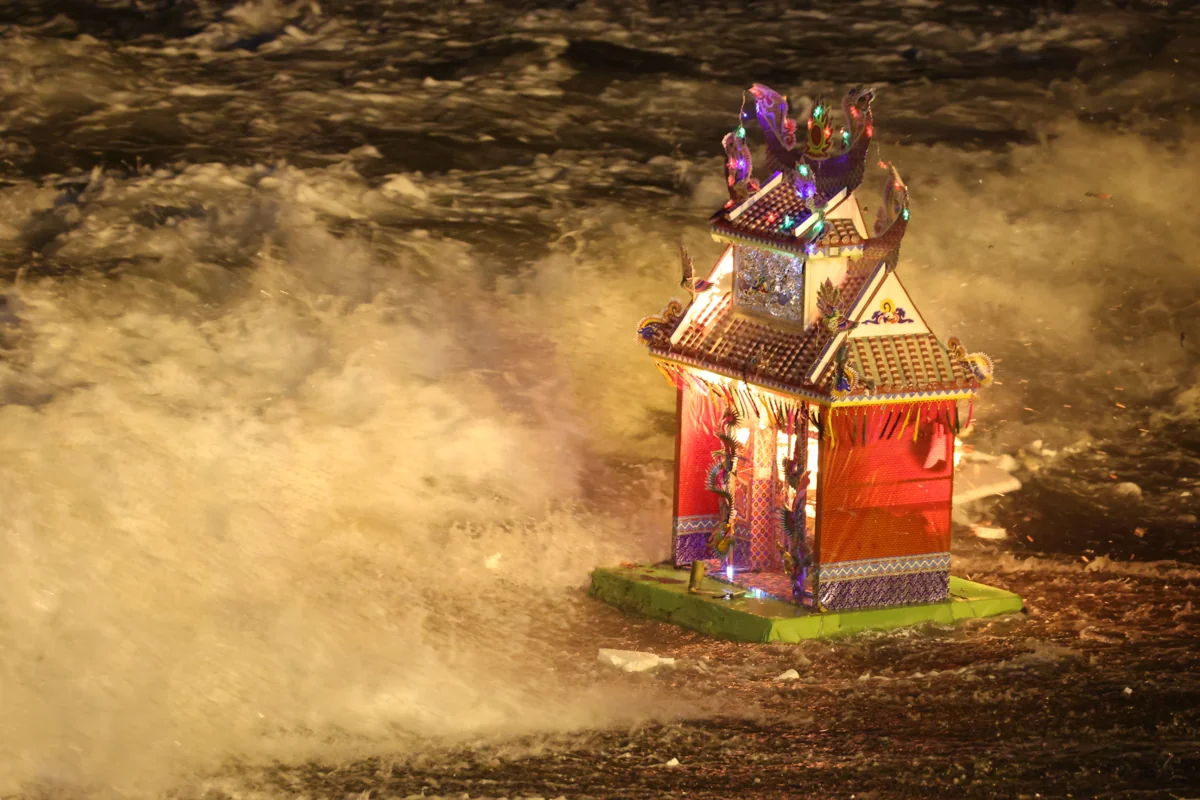
Water lanterns are released on lunar 7/14, offerings follow on 7/15, and the shrine gate closes on 8/1.
The Liu–Tang–Du clan association hosted in 2026, with water lanterns on 26 August and offerings on 27 August. The 2026 edition has ended.
Fifteen years later, the responsibility returns
Keelung’s festival has continued since 1855, with rotating responsibilities connecting local clan associations. In 2026 the Liu–Tang–Du association hosted, returning to the role it held in 2011. Organising is therefore not simply a matter of recruiting a fresh anonymous team each year: responsibilities pass among named groups over periods long enough to span stages of their members’ lives.
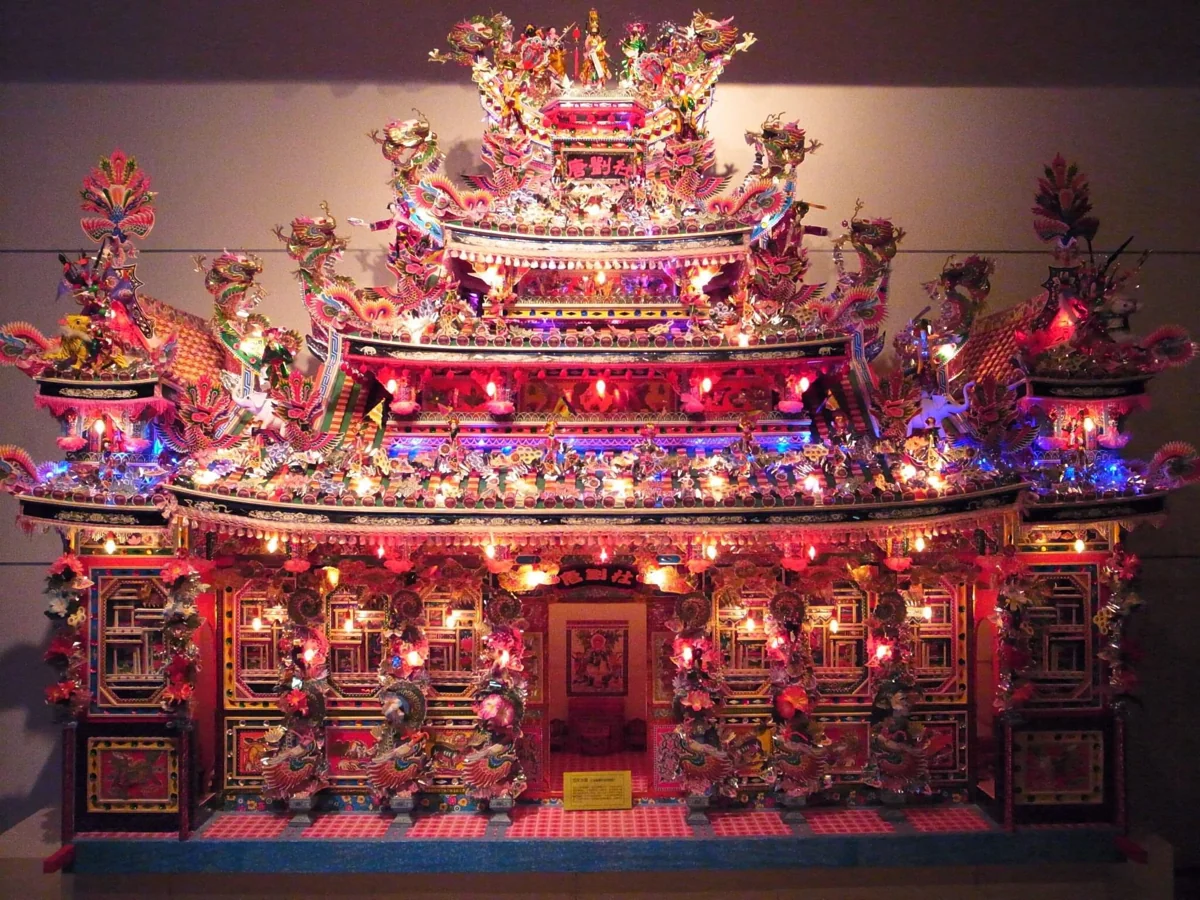
A large water lantern made for the 2011 turn survives in a production record. Maker Du Zhenhao described roughly two weeks of work, beginning with the frame before lighting and details. Viewers see tiers of roofs and an illuminated façade, but the workshop begins with structural questions: the paper house must stand and accommodate wiring as well as decoration.
Modern life enters a paper house
Green bamboo from Zhushan bends into the curves of a water lantern’s roof. In the workshop in 2016, dimensions followed the auspicious markings of a carpenter’s ruler as well as practical requirements. Buoyancy, weight and the paper’s ability to withstand rain enter the making alongside symbolic good fortune, rather than after the appearance is complete.
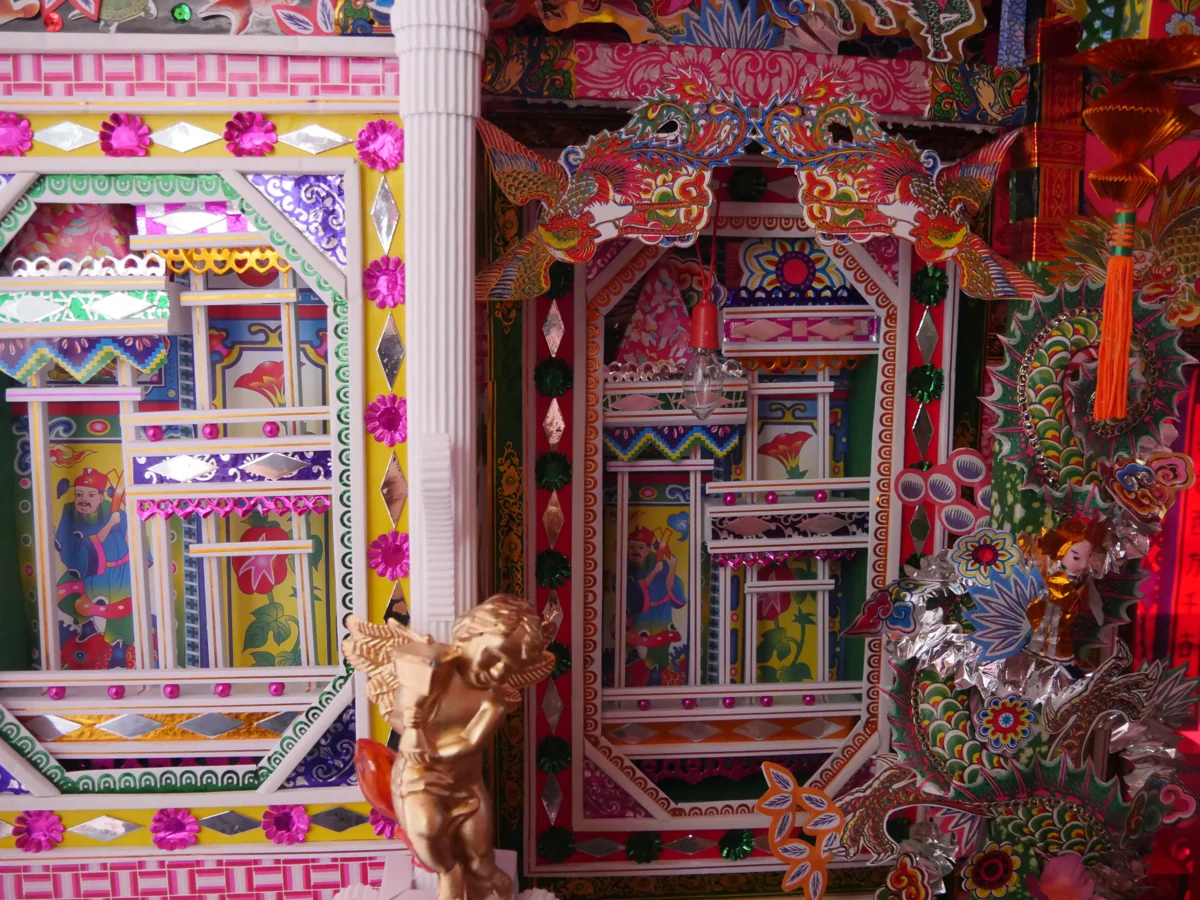
Inside, paper versions of rice cookers and refrigerators bring contemporary household life into a space intended for invited spirits. Windows, columns and furniture turn a house into a portable model. The contrast between an elaborate front and a plainer rear also reveals how limited working time is directed toward the surfaces an audience first encounters.
A register, a key and a handover
The closing ceremony gives the rotating system a visible form. At Laodagong Temple in 2025, representatives followed a Taoist officiant through purification and offerings, then took a register and key from a brocade box. The time was recorded before the niche doors were closed. The city’s account presents this as marking the separation of the human and spirit realms at the end of the ritual month.
The next step took place at Qing’an Temple. The Wu clan association passed the hand-held incense burner to the Liu–Tang–Du association, named as the following year’s host. This links the article’s 2026 organisers to a recorded act in 2025. An annual responsibility does not disappear when the streets empty: it is formally concluded by one association and accepted by another through an object both can hold.
The next year left another record of that responsibility. In its retrospective published on 14 September 2026, Keelung City Government records the completion of the 11 September closing and censer handover. At the ceremony, a historical volume bearing the signatures of successive clan-association chairpersons was displayed; it had been kept since 1983. The signatures give the annual turn a named human scale: particular people had accepted the work before passing it on.
A signature volume and a censer retain different kinds of evidence. One holds a sequence of names across years; the other takes part in the act of passing responsibility from one group to the next. They should not automatically be treated as the same object as the door-closing register. Read together, these records show how a festival can end for its visitors while its organisation continues into another year.
The sea takes the final stage
On lunar 7/14, water lanterns first parade through the city and then travel to Wanghaixiang. The 2026 release at 23:00 on 26 August passed the paper houses from vehicles and human hands to the water. Their burning light carries an invitation to spirits lost at sea to attend the following day’s offerings, linking two distinct stages of the ritual.
At the 2010 release, preparation continued on the shore: paper offerings were loaded into the lanterns and teams coordinated their carrying. Work did not end as soon as spectators departed. The brightest moment is brief for a visitor; those involved still have equipment, people and the shoreline to attend to afterward.
Look closer
Look at the frame, windows and miniature furnishings to distinguish the different kinds of work within one lantern.
Distinguish the city parade, coastal release and next-day offerings, and choose a stage you can attend in full.
Visiting information
- Dates
- The water-lantern release and communal offerings fall on the fourteenth and fifteenth days of the seventh lunar month. In 2026 they were on 26–27 August; the closing and censer handover were completed on 11 September. That edition has ended. Use the next edition’s announcement for dates, venues and transport.
- Venues
- City ceremonies connect with the main altar in Zhongzheng Park. Lantern launching takes place at the Wanghaixiang coast in Zhongzheng District, a separate venue from the city parade.
- Stay
- Allow half a day for the city and its evening parade. Coastal launching requires additional transfer and late-night waiting time. Public roadside viewing is unticketed.
- Arrival and return
- Walk into the city programme from Keelung TRA Station; reach Wanghaixiang separately by bus or arranged vehicle. For the late-night release, organise a return pickup or stay in Keelung; daytime Badouzi trains are not an after-event shuttle.