
Cultural place
Before rebuilding, someone had to save the station
Jiji’s timber station is a story of decisions after disaster. Its roof, platform and return to railway service connect preservation with the daily act of travelling.
The post-1999 reconstruction involved survey, emergency work, fundraising and cooperation.
The Jiji Line resumed full operation on 25 June 2026.
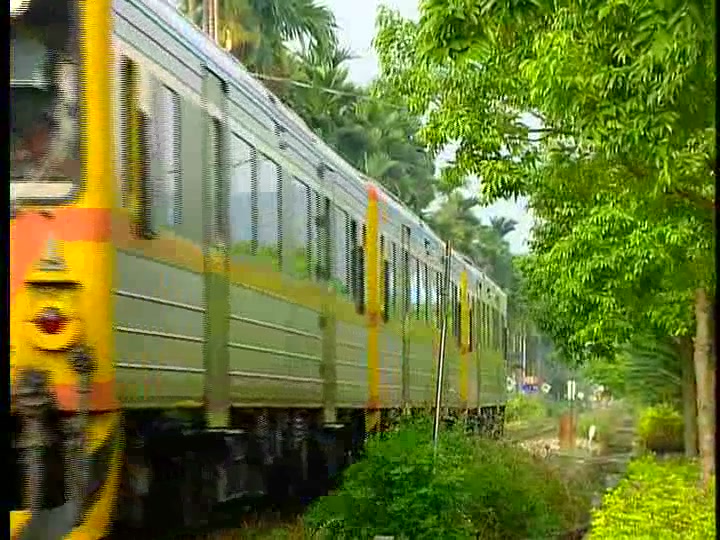
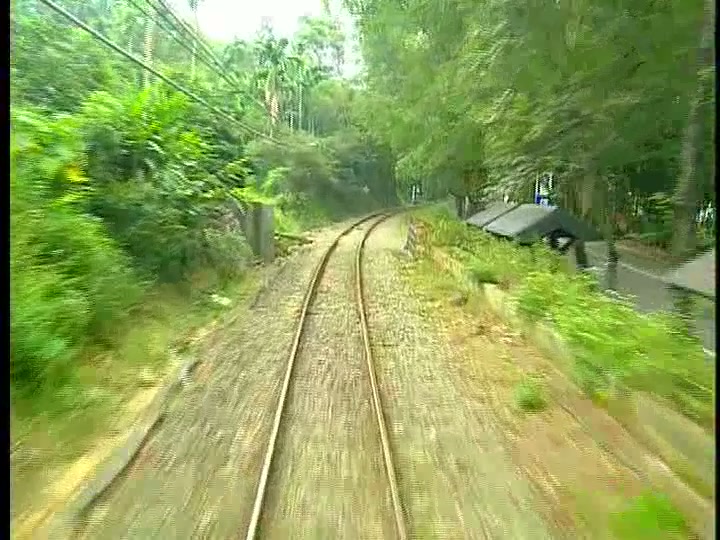
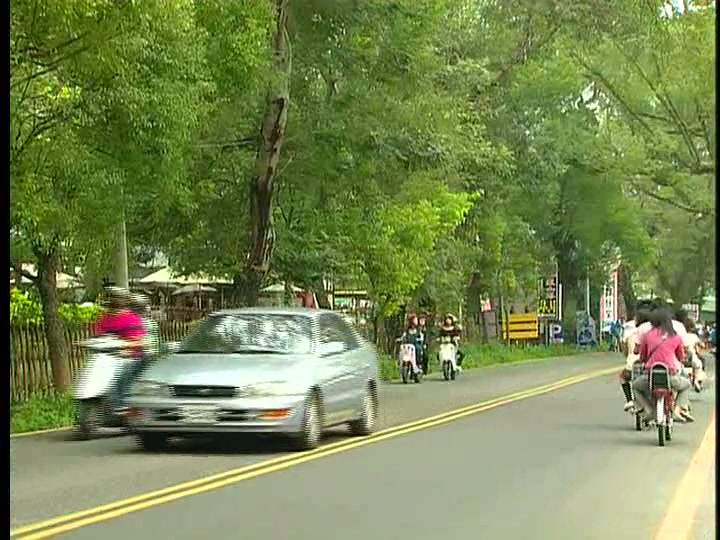
The film uses an official tourism documentary produced in December 2014. These are archive views, not footage of the 2026 reopening. Present railway service is checked separately against current official information.
The first task was to keep it standing
After the 1999 earthquake, Jiji Station faced demolition. Broken wooden posts and a leaning structure made its future uncertain. The account of reconstruction preserved by Hsieh Chih-cheng records a different course: the Le Shan Foundation funded a survey by Su Ming-hsiu of National Yunlin University of Science and Technology, while local coordination helped secure railway approval for emergency work.
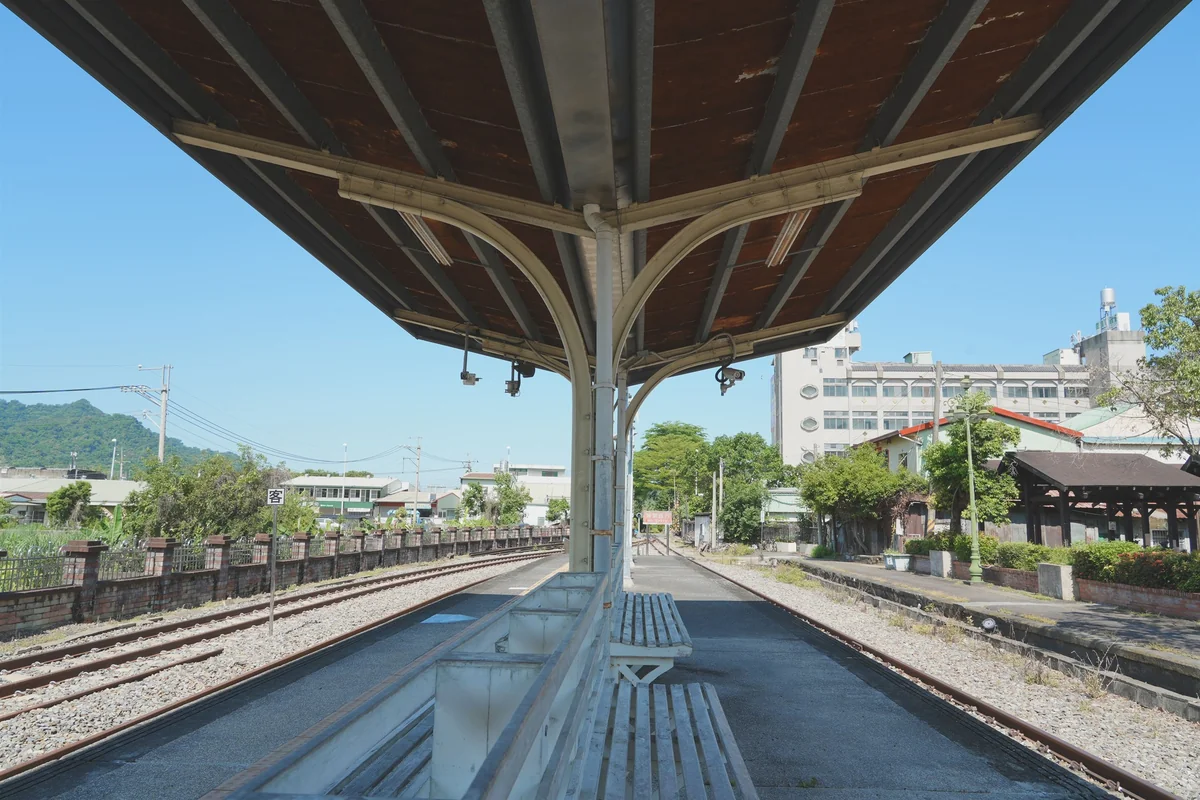
A station presents an unusually public loss. Residents recognise its entrance and roofline; passengers use it to locate themselves in the town. When that familiar structure leans after an earthquake, the problem is both material and social. Recording its dimensions and condition provides something that affection alone cannot: a basis on which engineers and supporters can decide what to do next.
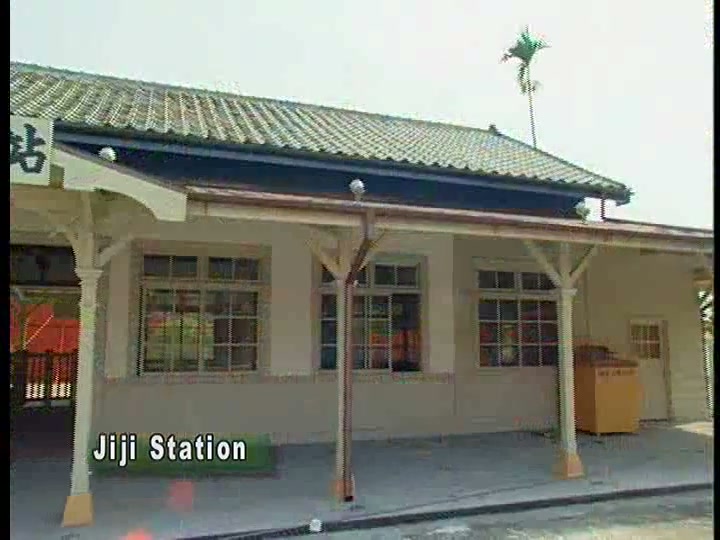
Rebuilding needed more than nostalgia
Donations and a reconstruction committee followed. Keeping the station required assessment, money and cooperation, not simply affection for its appearance. That history changes how the timber building reads: its present form carries the work of people who chose to repair it after disaster.
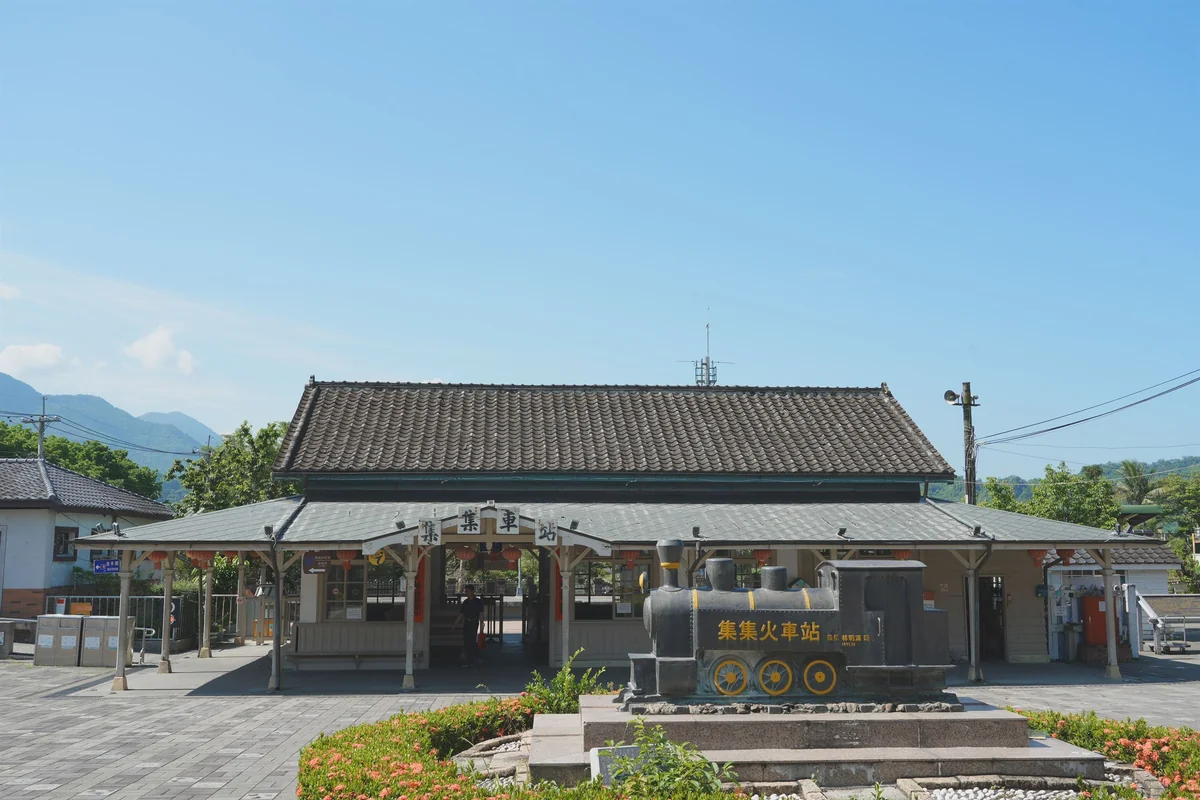
The rebuilt timber appearance carries that later work within an older architectural form. Look at the roof, posts and sheltered waiting space as parts of a station still organised around arrival and departure. An old-looking surface is not the end of the story; the rebuilding record explains why this particular form was worth returning to the town.
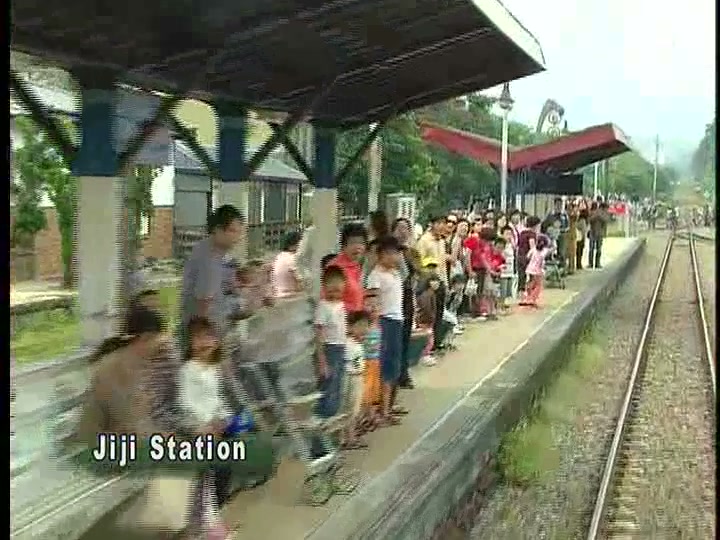
A station is also a timetable
Compare the station building with the platform before walking into town. The sheltered edge, station name and tracks arrange a sequence from street to waiting to departure. Read reconstruction photographs beside that working sequence: the meaning of keeping a station includes restoring a place where journeys can begin again.
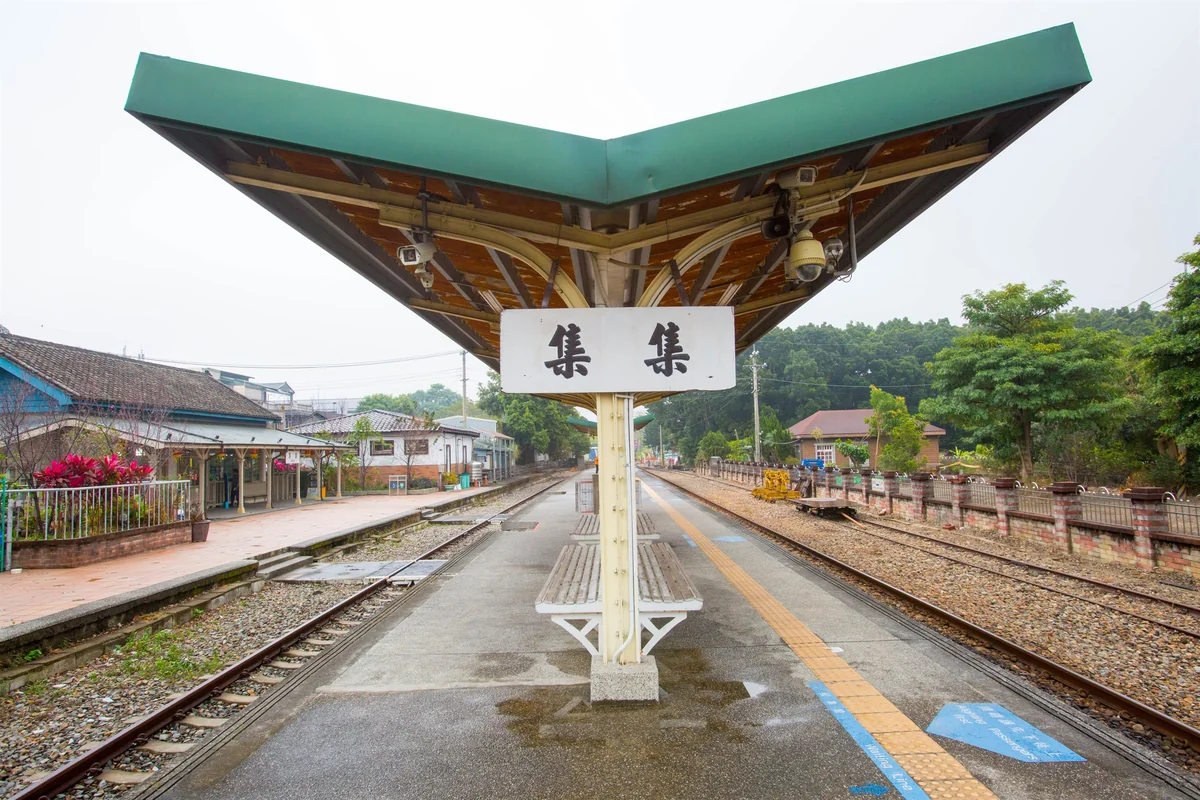
The Jiji Line fully resumed operation on 25 June 2026. A visitor can now approach the town by changing at Ershui and return by rail along the same branch. This makes the platform part of the experience again: the interval before the next train shapes how long people spend in the streets, and the station remains a connection rather than only a photograph.
Before the excursion, an engineering railway
The branch was not first built to bring tourists into town. The National Museum of Taiwan History’s catalogue for a 1936 photograph at Waichecheng connects the railway to the Sun Moon Lake power project. The line ran east from Ershui along the Zhuoshui River for construction transport, was completed in 1921, and was acquired by the railway department in 1927 as the Jiji Line. An engineering route became part of ordinary travel, making station preservation more than the survival of a timber building. Transfers, platforms and streets show that changing role. Waichecheng is today’s Checheng, so the photograph does not depict Jiji’s station building. The 2026 reopening adds a later layer; individual departures still require current operating information.
From the station, two different outings
The station can be a base for two different cycling outings. The tourism authority’s Jiji guide links the station, Mingsin Academy and other town sights through the town circuit; it describes the Green Tunnel separately. Between Mingjian and Jiji, that camphor-lined road extends for about 4.5 kilometres, with the railway beside it. Choose the route and distance before leaving the station, rather than treating both outings as a short walk around the building. Roads remain shared with ordinary traffic, so the tree canopy is part of a lived transport corridor.
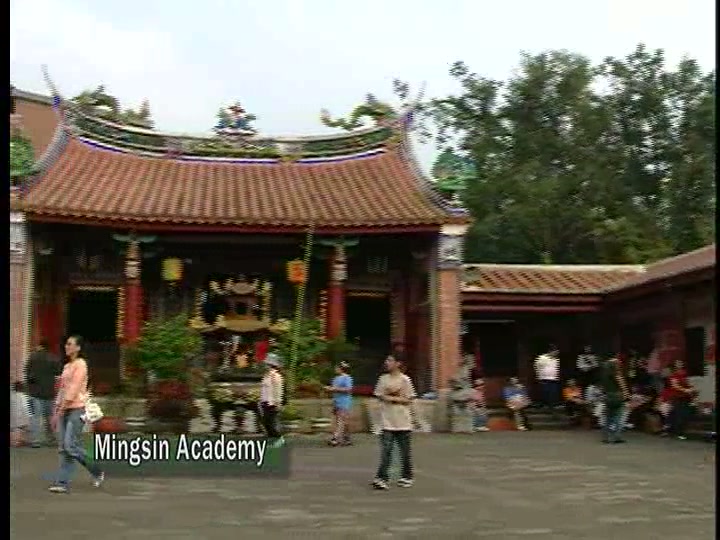
At Mingsin Academy, the view changes from a moving road to the geometry of a three-sided courtyard. The official account describes a central hall and red-brick walls, with Wenchang worship and inscriptions connecting the place to learning. Look across the whole courtyard before approaching the stone carvings and brick gateways. Keep to open visitor areas and leave space for worshippers. The station, road and academy offer distinct things to observe: a place that connects journeys, a corridor shared by road and rail, and an enclosed place where people stop.
Look closer
Compare the timber façade with dated earthquake and reconstruction photographs.
Look from the public station area towards the platform to see how the street meets a working railway.
Visiting information
- Address
- 75 Minsheng Road, Jiji Township, Nantou County
- Arrival and return
- Change at TRA Ershui for the Jiji Line and alight at Jiji. Full-line service resumed on 25 June 2026. Choose the return departure to Ershui before exploring the town; onward main-line trains require a separate connection.
- Visiting scope
- Allow 45–60 minutes for the station exterior and nearby streets, plus time for your train. The station remains in operation; use the ticketed passenger route when entering the platform.
- Choose the outing
- The town circuit and the 4.5-kilometre Green Tunnel are distinct options. Choose one scope and confirm the rental return point; ordinary road traffic shares these routes.
- Mingsin Academy
- 4 Dongchang Lane, Jiji Township. The official attraction page lists 06:00–21:00; on-site access arrangements take precedence.
- Current trains
- As checked on 2 November 2026, TRA’s live operating-status page listed the Jiji Line as operating normally. The Sun Moon Lake authority’s transport page records full-line service resuming on 25 June 2026. Check the actual return train before travelling.