
Cultural place
Taiwan Indigenous Peoples Cultural Park: a house is more than its roof
Community names, building materials and the return of ancestral images give the reconstructed houses distinct histories.
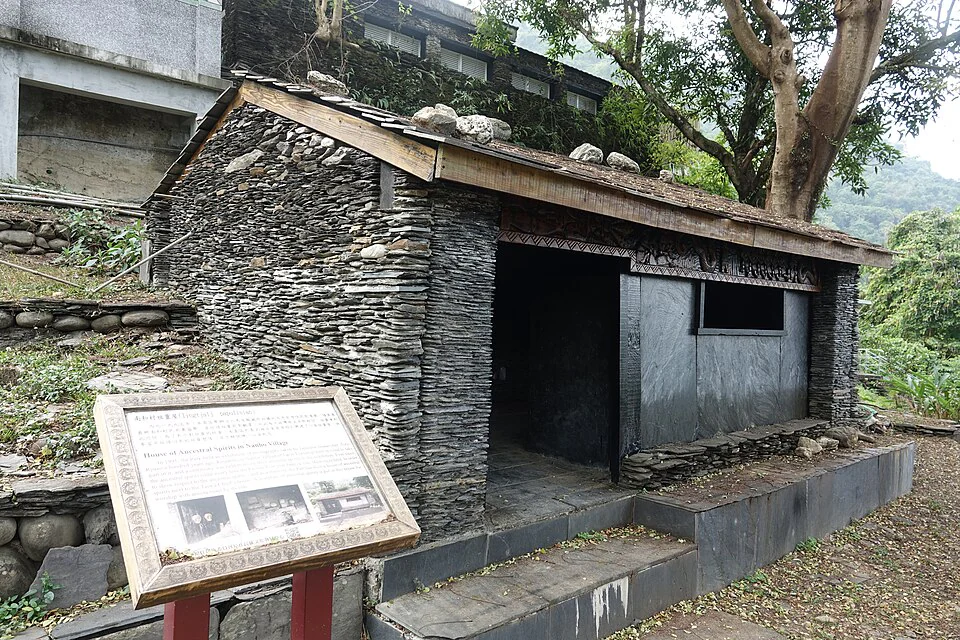
Reconstructed houses make regional materials and spatial choices visible.
A house, its community of origin and a staged performance provide different kinds of cultural evidence.
Photographs return to a community
In 1995, the Taiwan Indigenous Peoples Cultural Park exhibited historical photographs by Japanese researcher Torii Ryūzō. Its account records that people from Nanhe were invited to attend and ritually welcomed their ancestors to see the images. The exhibition became an encounter shaped by the photographed community’s descendants.
A photograph can travel far from the people it depicts. When descendants encounter it again, the image enters a new set of relationships. The Nanhe account makes that encounter concrete: an exhibition becomes part of a community’s act of remembrance, and the park gains a responsibility that cannot be described by architecture alone.
Rebuilding requires decisions
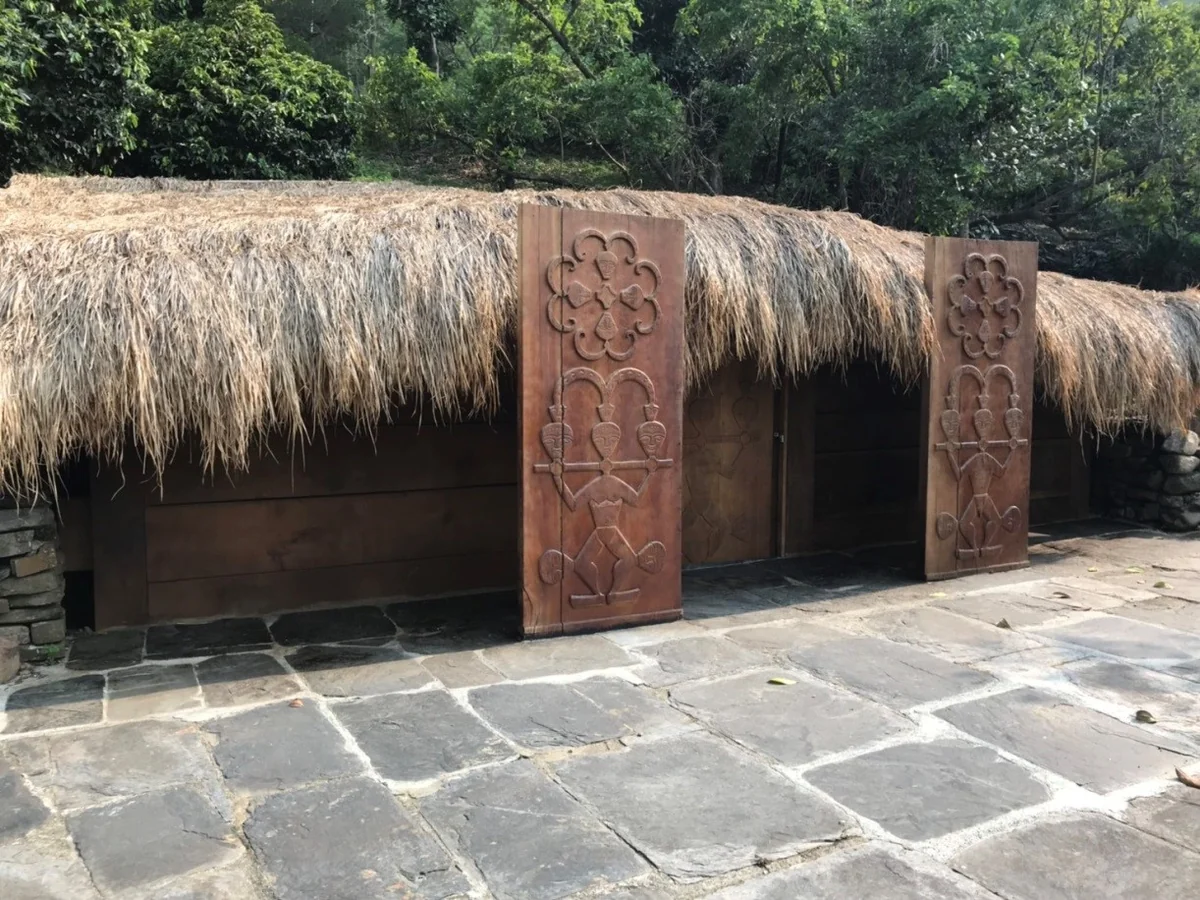
The park subsequently built a Nanhe ancestral house beside its reconstruction of a Taiwu chiefly residence. The same official description notes that the reconstructed residence uses carved wooden columns where the original had carved stone. Even a carefully presented building involves decisions about materials and representation.
Compare the displayed Paiwan house with the Amis houses elsewhere in the park. Notice the entrance, the roof material and how each label identifies a community. Even within one people, houses differ by location and use. The differences reward close reading; they explain more than treating every structure as an interchangeable emblem.
Read one house closely
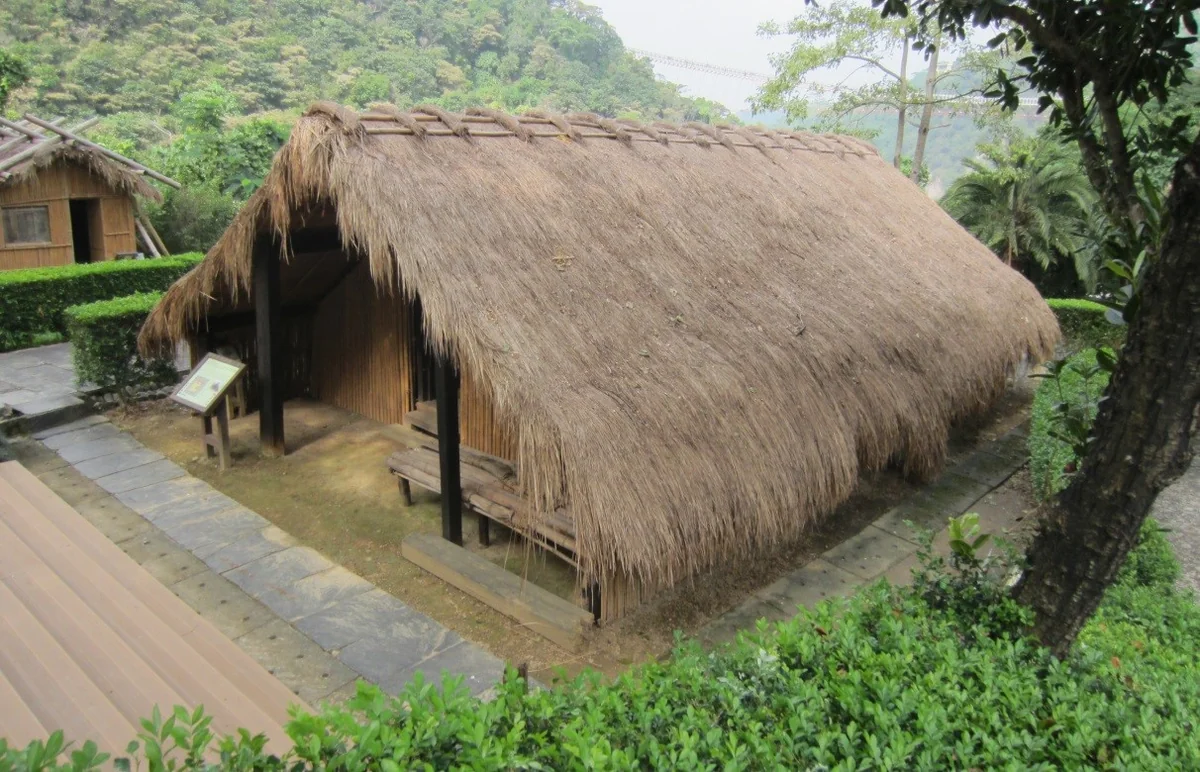
In Majia, follow the individual community names on the building labels. The Nanhe story opens a concrete connection with Japanese photographic records, while showing how local people gave those records new meaning. Exhibition buildings provide an introduction; living communities retain their own practices and authority to explain them.
A useful visit follows a few houses with attention rather than turning the whole hillside into a checklist. Look for where people cooked, stored food or gathered, then return to the building label. Everyday arrangements reveal how households worked; the displayed community names keep those arrangements connected to particular people and places.
Different plans in named Saisiyat houses
The park’s Saisiyat houses make variation within one people more concrete. The Shibae example uses bamboo walls and roofing around a rectangular plan, with sleeping rooms at corners and a bamboo partition separating kitchen and central living space. Some beds project outward, making the outline irregular. These arrangements address where a household sleeps, cooks and gathers. The Walo example instead extends lengthwise into front and rear rooms. Alongside Daae and other named examples, it provides a comparison rather than a standard plan for every Saisiyat home. Keep community names attached while reading partitions, entrances and hearths. Some explanations of later additions and Han contact remain interpretations; reconstructed displays do not mean contemporary households all live in the same way.
Look closer
Read each house’s ethnic group and place of origin; compare the roof, entrance and division of interior space.
For a performance, read its programme and performers’ introduction, then connect the sequence with the exhibition you have seen.
Visiting information
- Address
- No. 104, Fengjing, Beiye Village, Majia Township, Pingtung County
- Opening
- Regular opening is Tuesday–Sunday 08:30–17:00, with Monday closure except national holidays. The announced 2026 adjustment opens Monday 26 October and closes Tuesday 27 October; check the park calendar for other changes. Allow a half day for selected houses and performances.
- Transport and return
- Travel via Shueimen Bus Station. On weekdays reserve the park shuttle in advance at 08-7991219 ext. 238; on holidays route 603B serves the park. Reserve or check the return to Shueimen before choosing your final visit stop.
- Admission planning
- Use the park’s visitor information and performance programme when choosing a ticket and visit time. Reserve group interpretation and the weekday shuttle before travelling.