
Annual event
Huwei’s Ghost Festival: offerings become a street of craft
Ice, produce, food sculpture and theatre bring the work of preparing offerings into the town’s streets.
Huwei’s Ghost Festival: A Market Comes Together
90 seconds. English captions are part of the film. Optional Traditional Chinese subtitles are available in the player.
Selected from creator 艾迪爾影視’s 2026-labelled record of the Central-district Pudu association opening in Huwei, uploaded on 20 August 2026; the filming day is not independently confirmed. This is one market ceremony, not all eight districts, the full festival or a current event. The final street view closes the edit, not the festival. Instrumental music replaces location sound. No programme title, full-screen card or synthetic scene is included.
Read the complete five-chapter article → · 繁體中文
Complete English captions and Traditional Chinese translation
00:00:00,000 --> 00:00:03,000
Huwei’s Ghost Festival
A Market Comes Together
虎尾中元
市場裡的一場相聚
00:00:03,000 --> 00:00:09,000
One opening rite,
in Huwei’s Central district.
一場開香科儀,
位於虎尾中區的市場裡。
00:00:09,000 --> 00:00:14,000
Daily stalls stand
beside a different kind of table.
日常攤位旁,
擺著另一種桌面。
00:00:14,000 --> 00:00:22,500
Food, flowers and incense
bring the ritual into view.
食物、鮮花與香,
讓儀式的樣貌慢慢清楚。
00:00:22,500 --> 00:00:29,500
A ritual specialist
guides the gathering.
法師主持科儀,
眾人相聚在供桌前。
00:00:29,500 --> 00:00:32,500
Fruit and prepared dishes
become offerings here.
水果與準備好的菜餚,
在這裡成為供品。
00:00:32,500 --> 00:00:37,500
Candles rise
above small incense burners.
燭臺向上,
一旁排列著小香爐。
00:00:37,500 --> 00:00:39,500
Ritual objects
above the altar.
供桌上方,
儀式使用的物件。
00:00:39,500 --> 00:00:45,500
From the altar,
the gathering comes into view.
從供桌這一端,
看見另一端聚在一起的人。
00:00:45,500 --> 00:00:53,500
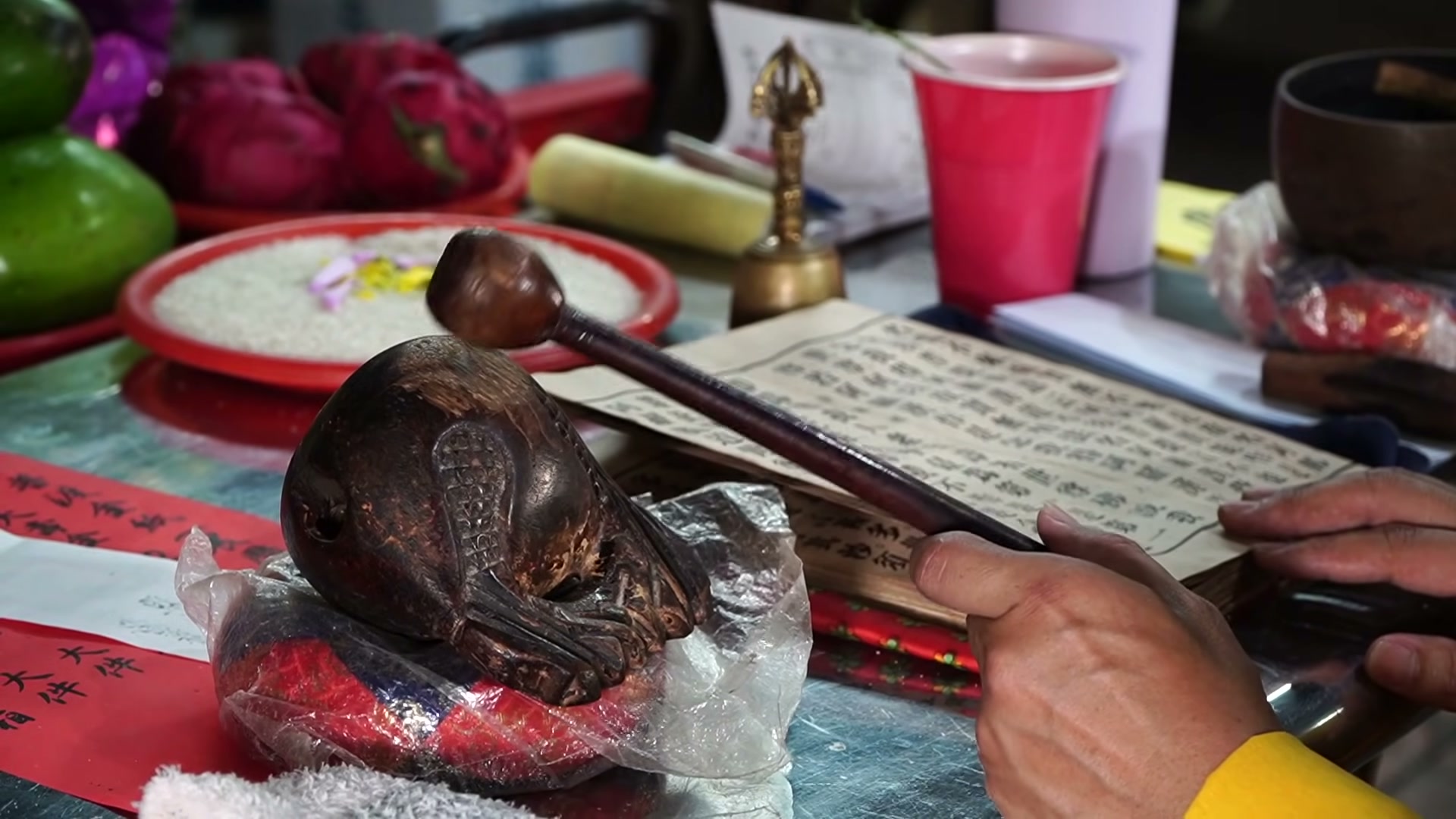
Hands and a wooden fish
accompany the written text.
雙手與木魚,
陪著經本上的文字。
00:00:53,500 --> 00:00:58,500
Familiar dishes
become part of the offering.
熟悉的菜餚,
也在供品之中。
00:00:58,500 --> 00:01:01,000
Smoke rises
above the red altar.
煙,
從紅色供桌前升起。
00:01:01,000 --> 00:01:05,000
A small movement
of the hands.
手上的一個小動作,
接續著科儀。
00:01:05,000 --> 00:01:09,000
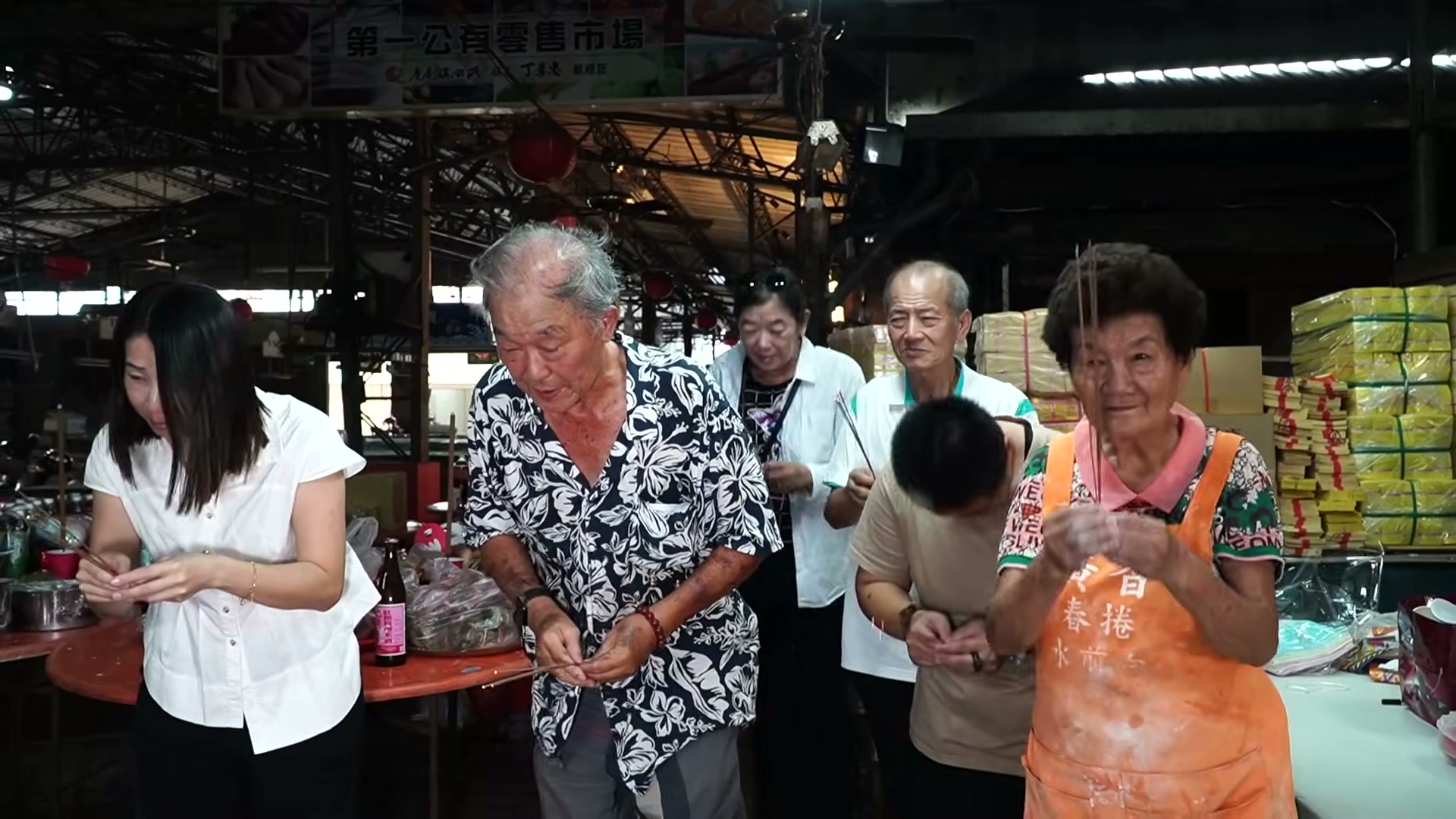
Neighbours gather,
incense held between their hands.
街坊聚在一起,
雙手持香。
00:01:09,000 --> 00:01:15,000
They bow together,
in a place of everyday work.
一起行禮,
就在平日工作的地方。
00:01:15,000 --> 00:01:20,000
Incense returns
to the burner.
把香,
送回香爐。
00:01:20,000 --> 00:01:25,000
One shared gesture,
among familiar faces.
熟悉的面孔之間,
有著共同的動作。
00:01:25,000 --> 00:01:27,500
Huwei, Yunlin
2026 record
雲林虎尾
2026年紀錄
00:01:27,500 --> 00:01:30,000
Taiwan, Layer by Layer
From story to place
島嶼年輪
從故事認識臺灣,再走進現場
The main offerings take place on lunar 7/15, with related activities around the seventh lunar month.
Eight offering districts participated in 2026, opening on 13 August with the principal offerings on 27 August. Both listed events have ended.
From household food to neighbourhood work
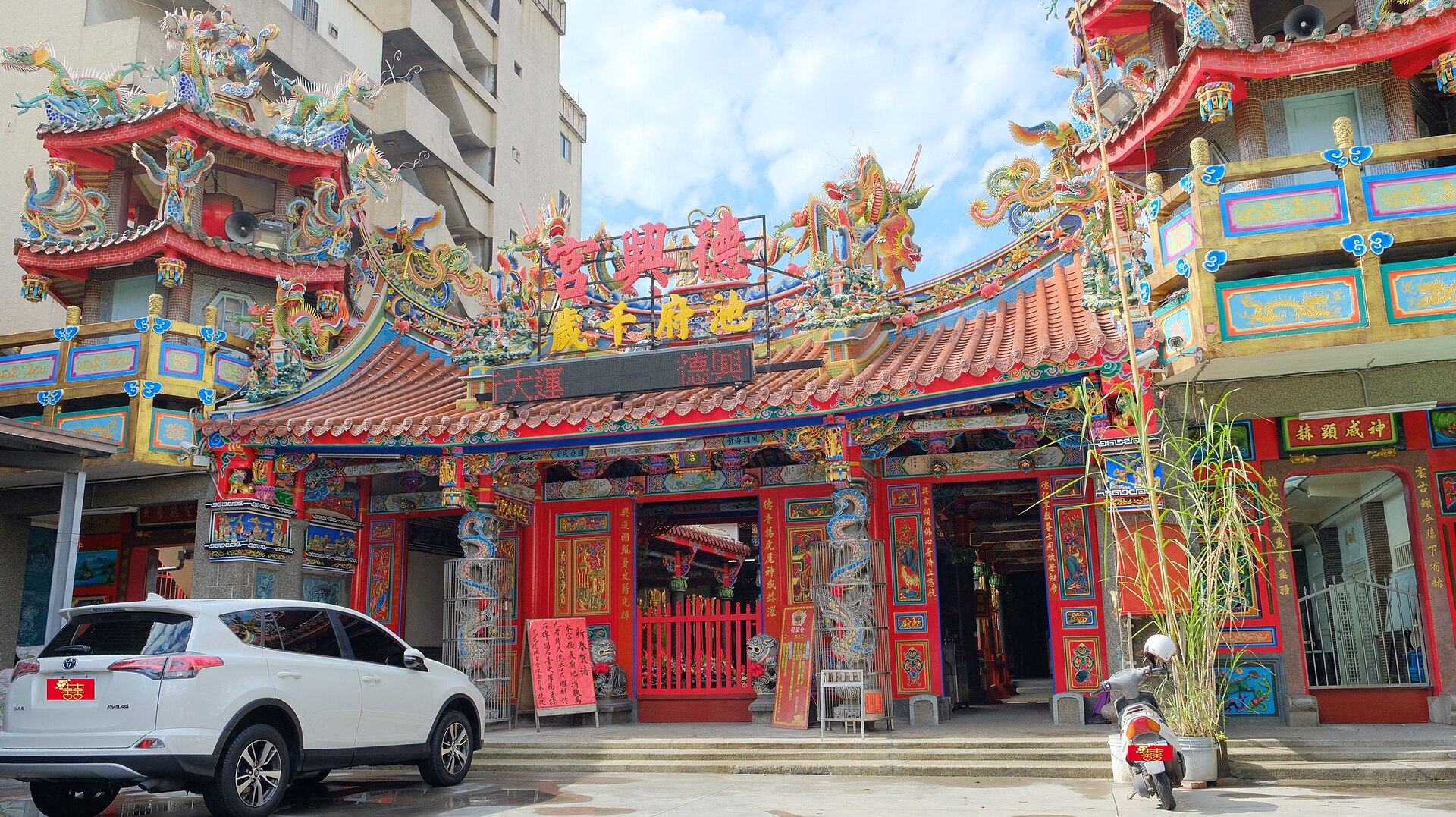
On Huwei’s Ghost Festival night, offering tables extend beyond homes and turn streets into shared ritual space. Residents, temples and district groups prepare food, construct altars and organise ceremonies. Joint promotion and rotating hosting developed from 1999; that date marks a change in organisation, not the beginning of local offerings.
By 2026, eight districts combined neighbourhood groups with Jinluo Hall, Dexing Temple, the Fude district and Guangyun Temple. Each organised its own offerings and setting while coordinating within the same month. Moving between streets reveals more than decorative competition: it shows how a town gathers dispersed labour and supplies into public space.
Food is not the only preparation. In a 2024 interview, East District organiser Wu Chieh-jung described books and exercise books, reading glasses for older guests, tea, bracelets, and games such as chess and mahjong. He was explaining provisions made for the ritual’s unseen guests. A table could therefore suggest studying, resting or passing an evening, extending hospitality beyond the act of feeding.
Taro under the knife, ice under lights
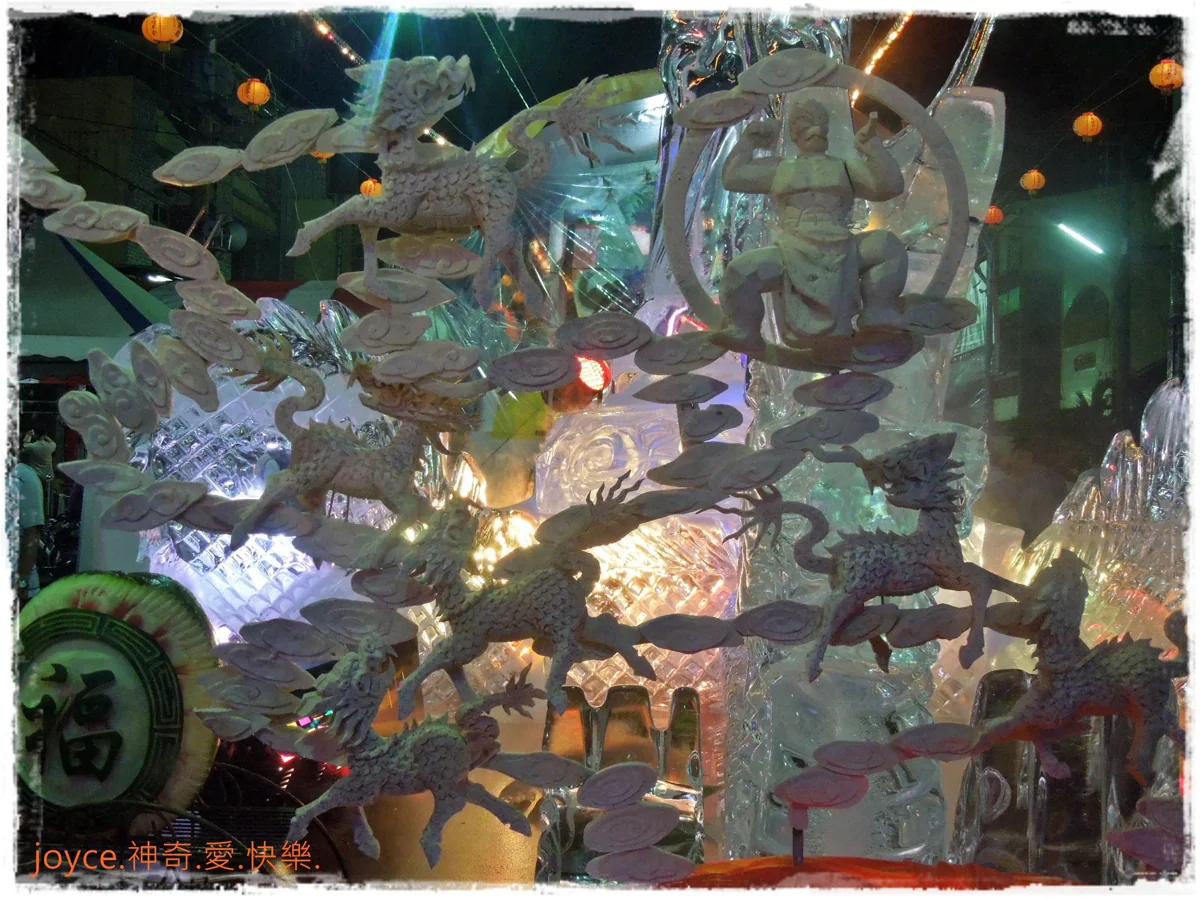
The ingredients are everyday materials, but their treatment goes beyond preparing a meal. Ice becomes scenery, fruit carries cut lettering, and meat and dough figures create layered displays. In 2025, locally branded peanuts were assembled into a small dragon, bringing farm products onto the offering table as both nourishment and a medium for expression.
A local mother’s 2014 account recorded a rainy-night walk past taro carved into a qilin, lettering on watermelons, an ice warship and a fishing boat assembled from fruit. Her child encountered a large ice sculpture at close range for the first time. The account shows how the adults’ ritual can become a child’s tangible experience of materials and craft.
This changes how the display can be read. A carved fruit asks how a familiar material was transformed; a pair of glasses asks whose need the preparers imagined. Both are deliberate choices, but they do different work in the offering. Wu’s list records one district’s preparations in 2024, not a compulsory inventory for every altar. Allowing each table its own intention keeps the visit from becoming only a comparison of quantity or cost.
The offering followed people into a new market town
Yunlin’s cultural record traces an earlier Dalunjiao observance to a temple-led offering under Chifu Qiansui. As unrest and floods disrupted the old market settlement and people moved, that observance spread into several neighbouring townships, retaining lunar July 27. This is a historical account of a wider local tradition, rather than the date of every present-day Huwei street offering.
The same record distinguishes Huwei’s later commercial-street organisations, including market-area associations holding offerings around lunar July 15; it records Fude’s separate observance on the sixteenth. The important change is who gathers the work: temple organisation, market traders and neighbourhood associations overlap without being identical. The joint promotion described from 1999 thus belongs to a longer history of people reorganising a shared responsibility.
A theatre beside the altar
In 2014, a Huang Junxiong glove-puppet production featuring Shi Yanwen and Cangjingren and a Ming Hwa Yuan performance accompanied the offerings. Altars and stages drew people to different parts of town, combining ritual, theatre and social meetings within one evening. Streets ordinarily used for trade and movement became places to watch and meet familiar people.
That gathering depends on less visible arrangements: rotating responsibilities, residents’ preparation, lighting and space for movement. In 2026 the eight districts opened together on 13 August before proceeding with preparations for the main offerings. Organising people first allows each area’s craft to emerge; that is how a table of food becomes a town-wide occasion.
Look closer
Notice joints, cut marks and lighting in produce and ice displays to understand how materials become forms.
Compare the placement of altars, stages and passageways to see how residents share a street.
Visiting information
- Dates
- Around the seventh lunar month, with principal offerings on lunar 7/15. In 2026 the opening was 13 August and main offerings 27 August. The listed 2026 opening and principal offerings have ended.
- Venues
- Central Huwei streets including Zhongzheng Road and the eight offering districts; the series opens at Huwei Township Office square.
- Stay and admission
- Public street viewing is free. Allow roughly two to three hours from late afternoon into evening and connect neighbouring districts on foot.
- Arrival and return
- Transfer from Yunlin HSR Station into Huwei, or approach via Douliu. During evening road closures, arrange pickup outside the controlled streets and return to that same point afterward.
Look closer at the places in the film
Begin at the market threshold
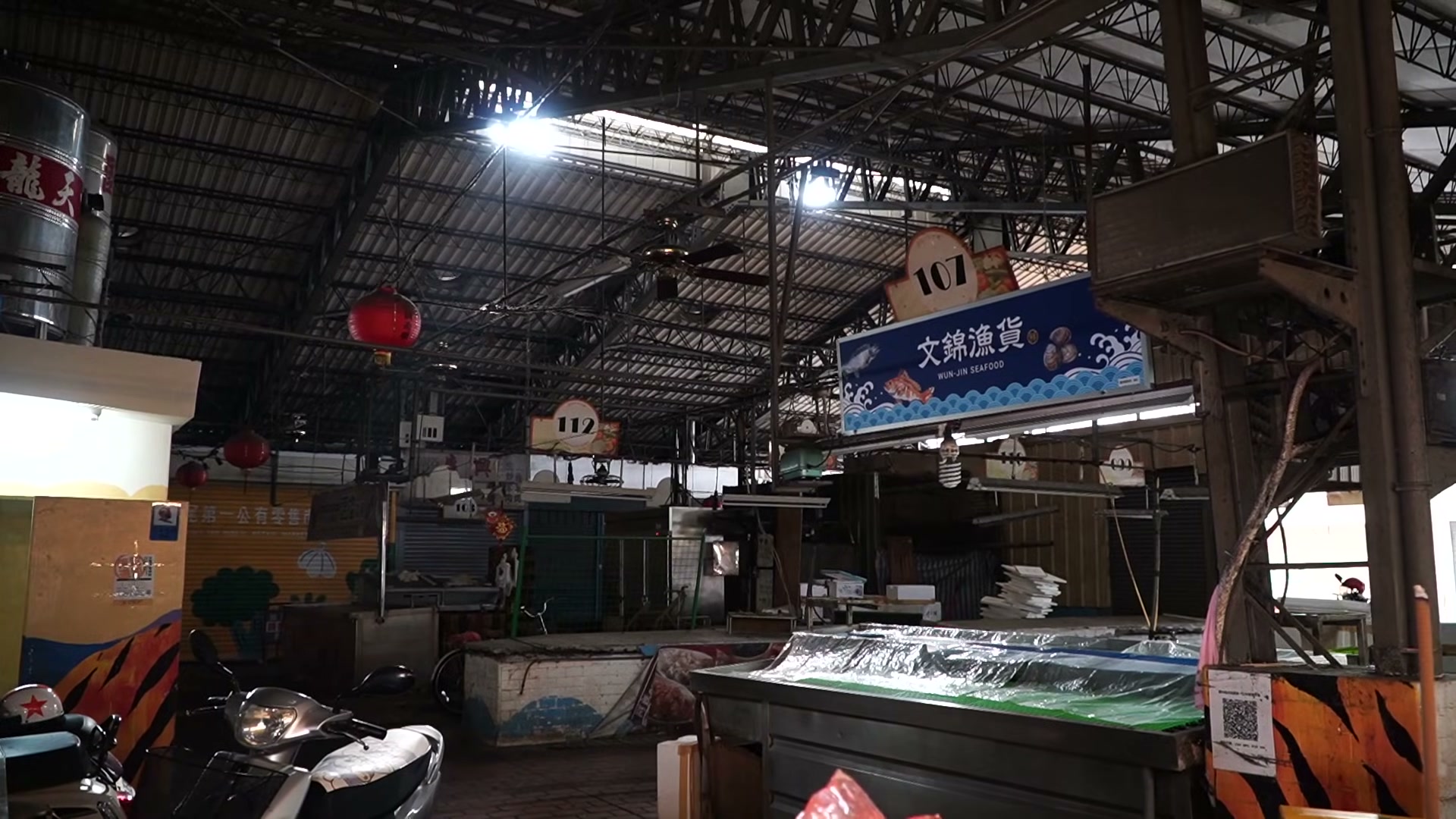
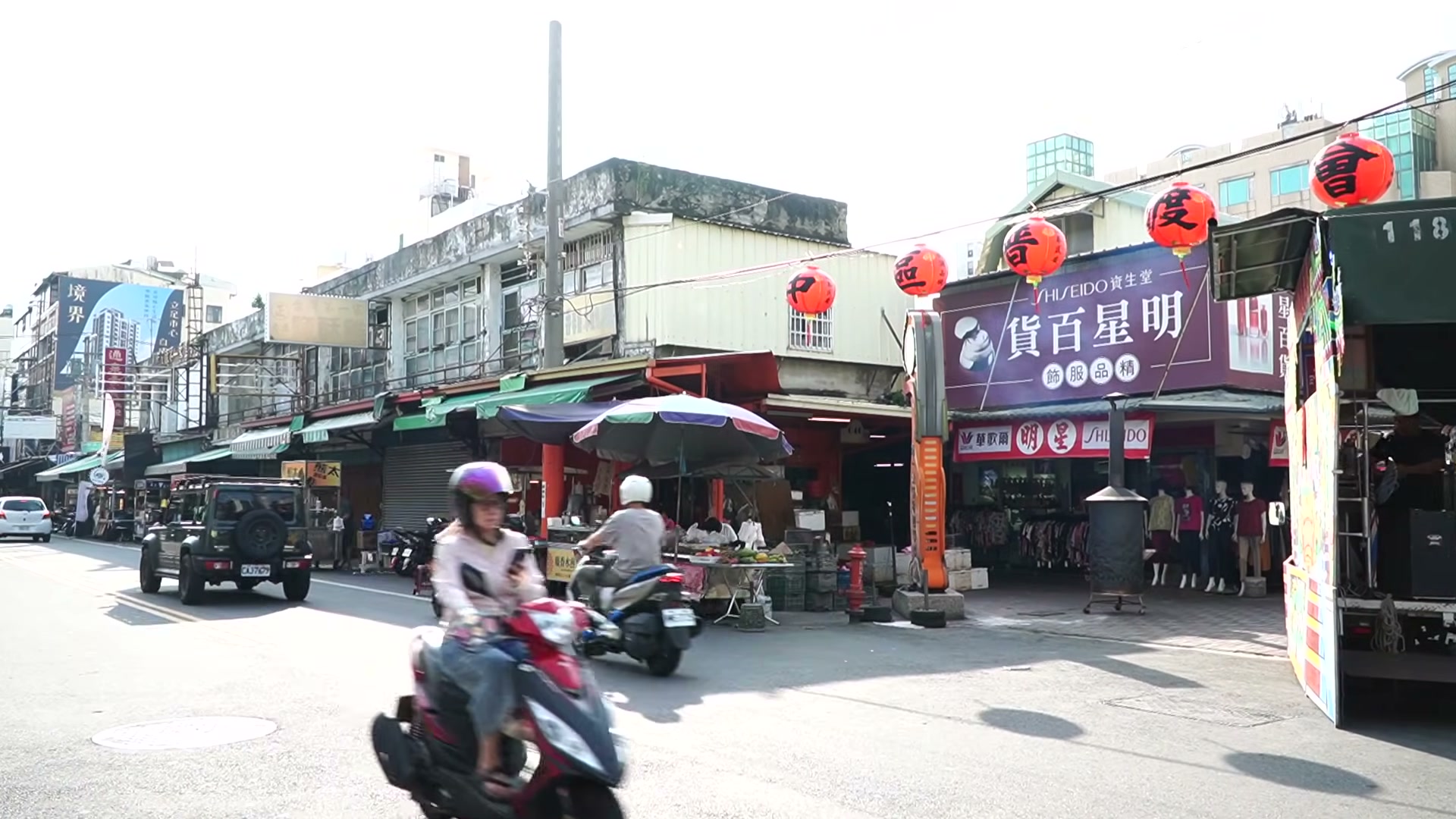
Scooters pass a colourful structure outside. Inside the market, counters, refrigerated cases and offering tables occupy the same roofed space. The setting begins with a place of everyday work, rather than a separate visitor stage.
The footage is labelled by its creator, 艾迪爾影視, as the 2026 Central-district Pudu association opening in Huwei. It was uploaded on 20 August 2026, but the filming date has not been independently confirmed. These streets, tables and gestures belong to a selection from that record. Pudu refers here to offerings and rites for wandering spirits; the English title uses Ghost Festival to identify the tradition for first-time viewers.
See the whole offering table before its details
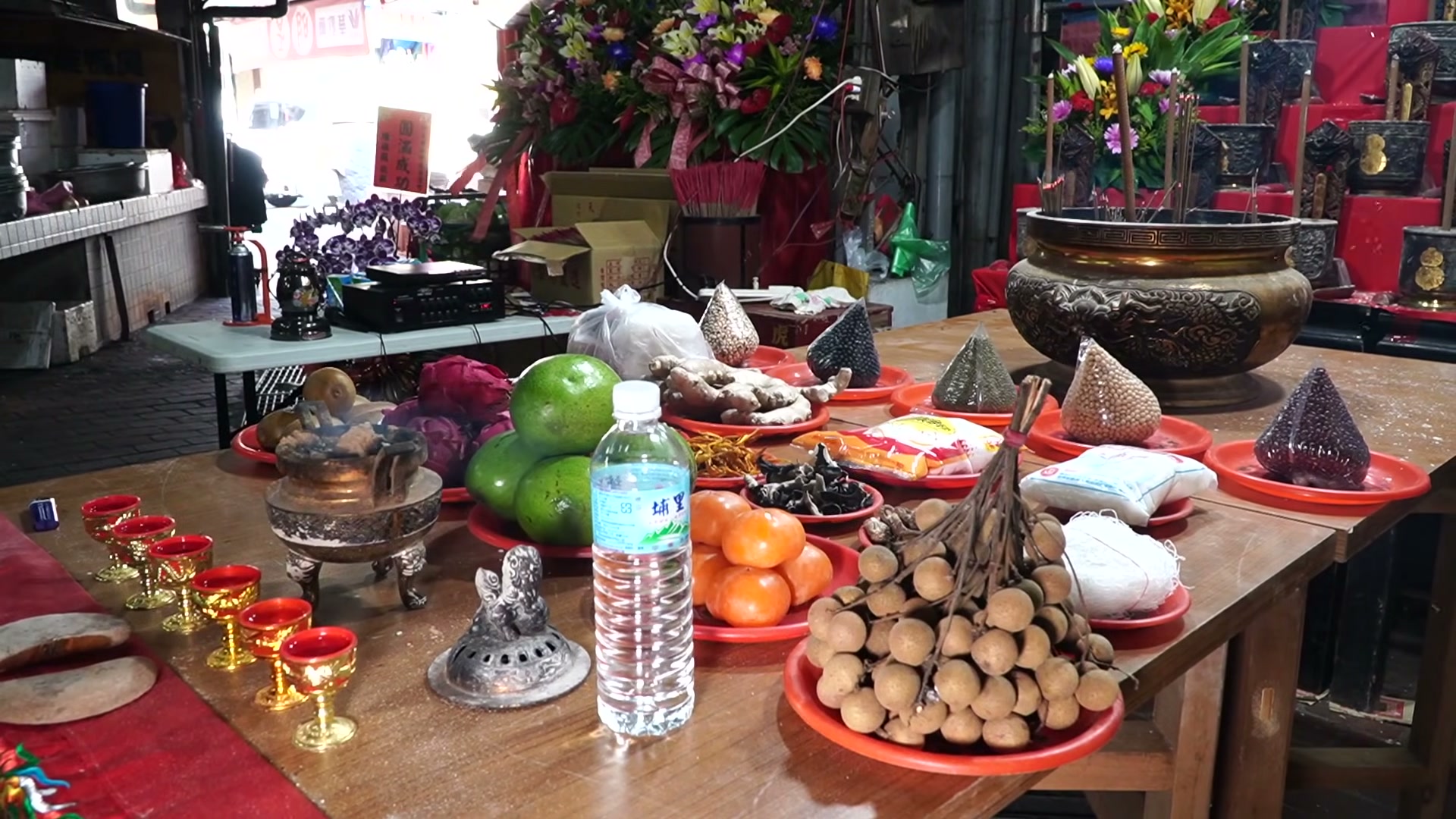
Fruit, dishes, drinks and flowers are already in place. The camera moves between the aisle and the tabletop, giving familiar objects a different setting. These are ritual offerings, not a promise of food that visitors may help themselves to.
Yunlin County’s 2026 account describes eight participating Pudu districts with different local features. This edit concentrates on a market opening in the Central district. It does not claim to show all eight, or include ice sculpture, ritual boats and large displays from other districts.
Follow hands, text and wooden fish
The ritual specialist sits beside an open text, a wooden fish and other ritual objects. The edit establishes the person and tabletop before moving towards the hands, keeping each detail within the same ceremony.
A separate instrumental score replaces the source audio. Chanting, wooden-fish strikes and street sounds from the original are not retained. A visible strike should therefore not be mistaken for location sound; the soundtrack shapes the edit rather than documenting the ceremony’s music.
Make room for the people bowing together
Neighbours hold incense and bow. An apron, market goods and counters remain visible around them. The ceremony and everyday setting share one frame. A complete gesture explains this gathering more clearly than a long sequence of static faces.
The film does not assign names, occupations or family relationships to unidentified participants, or call everyone a stallholder. At a ceremony, leave space for the ritual and for people passing through. Ask before making a close portrait.
Return to the street without inventing an ending
Incense is placed in the burner; another bow follows, then the camera returns outside. That closes the edit, not the whole Huwei festival. Other districts and later rites have their own dates and places.
This is an existing 2026 record, not a claim that the event is happening now or that a future edition has been confirmed. Before visiting, check the current programme and observation arrangements with Huwei Township and the organisers.
Film, article and image sources
Selected from creator 艾迪爾影視’s 2026-labelled record of the Central-district Pudu association opening in Huwei, uploaded on 20 August 2026; the filming day is not independently confirmed. This is one market ceremony, not all eight districts, the full festival or a current event. The final street view closes the edit, not the festival. Instrumental music replaces location sound. No programme title, full-screen card or synthetic scene is included.
1. 艾迪爾影視 · 2026
2. 艾迪爾影視 · 2026
3. 艾迪爾影視 · 2026
4. 艾迪爾影視 · 2026
5. 艾迪爾影視 · 2026
Music: 跨海的一段路 (AI-generated instrumental).