
Cultural story
Hualien stone: from the factory floor to the space around a sculpture
A slab, a chisel and a small model tell different parts of Hualien’s stone story. Industry supplied skills and tools; artists changed what those skills could express.
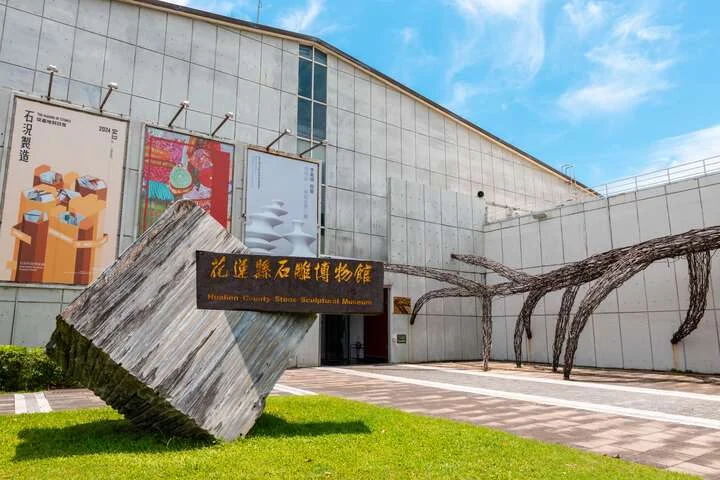
Stone processing and sculpture share techniques but work towards different ends.
A small model can reveal the decisions behind a monumental work.
The museum connects individual artists with Hualien’s industrial history.
The workshop came before the exhibition hall
Hualien’s modern stone industry expanded during the 1960s and 1970s. Cutting, grinding and polishing turned stone into building materials and everyday objects, including ashtrays and pepper mills. These were tasks of production: a surface needed to meet a specification, a piece had to fit, and an order had to be finished. The skills later found in sculpture were also skills learned beside machines and stacks of material.
Sculptor Xiang Guang-hua’s early working life passed through that world. He worked in a marble factory after junior high school, later ran a subcontracting workshop, and gradually entered sculpture competitions. His experience makes the transition less abstract. Moving from processing to art did not erase the knowledge of weight, cutting or cost; it changed who decided what the stone should become.
The museum's 2019 training diary makes a later stage of learning visible. As the eight participants approached fine finishing, it records machines being used less often and adjustments increasingly made by hand. Progress became harder to see because small changes to corners and texture accumulated slowly. The record turns a smooth surface back into working time: finishing was not simply the instant after the main shape had been cut.
What a small model can hold
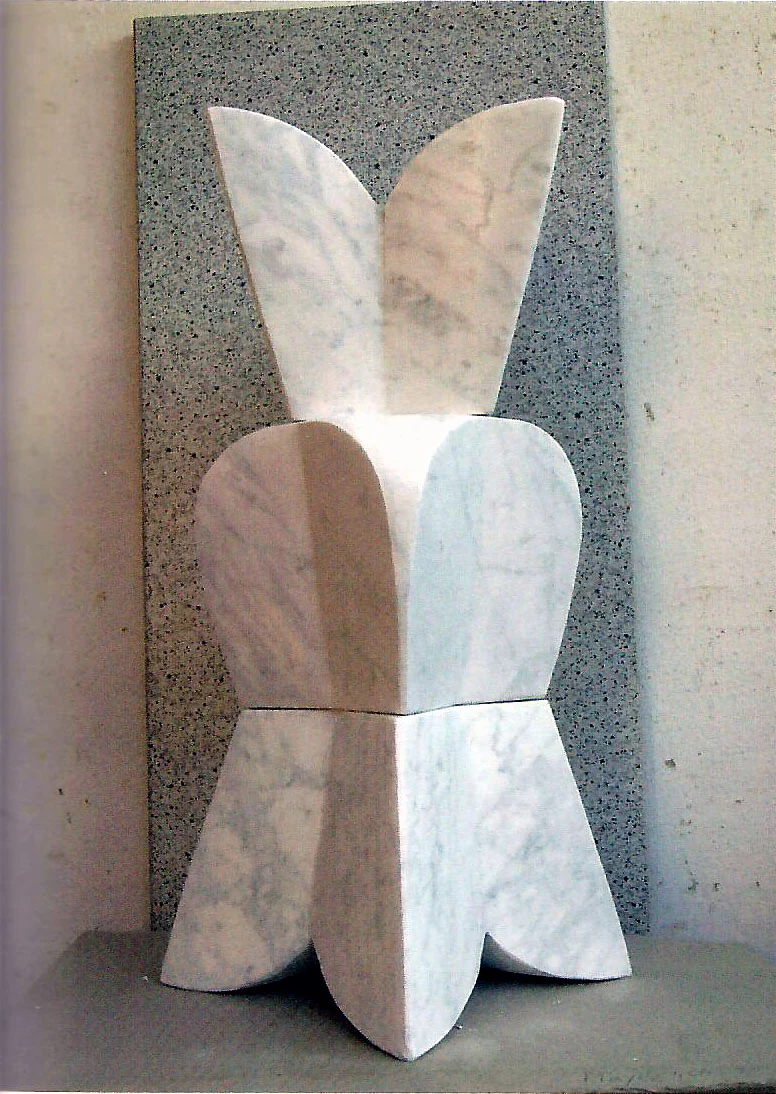
Hualien held an international outdoor stone-sculpture competition in 1995, followed by another in 1997; the stone sculpture museum opened in 2001. The museum’s collections include models as well as finished sculptures. A model is not merely a souvenir of a larger work. It allows a maker to test proportions, openings and the relation between a solid form and the space surrounding it.
Roland Mayer’s Tree of Life model, associated with the 2007 sculpture symposium, builds upward through repeated petal-like geometric units. At 60 centimetres high, it can be read close to the eye: the repetitions make a rhythm, while the spaces between them keep the vertical form from feeling like a single sealed block. Looking at this small object draws attention to choices that distance can hide in an outdoor sculpture.
The surface records a sequence of work
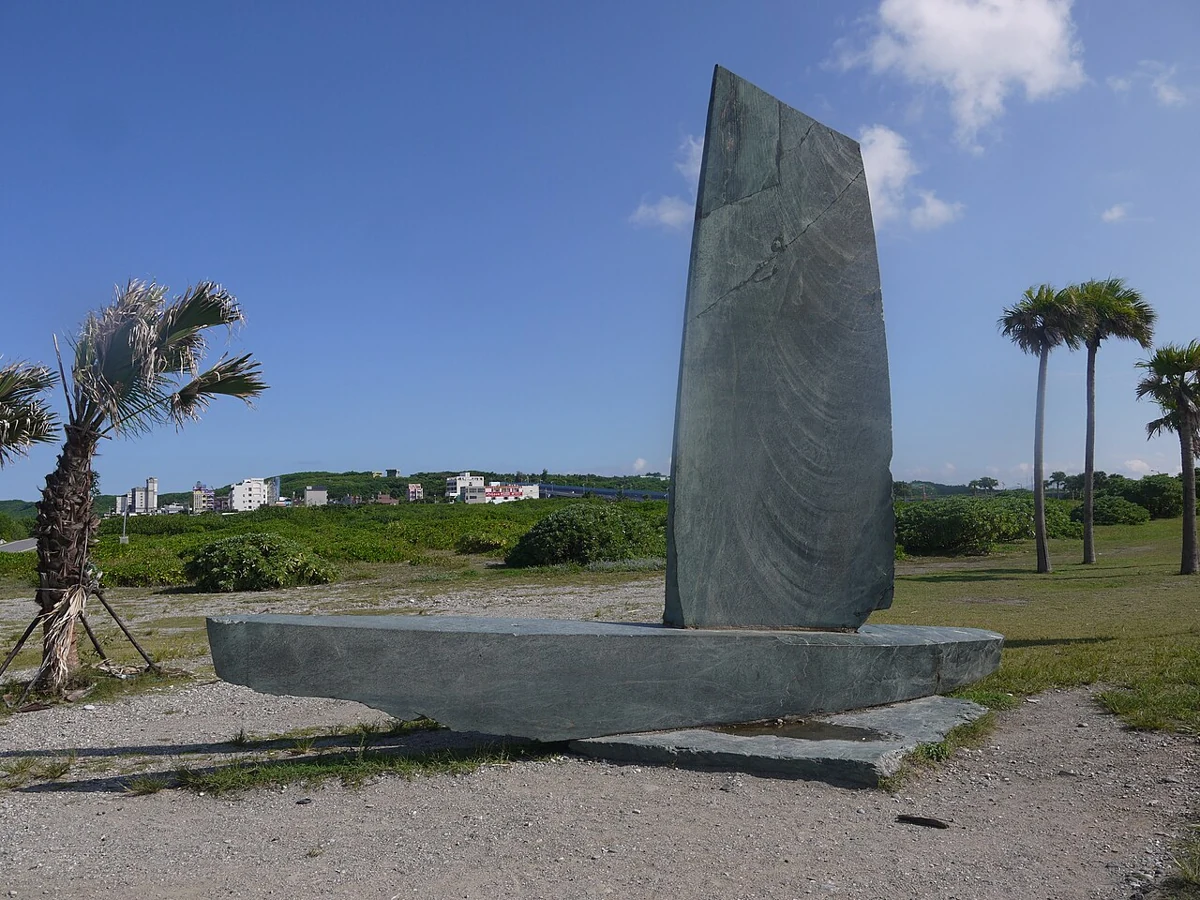
A stone surface can be split, chiselled, sawn or polished, and each treatment changes how it receives light. Hualien’s sculpture programmes have included demonstrations of tools and making; sculptor Dong Ming-long’s work also involves developing tools for stone. The finished surface is therefore a record of decisions and equipment, not simply the natural appearance of the material.
The 2014 photograph of a stone sculpture at Qixingtan shows a tall slab rising from a low, boat-like base: a form also has to meet a horizon and the viewer’s moving body. This connection to use and setting continues in contemporary stone design. Hualien’s stone-design initiatives have brought manufacturers and designers together to develop objects for present-day use, extending an industry once associated with familiar household ornaments. A museum visit becomes more useful when it returns the viewer to that ordinary scale: the edge of a vase or a polished tabletop can carry as many material decisions as a sculpture in a park.
One entry names Chiang Yu-hang working with water and 400-grit abrasive paper. Another describes polishing a bird's light-catching feather surfaces. These are observations of particular works, not a claim that all stone should receive the same finish. They offer a way of looking when the museum is open again: compare where light is reflected sharply and where a surface remains rougher, while recognising that the 2019 diary does not establish which pieces or tools are displayed today.
Look closer
Compare a rough edge and a polished face, watching how light changes across them.
Read the model’s openings and proportions before imagining the outdoor scale.
Visiting information
- Venue
- Hualien County Stone Sculpture Museum, No. 6, Wenfu Road, Hualien City.
- Exhibition change
- The museum announces a closure from 28 September to 30 October 2026 for an exhibition change; its 2026 art season begins on 31 October.
- Visiting focus
- Plan an indoor museum visit after the exhibition change, with time for models, tools and completed work.
- Getting there and back
- Take a taxi from Hualien railway station to the museum and arrange the return pickup at the same entrance.