
Annual event
Hsinchu’s City God Festival: paper cangues and music through the old city
Paper-cangue rites, family musicians and the route to the northern altar reveal different layers of life in the old city.
Hsinchu City God Festival: A Walk with Paper Cangues
90 seconds. English captions are part of the film. Optional Traditional Chinese subtitles are available in the player.
From the cangue-rite record uploaded by Xianfeng Pilgrimage on 27 August 2025; the exact filming date has not been independently confirmed. It is not a continuous record of every festival stage or a current event notice.
Read the complete five-chapter article → · 繁體中文
Complete English captions and Traditional Chinese translation
00:00:00,000 --> 00:00:05,000
Hsinchu City God Festival
A walk with paper cangues
竹塹城隍祭
戴上紙枷,走過老城
00:00:05,000 --> 00:00:11,000
An archival festival record:
a name, then a paper cangue.
從歷年祭典紀錄看起:
報上姓名,再戴紙枷。
00:00:11,000 --> 00:00:16,000
Yellow paper frames
rest across shoulders.
黃色的紙枷,
橫跨參與者的肩膀。
00:00:16,000 --> 00:00:21,000
The waiting crowd
becomes a procession.
等候的人群,
逐漸排成一支隊伍。
00:00:21,000 --> 00:00:30,000
Through a market passage,
then into the city streets.
穿過市場的通道,
再走向城市街道。
00:00:30,000 --> 00:00:36,000
The paper cangue symbolises
a burden to be released.
紙枷寄託著
解厄、放下重擔的願望。
00:00:36,000 --> 00:00:46,000
From temple gates
to familiar city streets.
從廟門出發,
走過熟悉的老城街道。
00:00:46,000 --> 00:00:56,000
The route is shared
by neighbours of every age.
不同年齡的街坊,
走在同一段路上。
00:00:56,000 --> 00:01:06,000
People gather again
at the next ritual stop.
隊伍再次聚集,
來到下一處儀式現場。
00:01:06,000 --> 00:01:11,000
The musicians have
their own work to do.
樂師各就各位,
接續祭典的工作。
00:01:11,000 --> 00:01:21,000
Ritual specialists attend
to each person in turn.
儀式人員依序
照應每一位參與者。
00:01:21,000 --> 00:01:26,000
Beyond the crowded streets,
a quieter courtyard.
熱鬧街道之外,
還有安靜的院落。
00:01:26,000 --> 00:01:30,000
Taiwan, Layer by Layer
From story to place
島嶼年輪
從故事認識臺灣,再走進現場
Paper-cangue rites fall on lunar 7/1 and the charity procession on 7/15: 13 and 27 August in 2026. The 2026 edition has ended.
The City God Temple and old-city streets are the setting; Beiguan musicians are part of the festival’s working life.
A name before the paper cangue
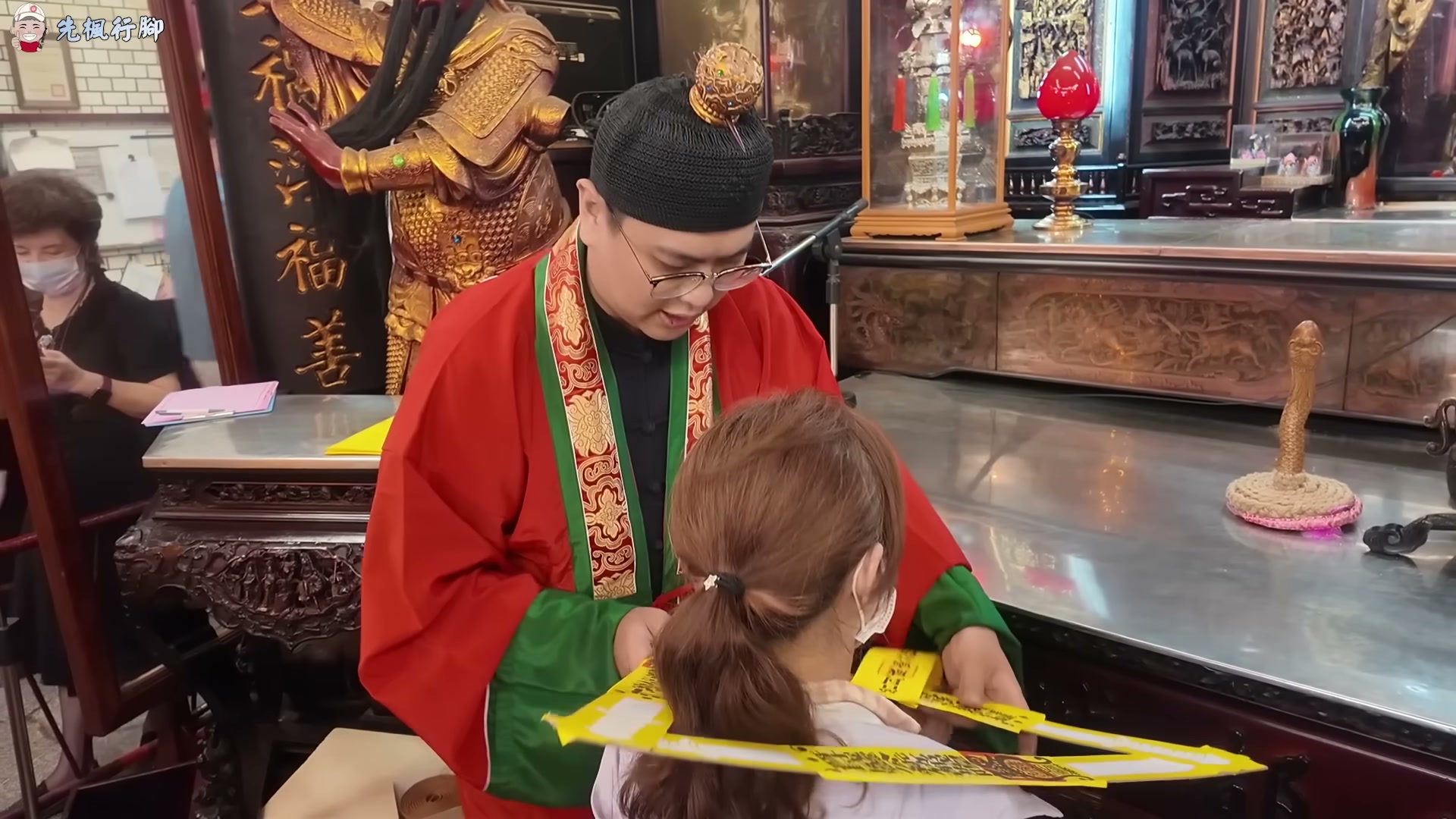
On the first day of lunar month seven, participants register at the City God Temple, hear their names called by a ritual specialist and put on triangular paper cangues. In 2022 the rites began at two for a four o’clock departure. People rested around the temple while waiting, bringing festival time into the street before the procession moved. An object once associated with punishment becomes part of a symbolic practice of reflection and release.
Before the palanquin leaves the temple’s front gateway, a ritual whip strikes the ground three times. Yin-Yang Sigong and the Seventh and Eighth Lords accompany the journey toward the northern altar, passing the East Gate and former Hsinchu Prefectural Hall. At the destination, participants queue again to have their names called and cangues removed. Waiting, walking and release give the rite a sequence that each person physically completes.
The paper cangue also carries paperwork. The heritage record describes a document fastened to it; at the northern altar, Daoist ritual specialists remove that document before the temple burns the papers and cangues. Registration, the reading of a name and the removal are parts of one personal petition, rather than costumes handed out for a parade. The temple’s 2026 notice again required registration; future participants need the next notice, not an old deadline.
The former edge of town is now part of the centre
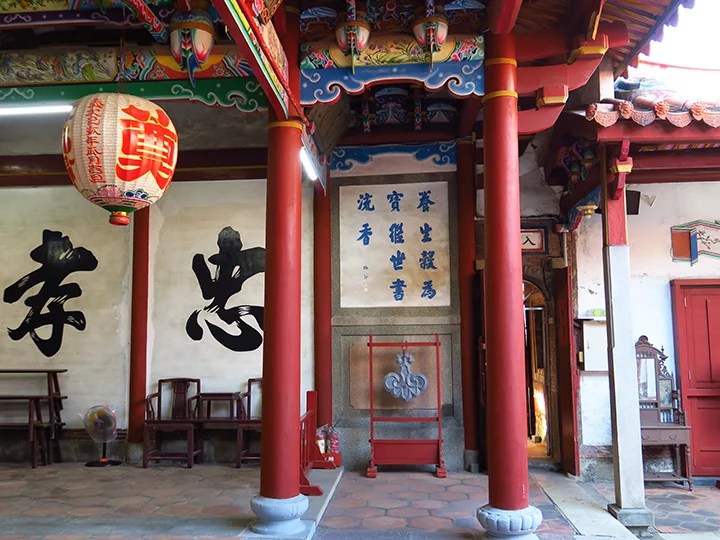
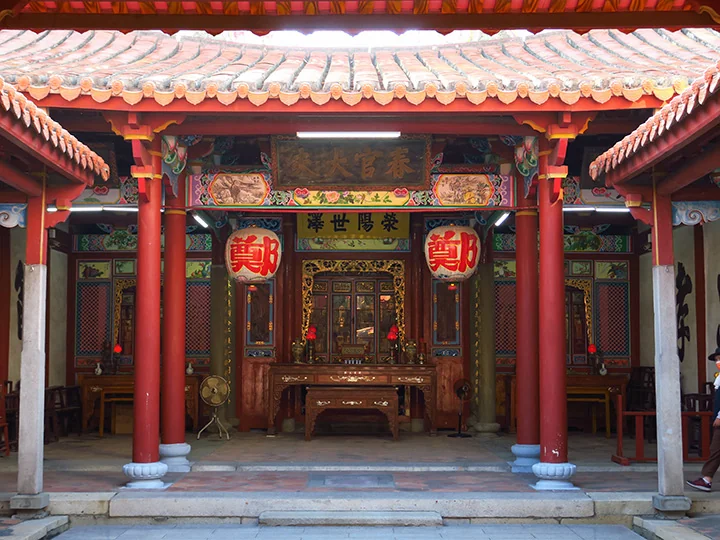
Near the Zheng ancestral hall and Beishantian Fude Temple, the northern altar belonged to an area outside the north gate where wandering spirits were worshipped in Qing times. Urban growth turned the former outskirts into busy streets, but the procession still returns. When the palanquin arrived in 2022, the normally private Zheng hall opened its doors. Brick carving, continuous geometric patterns and moral inscriptions brought a family space into the city’s ceremony for that occasion.
On lunar 7/15 the City God’s charity procession carries offerings through the city. Its purpose and sequence differ from the cangue rite on 7/1. In 2026 those dates were 13 and 27 August. Choosing the rite before setting out from the temple reveals an old city whose rhythms still follow the lunar calendar alongside its food stalls and historic buildings.
Before the City God travels, someone checks the road
The cultural-heritage account explains the night inspection as a duty delegated to the City God’s first or second son, who take turns. Before departure, a Daoist priest reads the command and puts it in a cylindrical container on the sedan. The group surveys the old city gates and associated temples before returning to report. The carried document turns a night procession into a specific commission: another deity is travelling on the City God’s behalf, ahead of the principal charity circuit.
Torch bearers give this earlier journey its distinctive appearance. The record describes fire as both inherited lighting and a ritual means of clearing harmful influences; the following day’s ying luguan separately announces the coming route to the human and spirit worlds. These preparatory acts precede the fifteenth-day charity procession. Watching several evenings therefore reveals a sequence of command, inspection, announcement and departure, rather than repeated versions of one parade.
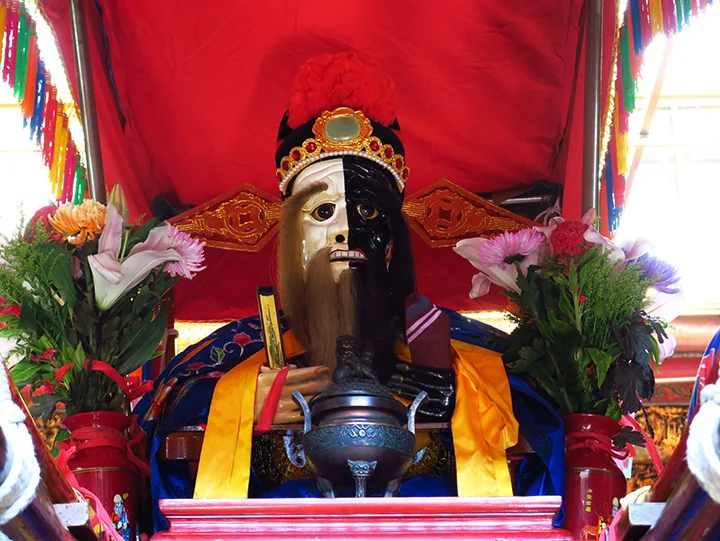
The deities taking part are distinguishable too. Yinyang Sigong has one black side of the face and one white, a form associated with judging yin and yang and distinguishing right from wrong. The heritage account places this deity at the northern altar for roughly the first half of the seventh lunar month, returning with the fifteenth-day procession. Moving a deity is also a temporary redistribution of the temple’s work across the city.
Another change happens inside the shrine. When attendants bring out the movable City God image on the twelfth lunar day, a clay enthroned image behind it becomes visible; a screen then helps define a temporary worship space for the image brought forward. The two figures have different roles and positions. This is a dated ritual arrangement in the heritage record, not a promise that every image can be approached on any ordinary visit.
A street filled with a family’s practice
At the 2016 Hsinchu Beiguan Arts Festival, twenty-eight amateur music societies set out from the East Gate. Lin Meishan of Taoyuan’s Juntian Society had studied the suona for eight years; her parents and siblings also participated. Walking in the heat while sustaining the instrument required circular breathing, a bodily skill that kept the music moving rather than a flourish added for display.
Lin Jianli wanted family participation to carry the skills forward, while Zheng Gengya faced the problem of ageing membership. Decorated signs, drum stands, gong frames and embroidered flags all had to be prepared, carried and used. The sound heard at a temple festival depends on rehearsals and shared responsibilities beyond the event itself.
Look closer at the places in the film
Begin with the yellow paper frame
The triangular yellow frame across a participant’s shoulders is a useful place to begin. This paper cangue carries a wish for reflection and release from misfortune. The film follows the cangue rite; it does not compress the gate opening, night inspection and charity procession into one day.
Watching from the street differs from joining a registered rite. Anyone wishing to participate should use the temple’s current instructions rather than assume that an archival scene promises walk-in access.
Gathering before the walk
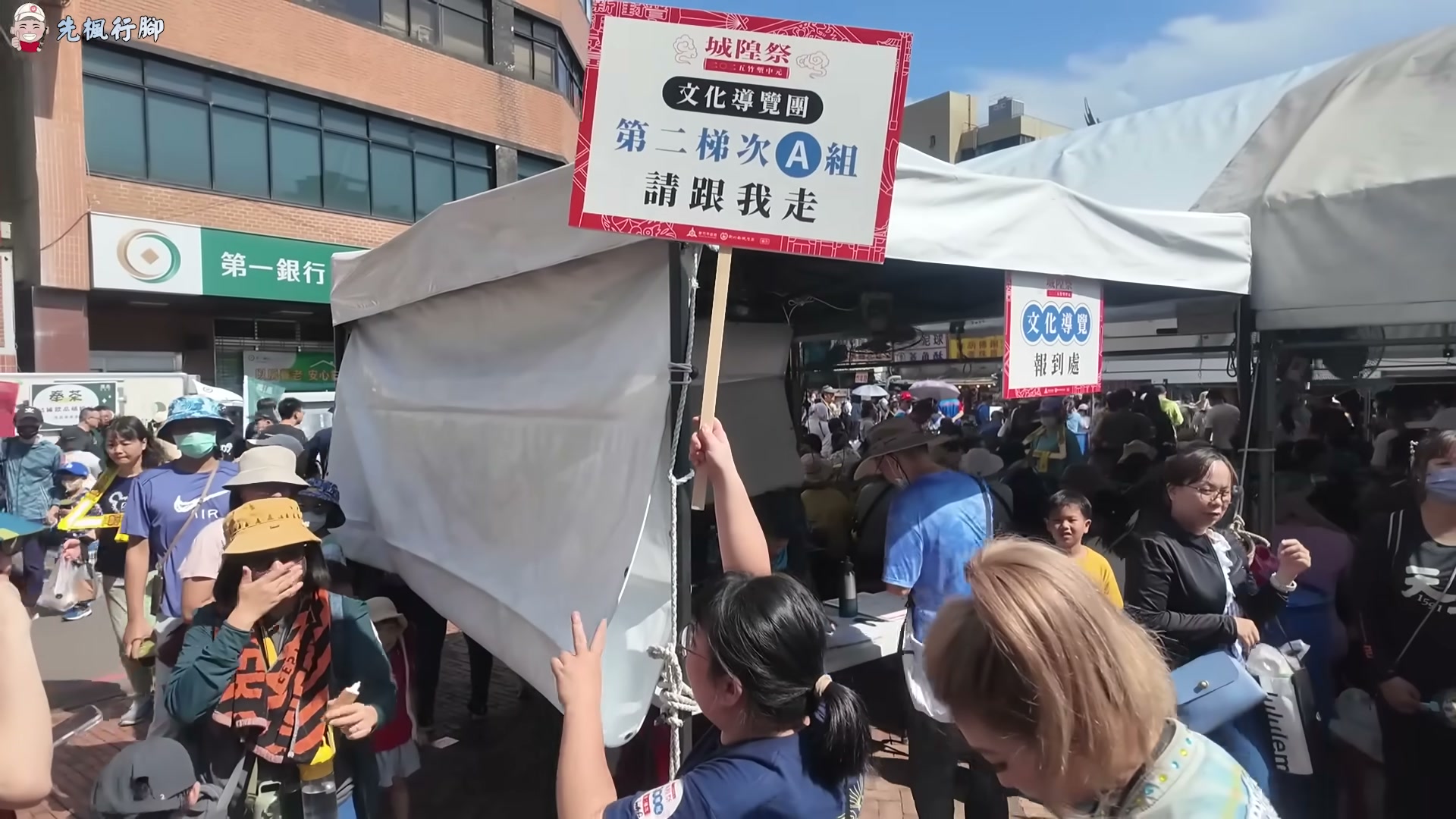
The rite includes waiting, finding a group and preparing to move. Market passages, shade and a group sign place the gathering within an ordinary working neighbourhood. Watch how a procession forms, as well as its most colourful figures.
Hsinchu City God Temple is at 75 Zhongshan Road. Assembly points and traffic controls depend on the named session. A video uploaded in 2025 cannot establish today’s arrangements.
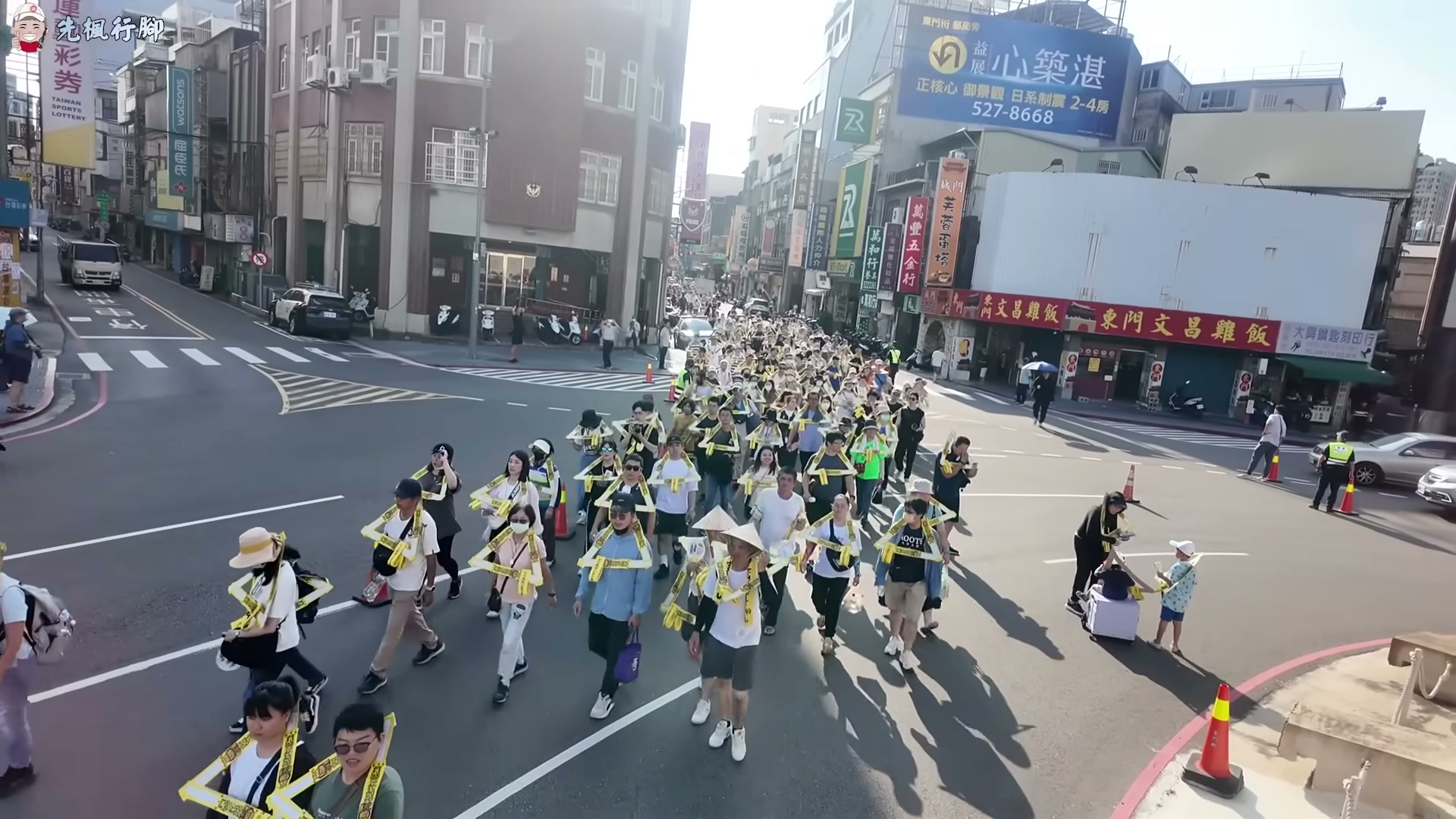
The old city becomes part of the procession
From a raised viewpoint, the cangue becomes part of a shared walk. Intersections, shopfronts and trees show a ritual passing through the living city. The moving participants and the scale of the streets remain visible together.
Keep the procession’s working space clear when watching. The turns and pauses in this record are scenes from that session, not a fixed route for visitors to follow.
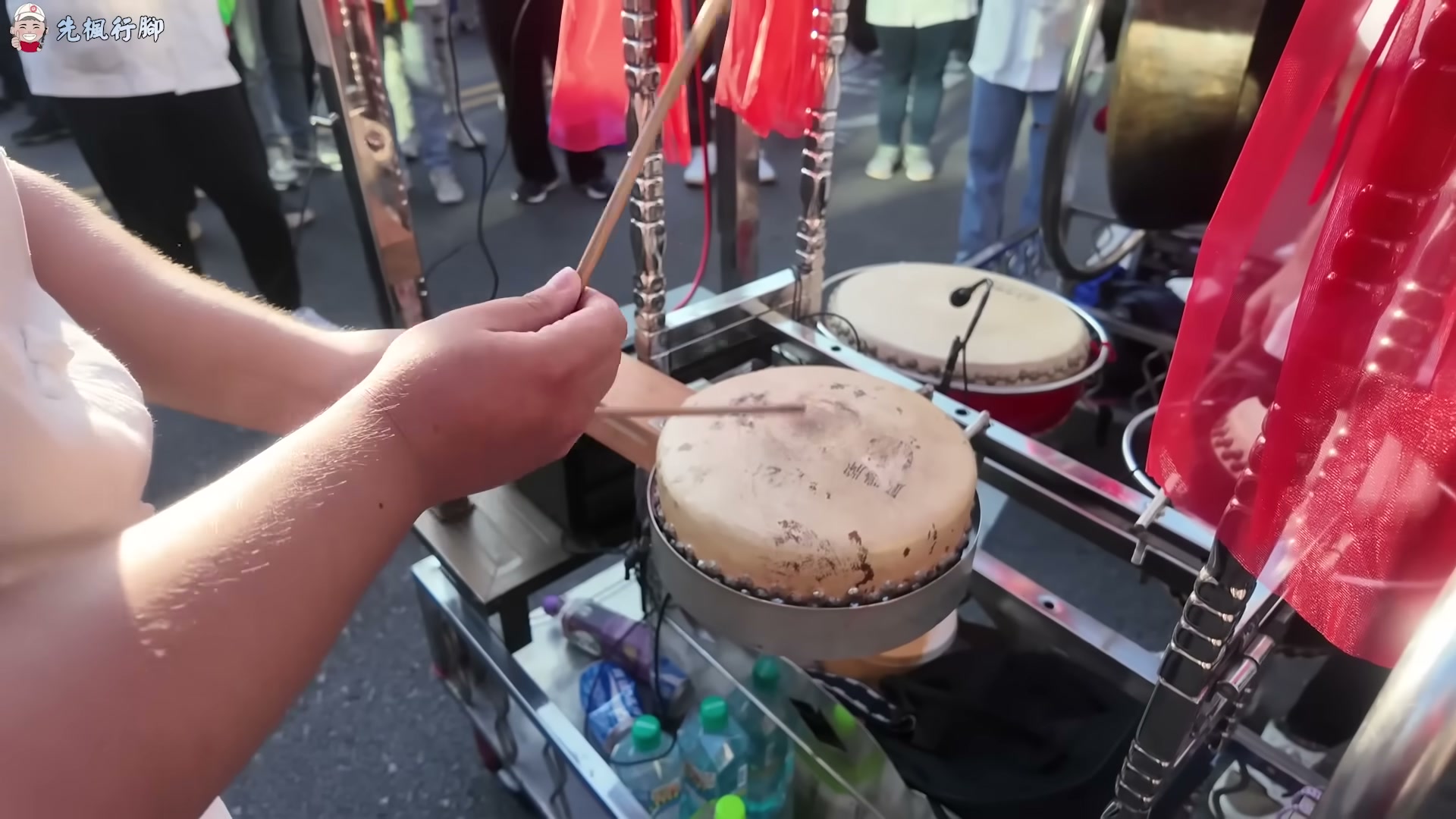
Notice the musicians and the work around the rite
Hands, drumheads and the instrument frame keep music connected to physical work. Musicians, ritual specialists and procession guides have different tasks, while participants eventually have the paper cangue removed. Following these actions connects the paper object with the festival’s life in the city.
The film uses a separately added instrumental soundtrack. Original speech and location sound are muted; the background music is not the musicians’ actual performance.
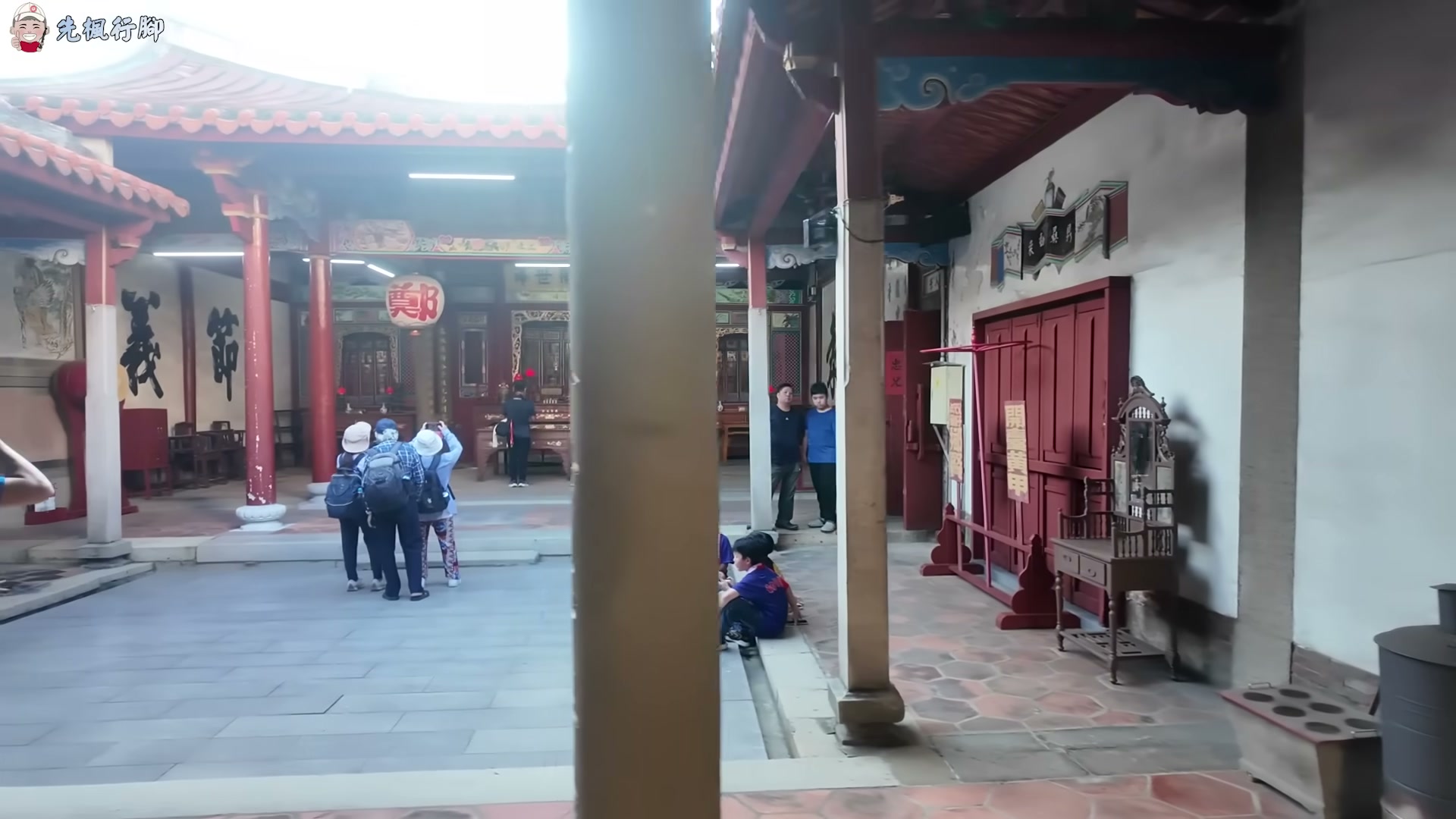
Leave time for a quieter courtyard
The plaque, columns and courtyard of the Zheng ancestral hall bring attention back from the crowd to a place. Cultural-heritage records also connect the hall with the city’s festival. This is where the film’s viewing journey ends; it does not assert a formal closing point for that session.
Identify the rite and the places you hope to visit before setting out. Hall access and event activity depend on the organisers and local arrangements. Begin with one paper object, then connect the streets and courtyard around it.
Film, article and image sources
From the cangue-rite record uploaded by Xianfeng Pilgrimage on 27 August 2025; the exact filming date has not been independently confirmed. It is not a continuous record of every festival stage or a current event notice.
1. Xianfeng Pilgrimage / 先楓行腳 · 2025
2. Xianfeng Pilgrimage / 先楓行腳 · 2025
3. Xianfeng Pilgrimage / 先楓行腳 · 2025
4. Xianfeng Pilgrimage / 先楓行腳 · 2025
5. Xianfeng Pilgrimage / 先楓行腳 · 2025
Music: 跨海的一段路 (AI-generated instrumental).
Look closer
Notice the sequence in which paper cangues, palanquins and ritual implements appear.
Listen to suona and percussion while noticing the people handling drum frames and embroidered flags.
Visiting information
- Timing
- Lunar 7/1: cangue rite; 7/13: night inspection; 7/15: charity procession. The first and fifteenth fell on 13 and 27 August in 2026. The listed 2026 events have ended.
- Venue
- Hsinchu City God Temple, 75 Zhongshan Road, North District, Hsinchu City. The northern altar is around the Zheng ancestral hall and Beishantian Fude Temple.
- Stay and participation
- Allow roughly half a day in the old city. Watching from the street differs from registering for the cangue rite, which is organised by the temple.
- Arrival and return
- Walk about fifteen minutes from Hsinchu TRA Station to the temple, returning along Zhongshan Road. Use the street edges while the procession passes rather than crossing its palanquin route.