
Cultural place
The railway bridge that still needs a working crew
On the Houfeng Bikeway, an old bridge and tunnel still organise movement. Look beyond a pleasant ride to the structures and maintenance that make it possible.
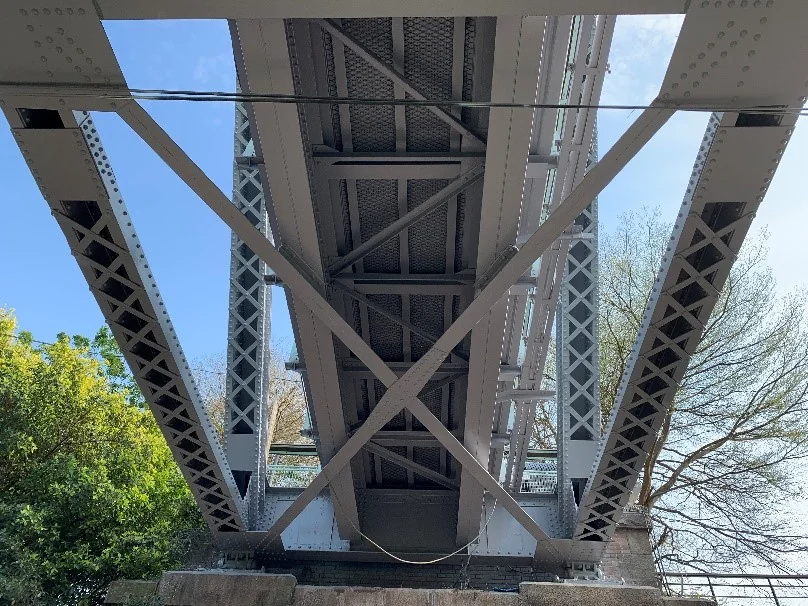
Hualiang Bridge’s 1908 structure now carries cycling instead of trains.
The bridge and No. 9 Tunnel explain how a transport corridor can change use while retaining its alignment.
A railway alignment becomes a cycle route
The steel trusses above the Dajia River once carried railway traffic. Built in 1908 during Japanese rule, the Hualiang Bridge later became part of the Houfeng Bikeway. Riders now pass through a structure whose purpose changed while its exposure to rain and weather continued.
A bicycle follows the old railway’s decision to cross the river at this point. The steel members repeat overhead, while the river remains visible through the sides. The experience is different from travelling inside a train, but the route still reveals the engineering choice: find a workable crossing, hold the track steady and connect it to the hill beyond.
Maintenance happens outside the holiday picture
Taichung’s August 2022 repair account describes corrosion removal and repainting completed that March. Crews worked at night to keep daytime passage available. Earlier work had repaired bridge piers. The scene enjoyed by cyclists depends on successive rounds of maintenance, with workers making decisions that help an old railway structure remain usable.
The repair photographs draw the eye to places a rider seldom sees: the underside of the deck, connections between members and the spaces workers must reach. Keeping those parts sound is what allows the historic silhouette to remain in everyday use. Preservation is therefore present not only in the old steel outline but also in the less visible cycle of inspection and treatment.
Read the bridge and tunnel together
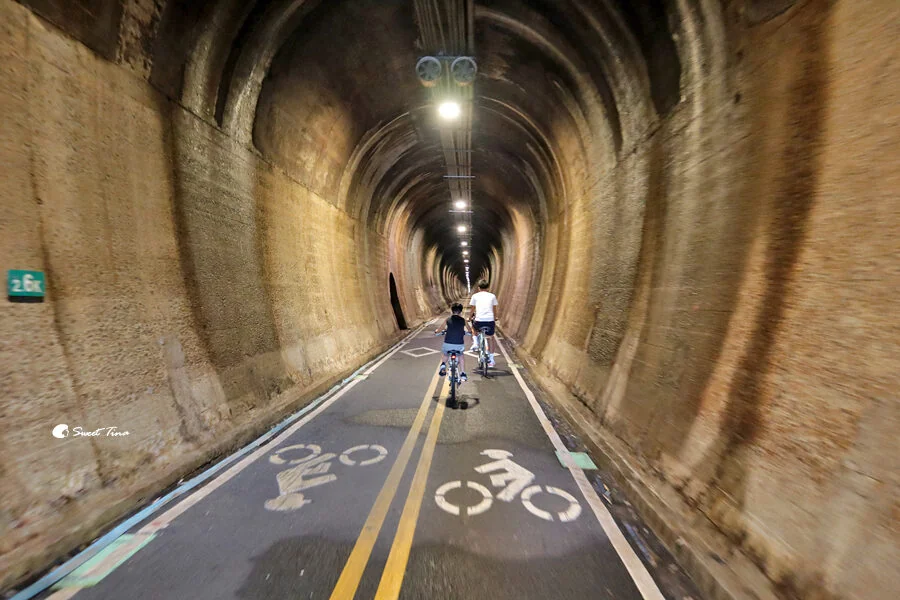
The Houfeng route joins the river bridge with No. 9 Tunnel, turning two railway structures into a continuous cycling experience. Read their relationship before extending the ride elsewhere: the bridge, tunnel and approaches already form a clear account of how a railway negotiated river and hill.
The open river crossing and the enclosed No. 9 Tunnel give two contrasting answers to the same transport problem. One carries the route over water; the other passes through terrain. Pausing safely outside the traffic line makes it possible to compare their scale, materials and light. The railway’s spatial sequence survives even though the people using it now travel for different reasons.
A founding date does not date every member
A bridge’s founding date does not date every steel member. Taichung’s heritage register places the Dajia River bridge on the final Houli–Huludun, now Fengyuan, section completed for the 1908 opening of the through railway. It also records a steel-girder replacement in April 1964. Railway use ended when the Houli–Fengyuan service changed to the new alignment in October 1997. Registration as a historic building in 2004 and conversion to the Houfeng Bikeway in 2005 added further layers. Read these alongside the 2022 maintenance account: preservation has involved replacement, repair and a change of use, while keeping a recognisable structure and memory. After reopening, look at a bridge shaped by successive engineering works, without assigning every joint or member to 1908.
Look closer
Compare the overhead trusses with the maintenance photo of the underside.
Outside the flow of bicycles, compare the open bridge view with the tunnel’s enclosed entrance.
Visiting information
- Place to enter
- Checked 24 October 2026: Hualiang Bridge and No. 9 Tunnel have been closed since 18:00 on 22 October for Typhoon Champi. Do not plan this bridge–tunnel ride; wait for an official reopening announcement.
- Tunnel hours
- The regular tunnel timetable below does not override the temporary closure: October–March 06:00–18:00; April–September 06:00–19:00. Use it only after reopening is confirmed.
- Transport and return
- After reopening, use TRA Fengyuan and bus 811 towards Dongfeng/Houfeng Bikeway, checking that day’s service. A same-point rental return avoids confusing Fengyuan access with the separate Houli station approach.
- Movement and stopping
- After reopening, follow the marked cycle direction and move out of the traffic flow before observing. The former 1.5–2-hour allowance is an outing estimate, not permission to enter during closure.