
Cultural story
Taiwanese on the page: when a spoken language becomes a place for writing
From an 1885 newspaper to poetry and fiction, Taiwanese has carried more than familiar sounds. Writers have used it to address public life, history and the worlds around them.
Romanised Taiwanese print has a history reaching back to the nineteenth century.
Literary writing expands beyond conversation, songs and nostalgia.
The writing system and the experience being written both matter.
A newspaper made a reading community
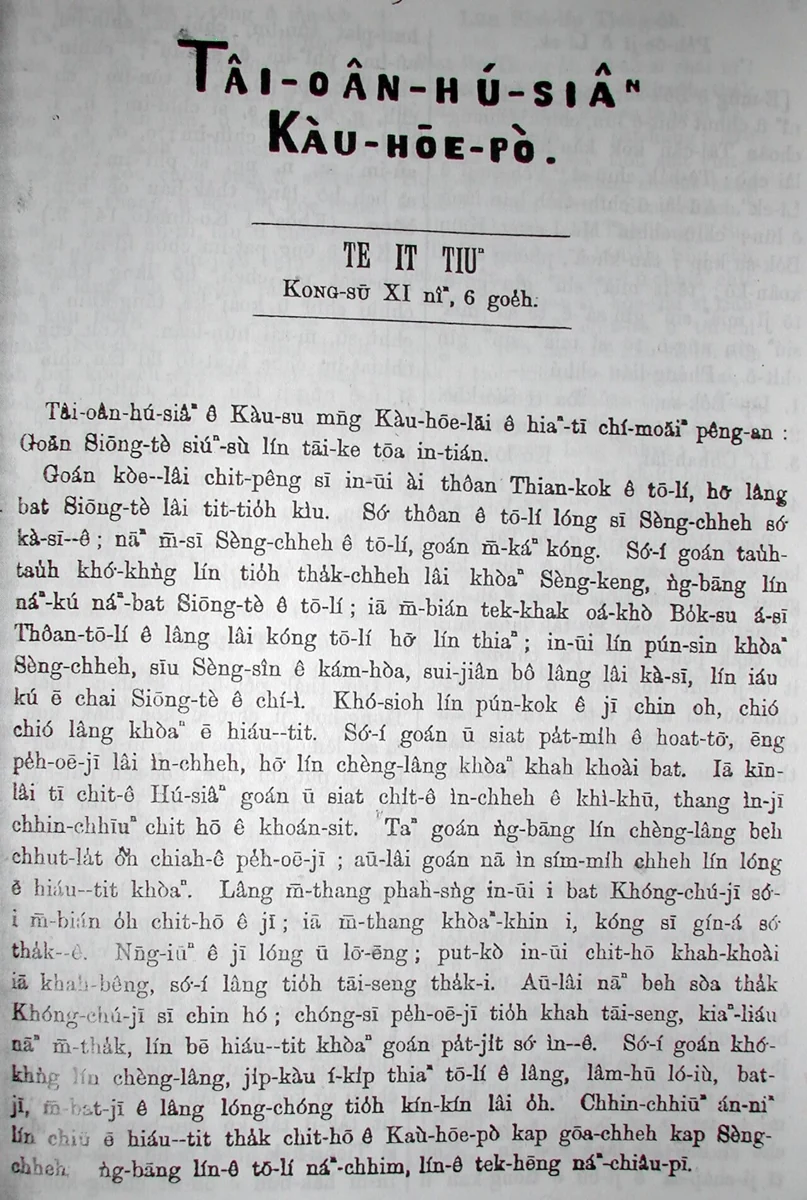
In 1885, Taiwan-fu Church News began publication in Tainan using Peh-oe-ji, a romanised system for writing Taiwanese. For a reader accustomed to Chinese characters, its page can look unfamiliar even when the language is familiar by ear. The important change was practical: spoken words could travel on paper, be read again elsewhere and become part of a continuing publication.
The press had been established the previous year. Its work joined type, printing, distribution and readers rather than relying on speech alone. Publication was interrupted in 1942 and resumed after the war in 1945. Those breaks matter alongside longevity: the history of a language on paper also includes the political conditions under which a page could be printed and circulated.
A surviving book makes that print culture tangible. The literature museum holds Tsai Pei-huo’s 1925 Chap-hang Koan-kian, or Ten Views, collection number NMTL20080360091. The heritage record describes a dark-green cover showing Taiwan and its offshore islands, machine-made paper and hand-sewn cotton binding. Black printing shares the pages with pencil marks and red annotations. The marks document a used copy, although the record does not identify every reader who left them.
From collected songs to the ambition of literature
Taiwanese writing did not develop along one straight line. Folk-song collection, debates over written language and later literary movements each asked a different question. Was a text preserving words already spoken by a community, or creating a new voice for a poem or story? The distinction helps explain why collecting oral material and writing a novel can share a language without being the same activity.
The debates of the 1930s and renewed discussions in the 1980s made the form of writing itself a literary issue. Chinese characters, romanisation and mixed forms involve choices about sound, meaning and the reader’s habits. There is no need to settle all those debates before reading. A line can first be heard, then compared with the marks used to represent it; typography becomes part of the encounter with the voice.
Its contents move well beyond recording speech. Sections address social life, women, livelihood, compassion, health and money alongside the relationship between Taiwan and Roman letters. Tsai chose written Taiwanese for arguments about the world his readers lived in. The choice of script and the choice of subject were connected: a language could serve public reasoning as well as a familiar conversation or song.
Writing a language into public memory
Taiwanese literature also addresses events larger than the household. In 2010, the Fire-tempered Crystal exhibition and anthology brought Taiwanese writing into a discussion of the February 28 Incident. The work of poets and fiction writers placed the language in a public conversation about historical experience, rather than assigning it only the role of preserving an affectionate local past.
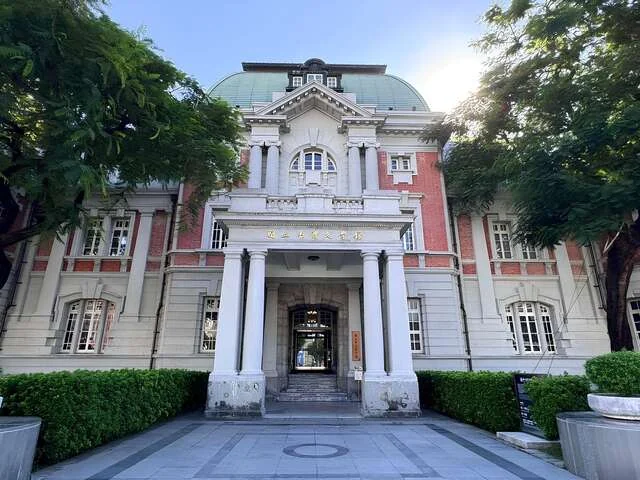
In Tainan, a visit to the National Museum of Taiwan Literature can be paired with the city’s continuing publishing world. Books and periodicals reveal choices that a general label such as “mother tongue” cannot explain: who is speaking, whose experience is recorded and what kind of reader a work imagines. Reading even a short passage closely offers more than treating the language as a sound to recognise.
The catalogue’s digitised pages offer a separate way to look closely at the cover, type and page sequence. The physical volume was repaired in 2015, according to its conservation record; collection status does not mean it is on display on the day of a visit. Read the digital object before travelling, then use the museum’s current programme to choose what can actually be seen in the galleries.
Look closer
Compare the sound of one short passage with its written form, including punctuation and line breaks.
Notice whether a work records an existing voice or invents a narrator for a new story.
Visiting information
- Museum
- National Museum of Taiwan Literature, No. 1, Zhongzheng Road, West Central District, Tainan.
- Publishing stop
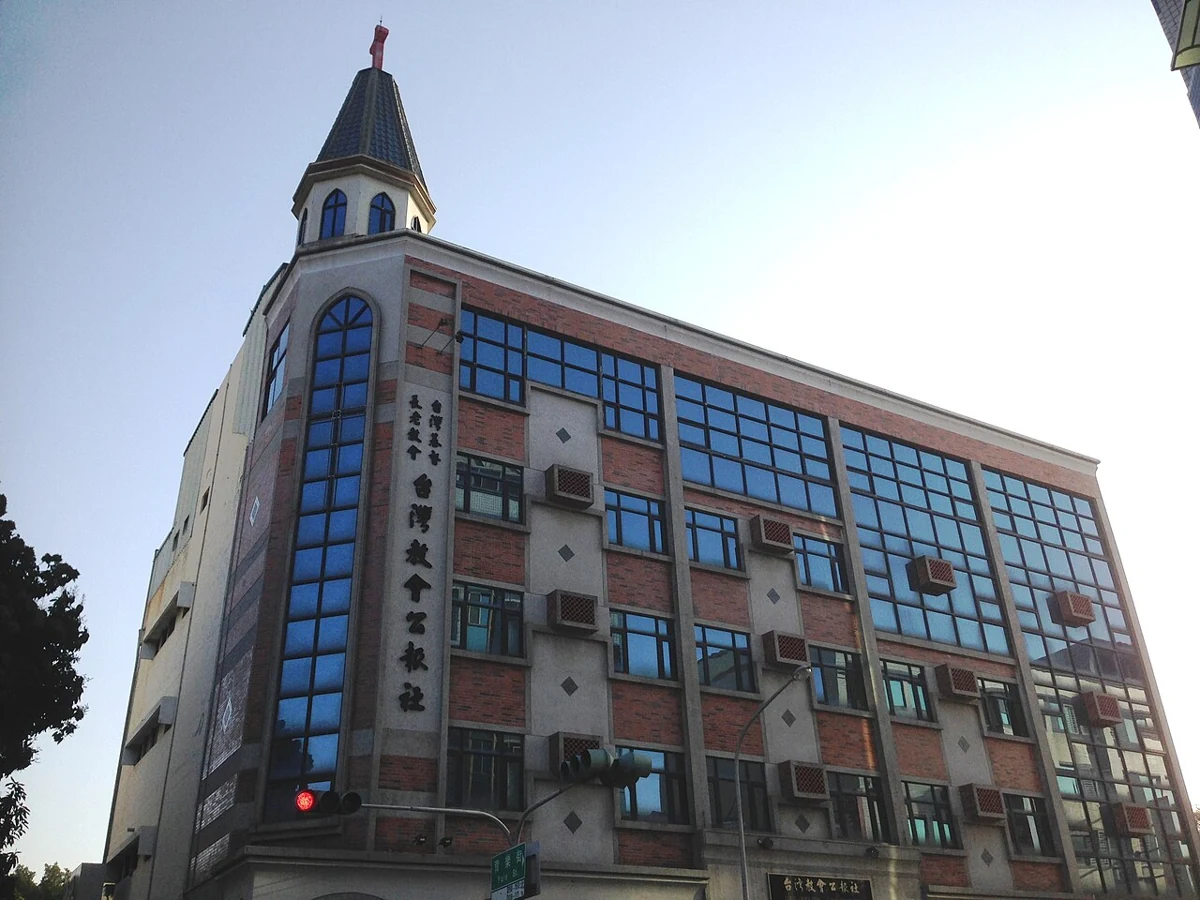
- Taiwan Church Press, No. 334, Qingnian Road, East District, Tainan. Visit the bookstore for publications; printing experiences are currently suspended for maintenance.
- Visiting focus
- Visit the museum’s exhibitions and arrange any group tour in advance. At the press, focus on its publications and check reception arrangements with the press.
- Getting there and back
- Start at Tainan railway station. Walk or take a taxi to the museum; use a separate city journey for Qingnian Road, then return to Tainan station.