
Cultural story
The work that welcomes the sacred shells
At Meilan, the sacred-shell ceremony begins long before the gathering. People collect roofing materials, repair communal buildings and decide how to carry shared obligations into another year.

Young people learn through the preparation of the ritual grounds.
A bamboo tally records participation in the Meilong ritual sequence.
The festival’s present form includes restoration and adjustments to working life.
Learning with bamboo, grass and palm leaves
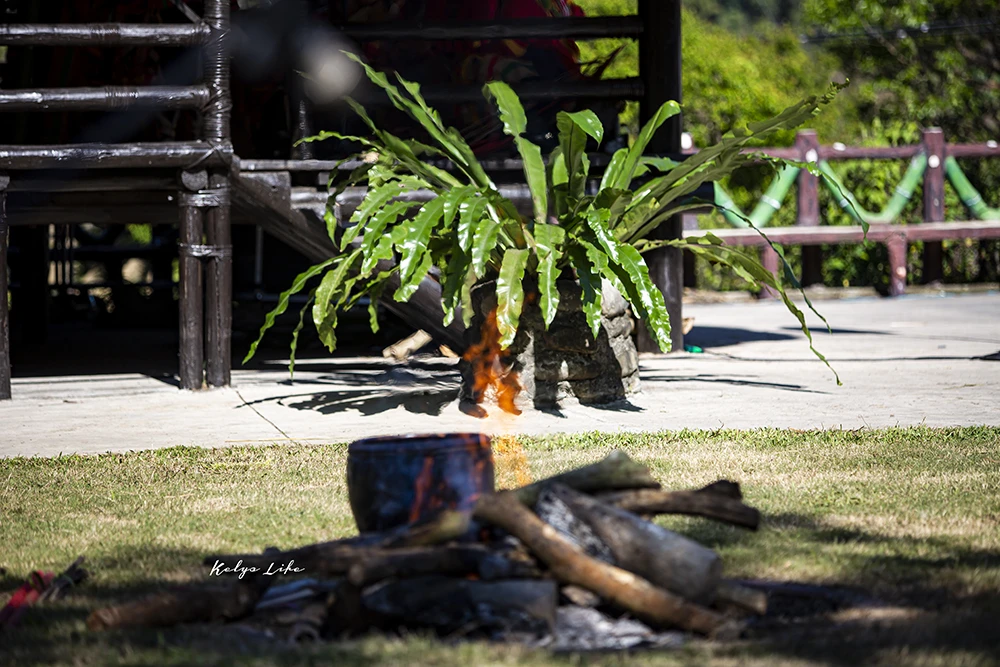
Before the 2025 Sacred Shell Festival, the youth association took responsibility for preparing the ritual grounds. Its chair, Vintiia tumamalikisasʉ, also known as Yu Fan, explained that elders would guide the work. Bamboo, silvergrass and palm leaves had to be carried in and fitted to the meeting house and other structures. Skills were transmitted while there was a real roof to renew.
Tautau, Yu Yen-cheng, stayed in the community from December through March to help. With fewer elders available, he felt that younger people needed to step forward. In 2026, structural improvements supported by the Maolin scenic-area administration reduced some of the annual burden. The young people could concentrate on thatching the men’s meeting house, while strengthened posts and fencing improved the wider setting.
One bamboo stick says: I am here
In Meilong’s recorded ritual sequence, a man takes a bamboo tally from outside before entering the meeting house and places it in the central tube. The leader can then count those present. The preparation song that follows asks participants to stay attentive to their tasks. Attendance, listening and collective work are built into the ceremony, rather than treated as background arrangements.
Oral tradition tells of ancestors living with the kavurua, who gave them sacred shells when they left for another home. The shells embody continuing obligations to remember and honour that relationship. Meilong and the other communities developed distinct sequences; a single public festival programme cannot stand in for every community’s practice.
Kuo Chi-ting's study describes the care that precedes the gathering: shells kept in a small vessel are moved by the officiant into the ritual ground before the rite, with guardians assigned to protect the space. It distinguishes safeguarding an object from merely displaying it. Accounts of the shells' departure and return belong to community belief; visitors are not being invited to inspect the vessel or cross its boundary.
The road into the community is part of the story
The revival of Sacred Shell Festival music and movement helped make Hla’alua identity visible during the decades leading to official recognition in 2014. In later teaching programmes, Chen Si-kai encouraged young people to consider what their own skills could contribute. Music training, building maintenance and community organisation each offered a different way to take part.
The Suoaiji suspension bridge connects Meilan with the valley road. After a year of repair, it reopened before the 2026 festival, restoring a more direct connection for residents and guests. Arrival here is therefore tied to infrastructure as well as ceremony. A community-arranged visit can introduce the landscape, buildings and histories while leaving the handling of sacred objects to their custodians.
The study also traces changes in frequency. Economic demands once helped shift the rite from annual to two- or three-year intervals; later revival brought annual gatherings and adjustments toward March. A date is therefore part of decisions about community work and resources. This history explains variation, but does not announce the next ceremony or establish a fixed day that travellers can use every year.
Look closer
Notice which roofing materials need regular replacement.
In Meilong’s ritual account, read how the preparation song is connected with the sequence of shared work.
Visiting information
- Starting point
- Meilan community and the Hla’alua cultural ritual grounds, Gaozhong Village, Taoyuan District, Kaohsiung.
- Arrange a visit
- Call Taoyuan District Office at 07-6861132 for local visitor information. Confirm community interpretation and the meeting point separately with your local host. Sacred-shell rites usually fall around late February or March.
- Travel and return
- Arrange a vehicle from central Kaohsiung through Liugui and Baolai to Meilan, including the return journey. Meet your host at the agreed village or bridge-side point.