
Annual event
Taiwan, Layer by Layer · 島嶼年輪
Guanziling’s Fire Lord: from the spring source into the spa town
A Fudō Myōō statue, hoteliers’ prayers and autumn lanterns connect a mountain town’s water supply with its livelihood.
Before you visit
The Fire Lord’s spring-side belief and public tourism programmes have different calendars.
Family photographs and local products connect worship with the spa town’s working life.
Check shrine arrangements, bathing reservations and return transport separately.
Fudō Myōō beside the spring
Guanziling’s Fire Lord takes the form of the Japanese Buddhist protector Fudō Myōō. In 1902, Japanese hot-spring developers placed a stone image near the water source. As the spa town developed, a belief in protecting its springs entered local life. Flames, a rope and a sword form the image of a stern guardian.
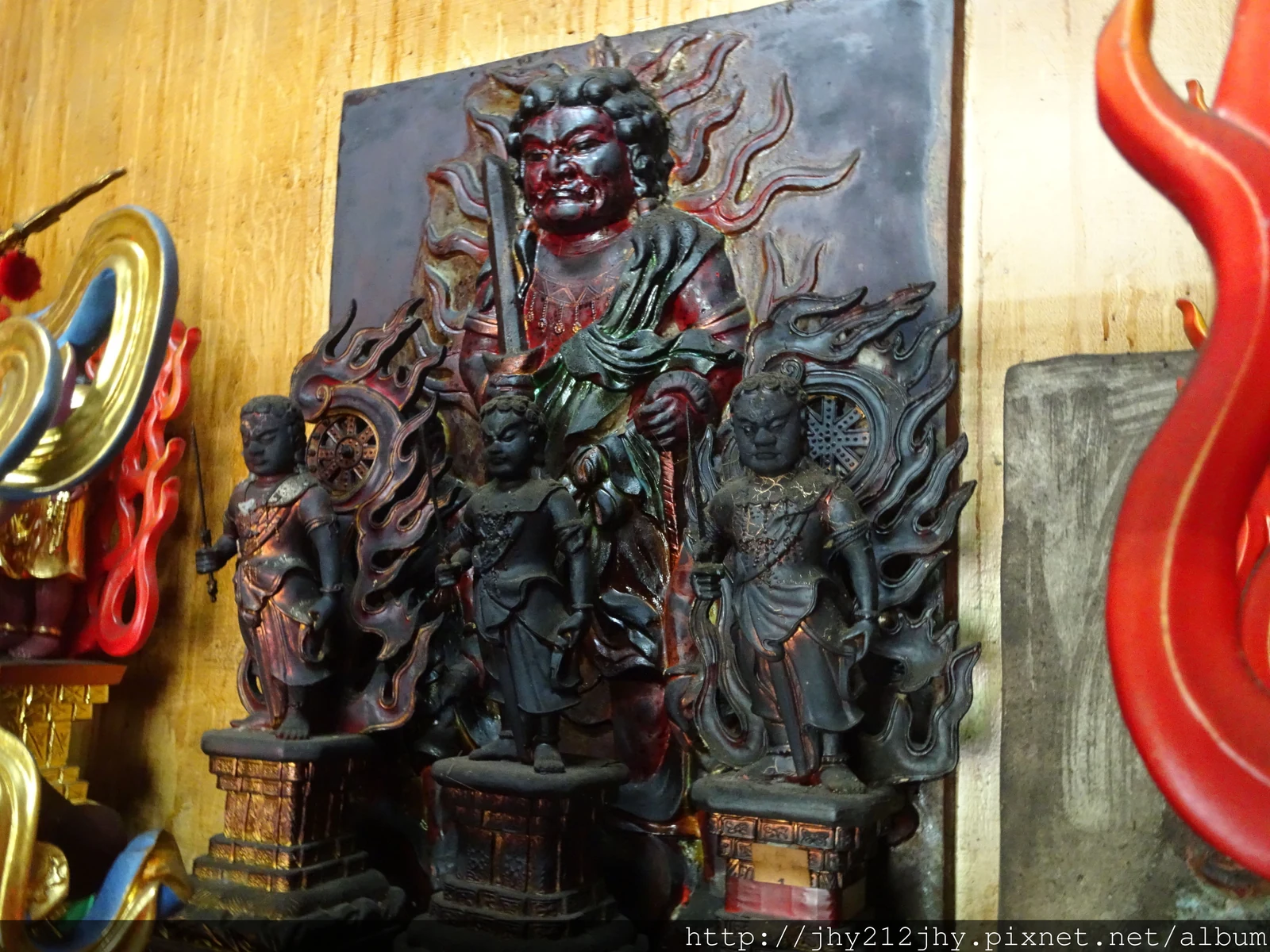
After the war, the original image was removed; residents later raised funds for a replacement and a shrine. Hoteliers prayed for an abundant flow, connecting faith with everyday business. Before a guest could enter a bath, water had to come from the mountain. The source was both landscape and a condition of continued work.
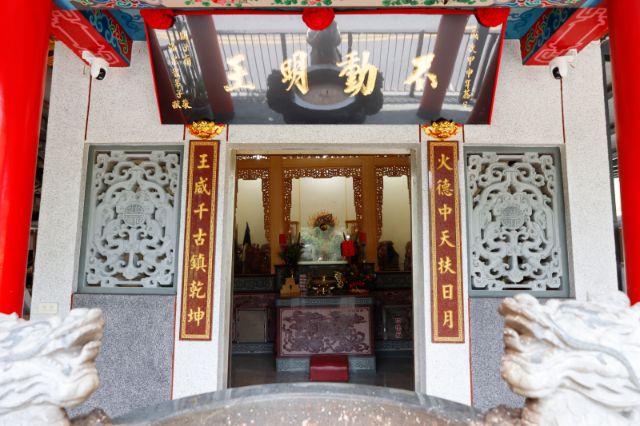
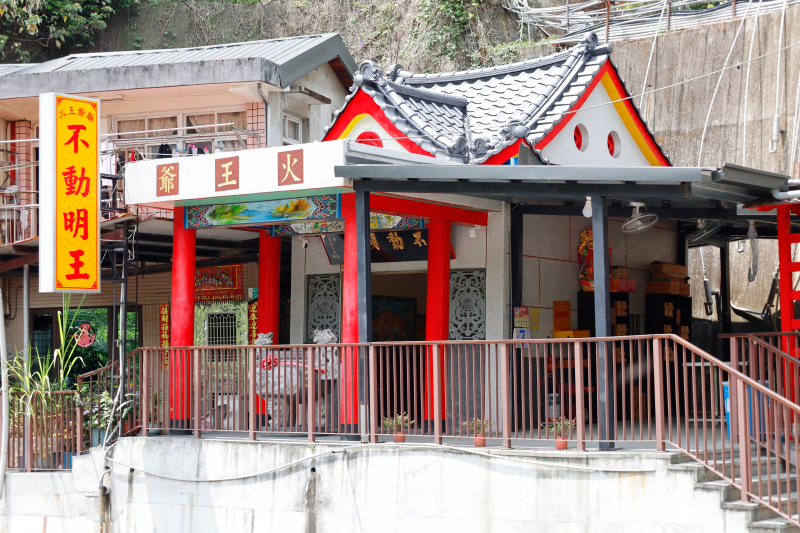
At the shrine, the relationship between image and spring district matters more than the statue’s size. This is a connection people established beside a particular source, rather than an isolated ornament in a tourist area. Following that connection brings hotels, baths and worship into the same story.
The spa town also survives through family archives. In a 2024 Tainan cultural magazine, Jing Le Guan’s third-generation operator Chou Cheng-chung and his mother, Chou Liu Yueh-chu, supplied photographs and memories of its development. One image shows second-generation operator Chou Liang-tsai with friends at Baoquan Bridge. Such records put identifiable households beside the shrine’s story: maintaining a bathing town also meant receiving guests and carrying knowledge across generations.
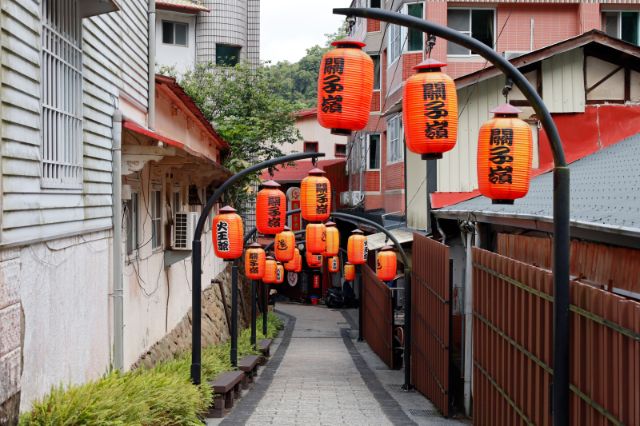
A Fire Lord at the shopfront
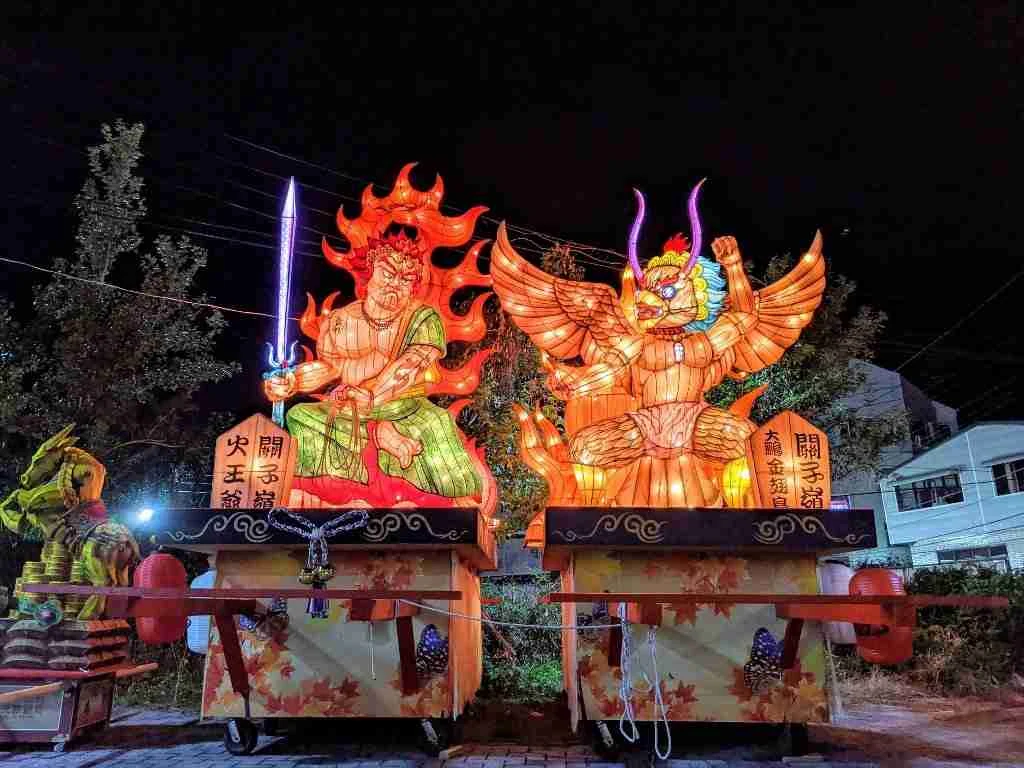
The autumn hot-spring festival brings the Fire Lord into the street. Large lanterns, yukata and handheld lights create a shared evening scene among businesses that normally receive guests separately. In 2020, 18 smaller shop lanterns depicted the deity, jar-roasted chicken, mud bathing and mice in bathrobes.
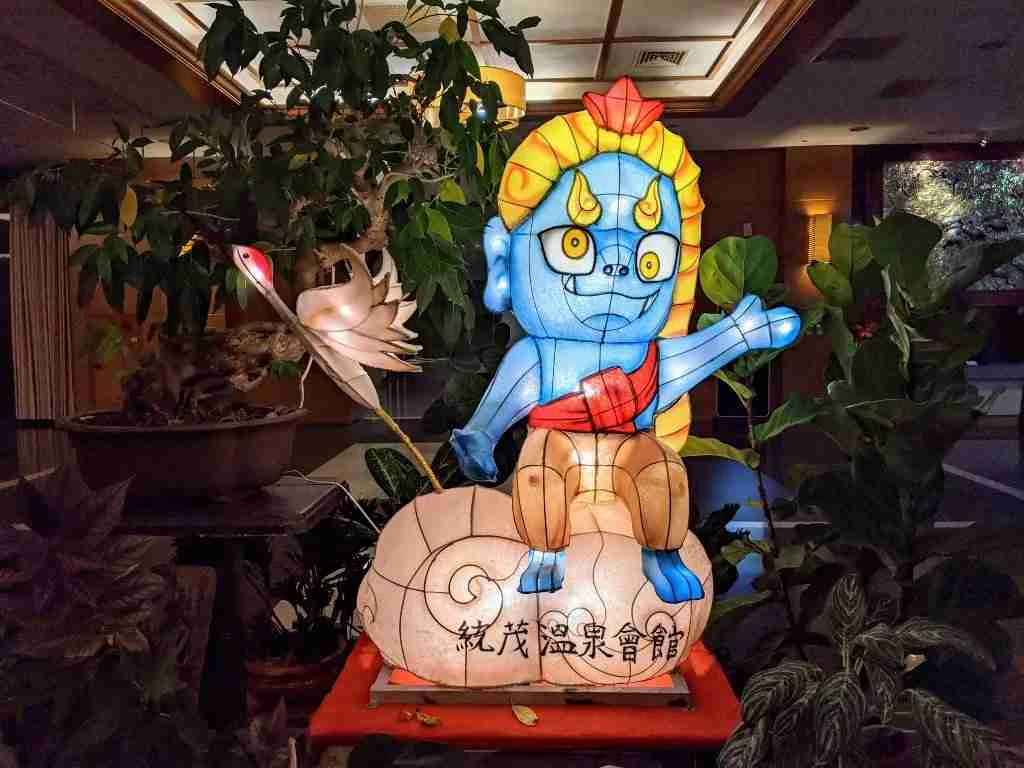
These small pieces put business identities alongside local ways of life. Finding them required moving along the streets, making lanterns a way of reading the neighbourhood: food businesses and bathing establishments became part of the visual story. Celebration spread beyond a single stage to the town’s working doorways.
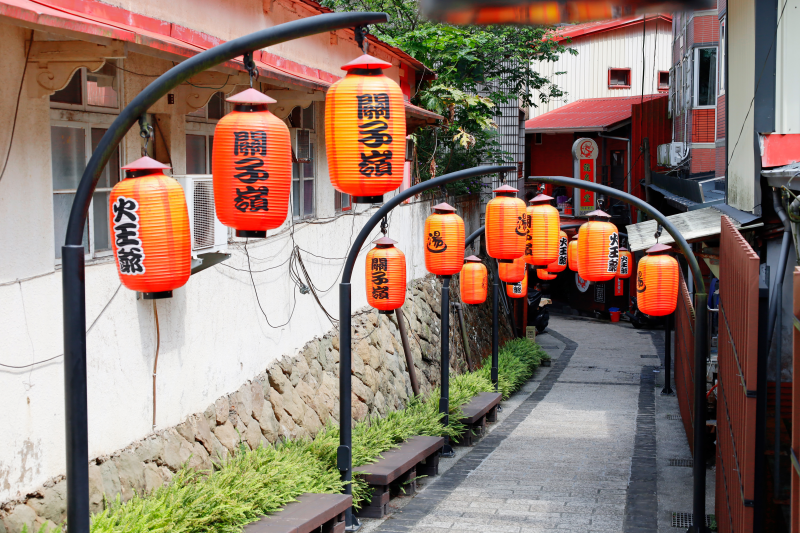
Shrine worship, the summer procession documented in 2019 and later autumn tourism programmes need separate calendars. A public procession date is not sufficient evidence for a fixed lunar observance. Check the shrine’s own arrangements for worship and the relevant organiser’s announcement for any public programme; participation in one does not automatically include the other.
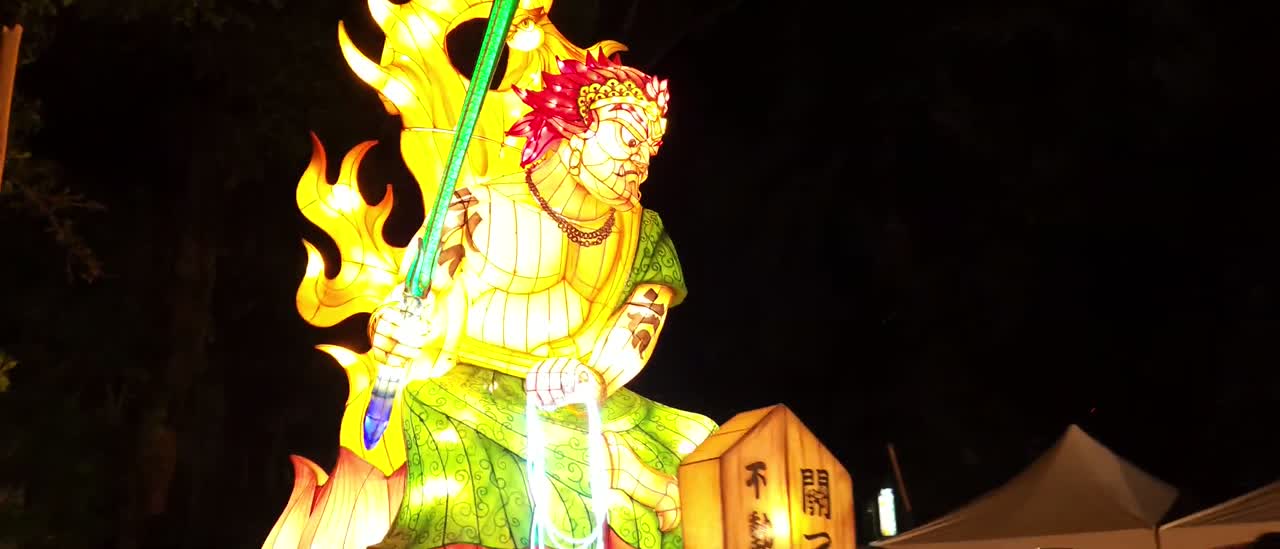
A mountain float needs a town’s hands
The 2012 announcement names three groups behind the Fire Lord’s float: the Tainan Hot Spring Association, Guanling Community Development Association and the shrine’s management committee. They jointly prepared a vehicle for the guardian of the springs. The announced sequence began with schoolchildren’s folk performance and a ceremonial dance, followed by blessing bags and the collective pull from Baoquan Bridge park towards Dacheng Hall.
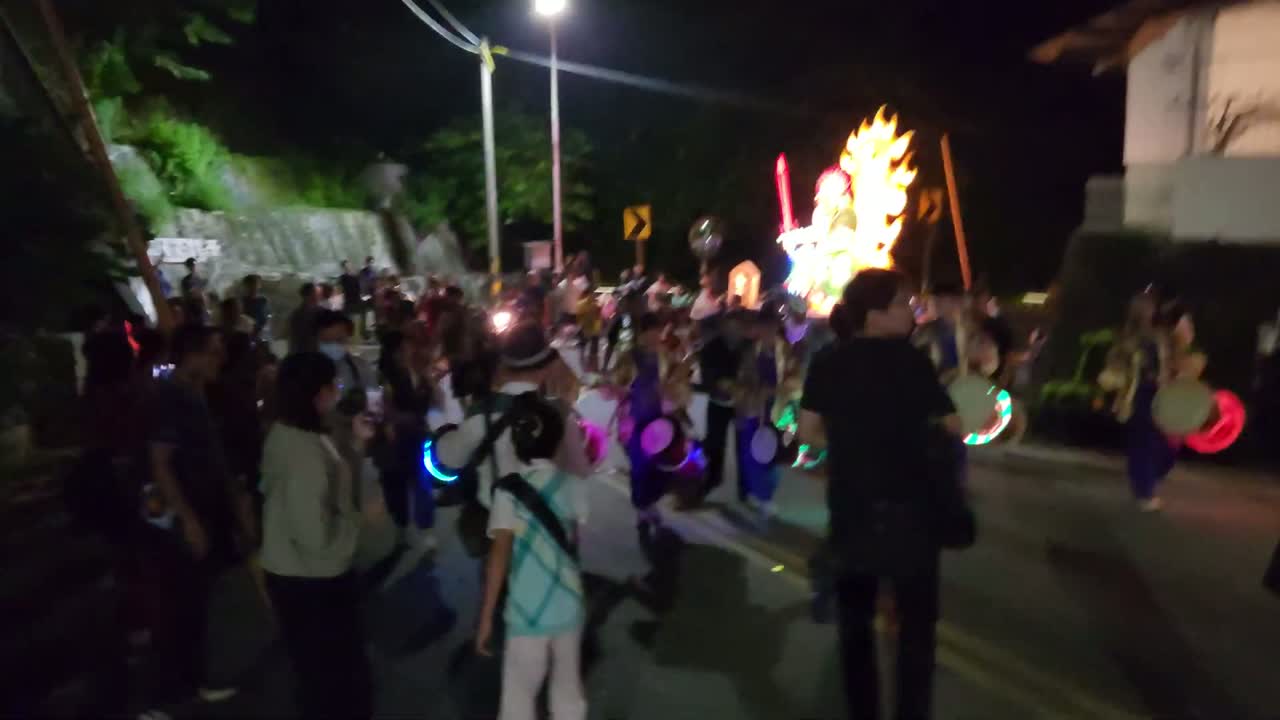
Pulling gave participants a task within the new public programme: the vehicle could move only through coordinated effort. The announcement explicitly presented this as a combination of Taiwanese and Japanese ceremonial ideas. It should be understood as a documented 2012 tourism production around an existing belief, rather than proof that an unchanged Japanese rite survived here or that the same route belongs to the 2026 autumn programme.
A 2019 procession account records another choice of objects: lotus seeds and dried longans. The Siraya administration and spa operators brought these local products to the shrine to pray for the springs to keep flowing, then distributed them to businesses. Their Chinese names supplied wordplay about returning visitors and prosperity. These were gifts documented for that edition, not a continuing visitor entitlement. They show how the prayer embraced a whole town’s livelihood, beyond a single hotel’s bathwater.
Read the spring town through the people who kept its pictures
The same family collection records a small service that once linked a visit to home. Before cameras were common, visitors hired local photographers, who developed the pictures and mailed them afterwards. The magazine reproduces old portraits taken at Haohanpo and the Water and Fire Spring. Bathing thus supported work beyond the baths, while the pictures preserved how people wanted to remember a mountain journey.
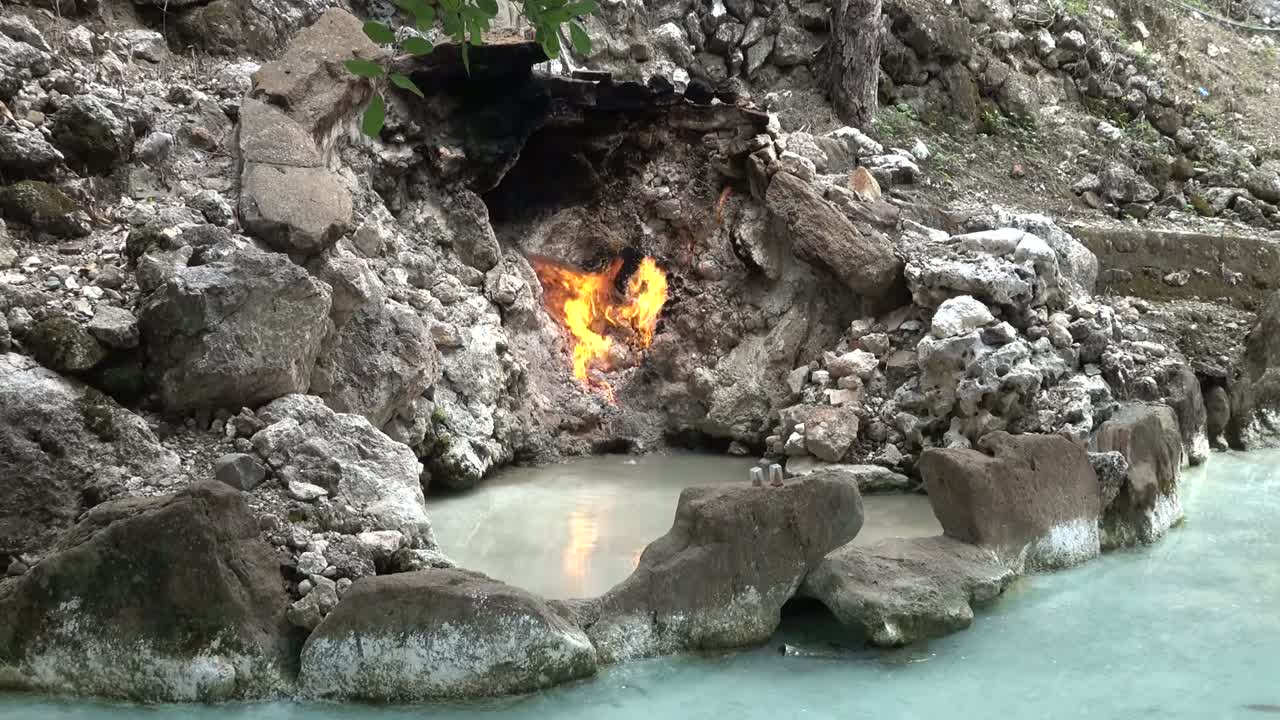
An ordinary visit can focus on the shrine and spa streets without waiting for a tourism opening ceremony. Bathing businesses make their own arrangements, and a shrine is a place of worship. Before travelling, check the day’s transport and weather notices: the Siraya administration issued a typhoon advisory on 22 October 2026. That notice calls for caution; it does not establish that the entire district is closed or that every programme is cancelled.
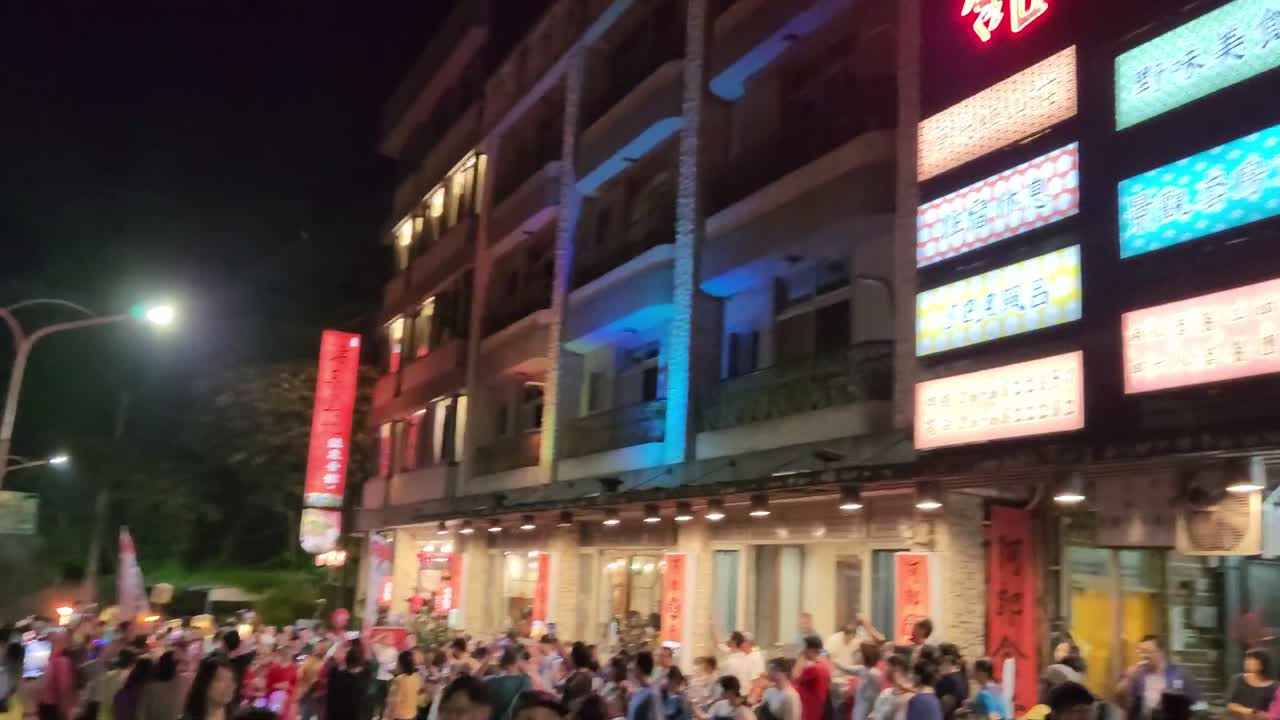
What is happening in 2026?
As checked on 5 November 2026, the tourism festival runs from 24 October to 22 November. The opening weekend on 24–25 October has passed; the next themed weekend is 7–8 November. The organiser announced fire performance for 7 November. The 24 October night procession must not be advertised as a nightly event throughout the festival. Check the official programme again for changes and availability before travelling.
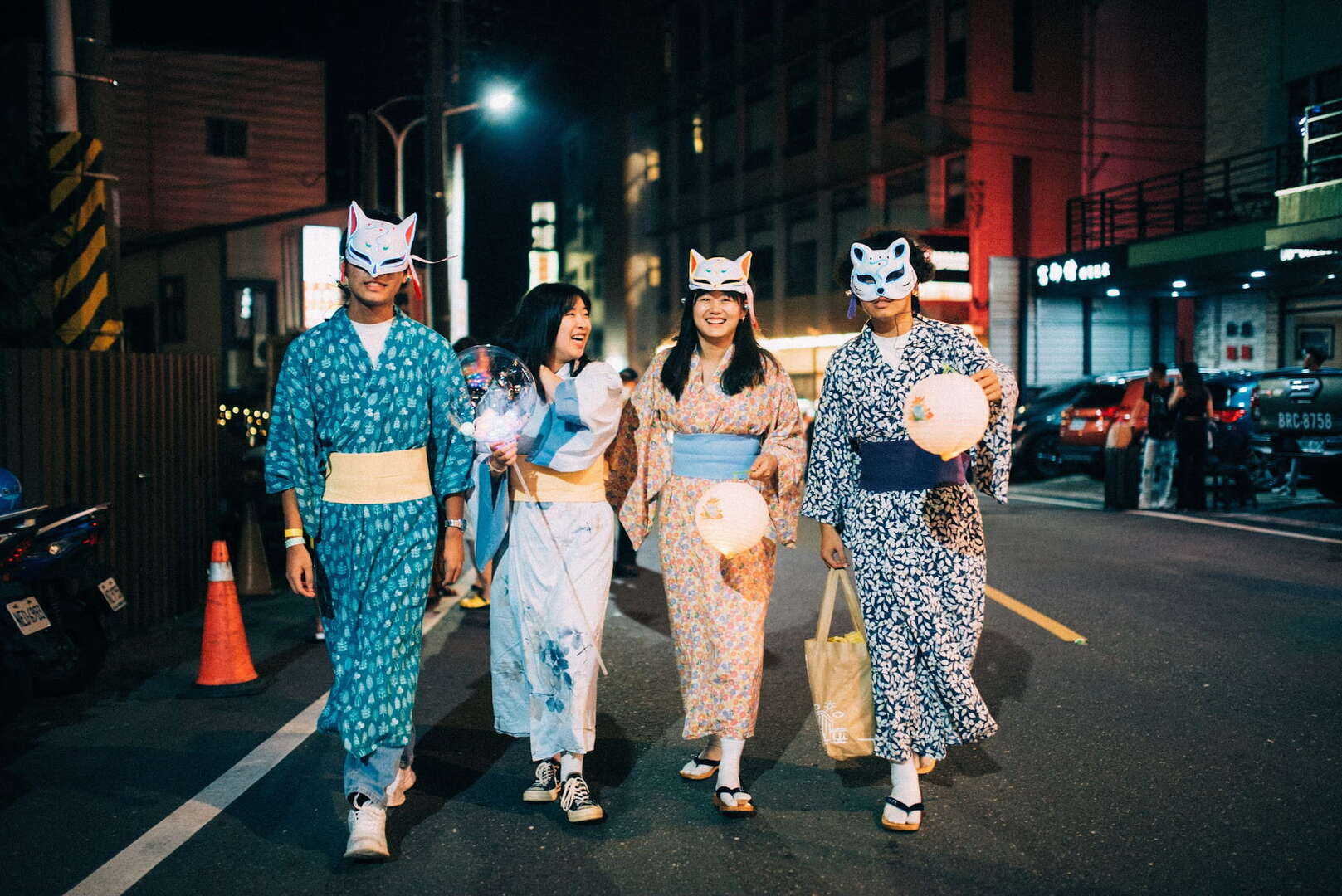
By day, start with the Fire Lord shrine and the spa streets. Water and Fire Spring can be planned as a separate stop to observe water and natural flame. Arrange travel between these places and your evening route according to the current official programme and transport notices.
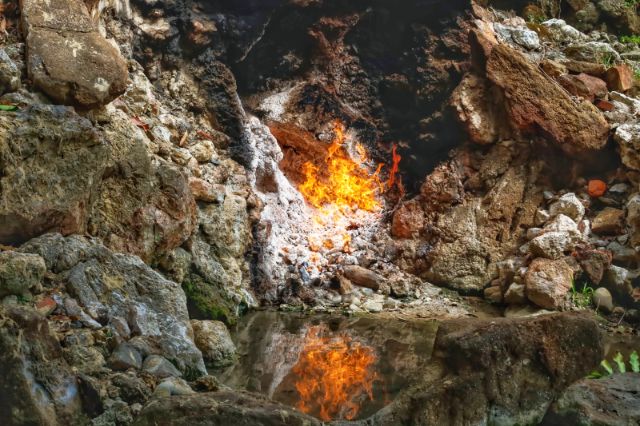
Arrange bathing with the business you choose, separately from the public programme. For an evening visit, check the final return bus and any traffic notices in advance; if it will not serve your chosen finish time, book accommodation or return transport first. Leave the procession lane and performance boundary clear, and do not approach the flame for photographs.
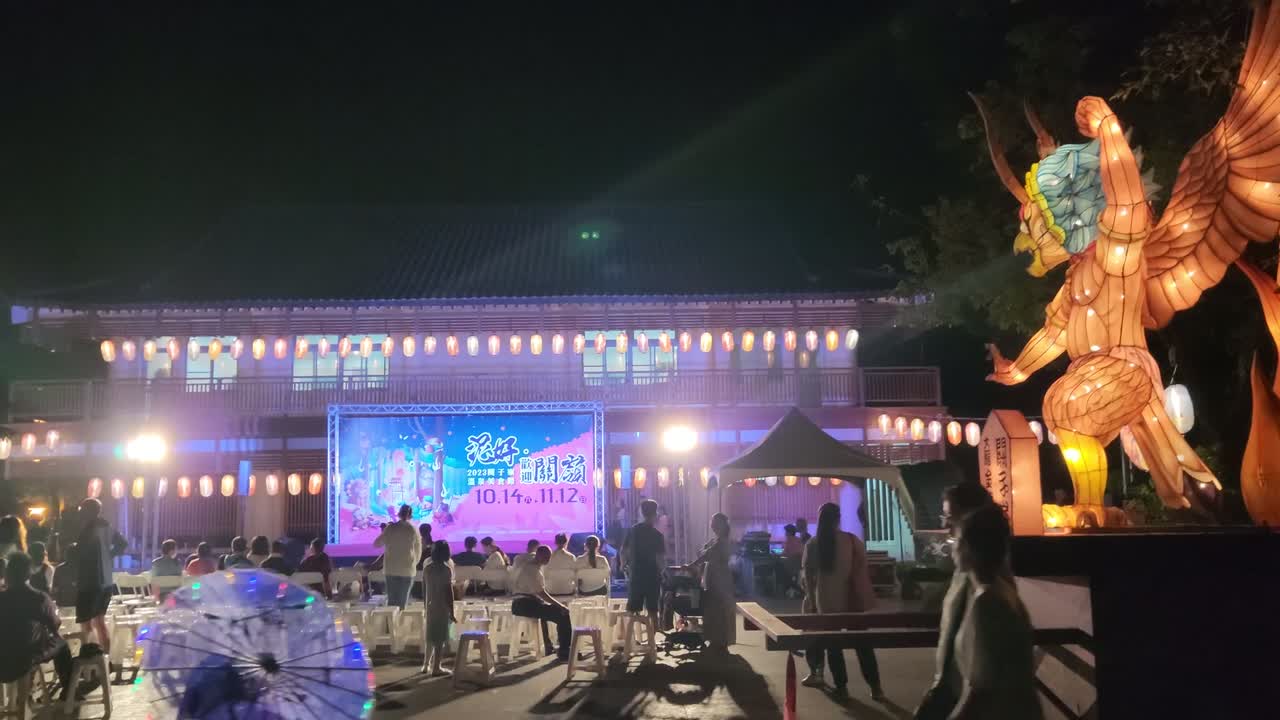
What to notice
Identify the flames, sword and rope, then consider the shrine’s relationship with the spring district.
Notice how shop lanterns connect bathing with food culture.
Plan a visit
- Location
- Guanziling hot-spring district, Baihe, Tainan; the Fire Lord shrine is near Route 172 and Haohanpo in Guanling village.
- Dates
- Check the shrine’s worship arrangements separately from any edition-specific public procession. An autumn tourism programme does not establish the shrine’s annual ritual date.
- Public transport
- Travel to Baihe Bus Station, transfer to Yellow 12 for Guanziling, then walk into the spa streets.
- Evening return
- Check the day’s last bus and weather notices before travelling. If joining an independently announced evening programme, arrange accommodation or return transport in advance; do not assume a daytime bus runs after it ends.
- Bathing
- Bathing is operated by individual hot-spring businesses and booked separately from street events.
Sources & historical context
Taiwan Tourism Administration / Siraya National Scenic Area Administration: portal images under the Open Government Data License, Version 1.0. The stills are contextual records, not proof of every historical event described. Existing mother text and photographs are preserved.
- Fire Lord shrine / 火王爺廟;1902、重塑與地方業者信仰
- 2012-08-08:山車合作團體與當年路線
- 2019-07-26活動紀錄,頁面2020-08-02更新:蓮子、龍眼乾與泉源祈願
- 2024年9月臺南藝文活動月刊:靜樂館家族記憶;沿用原母文,不將當代街景當作家族舊照
- 2023-09-27公告:10月14日夜祭巡行
- 2026-10-08:10/24–11/22及兩組週末日期
- 2026-10-24:開幕紀錄、11/7–8主題週與11/7火舞
- 2026關子嶺溫泉美食節官方活動網站
- 西拉雅國家風景區管理處/觀光署多媒體:關子嶺老街,2026-05-14入庫,拍攝日未載
- 西拉雅國家風景區管理處/觀光署多媒體:不動明王,2026-05-14入庫,拍攝日未載
- 西拉雅國家風景區管理處/觀光署多媒體:水火同源,2026-01-13入庫,拍攝日未載
- Blair’s Tour&Food Channel;2017-10-10上傳;水火同源;拍攝日未獨立核實
- 李家彰;原標題記錄2023-10-14;夜巡與廣場
- 李家彰;原標題記錄2023-10-14;燈車
- 李家彰;原標題記錄2023-10-14;南臺火舞秀
Information checked: 5 November 2026.