
Cultural story
A lantern sent to sea: remembering the dead in Keelung
Behind the illuminated procession is a system of shared responsibility, inherited names and invitations to those without a home.
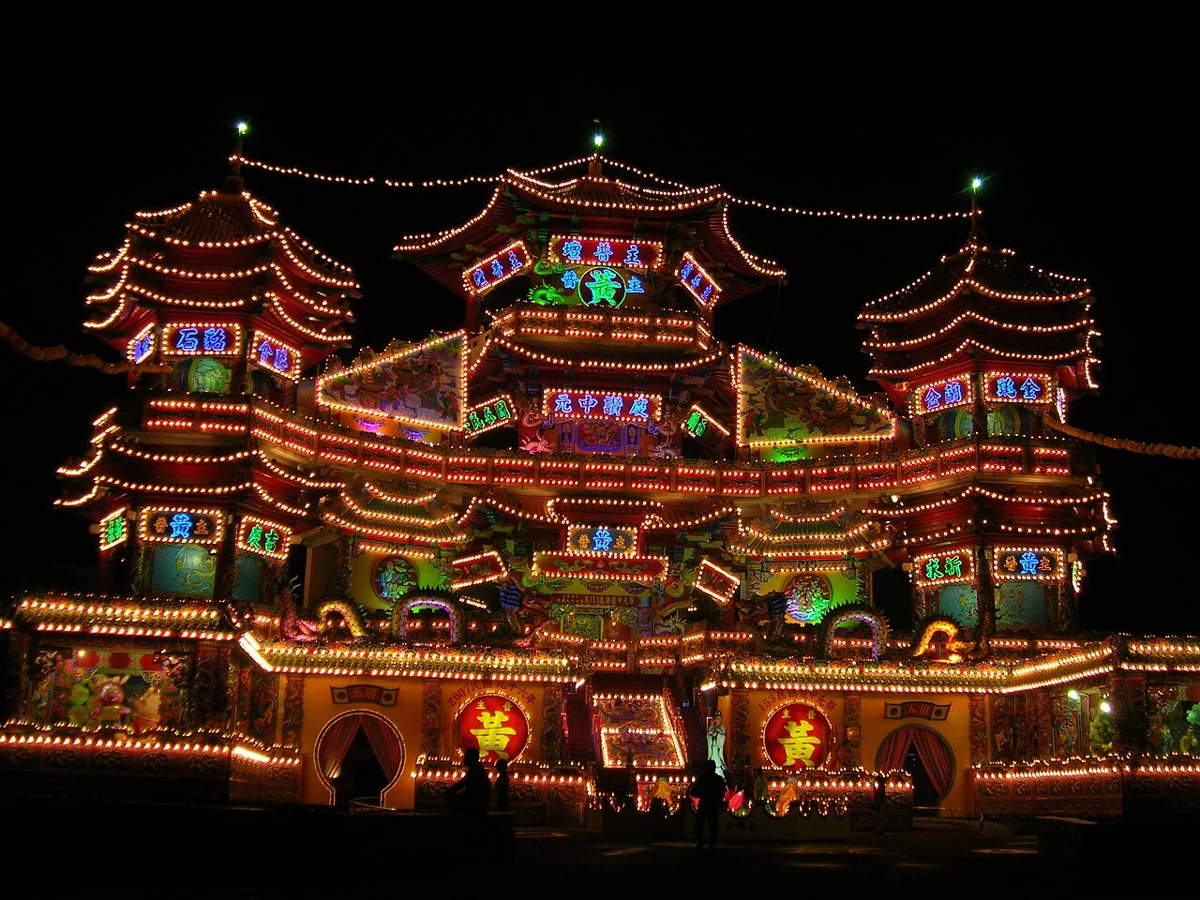
Trace the ritual from the Laodagong Temple to the waterfront.
The water lantern is a paper house and a ritual invitation, not merely a floating light.
Names take turns carrying the work
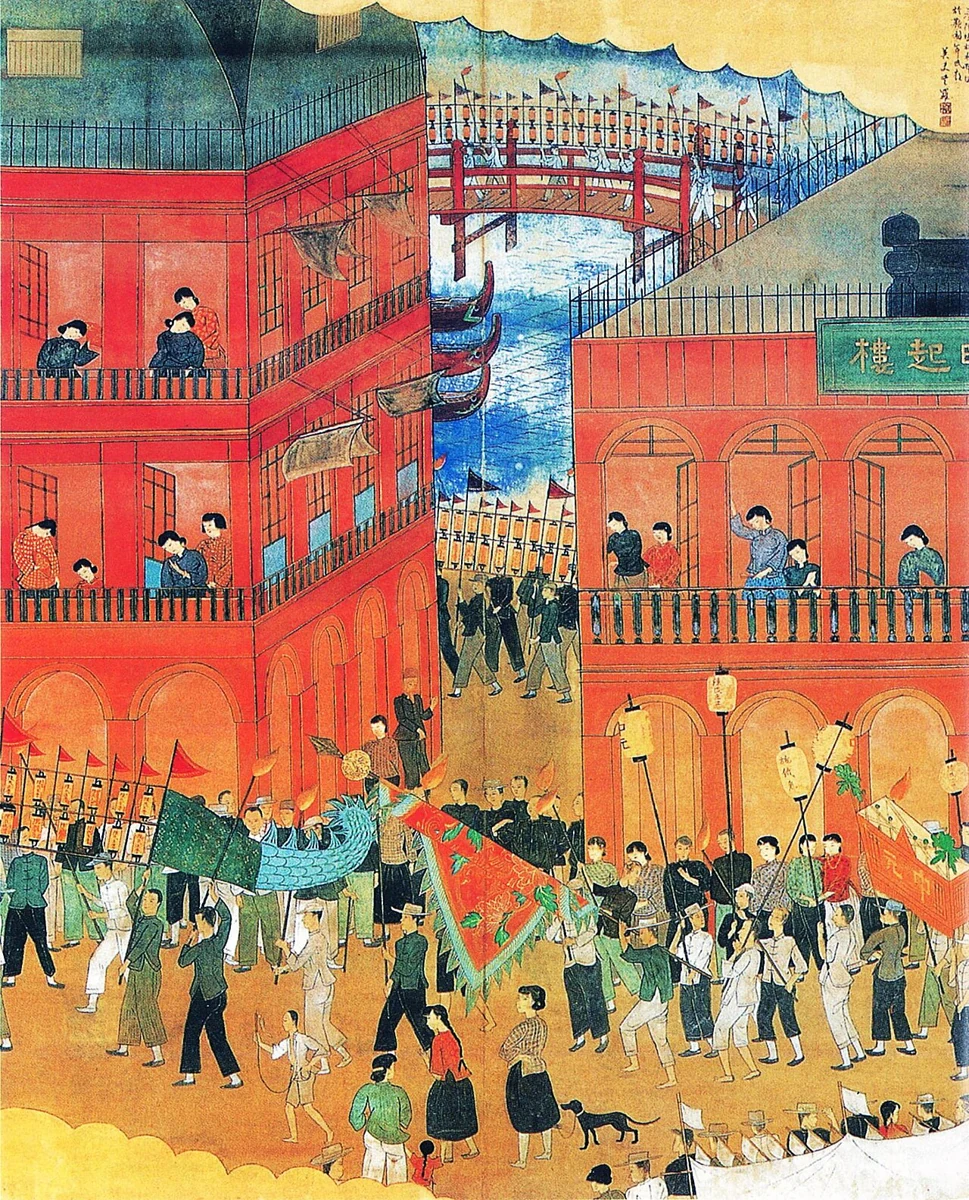
Keelung’s Ghost Festival is tied to the history of conflict between settlers from Zhangzhou and Quanzhou. The dead became Laodagong, honoured collectively rather than left as a continuing division between the living. From 1855, surname associations took turns leading the communal offering. The arrangement gave remembrance an organisation: someone had to gather resources, coordinate participants and hand the responsibility on.
That handover still has a public life. In 2022, the Huang association passed the duty to the Guo association for the following year. Reading the changing surname on a festival structure is therefore a way of reading who is doing the work. A repeated ritual is renewed through specific people and organisations rather than reproduced by a city administration alone.
Responsibility is handled through smaller objects too. The city account of the 2025 closing ceremony describes taking a register and keys from a brocade box, recording the time and then closing the shrine doors together at Laodagong Temple. The written record and the key accompany a religious boundary. The gesture does more than produce a closing photograph: it leaves a time and a custodial action that participants have jointly witnessed.
A house made to carry an invitation
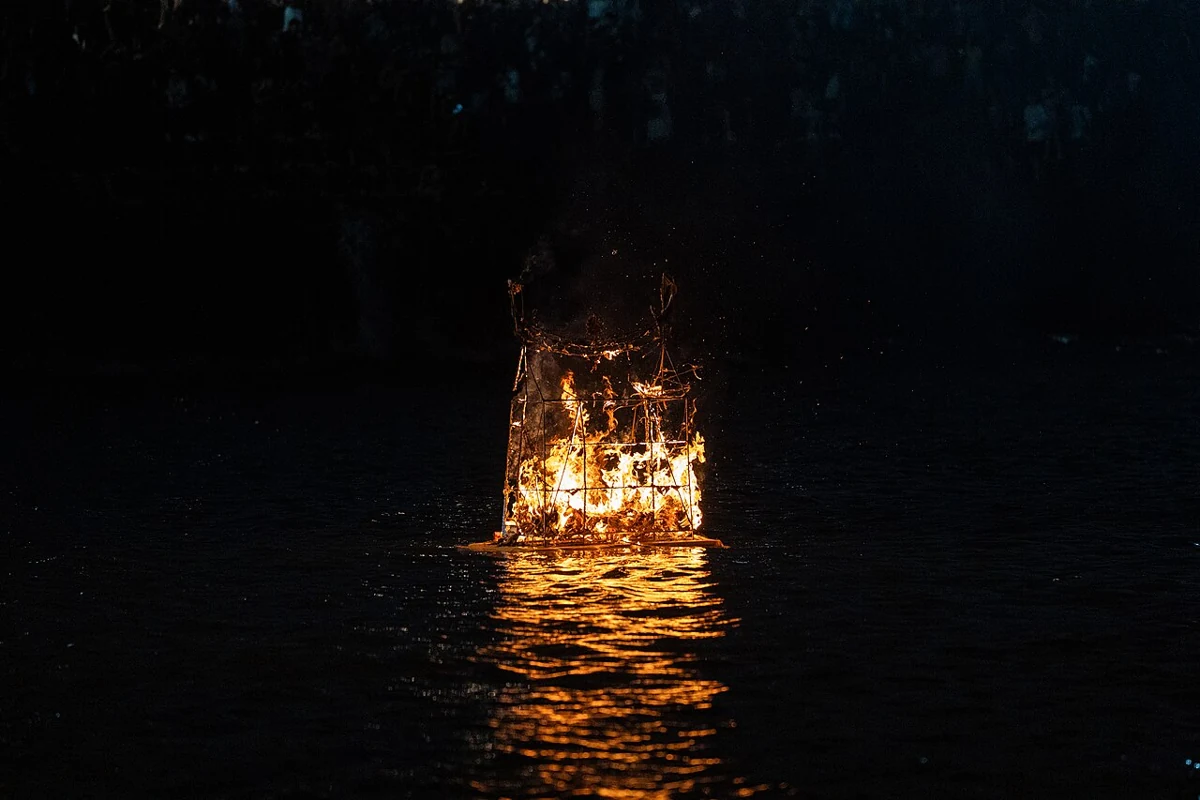
A water lantern head takes the form of a small paper house. After the street procession, the lanterns move to Wanghaixiang, where ritual actions precede their release. The journey joins the city and the sea: those invited to receive offerings are given a visible sign to follow. The house form offers a sense of shelter within a rite addressed to souls without settled descendants or a place of return.
The 2025 programme placed the procession in the evening and the release late at night, showing why the two should not be treated as one viewing stop. Preparations, transport and waiting separate them. Photography records from earlier festivals help reveal the made structure before it is launched; the temporary object matters as much as the final flame on the water.
From feeding to remembrance
The festival also gives work to food makers and display craftspeople. An account of its ceremonial tables distinguishes dishes intended as offerings from rice-and-flour figures made to be viewed. Hospitality is given a material form through arrangement, craft and abundance. Looking closely at the table makes the ceremony less abstract: remembrance involves preparing something for an absent guest.
The Laodagong Temple provides a place to begin this history outside the procession. Opening and closing its spirit doors mark stages of the festival month. A visitor who starts there can understand the illuminated streets as one part of a longer sequence of welcoming, offering and concluding, with the community’s work extending well beyond a single spectacular night.
The handover followed at a different temple, Qing'an Temple. In that year's record the Wu association passed the handheld incense burner to the Liu–Tang–Du association for the following rotation. The burner gave the transfer an object to hold, while the two locations marked distinct tasks: closing the year's shrine observance and accepting the next responsibility. These are documented events of 2025, not a new timetable or an assurance that visitors can enter either ritual area next year.
Look closer
Read the surname on a lantern structure and distinguish the procession from the later release at sea.
Visiting information
- Place
- Laodagong Temple, 37, Lane 76, Le 1st Road, Anle District, Keelung.
- Visit
- Visit the public temple space to understand the festival setting; ceremony access follows the temple’s arrangements. Wanghaixiang’s release is a separate annual event.
- Transport
- Take Keelung city bus 501 or 502 to Guojun Fuli Zhongxin, then walk uphill along the lane to the temple.
- Return
- Return to the stop for the service towards central Keelung and connect with the railway. For the late-night release, arrange the event shuttle or a booked ride separately.