
Cultural story
Inside the leaf: rice, labour and the Dragon Boat Festival
The difference between two dumplings begins long before the wrapping string is untied.
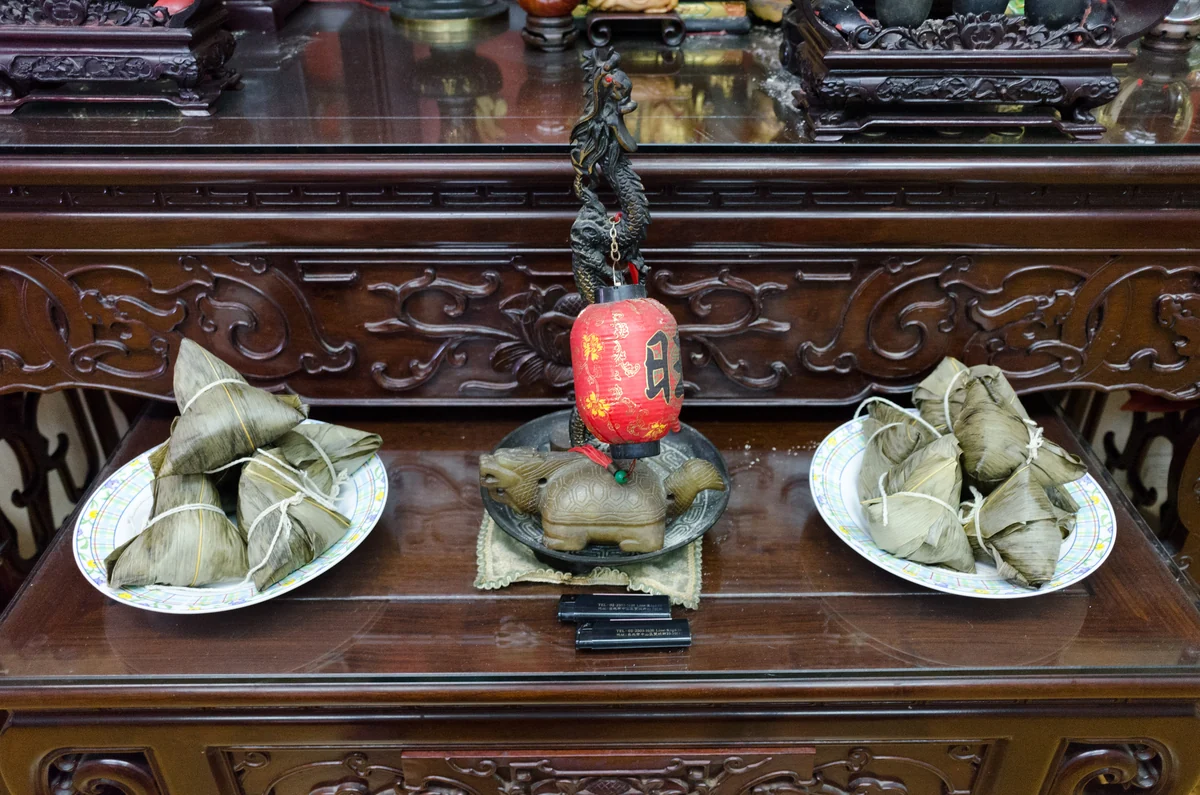
Follow the order of cooking rice, wrapping and heating.
Rice-grain dumplings and Hakka rice-dough dumplings preserve different material knowledge.
A regional name conceals a cooking sequence
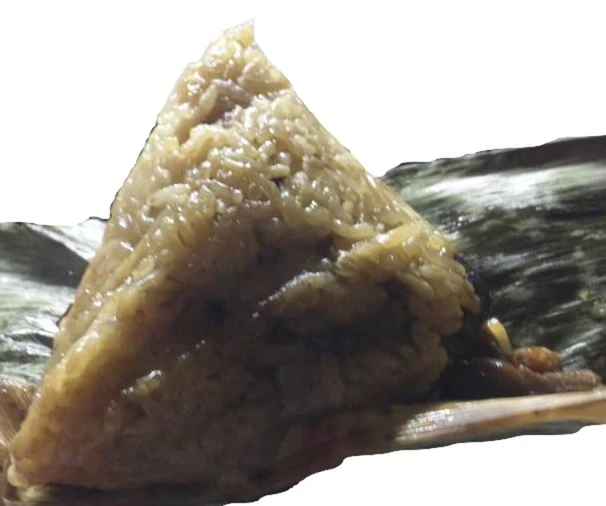
The familiar contrast is steaming in the north and boiling in the south. It is useful because it directs attention to preparation: in many northern-style recipes, rice and fillings are cooked or fried before the wrapped parcel is steamed. Southern-style parcels commonly enclose soaked raw rice and fillings before boiling. The rice sets together differently, producing different textures when the leaf is opened.
Family recipes cross these boundaries. A cook may change the rice, filling or preparation without changing what the family calls its dumpling. Instead of treating a town name as a fixed recipe, ask what enters the leaf raw and what has already been cooked. That question brings the discussion back to the person doing the work and the sequence they have learned.
When rice becomes a skin
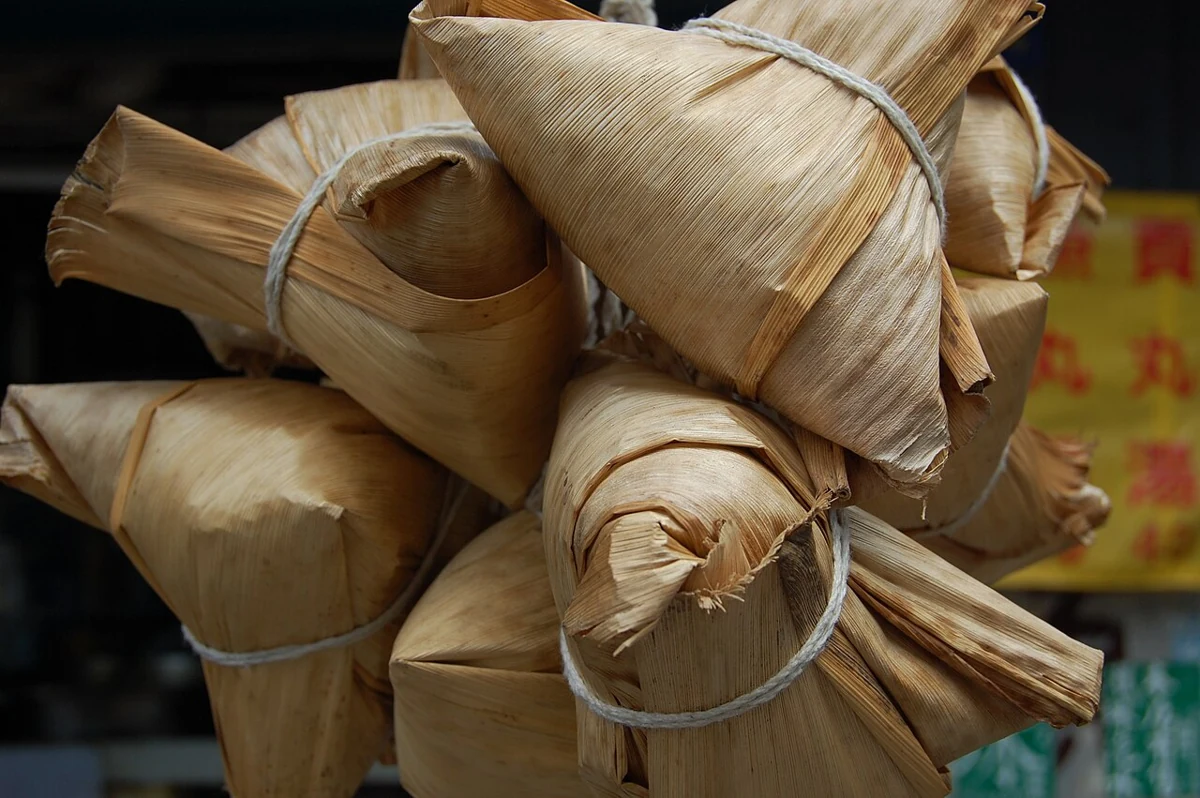
Hakka ban zong changes the material more radically. The rice is soaked, ground and drained to make a workable dough, which encloses a savoury filling. A Tainan Hakka Affairs account describes this preparation as part of a broader rice-food tradition used at festivals and family occasions. The soft exterior comes from turning rice into a dough, not merely from boiling a grain-filled parcel longer.
Leaves also wrap many Indigenous foods, but a similar parcel shape does not establish a shared festival origin. Each community’s ingredients, names and occasions deserve their own account. Keeping those histories distinct makes comparison more informative: the leaf is a practical technology used in different lives, while the fifth day of the fifth lunar month belongs to a particular festival calendar.
The meal and the river have different rhythms
A parcel carried home and a dragon boat arriving at the start line belong to different kinds of preparation. Cooking gathers labour around a table and stove; paddling requires a team to repeat a movement together. At a public race, the most useful moment may come before the finish, when a crew settles its rhythm and the blades enter the water in sequence.
Dajia Riverside Park offers a Taipei setting for the race side of this story, while rice-food shops make the cooking side accessible on ordinary days. Combining them does not require pretending that a race is always taking place. Visit the river as a landscape, and return for the announced festival programme when boats, teams and spectators temporarily change how it is used.
Taipei's race and its river ritual do not begin at the same place. The city's 2026 record places eye-dotting and the river offering at Qu Yuan Temple in Zhoumei, Beitou, on 6 June, before the later Dajia races. A vermilion brush marked the dragon's eyes, and the water deity's statue was carried aboard for the blessing. This gives the decorated boat a religious setting as well as a sporting one; it does not make either location a year-round ceremony venue for visitors.
The department dates Taipei's official races to 1974. That is the history of a city-organised competition, not the invention date of dragon boats or Taiwan's other village traditions. Holding those scales apart helps a first visit: Dajia shows how a modern race uses a riverbank, while Zhoumei's record explains a particular community and ritual connection. Neither comparison requires treating all Taiwan dragon-boat customs as one unchanged ceremony.
Look closer
Ask which ingredients were cooked before wrapping, and compare the opened rice texture.
Visiting information
- Place
- Dajia Riverside Park, beside the Keelung River in Zhongshan District, Taipei; the festival race zone is set by the event.
- Visit
- Use the public riverside paths on an ordinary day. Attend races on the published event dates and enter via the announced spectator access.
- Transport and return
- From Dazhi MRT station, take bus 72 to Hebin Gongyuan Dajia Duan (Dajia Riverside Park section). Return on the service towards Dazhi; race-day detours follow the event transport plan.