
Traditional festival
Donggang welcomes the kings: a town builds a voyage
The boat begins long before the final fire, in rotating neighbourhood duties, shipbuilding and the gifts carried aboard.
Every three years, usually autumn; next cycle 2027.
Donglong Temple and the King Boat Museum connect the neighbourhood procession with the craft of building a ritual vessel.
Seven neighbourhoods share the work
Donggang’s welcoming of the kings takes place once every three years, in the zodiac years of the ox, dragon, goat and dog. The 2024 cycle ran from 28 September to 5 October; the next is the 2027 cycle. Behind eight days and seven nights is a much longer rotation of responsibilities. Seven neighbourhood palanquin associations draw lots for their roles, making the conclusion of one festival the beginning of work for the next.
A coloured shirt identifies more than a place in a procession. Each association carries its own neighbourhood history, relationships and duties. During the four days of inspection processions, household altars and street receptions connect these groups with the town they serve. Welcoming the kings is accomplished through many small obligations fulfilled together, from receiving a palanquin to preparing a place for it to pass.
A boat made for a ritual voyage
Earlier boats used bamboo frames and paper; wooden construction became established in 1973. Shipbuilding introduces a sequence of specialised work and rites, including setting the keel and giving the vessel its eyes. Its dimensions are determined for each cycle. The finished object joins carpentry, painted decoration and the knowledge of how a boat is put together, even though its final journey will be ritual rather than a commercial voyage.
The boat’s movement through town is called qianchuan. Ropes and coordinated labour make a vessel travel over land, while residents add supplies for the kings’ departure. These additions bring domestic life aboard: clothing, food and other necessities turn departure into an act of care. In the final sending-off rite, burning releases the boat and its cargo; in local belief, the voyage carries away misfortune and restores peace.
A temple hall becomes a temporary court
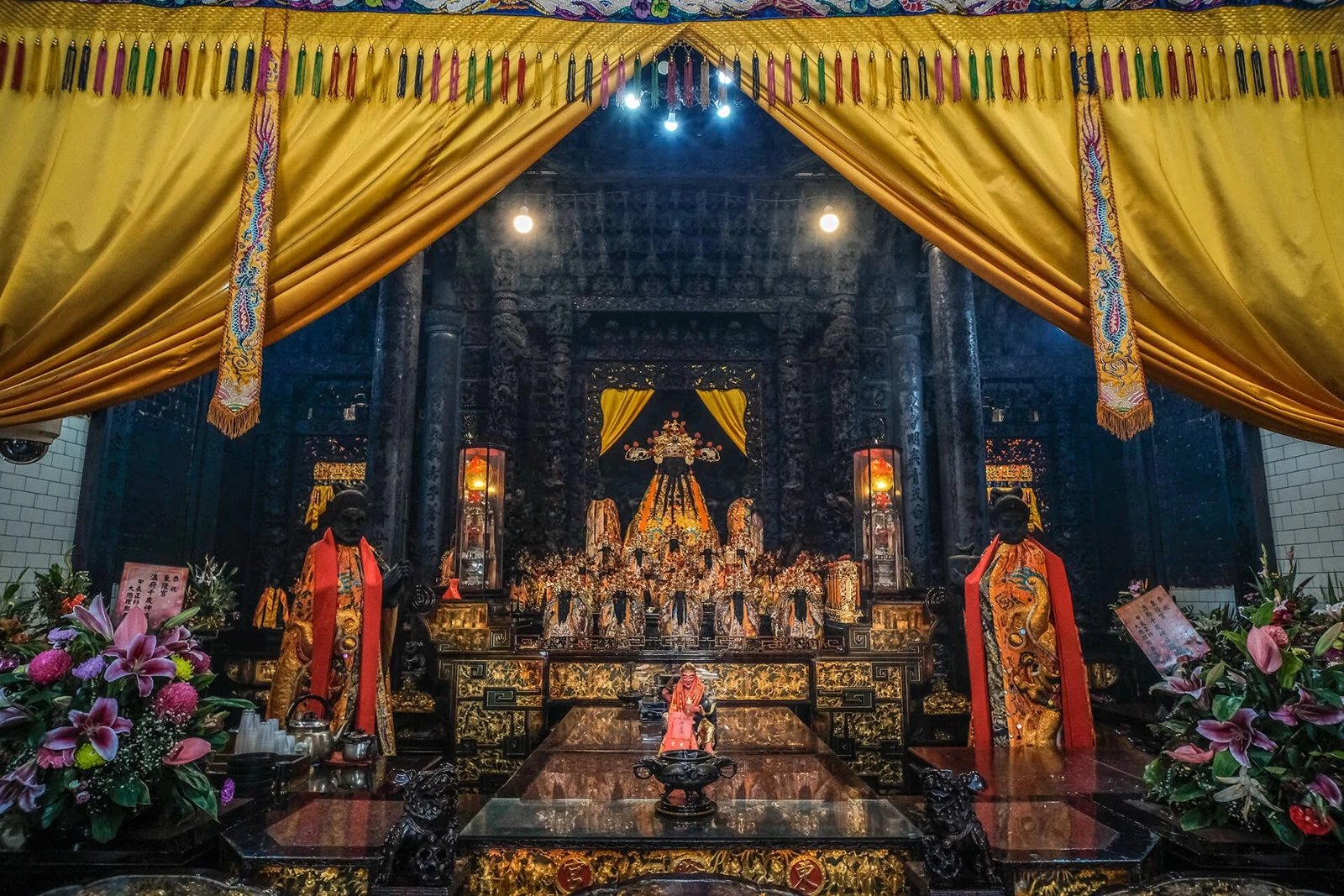
Donglong Temple describes the setting-up of the daitianfu court three days before welcoming the kings. Most deity images are moved from the main hall, while the court receives five chairs, writing implements, registers and ritual insignia. Named lanterns identify those serving the festival. The arrangement is more than festival decoration: an ordinary temple hall becomes the temporary seat of the visiting kings. Barriers at the doors distinguish the working ritual interior from the public forecourt.
During the kings’ stay, morning and evening offerings continue until departure. Tea-room attendants prepare five portions of foods such as tea, cakes and fruit for the five kings; senior organisers present them through formal ritual. This repeated service is less conspicuous than pulling or burning the boat, but it explains the word ‘welcoming’. The town prepares a place to receive its guests, attends to them during their stay and only then completes the elaborate farewell.
Between two festival cycles
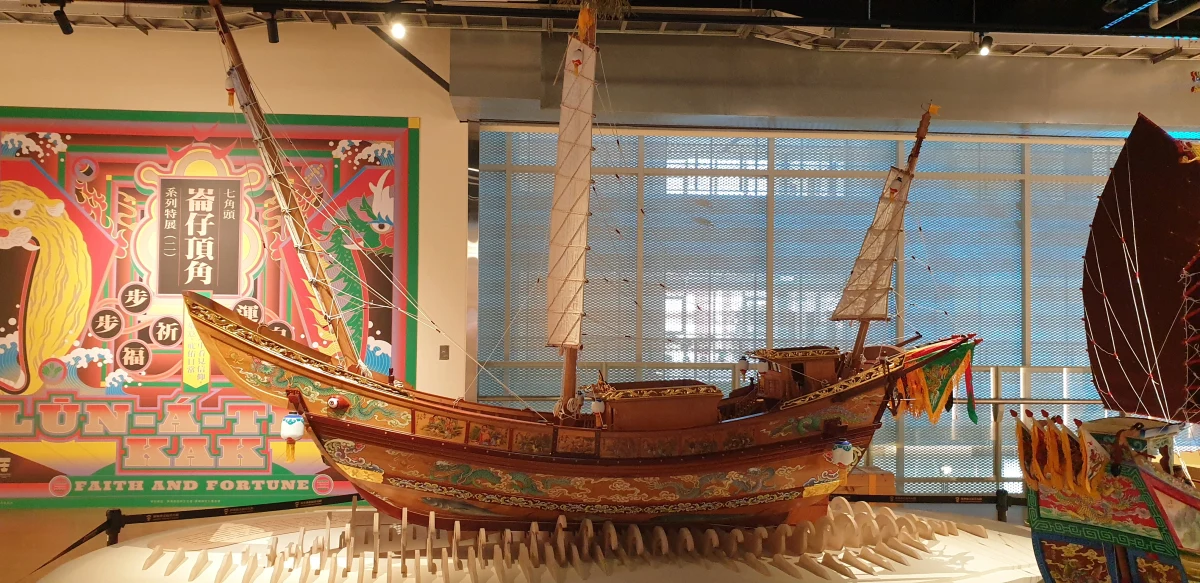
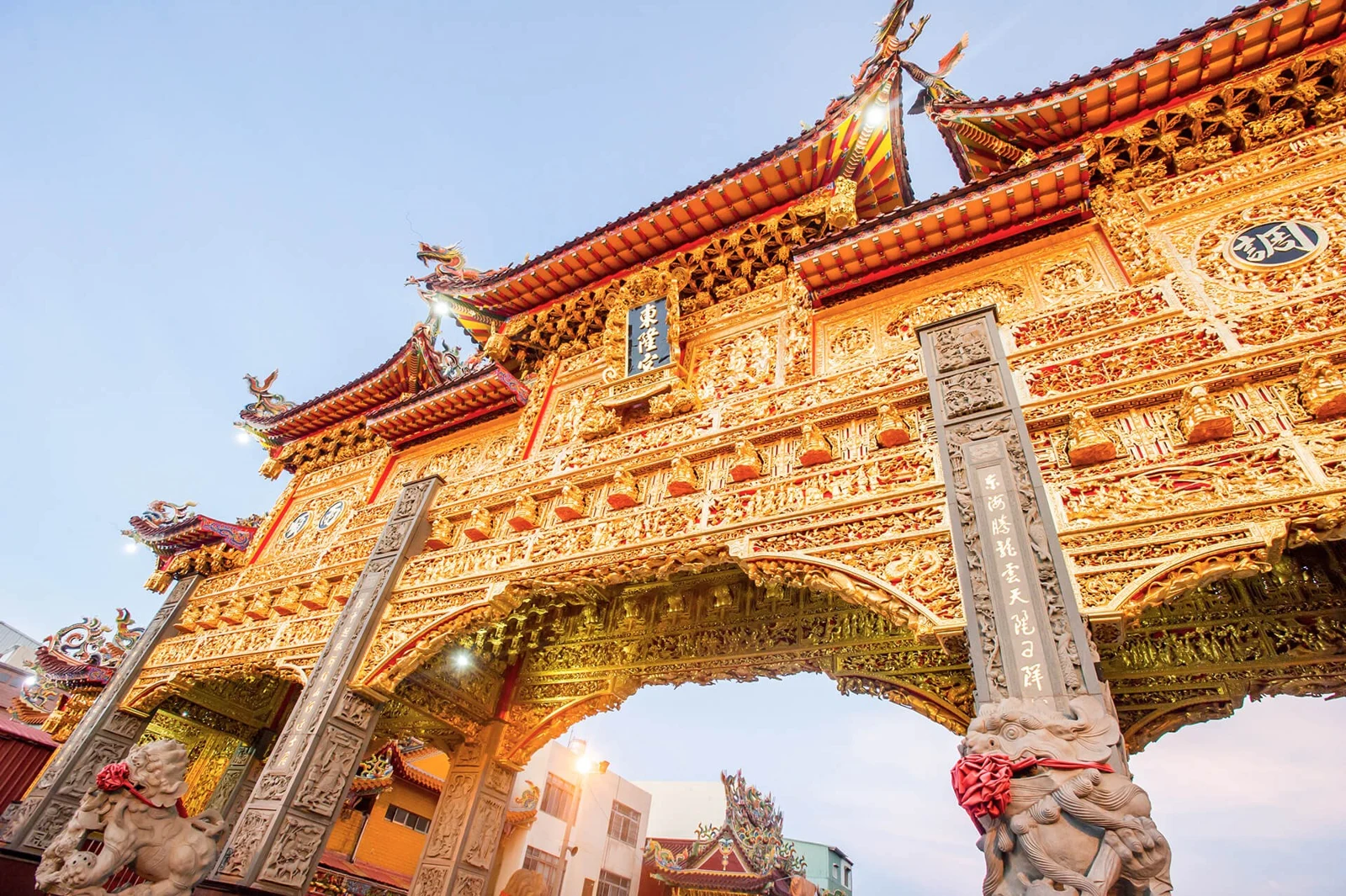
Outside festival season, Donglong Temple remains the town’s point of reference. Its golden gateway marks an entrance used by daily worshippers as well as great processions. The King Boat Museum on Chuanto Road offers another scale of encounter: its collection includes a cypress boat completed in 2016 by five craftsmen over eight months, later moved from the temple for public display. Details that pass quickly in a procession can be approached more slowly indoors.
Some of the evidence of cooperation survives after a procession has gone home. A plaque reading Wuhua Tianbao was presented to the Dingzhong Street sedan team by the seven neighbourhood teams. In its 2026 account, the King Boat Museum follows that gift alongside a century-old sacred sedan long preserved by the Dingzhong Street team’s association. The plaque records a relationship between groups; the sedan records their continuing care for an object that once had work to do in the procession. Neither can be reduced to a decorative symbol of the town.
A surviving flag, team shirt or handwritten record changes what a visitor can ask. Instead of asking only how spectacular the next festival will be, one can ask who kept this piece, which team used it and how its meaning was explained to a later generation. The museum display is one way of sharing those records; the history belongs equally to the people who retained them between festivals.
The museum and temple connect the spectacular farewell with the years of preparation around it. Leaving Donggang with the image of a boat’s carved surface, a neighbourhood colour and a household offering gives the final fire a fuller meaning: a town has spent time making something together before agreeing to let it go.
Look closer
Follow the neighbourhood colours and compare the boat’s painted surfaces with the supplies prepared for departure.
Visiting information
- Cycle
- The festival follows a three-year cycle, usually in autumn; 2027 is the next cycle year. Its exact dates and public arrangements must be taken from Donglong Temple’s announcement rather than calculated from the 2024 dates.
- Temple
- Donglong Temple, 21-1 Donglong Street, Donggang; daily 05:30–21:30.
- Museum
- King Boat Museum, No. 9, Chuanto Road. Regular hours are Tuesday–Sunday, 09:00–18:00, with Monday closure subject to special notices. The 22 October notice closes the museum on 23 October, opens it on 24–26 October and closes it on 27 October. Recheck any later weather-related change before travelling.
- Transport and return
- Take 9127G from THSR Zuoying to Donggang; Dongliu Pier is a walking approach to Donglong Temple. For the museum, use Donggang Bus Station on Chuanto Road. Return via the same service before its last departure.
- Current exhibition
- The Dingzhong Street Tianbao exhibition is announced for 16 August–15 November 2026 in the second-floor special exhibition room. The exhibition period is separate from the next festival; the presence of particular objects after it ends is not confirmed.
- Inside the museum
- Indoor exhibitions are ticketed under the museum’s current rules. Do not use flash, selfie sticks or camera tripods; special filming requires the museum’s permission. Observe any barriers in the temple and do not treat the Wangfu ritual interior as a freely accessible exhibition.