
Cultural story · Food and local life
Donggang Bluefin Tuna Festival: the work begins when the fish comes ashore
Follow the first-tuna auction, fish carts, ice and the dining table to understand the work behind Donggang’s celebrated catch.
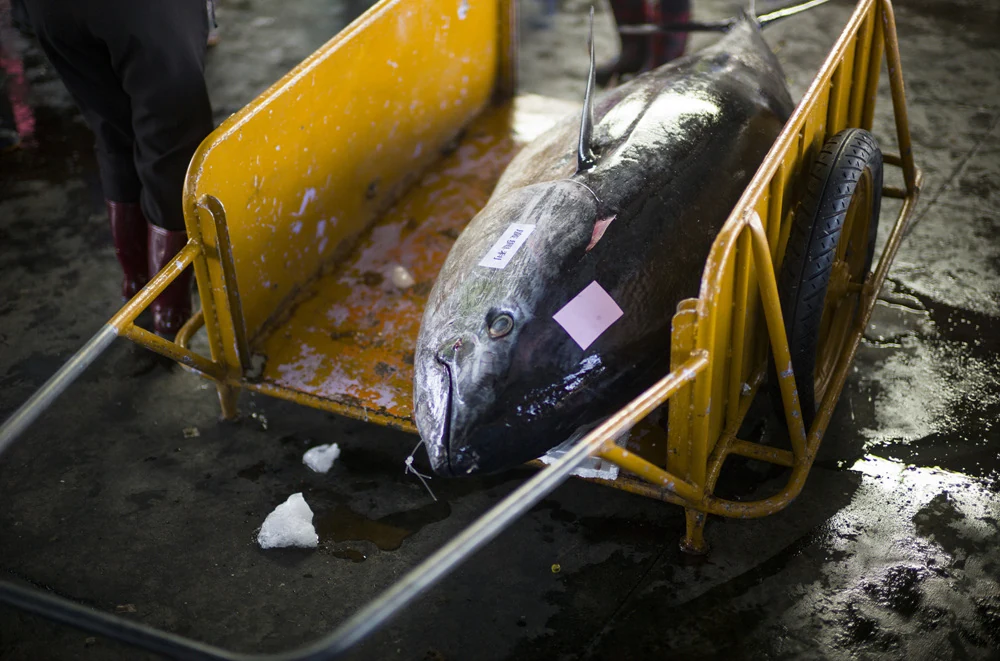
Bluefin season is roughly April–June; festival programmes generally begin in May.
The 2026 first-tuna auction took place on 2 May.
Distinguish working fish-market areas from visitor dining areas.
The first tuna is more than an auction headline
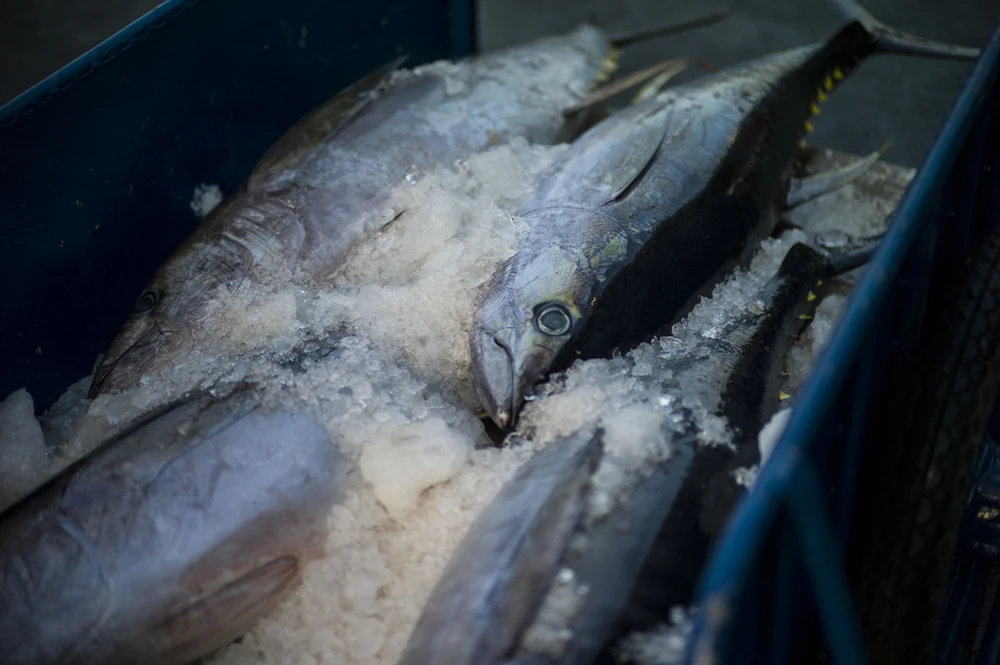
On 2 May 2026, the festival opened with the first-tuna auction. Captain Hong Fu-chia of the Liuqiu-registered Fu Yu Ching No. 2 brought in a 190-kilogram bluefin. Chia Chen Seafood Restaurant and Peng Fang jointly bid NT$10,600 per kilogram, a total of NT$2.014 million. For a moment, the boat, skipper and buyers all shared the spotlight.
The ceremony turns a roughly April-to-June fishing season into a moment the town anticipates together. Visitors may remember a concert or sashimi first; the port depends on returning boats and the markets, transport workers and restaurants that receive their catch. The first tuna introduces a much longer chain of work.
The fish cart follows the port’s working line
Fish move from the side of a vessel onto low two-wheeled carts and into the market. A long body, a narrow cart and the change in height between boat and quay make unloading a coordinated task. One person steadies the load while another controls the handles. That short passage is a working space.
Inside the market, buyers consider more than size, inspecting flesh and fat at the tail. Vessel names, tags and sales documents identify the catch as it is assessed and changes hands. A slice served at lunch has already passed through many decisions.
Washing the market floor is another part of the working day. Water, the reflective surface and parked equipment reveal the quieter work of cleaning and resetting the space for trade. From a publicly accessible spot, the rhythm becomes easier to follow when the passage remains clear.
A fish can also leave the port as a research sample. In a 2015 National Taiwan University study, Lu Han-bo examined ear stones collected from Pacific bluefin landed at Donggang and Nanfang'ao during 2011–2014. Reading their growth rings helped estimate age, and matching age with fork length allowed catch records to be analysed in another way. The small ear stone answers a different question from the tail sample inspected by a buyer: how long the fish had lived, rather than how its meat might sell.
From the market to the table
Donggang’s fishery direct-sales centre, commonly called Huaqiao Market, stands on Chaolong Road beside the ferry waterfront. Seafood stalls and prepared food share this harbour setting. Looking at species, cuts and preparation before ordering links a meal to the work visible nearby.
Bluefin should not obscure everything else on sale. Other catches and vendors sustain their own routines; the festival illuminates one season within that larger life. Treat the stage programme and a harbour visit as separate parts of the day, allowing both celebration and attention to the place that supports it.
Before leaving, the moored vessels give the auction headline another meaning. Its price connects time at sea with handling on shore, market judgement and the responsibility of bringing food to the table. Those handovers are part of Donggang’s flavour.
That study also used stable isotopes in a smaller set of ear stones to investigate spawning origin. Its findings belong to the sampled fish and period; they cannot identify the origin of every market fish or establish the stock's condition in 2026. Keeping those limits makes the port's wider work visible. A visitor need not enter a laboratory or interrupt unloading to understand that fishers' catches can contribute both to a meal and to evidence used in studying the next generation.
Look closer
Notice how carts connect vessels and market entrances, leaving handling lanes clear.
Identify the species and cut when ordering, connecting the meal with harbour work.
Visiting information
- Location
- Huaqiao Market: 39 Chaolong Road, Donggang, Pingtung, beside the Donggang–Liuqiu ferry area.
- Season and time
- Roughly April–June. Allow half a day for the harbour and market; stall hours vary.
- Getting there and back
- Take route 9127D from HSR Zuoying to Dongliu Ferry Terminal and walk to the market. Return on the Zuoying-bound service.
- On site
- Fish unloading and auctions are workplaces: stay on open visitor passages. Stage programmes have their own festival locations.