
Annual festival
Dajia Mazu: a journey sustained by many hands
Nine days on the road connect temple ritual, roadside hospitality and the craft waiting back in Dajia.
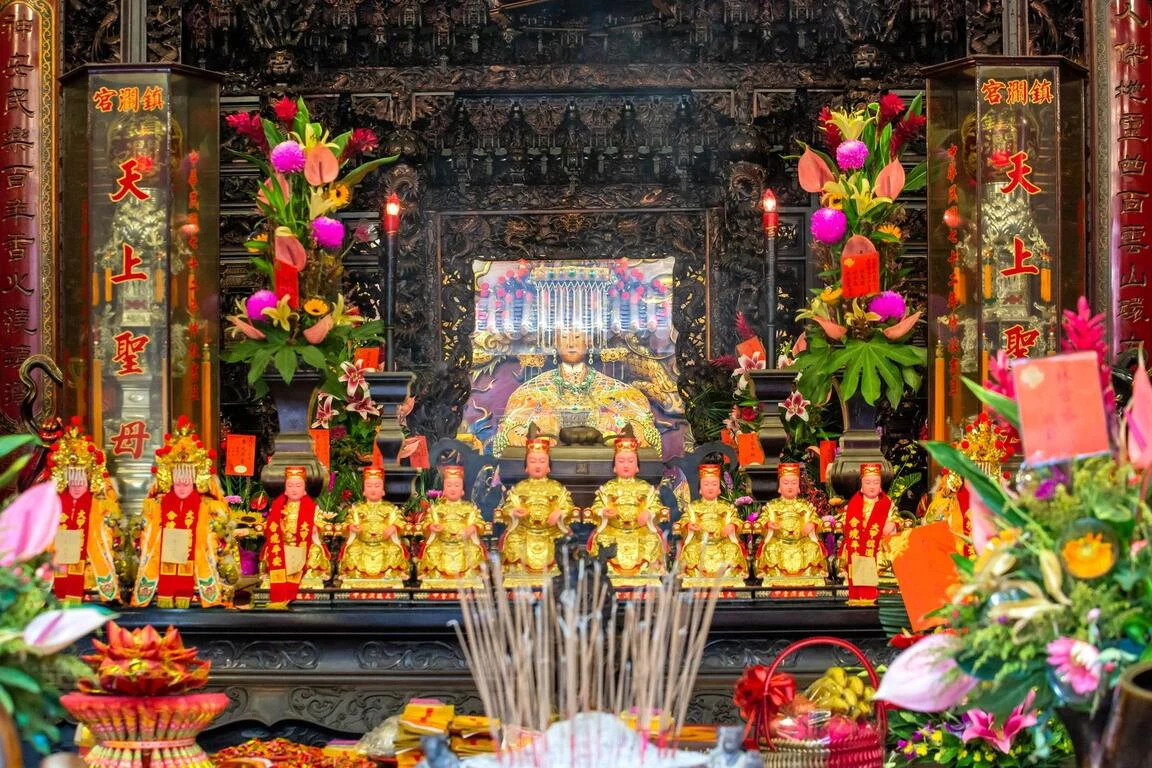
Usually spring; departure is selected by temple divination. The 2026 journey ran 17–26 April. The 2026 edition has ended.
Begin at Dajia Zhenlan Temple: look up at the carved ceiling, then choose a manageable pilgrimage segment.
A timetable becomes a shared journey
At Dajia Zhenlan Temple, departure turns a familiar town centre into the beginning of a long journey. The 2026 pilgrimage left on 17 April at 22:05 and returned on 26 April. Its nine days and eight nights linked Dajia with temples in Changhua, Xiluo and Xingang, where the birthday ceremony took place on 21 April. The overnight temples give the journey its rhythm: walking, receiving the procession, resting and setting out again.
The dates are determined by the temple through divination, so the pilgrimage does not occupy the same Gregorian dates each year. People also join for different lengths of time. Someone walking one town section shares the road with a pilgrim continuing to the next overnight stop. Choosing a manageable segment and its return station makes participation a concrete journey rather than an attempt to keep up with every movement of the palanquin.
The temple’s own outline separates ten principal ceremonies, including divination, raising the flag, prayers for peace, seating the deity in the palanquin, departure, stays, birthday worship, return and re-enthronement. ‘Getting on the road’ is therefore not one interchangeable moment: preparing the palanquin, leaving and restoring the image to its place have different roles. The journey’s endpoints are also acts of worship, rather than simply start and finish lines for walkers.
The road also has a kitchen
The moving procession depends on work that happens at its edges. Along the route, food stations receive walkers, while local residents contribute ingredients, cooking and transport. Near Xiluo Bridge, villagers from Sanzhen have used small trucks to carry food to pilgrims. A pot of food has to reach the road before it can become an act of hospitality; preparation and distribution connect the household to the public procession.
This support changes the experience of distance. A short pause can mean water, a meal and a conversation before the next stretch. Accepting only what one needs, keeping the serving space clear and carrying rubbish away are simple ways of joining the exchange. The journey is remembered through feet and fatigue, but also through people who make another stretch possible.
A small flag records the road
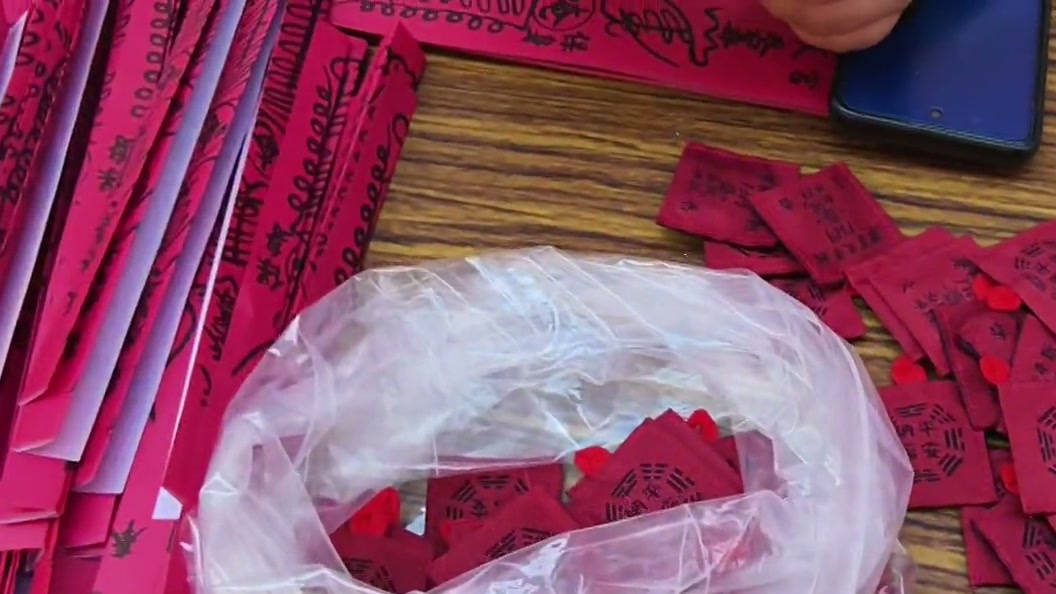
Jenn Lann Temple describes the pilgrim’s flag as a personal sign, with two small bells associated with companions finding one another during night walking. Charms from temples along the route are tied to it. Before a new pilgrimage, the old charms are removed and new ones attached through the temple’s prescribed process. A small carried object can thus accumulate the places and acts of worship within a much larger moving crowd.
The same account distinguishes the two directions: the flag is opened on the outward journey and wrapped on the return, when incense carries the meaning of bringing the sacred fire home. The temple also states that a flag is not required simply to join the walk. Thus even a small change in a carried object marks returning as a distinct stage, rather than merely retracing the outward distance: places visited and prayers made are being brought back into ordinary life.
At roadside tables, hands arrange red paper charms and embroidered objects, bringing personal wishes into a shared journey. These blessings are not all personal pilgrimage flags: flags, paper charms and embroidery have different roles. Notice how each object is arranged and carried, rather than treating everything seen along the route as one kind of flag.
A personal pilgrimage flag should also be distinguished from the organised embroidered-flag team. The religious-culture record dates that women’s team to 1963 and places it within the procession’s ordered formations. It gives female devotees a visible collective role alongside the other groups. The historical description does not establish a current registration quota: joining an organised team requires its own announcement, whereas carrying a personal flag follows a different practice.
A ceiling built like a woven web
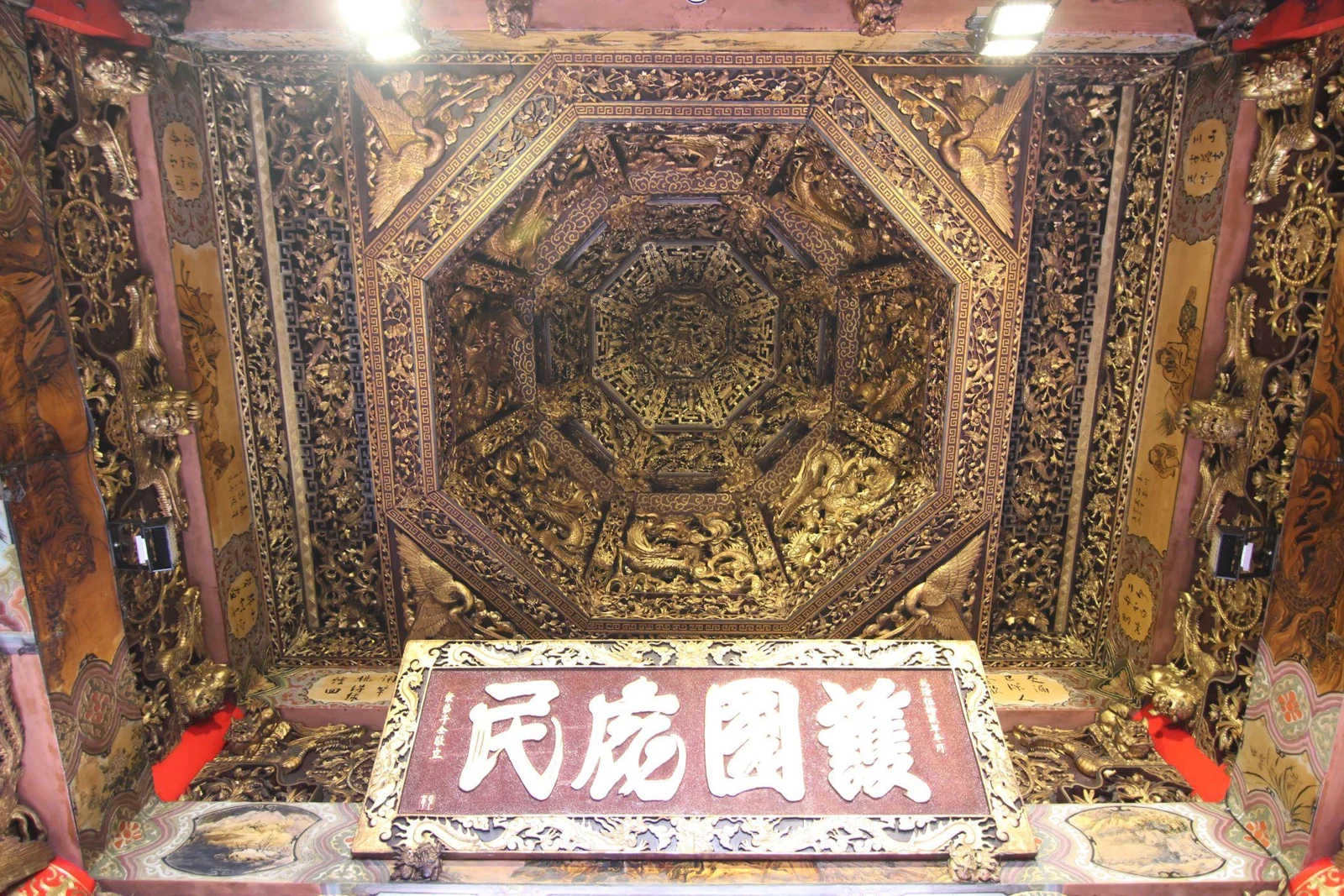
The caisson above the worship space draws successive layers of wood towards its centre. Taiwanese carpenters call this kind of ceiling spider-web construction: a network of members makes depth visible overhead. At Zhenlan Temple, carved figures and gilded details occupy the spaces between those layers, so structure and ornament are read together.
The temple’s woodcarving also belongs to the working history of the Shi family from Lukang. Shi Zhen-yang learned alongside his father Shi Kun-yu and later took on carving commissions at Zhenlan Temple, including panels behind the Mazu image. The overhead pattern can therefore lead the eye back towards the shrine: different architectural positions gave carvers different surfaces on which to work.
A blessing written in birds and lotus
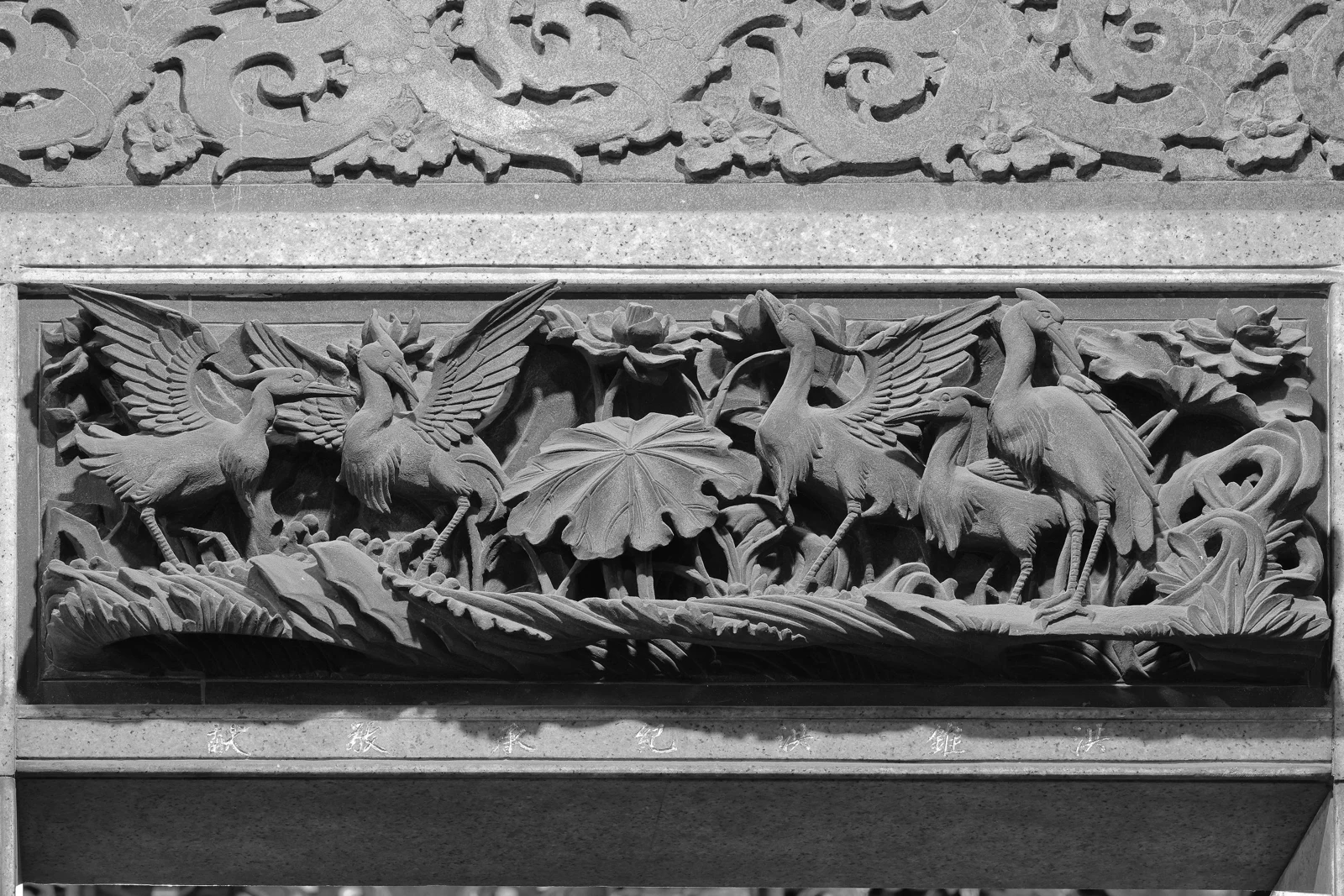
The temple’s stone-carving subjects carry wishes as well as forms. A bird-and-lotus composition is presented as a blessing for success in examinations; other panels depict immortals and episodes from classical stories. Animals, plants and people give worshippers a vocabulary for hopes about study, family and the future.
Raised birds, stems and broad leaves catch light at different depths. Their patient arrangement stays in the town after the nine-day procession has returned. A visit can end here, with the large shared journey narrowing again to the individual hopes that bring people through the temple door.
Look closer
Compare the layered wooden ceiling with the shallow and deep cuts of the bird-and-lotus stone panel.
Visiting information
- Season
- Usually spring; departure is selected by temple divination. The 2026 journey ran 17–26 April. The 2026 edition has ended.
- Start and everyday visit
- Dajia Zhenlan Temple, 158 Shuntian Road, Dajia District, Taichung.
- Getting there and back
- From Dajia Railway Station, walk along Jianggong Road towards Shuntian Road. Return to Dajia station after a temple visit; for a pilgrimage segment, choose the exit station before setting out.
- Participation
- Keep access to the palanquin and serving stations clear; choose a walking segment suited to your time and stamina.