
Annual festival
Chiayi’s high swing: a village raises its craft
Before someone rises above the temple forecourt, residents must find bamboo, bind a frame and pass on a way of working together.
Usually spring, around the third lunar month; in 2008 the rite changed from years with an intercalary lunar month to annual observance. The 2026 festival was on 18 April and has ended.
At the Xuantian Shangdi Temple, follow the bamboo frame, offerings and the community work behind the swing.
The work begins before the swing
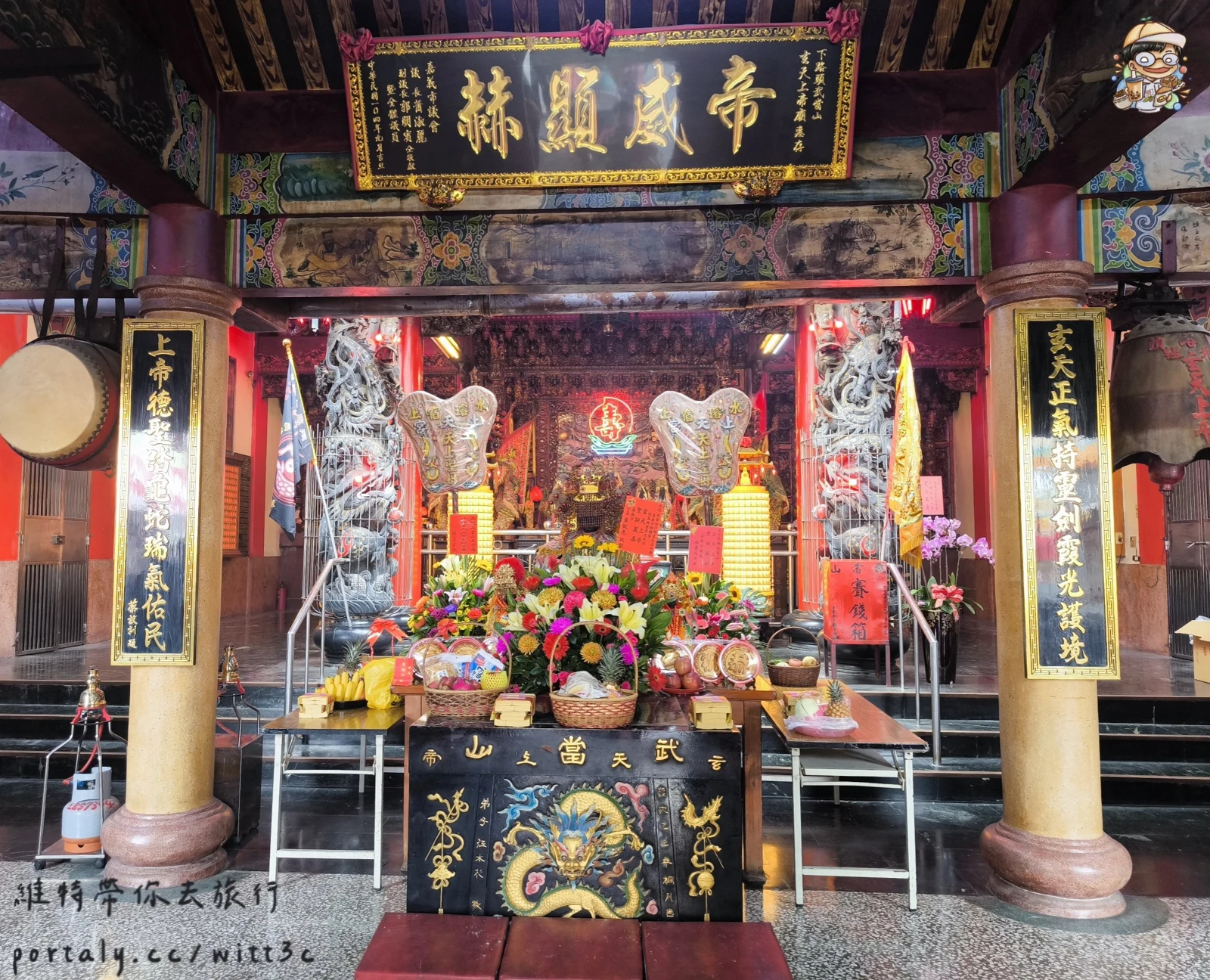
At Xialutou in southern Chiayi, the high swing belongs to the worship of Xuantian Shangdi at Wudangshan Temple. Local stories connect its movement with prayers for relief from disease and hardship. The frame rises roughly twelve metres above the forecourt, but its size is only the visible end of a much longer preparation. In the traditional cycle, organisers and elders begin looking for suitable bamboo after the winter thanksgiving rituals.
Thorny bamboo and rattan bindings carry skills learned through doing. The community has to recognise suitable material and work together as the frame is assembled. The result is not a permanent playground installation: it is a structure prepared within a ritual calendar. Remembering that preparation changes the spectacle from one person’s daring into the work of many households.
The temple history, as recorded in the religious-culture account, places the image first in a Lai family home, before residents built a dedicated temple in 1804. That gives the forecourt a history beyond its tall framework. A household’s act of keeping an image became a shared place where neighbours could gather and prepare the rite. The documented temple date should be kept separate from much older claims about how long the belief or swing custom has circulated.
A traditional rite and a yearly festival
The swing rite was once held in lunar years with an intercalary month. The Ministry of the Interior’s cultural account records a change to annual observance in 2008, after the temple sought and received the deity’s consent through divination. In 2013, the city promoted it as the Chiayi Swing Festival. The 2026 festival took place on 18 April. The change was a decision within the community’s religious life as well as a new opportunity for visitors to return each spring.
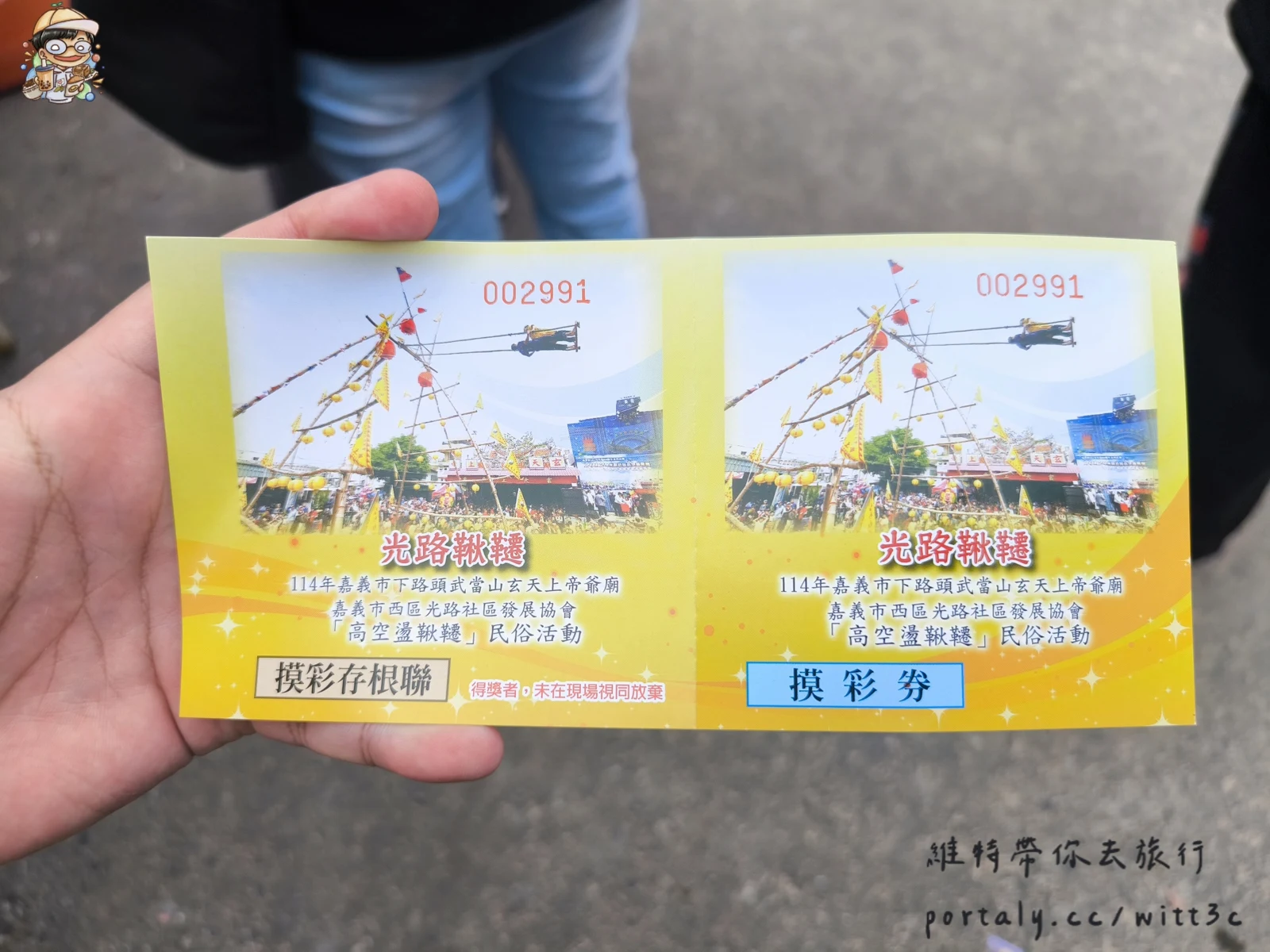
On the ground, helpers assist the swing’s initial movement; above them, competitors coordinate bending and rising with the arc. The gathering also includes the ordinary machinery of a community festival: registration, prize draws and people helping visitors find their place. In 2025, raffle tickets carried a picture of the high swing, turning its familiar outline into something residents could hold in their hands.
Before climbing, rules have already changed
The traditional frame was assembled through a ritual sequence, not simply erected as sporting equipment. The heritage account describes asking the deity to oversee the work, choosing an auspicious time for breaking ground and aligning the frame to that year’s prescribed direction. Bamboo and rattan were used without iron nails or wire. Material knowledge and ritual decisions met before a competitor put a foot on the board; the tall structure made both kinds of preparation visible.
Those rules also have a history. Older heritage documentation records a ban on women competing and even touching the bamboo. In 2025 the temple explicitly opened a women’s high-swing experience, alongside age-grouped solo and pair competitions. That announced experience was a specific change in participation, not evidence that every older restriction had disappeared. Holding the two records together lets visitors understand a living custom whose keepers can reconsider who is invited onto the frame.
The temple remains after the applause
The altar and forecourt keep the swing connected to the neighbourhood’s religious life. Visiting Wudangshan Temple outside festival time reveals a different scale: offerings, pillars and the short approach from Xinmin Road. The high frame is seasonal, while the temple continues to receive people who live around it.
Transmission also reaches classrooms. Minsheng Junior High School students produced a picture book about the local deity and swing in 2025; the following year, educators from Kumamoto visited the festival. A skill that depends on bodies, material and shared memory can therefore be retold through drawing and exchange, while the forecourt remains the place where it is practised.
The same account records more than one explanation of the swing’s origins, including a local ‘dragon-boat site’ legend and a proposed connection with Plains Indigenous customs. It also notes differences between bamboo suspension here and rope-hung swings in other traditions. Similar movement is therefore not enough to establish a single line of descent. Keeping stories, scholarly proposals and observable construction apart allows the particular community’s practice to remain clear.
Look closer
Follow the bamboo frame from its bindings to its upper crosspieces; the height begins with work at ground level.
Visiting information
- Season
- Usually spring, around the third lunar month; in 2008 the rite changed from years with an intercalary lunar month to annual observance. The 2026 festival was on 18 April and has ended.
- Place
- Wudangshan Xuantian Shangdi Temple, 8 Lane 555, Xinmin Road, West District, Chiayi City.
- Arrival and return
- From Chiayi Railway Station, take a taxi to the Xinmin Road entrance of Lane 555 and walk into the temple forecourt. Use the same street entrance as the return pickup point.
- Watching
- Stay outside the marked swing area; participation is organised by the event team with its own safety arrangements.
Film & source information
This film combines a promotional film published in 2013, a compilation published in 2018 and field footage published in 2019 at the same Chiayi temple. These are not a continuous record of one edition or footage of the 2026 festival. Three genuine photographs embedded in the 2018 compilation appear at 25.8–31.3, 71–78.8 and 78.8–86 seconds; no separately retained capture dates are available. They count as photographs, not live footage. Music only; no AI-generated images or video. The 2026 festival was held on 18 April and has ended. Check the next festival announcement and the temple’s access arrangements before travel.
- Chiayi tourism channel · promotional film published in 2013 · Original record
- mm chou · festival compilation published in 2018 · Original record
- Jung Chen · festival field footage published in 2019 · Original record