
Cultural place
A camera entered before the visitors did
A fan of tracks makes railway maintenance visible. The story begins with people gaining access to film it, and continues with a depot adapting to different generations of locomotives.
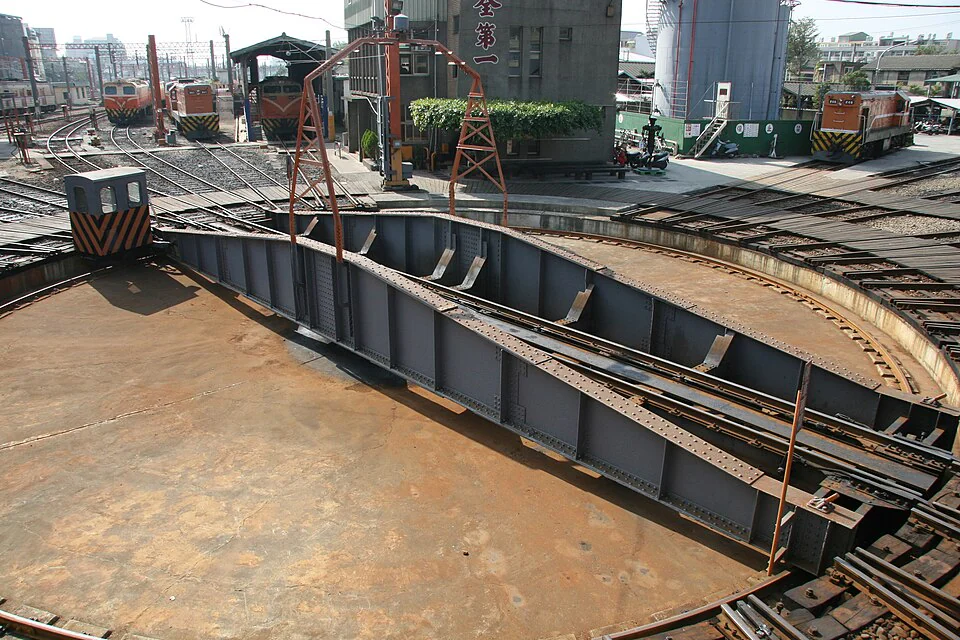
The 1922 depot’s turntable connects locomotives with radiating maintenance bays.
Public documentation and continued adaptation both contributed to its survival.
The workplace becomes visible
When demolition threatened Changhua's roundhouse in the 1990s, filming it required permission to enter a restricted railway workplace. Documentary maker Lin Chien-chih (林建志) recalls negotiating access for the local television team. Their images helped bring a little-seen working building into public discussion, alongside campaigning by rail enthusiasts and local advocates.
Most passengers see trains arriving at platforms, not the spaces where they are checked between journeys. The film crew’s entry reversed that viewpoint. A building previously understood through railway restrictions became something the wider public could discuss. The preservation story is therefore also a story about access: who could enter, what could be recorded and who could see the result.
The fan shape follows the work
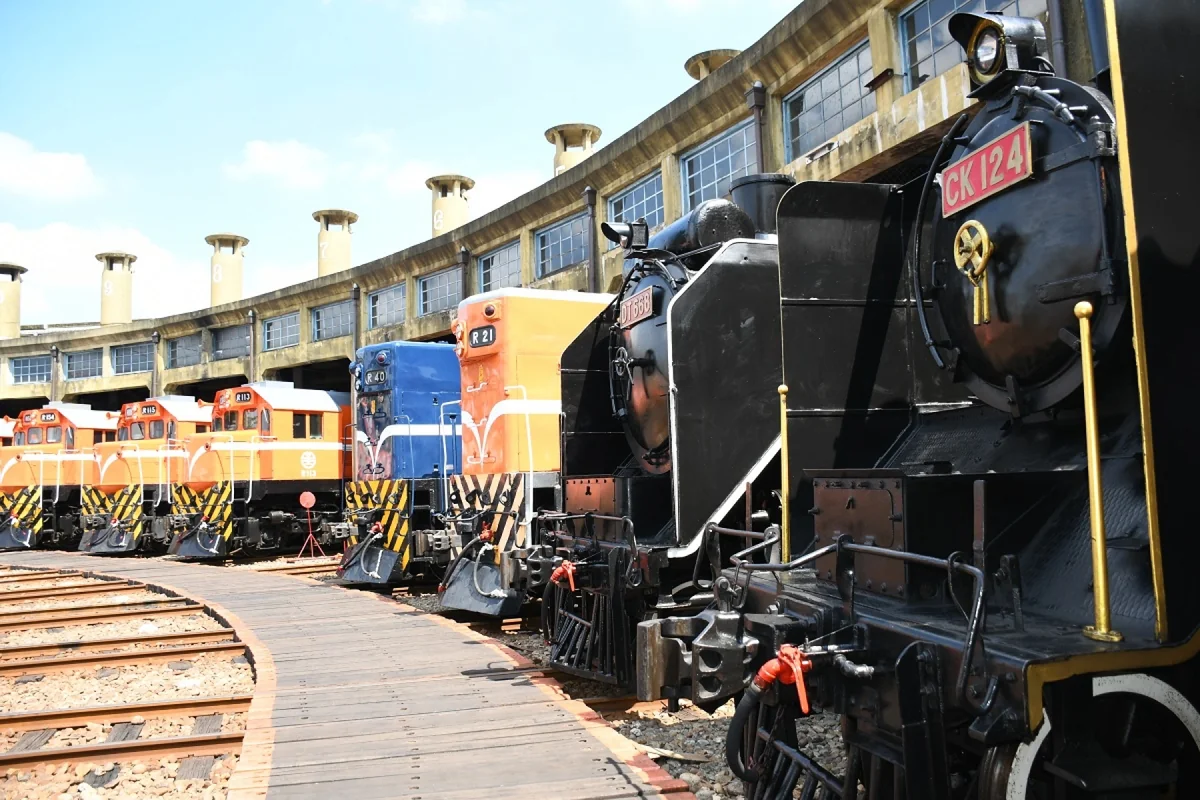
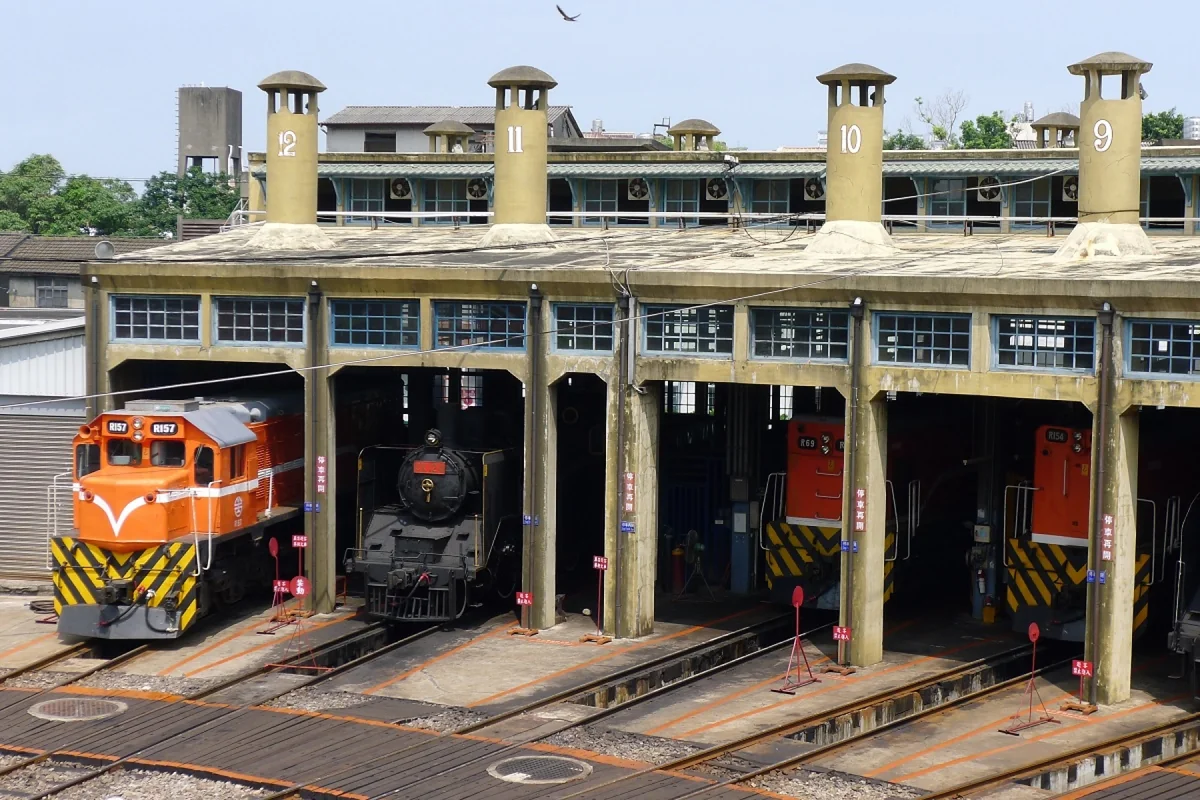
The shape is a working arrangement: tracks radiate from a turntable to maintenance bays. Changhua City's account describes later alterations for diesel and electric locomotives. The building survived through adaptation as well as preservation. Its 2022 designation as a national historic site added recognition to a place shaped by successive kinds of railway work.
The depot grew with traffic at the junction of the mountain and coast lines. It opened in 1922 with six tracks, expanded to ten by 1924, and reached twelve after the 1932–33 extension. The fan shape is therefore not a single completed gesture frozen at its opening: successive additions record the increasing demands of locomotive servicing.
Look at what keeps trains moving
The 1950 Hitachi steam-powered breakdown crane adds railway recovery to the story told by locomotives and bays. Identify equipment from the permitted viewing area and use the layout to relate it to the depot’s work. A moving turntable, when railway operations require one, is part of that work rather than a scheduled performance.
The building also carries evidence of wartime damage. Between tracks 5 and 6, a repaired support has a Y-shaped reinforcement unlike the I-shaped columns nearby. The depot’s history is consequently preserved in altered structural details as well as in its collection of vehicles. The repair kept a working building usable while leaving a visible difference within the repeated bays.
Read the roof as working equipment
The roof also answers a locomotive’s working needs. The official account of the 2022 centenary explains paired front-and-rear exhaust chimneys, allowing a steam locomotive to vent outside whether it entered forwards or backwards. Timber windows provide light and ventilation. Roof projections relate to vehicle orientation and working air, rather than ornament alone. From the open viewing area, compare tracks, bays and exhaust positions. This explains a steam-era arrangement; it promises no steam movement on the day of a visit, and grants no access to the turntable or maintenance bays.
Look closer
Follow one track from the turntable to a bay, then compare the neighbouring tracks.
Identify the purpose of a displayed vehicle before comparing its age or appearance.
Visiting information
- Address
- 1, Section 1, Zhangmei Road, Changhua City
- Opening
- Tuesday–Friday 13:00–16:00; weekends and national holidays 10:00–16:00. Monday closed unless a national holiday. Individuals register at the guardhouse.
- Transport and return
- From TRA Changhua, follow Sanmin Road, turn into Heping Road and use the pedestrian passage beside Minsheng underpass. Return to the station along the same public pedestrian route. Allow about an hour in the depot.
- Viewing and interpretation
- Use the designated viewing platform and boardwalk. Weekday group interpretation is offered Tuesday–Friday at 14:30 for groups of at least ten booked 14 days ahead; it is not offered on holidays.
Film & source information
Panorama: Chiu Chia-chung / Tourism Administration, “The Beauty of the Fan-shaped Roundhouse” (24287_PH_20091129, 18 March 2009). Original record, released under the Open Government Data License, version 1.0. Some foreground was cropped and the resolution adjusted. This historical image explains the spatial arrangement and does not guarantee today’s vehicle displays.