
Cultural story · Craft and making
Caotun Straw Festival: the work before a whale can stand
Drying straw, tying a family buffalo and building a giant sea creature connect farm material with the skills a town wants to keep.
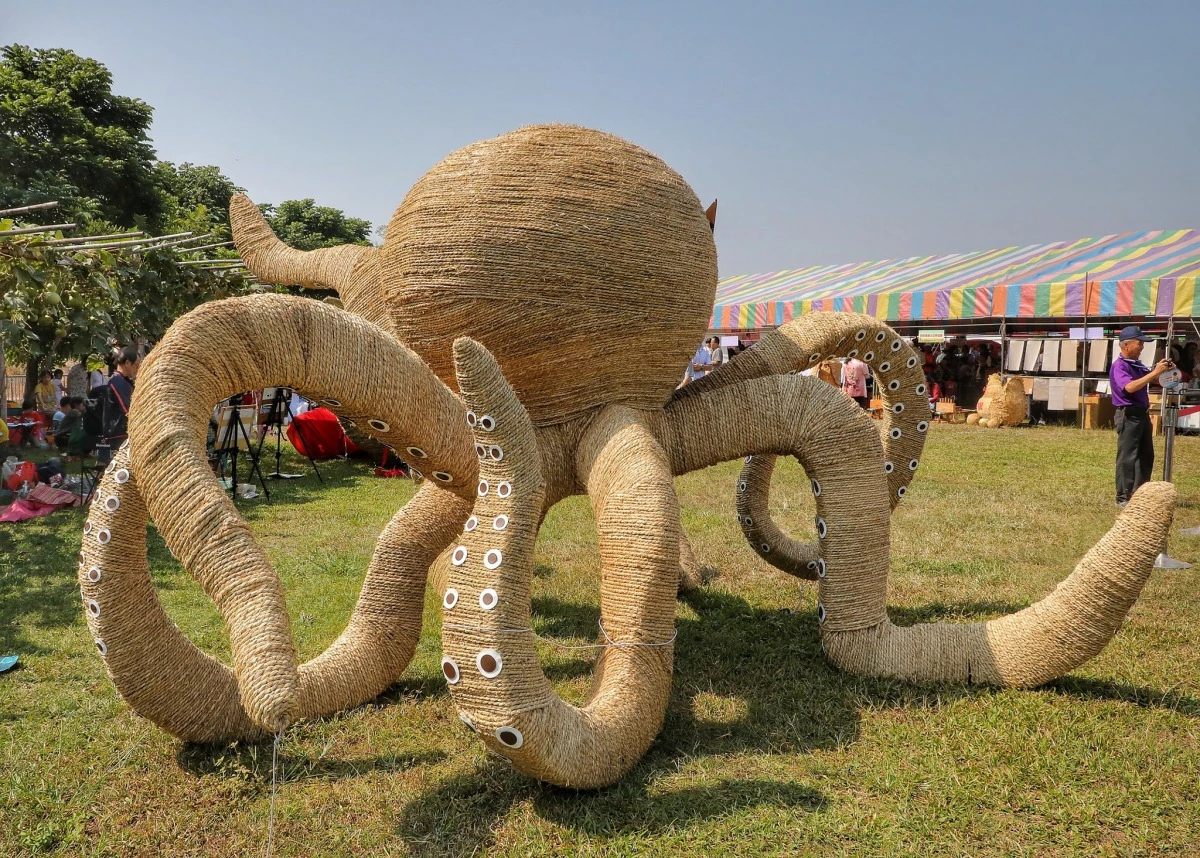
The festival follows the autumn harvest and an organiser-set programme.
The 27th edition opened on 29 November 2025 at Caotun’s performing arts centre.
Usually held after the autumn harvest, around October–November.
Shoes made from the harvest
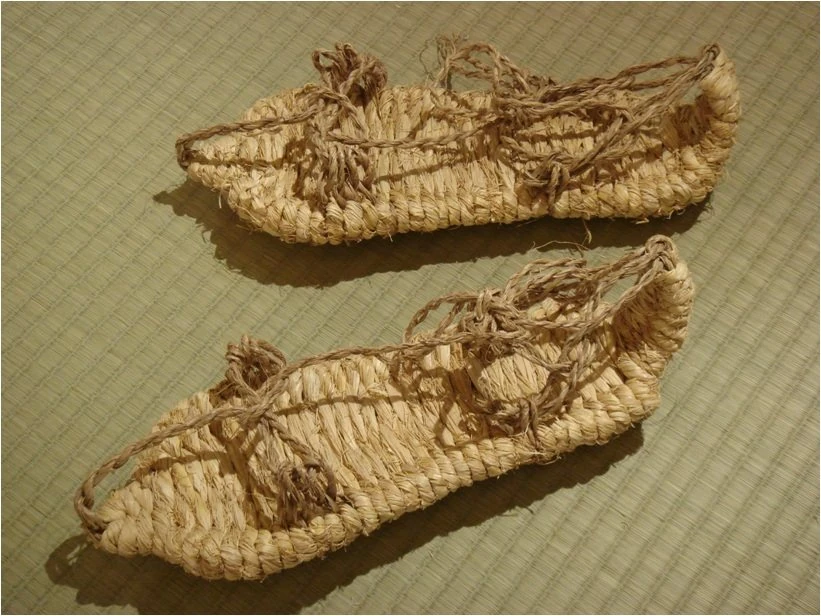
Caotun’s old name, Caoxiedun, keeps straw sandals in the town’s vocabulary. Straw once supplied an accessible material for household objects and footwear. As other materials replaced those uses, the practical setting in which people learnt to braid straw also shrank. Keeping a finished sandal in a display case preserves its shape; keeping the skill requires somebody to handle the fibres again.
The local cultural association began its creative straw competition in 1999. By taking teaching into schools and communities, supplying material and helping with transport, organisers lowered the practical barriers to joining. A competition could then become a reason for neighbours and families to work together, rather than an exhibition that only experienced craftspeople could enter.
The 2009 awards took place beside farmland near Chenfu General Temple in Nanpu. Harvested fields also hosted earth-oven cooking and food stalls. Bringing the competition there kept the material close to the agricultural setting from which it came: straw sculptures stood within a gathering that still involved soil, crops, cooking and family work.
A large sculpture begins with drying
In 2018, the association turned straw into an underwater world, including an enormous whale and an octopus. Secretary-general Han Kuang-fan described the work that preceded the sculptures: renting storage, borrowing a school basketball court or public parking area for drying, and repeatedly turning and checking the straw. Moisture could spoil the material before weaving had even begun.
A local student’s 2009 account offers a different scale. Their family entered a straw-making contest and chose a buffalo in memory of the animal their father’s family had once kept. Adults tied the body and added details while children gathered more straw. The entry won no prize, but the family had made a farm memory into something they could build together.
The craft study records contestants dyeing straw with plant colours and combining it with hemp cord or loofah. ‘Straw craft’ did not require every visible part to remain undyed rice straw. Mixed materials changed the available texture and structure while keeping agricultural fibres central. This describes work observed in earlier contests, not the material list for every large sculpture in a later festival.
The theme changes; hands keep learning
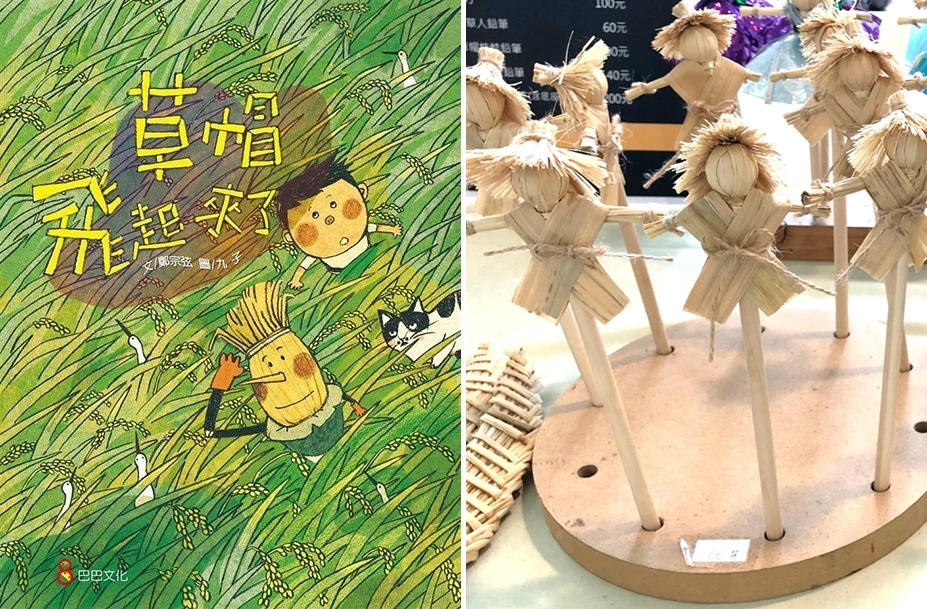
The festival also connected straw work with children’s stories and handmade figures. Such activities let a familiar book lead toward a material children might otherwise know only as something in a field. A small figure and a giant octopus demand different amounts of labour, but both move straw from agricultural remainder into a deliberate choice of form.
A 2019 reading programme planned by the craft institute and the local association paired the picture book The Straw Hat Flies Away with a small scarecrow pencil project. Children could move from hearing a story to making an object. The change of scale was important: participation did not require building a festival-sized sculpture, only a manageable piece of work and someone to guide it.
At the 2025 opening, residents of Caotun’s Beitou community carried an approximately eight-metre pole, recalling the work of porters moving goods between Lukang and Puli. Straw installations, sandal-making and traditional play accompanied the event. The annual theme can change, while the deeper continuity remains the ability to gather materials, organise neighbours and teach a process to another pair of hands.
The same study identifies training for seed teachers in traditional straw-shoe making, alongside the development of toys, handmade paper and sculptural forms. Training someone who can later teach another group changes the scale of transmission: a skilled pair of hands need not remain the only point of access. Looking at a finished animal or shoe can therefore lead to two separate questions—how was it made, and who has been prepared to teach the next maker?
Look closer
Compare how a sandal and an animal sculpture bind the same fibres.
Ask how straw was dried and stored before a workshop begins.
Visiting information
- Timing
- Usually after the autumn harvest, around October–November; the 2025 edition opened on 29 November.
- Festival venue
- The 2025 opening was at Caotun Township Performing Arts Centre, 571-6 Zhongzheng Road, Caotun, Nantou.
- A visit beyond festival dates
- Taiwan Craft Culture Park, 573 Zhongzheng Road. Its Local Craft Museum opens Tuesday–Sunday 09:00–17:00, closed Monday except national holidays; workshops booked separately.
- Hands-on activities
- Book the listed workshop rather than assuming every straw display offers a class.
- Arrival and return
- From TRA Taichung, bus 108 towards Nan Kai University stops at Gongyi Zhongxin (Craft Center), by this Zhongzheng Road area. From HSR Taichung, take 1657 to Caotun and transfer to 108 or 6655 to Craft Center. Save the return stop before starting your visit.