Heritage-object coordinate
The heritage record’s inscription location; an object to read, not a departure point.
Read this part of the story →HISTORIC TRAILS · PEOPLE & MEMORY
The mark is the Chinese character 虎—hǔ, meaning “tiger”. Follow its carved date, a legend about wind, and a family’s donated rubbing to see how a road can be remembered in stone and on paper.
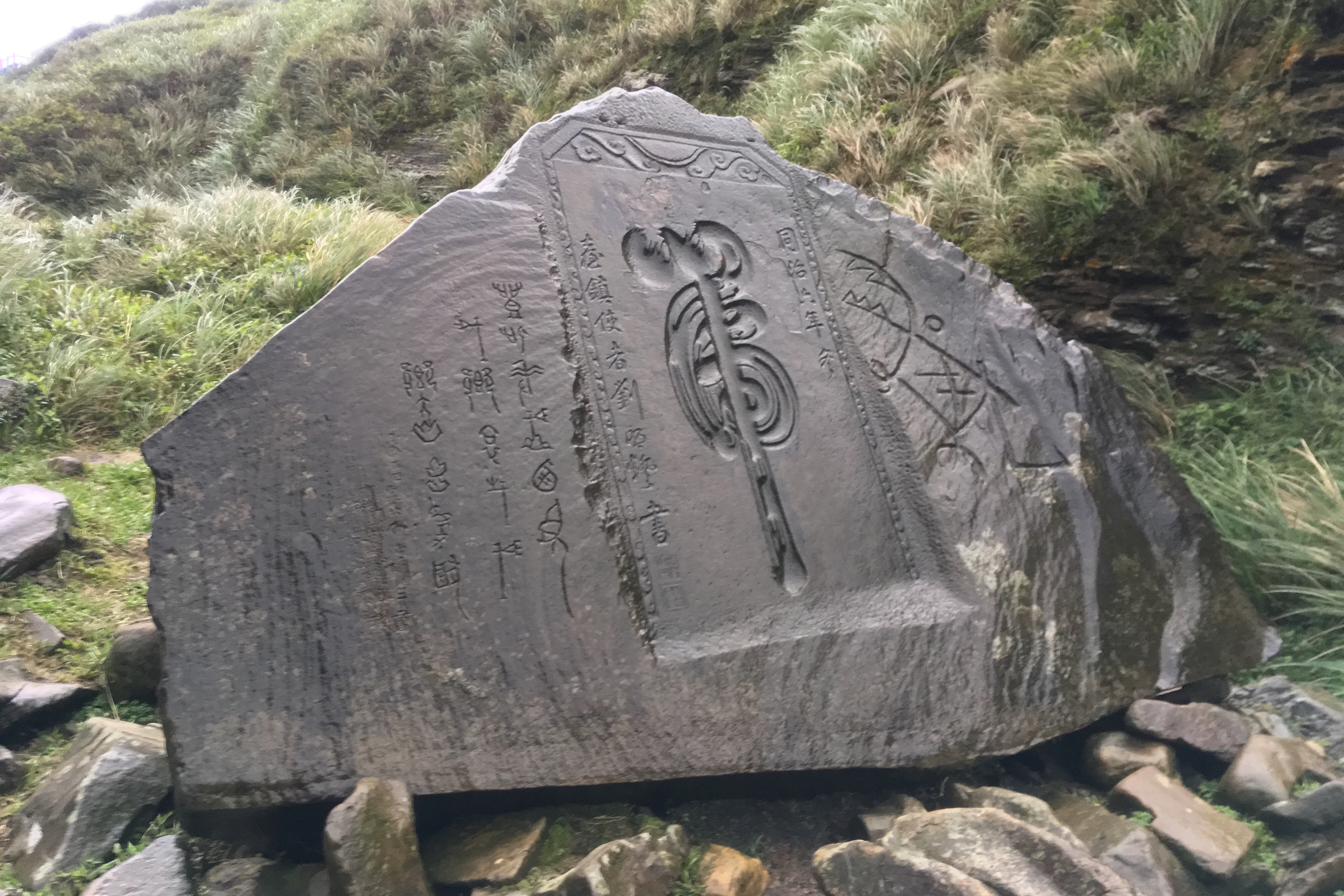
Read the Chinese character, then follow the inscription into a family’s collection.
Checked 1 November 2026: the management office’s 30 October update lists the northern, Dali and Daxi sections closed 22 October–13 November; Yuanwangkeng Water Park remains closed until further notice. A separate 24 October notice says the whole trail awaits repairs and a safety inspection. Postpone the crossing. A planned event date or the end of the listed period is not proof of reopening; wait for an explicit announcement.
If you cannot read Chinese, the central mark may look like a drawing. It is 虎 (hǔ), the word for tiger, written in cursive calligraphy. Look beside the large character: the smaller inscription dates it to winter 1867 and names Liu Mingdeng, a Qing military commander. These marks give the stone a date and an attribution, rather than just a scenic place on a mountain path.
A local legend says Liu was stopped by strong wind and used silvergrass as a brush to write the character, drawing on an old association between tigers and wind. The National Museum of History labels this account as tradition. The inscription can support its date and named writer; it cannot show that writing stopped a storm. Read the story as a wish for protection on a difficult crossing, not as evidence of a weather-controlling event.
Caoling links Gongliao in New Taipei with Toucheng in Yilan within the wider Danlan network. Heritage records describe rice transport as well as official travel, and record merchant Lin Pinghou’s contribution to road repair. The inscription preserves an officer’s name; it cannot name everyone who carried goods along the path.
The Xiongzhen Manyan inscription farther down the hillside offers another scale of looking: lettering and cloud borders set into natural rock. Consider why such prominent words stand on a transport road. Visitors can pause over them today; people earning a living from that road also had cargo to deliver.
The stone remained on the mountain, while a rubbing carried its lettering elsewhere. One example at the National Museum of History came from Wei Qingde’s collection. A journalist and editor at the Taiwan Daily News, Wei also participated in Chinese poetry and calligraphy circles.
His daughter Wei Fengzhen donated the rubbing in 2005. The stone’s 1867 inscription, the making of the paper impression and its museum acquisition are different moments. The donation made a private object available as a public collection; it does not establish that the rubbing is currently on display.
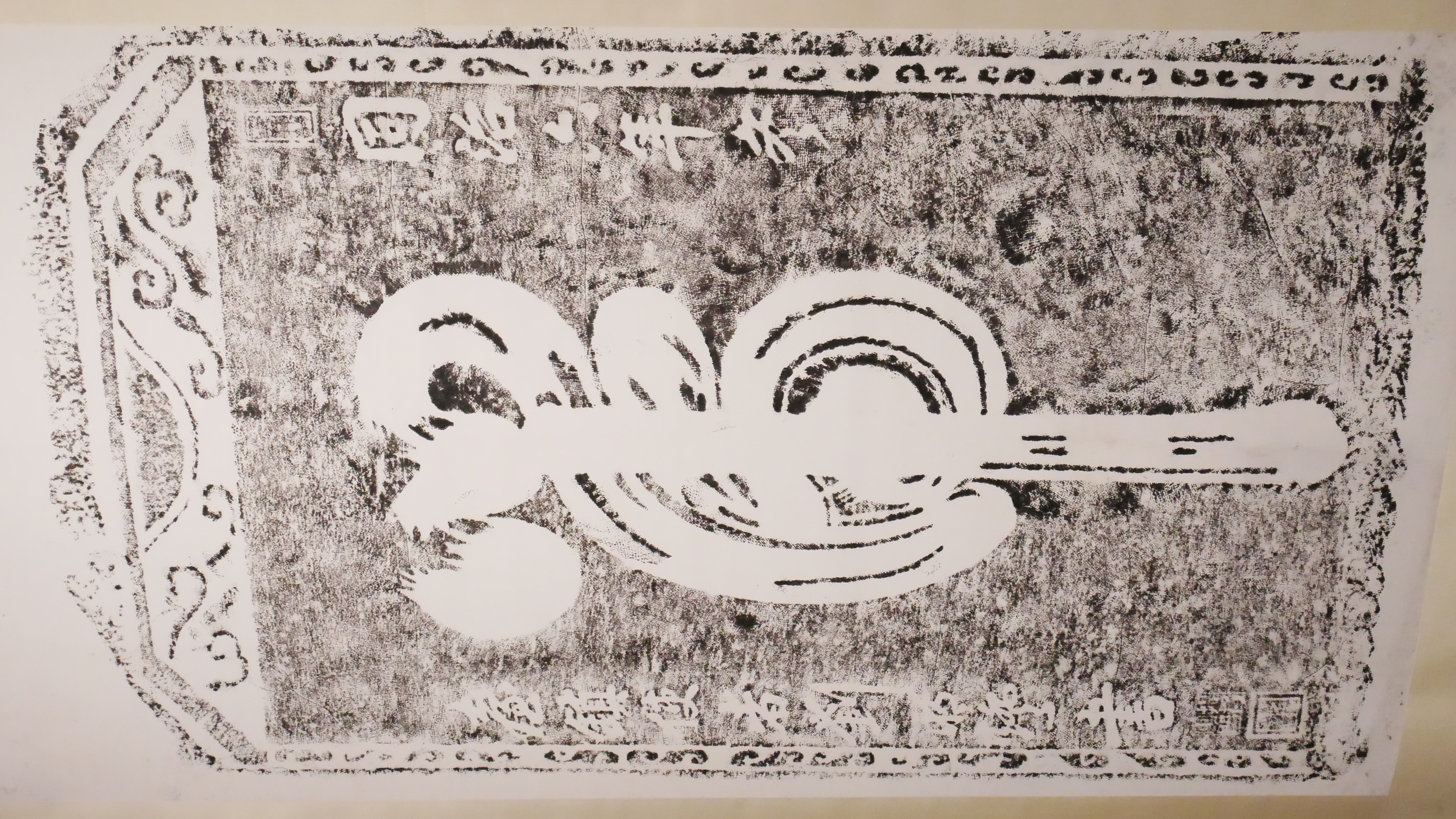
This 2023 exhibition photograph shows a paper rubbing for comparing the strokes. Its accession number has not been verified, so it is not presented as the particular object donated by Wei Fengzhen. In the museum record, the family donation is a separate documented event. Stone keeps the lettering in a mountain journey; paper offers another distance from which to study it.
Use the collection image to compare the main character, side inscriptions and decorative border. On the trail, observe how the carved rock relates to the hillside and path. A paper impression and a stone in its setting offer different experiences; making a new rubbing is unnecessary.
Heritage guidance calls for preventing climbing and damage to the stones. Stay within the permitted path and use photographs or notes to record details. The inscription has connected official travel, everyday transport and collecting. Its survival also depends on how present visitors choose to look.
Read the route from the northern side as Yuanwangkeng → Xiongzhen Manyan inscription → Tiger inscription and pass → Dali. The site already has a guide for this crossing, so this article does not invent another trail. The story map’s three markers place the two inscriptions and a southern information point; they are not a verified walking sequence. Taoyuan Valley is a separate ridge extension, not a short extra stop on this crossing.
Reaching an inscription takes a different kind of preparation from understanding it. Read the dated closure notice below first. Once the named sections are explicitly reopened, leave time for the northern approach, the climb and descent, reading the stones, and a separate railway connection from Dali. A train service cannot establish that the mountain path is open, and a photograph cannot report today’s wind or surface conditions.
Compare the Tiger’s main character, side inscriptions and cloud border with the lettering and setting of Xiongzhen Manyan. Observe from open paths without climbing, touching or taking rubbings. The collection image is not a photograph of the stone’s present condition.
Place the story before planning a visit. These locations are reading references, not a walking sequence.
Approximate locations · select a place to look closer
Heritage-object coordinate
The heritage record’s inscription location; an object to read, not a departure point.
Read this part of the story →Heritage-object coordinate
The carved stone and the paper rubbing have different settings. This location does not establish present access.
Read this part of the story →Management visitor-center location
A southern public information point, not the museum holding the rubbing or a verified return connection.
Read this part of the story →
