
Cultural place
An oyster shell becomes a lesson in coastal work
An oyster reaches the table through shell preparation, tides and skilled hands. At Baishuihu, those working skills also became a way to welcome visitors.
Dongshi: from oyster racks to the table
90 seconds. English captions are part of the film. Optional English and Traditional Chinese CC are available in the player.
Footage appeared in publications by the Ministry of Agriculture in 2023 and the Dongshi Digital Opportunity Center in 2025. Exact filming dates were not verified separately.
Read the complete five-chapter article → · 繁體中文
Complete English captions and Traditional Chinese translation
00:00:00,000 --> 00:00:06,000
Dongshi, Chiayi
Where oysters shape the shore
嘉義東石
沿海的地景,有養蚵的形狀
00:00:06,000 --> 00:00:12,000
Rafts and fixed racks
organise the shallows.
浮筏和固定蚵架
在淺海排列出不同形狀。
00:00:12,000 --> 00:00:18,800
An empty shell gives
young oysters a place to settle.
空蚵殼是蚵苗
可以附著的地方。
00:00:18,800 --> 00:00:25,700
Thread the shells together
to begin another growing cycle.
把空殼一片片串起來,
下一批養殖才開始。
00:00:25,700 --> 00:00:32,500
The water moves through
the rows of suspended oysters.
潮水從一列列
懸掛的牡蠣間流過。
00:00:32,500 --> 00:00:38,700
Among the racks,
harvest is work for steady hands.
在蚵架之間,
採收靠的是一雙雙熟練的手。
00:00:38,700 --> 00:00:45,900
Lift the clusters, separate them
and rinse the harvest.
提起成串的牡蠣,
敲開、沖洗這批收成。
00:00:45,900 --> 00:00:53,300
From the water, the oysters
move into baskets and workrooms.
蚵從水裡進到籃子,
再送到剖蚵的工作空間。
00:00:53,300 --> 00:00:57,700
At the counter, Chen Chang-hua
opens each shell by hand.
在工作檯前,
陳長花用雙手剖開蚵殼。
00:00:57,700 --> 00:01:07,000
At Baishuihu, the farmer
teaches visitors the work.
在白水湖,
蚵農也把這份手藝教給旅人。
00:01:07,000 --> 00:01:11,500
Take one shell in your hands.
Find where it opens.
把一顆蚵握在手上,
找出殼從哪裡打開。
00:01:11,500 --> 00:01:17,000
The grill is the last stop
in a much longer journey.
走了一段很長的路,
蚵才來到烤網上。
00:01:17,000 --> 00:01:24,000
Plan a visit to Baishuihu
and see the coast through its work.
預約走進白水湖,
從養蚵的工作看海口。
00:01:24,000 --> 00:01:30,000
Taiwan, Layer by Layer
From story to place
島嶼年輪
從故事,走進現場
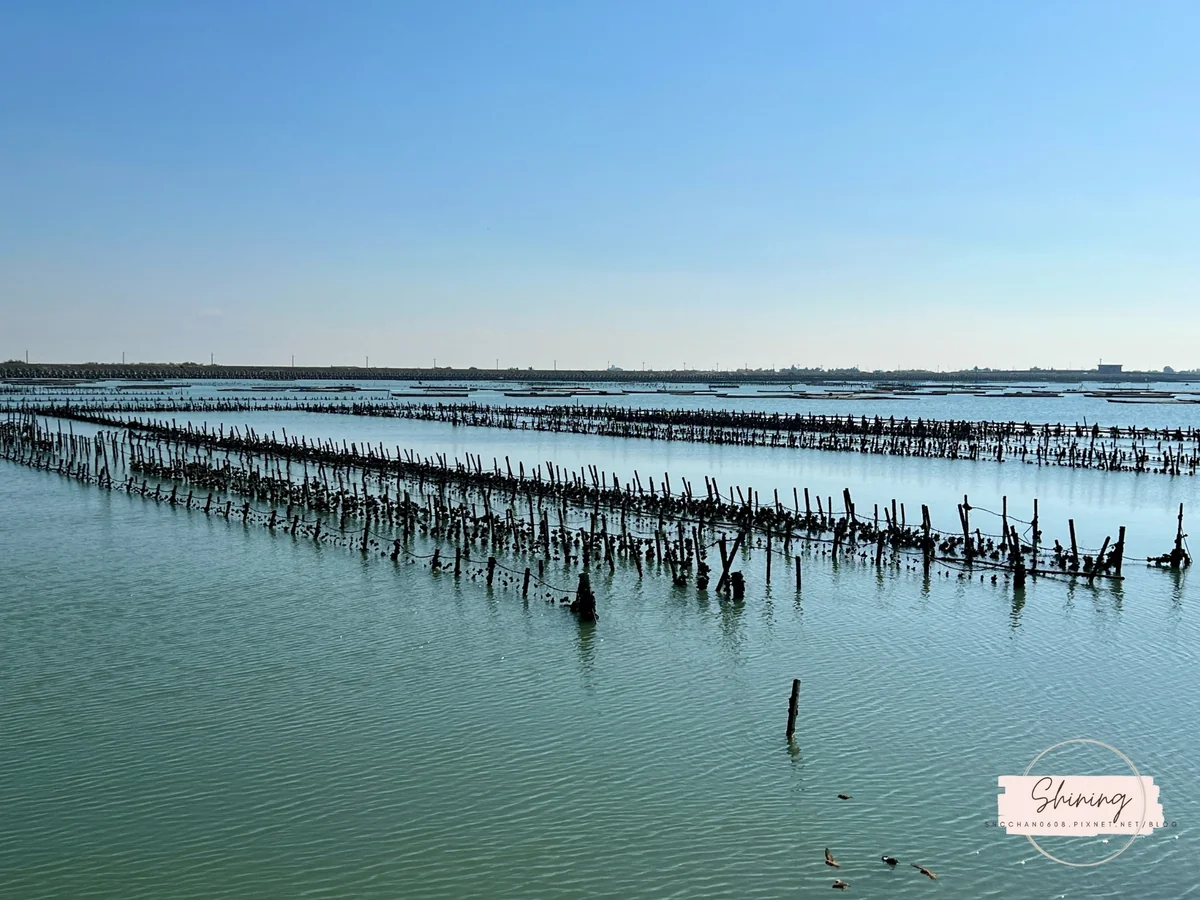
Meet oyster work through a booked Baishuihu experience.
Budai’s public fish market adds the selling and cooking stage.
Learning a new occupation
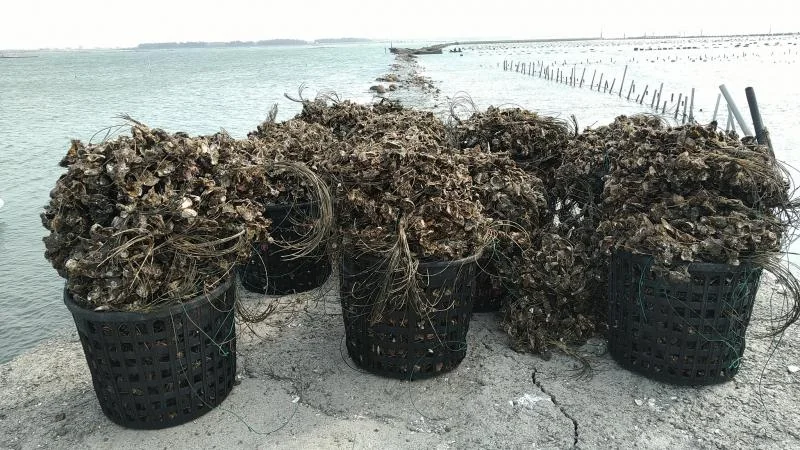
Chen Chang-hua, a migrant from China, learned oyster farming after moving with her husband from New Taipei to Dongshi to help his family. A 2021 local digital-opportunity-centre profile describes her learning to string empty shells, inspect the oysters and move them when growing conditions required it. Familiar seafood became a demanding new occupation.
The move became permanent in 2011. For the first three years, Chen combined caring for her children with learning from her parents-in-law. Oyster farming demanded more than shucking: empty shells had to be prepared as places for young oysters to settle, and growth had to be checked out on the water. A family business became her own daily responsibility.
From production to explaining production
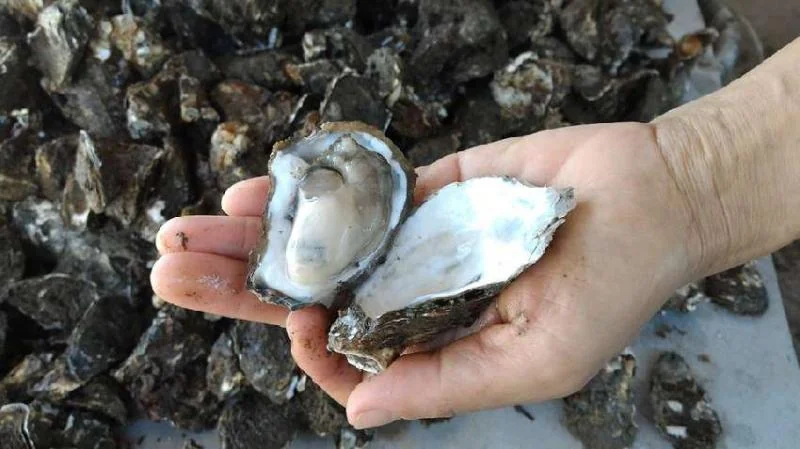
A motorcycle-licence class brought Chen into contact with the Chiayi County Rural Sustainable Development Association. Visits and training opened another possibility: explaining oyster farming to people who knew oysters mainly as food. She practised speaking into a microphone and first welcomed a group of about forty visitors. The skill being learned was now how to make familiar work understandable to others.
The visitor sequence follows the work itself: drilling shells, stringing them, learning about cultivation and opening oysters before eating. A 2022 visitor account photographs both the shell-making area and the coastal oyster racks. In a later university field course, students continued from Baishuihu to Budai’s fish market, moving from production to the public place where seafood is selected and sold.
Selling a harvest in different ways
Chen and her husband also changed how they sold their harvest. Rather than relying entirely on middlemen, they developed direct sales: she handled cultivation and guiding, while he used his electronics-industry experience to work with online channels. During the pandemic, fewer visitor groups and increased home delivery exposed the different rhythms of these two sources of income.
At Budai’s public fish market, fresh seafood, processed products and kitchens that cook purchases sit alongside one another. This is a different encounter from a booked lesson in Dongshi. The two places reveal successive parts of coastal work: learning a production skill, finding a buyer and turning the catch into a meal. Travel between them is arranged separately.
An empty shell begins another crop
An empty shell is a settlement surface for oyster larvae, not a container into which a young oyster is placed. Agriculture Ministry teaching material separates stringing shells, collecting spat and thinning. Once attached oysters grow, bundles are separated and spaced for growth and feeding. Oysters filter microscopic algae, linking water depth, current and suspension method to the crop. Horizontally hung strings experience rising and falling tides; racks and rafts arrange them differently. These are general comparisons, not evidence that the family described earlier uses every method. During a booked visit, ask which production stage a particular string represents, rather than judging only the size of the oysters.
Look closer
Notice the spacing of empty shells and ask how it serves cultivation.
Compare fresh seafood stalls, dried products and restaurant kitchens.
Visiting information
- Dongshi address
- Baishuihu Oyster Farm, 25-1 Baishuihu, neighbourhood 12, Zhangtan Village, Dongshi, Chiayi; book at 05-345-1617.
- Budai address and hours
- Tourist Fish Market, 3 Zhongshan Road, Cenhai Village, Budai; weekdays 10:00–19:00, weekends 09:00–19:00.
- Arrival and return
- For a two-stop day, pre-book a car from Chiayi or HSR Chiayi and agree on collection after the farm lesson and market visit. The oyster farm and Budai market are separate destinations, not a harbourfront walk.
Look closer at the places in the film
1. Read Dongshi from the water
Notice how the water is divided into rows. In the shallows off Chiayi’s Dongshi coast, fixed racks stand in lines, while floating rafts appear on more open water. The Ministry of Agriculture’s teaching material explains how the arrangements affect immersion and when oysters can be harvested. The opening view makes those structures visible at the scale of a whole shoreline.
Methods differ among farms. Begin with Baishuihu and look at its oyster landscape from public roads and accessible spaces.
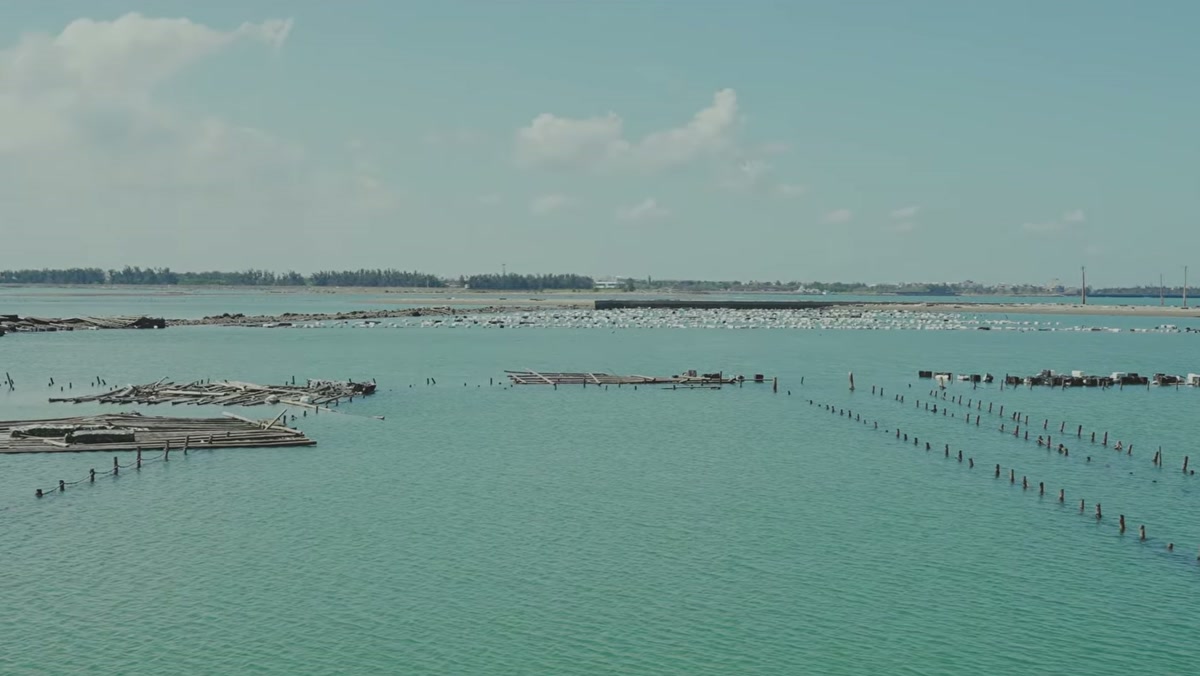
2. An empty shell begins the cycle
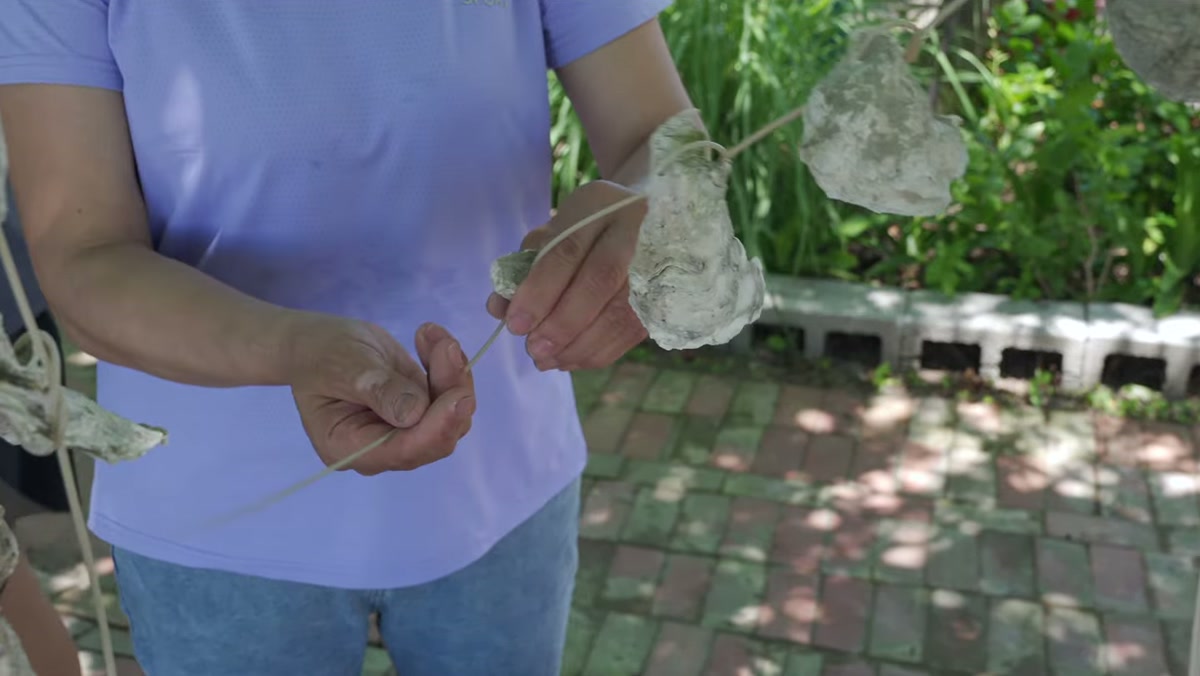
In the Dongshi Digital Opportunity Center’s footage, a demonstrator threads a cord through drilled, empty shells. The shells give young oysters a surface to attach to. As they grow, the farmer may separate the strings to give them room. The film moves from the hands that thread a shell to the clusters suspended in coastal water.
If you join a Baishuihu workshop, start with an empty shell. Ask where it goes, when it might be moved and how a farmer reads what stage the string has reached.
3. Harvest comes out of the water
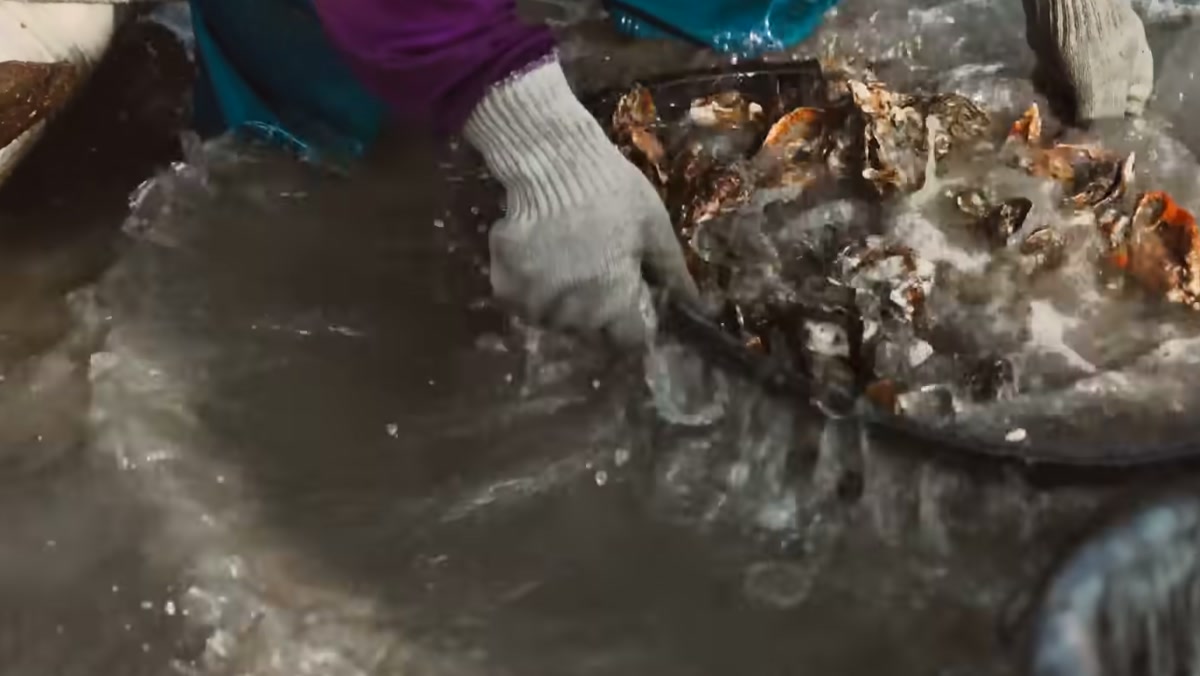
Footage from the Ministry of Agriculture shows racks, water and people working together on a raft. Workers lift the clusters, separate them, rinse the harvest and move it into baskets. Watch the tools, hands and the waterline to see the conditions the work depends on.
This footage was published in 2023 and the exact filming day has not been verified separately. A visit still depends on tides, weather and what the host can arrange.
4. The workbench can become a classroom
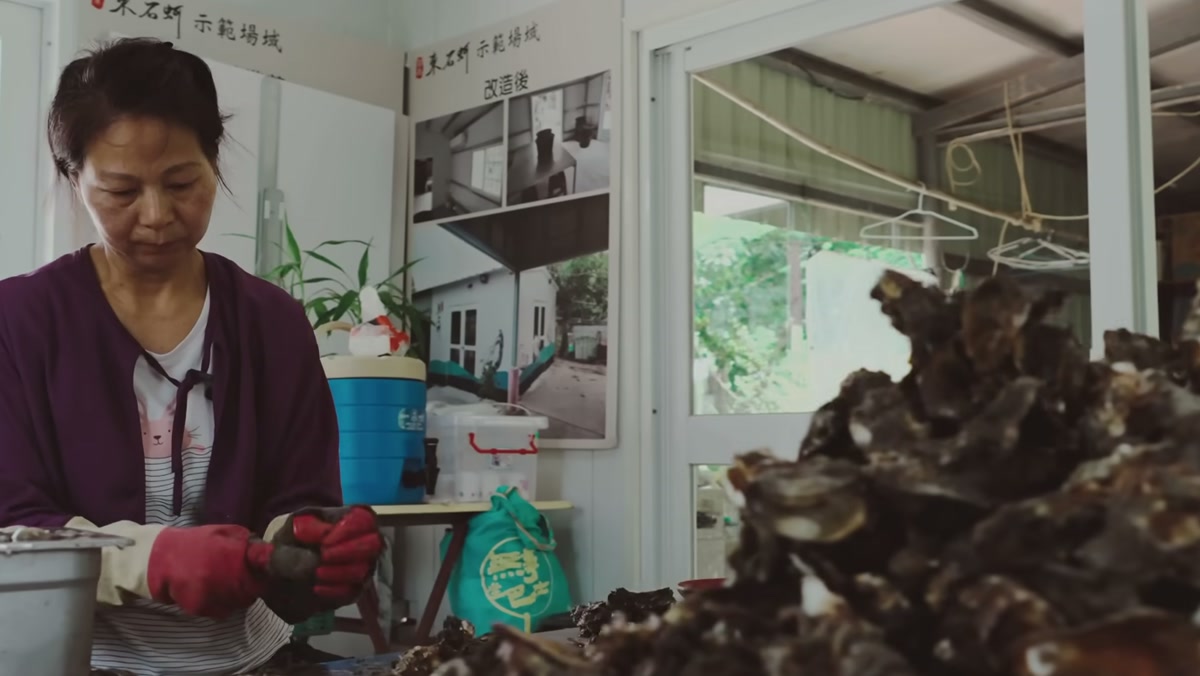
The Ministry of Agriculture’s Baishuihu film follows farmer Chen Chang-hua as she opens oysters at a workbench. She brings that skill into visitor teaching. A county workshop record describes visitors threading and shucking shells under the guidance of an oyster farmer. The film pairs the practiced movements of the workroom with a separately recorded outdoor lesson.
Watch a demonstration, then ask a guide how to read the shell and handle the tools. Confirm any visit or workshop in advance.
5. Taste the coast after seeing its work
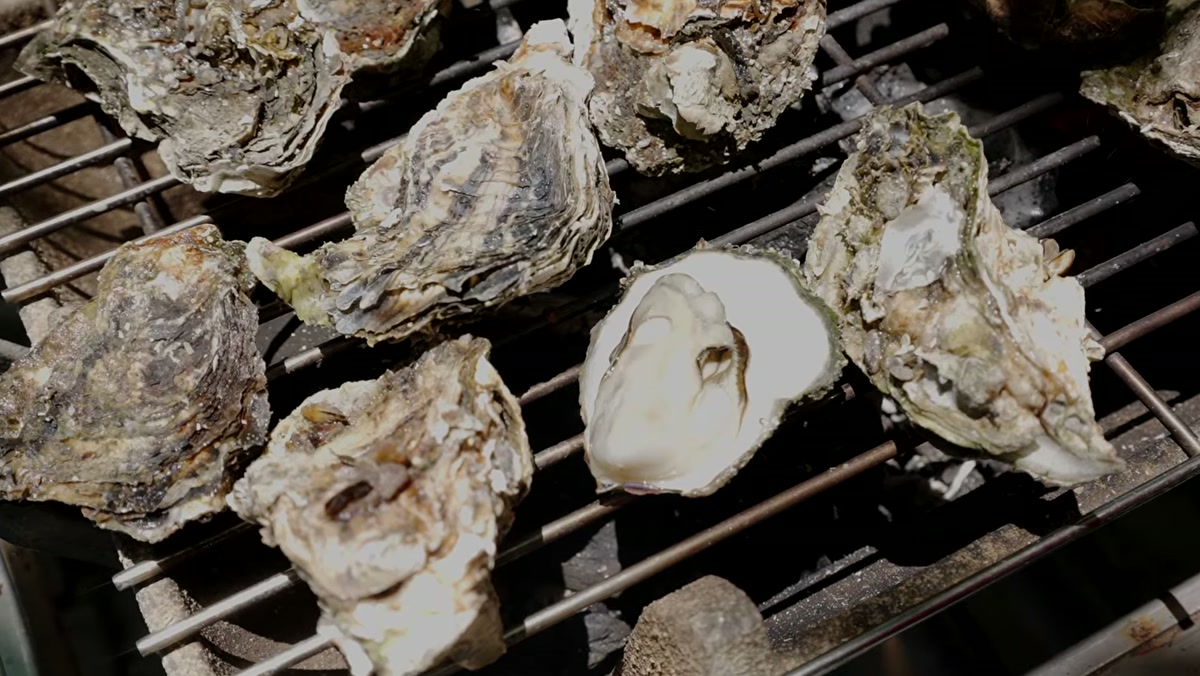
An open oyster on the grill brings the film back to where it started. The mouthful comes after shell preparation, growth in the water, harvesting and shucking. Look across the water again after a visit and the rows will have a different meaning.
Book with the Baishuihu host in advance. A visit to Budai Fish Market adds the separate story of selling and cooking and requires its own transport and time. This film focuses on Dongshi.
Film, article and image sources
Footage appeared in publications by the Ministry of Agriculture in 2023 and the Dongshi Digital Opportunity Center in 2025. Exact filming dates were not verified separately.
- Dongshi Digital Opportunity Center: a community record of oyster farming
- Ministry of Agriculture: the working space of Baishuihu’s oyster farmers
- Ministry of Agriculture: an oyster workshop in Baishuihu
- Teaching material: oyster farming and harvest in Chiayi
1. Frame from the archival record; exact filming day independently unverified. · exact filming date unverified
2. Frame from the archival record; exact filming day independently unverified. · exact filming date unverified
3. Frame from the archival record; exact filming day independently unverified. · exact filming date unverified
4. Frame from the archival record; exact filming day independently unverified. · exact filming date unverified
5. Frame from the archival record; exact filming day independently unverified. · exact filming date unverified
Music: 把時間留下 (AI-generated instrumental).