
Annual event
Beimen’s Peace Salt Festival: from salt pans to a temple blessing
White crystals once sustained coastal households; carried away in small pouches, they also become a wish for peace.
Beimen’s Salt Festival: Follow the Salt
90 seconds. English captions are part of the film. Optional English and Traditional Chinese CC are available in the player.
The ritual footage comes from the 2020 receiving rite and the 2025 event. Scenic-area footage shows ordinary salt work and the pans. The scenes span multiple editions and do not convey an upcoming schedule.
Read the complete five-chapter article → · 繁體中文
Complete English captions and Traditional Chinese translation
00:00:00,000 --> 00:00:07,500
Beimen’s Salt for Peace Festival
Tainan, Taiwan
北門鯤鯓王平安鹽祭
臺灣臺南
00:00:07,500 --> 00:00:13,200
Sun and wind leave salt in the pans.
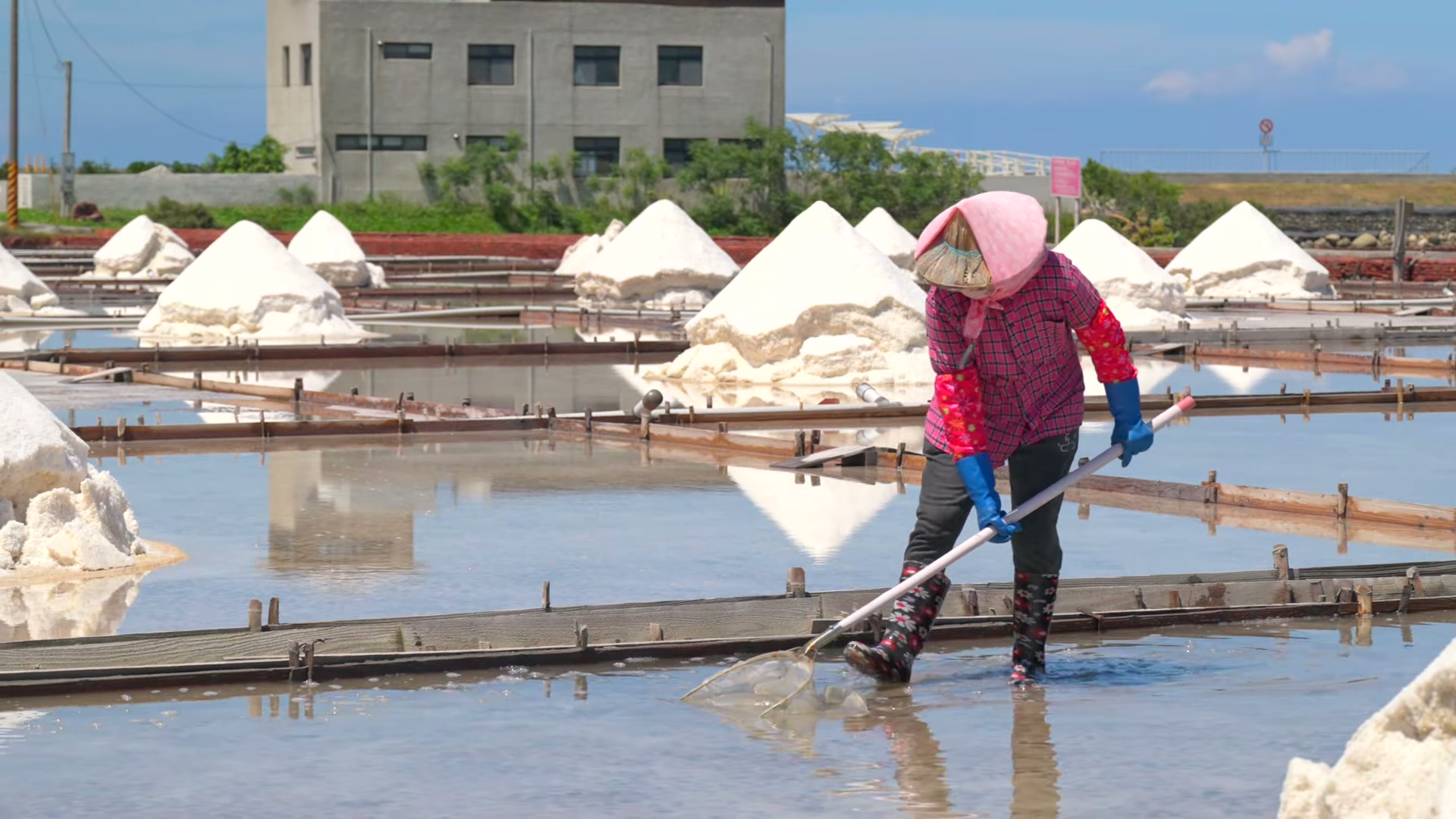
Workers rake the crystals by hand.
陽光和風讓鹽留在鹽田裡。
鹽工用手上的長耙收鹽。
00:00:13,200 --> 00:00:20,200
Jingzaijiao, 2020.
The festival begins with a rite to receive salt.
井仔腳,2020年。
祭典從請鹽科儀開始。
00:00:20,200 --> 00:00:28,000
A priest prays beside a basket
of salt from the pans.
鹽田的鹽盛在籃裡。
道長在鹽籃旁行禮祈福。
00:00:28,000 --> 00:00:33,000
At the 2025 festival,
people lift offerings of salt.
2025年的鹽祭現場,
眾人舉起盛鹽的供具。
00:00:33,000 --> 00:00:38,000
Bearers carry the salt
out of Jingzaijiao.
護鹽隊伍抬著鹽,
從井仔腳出發。
00:00:38,000 --> 00:00:43,500
Cyclists escort it
to Nankunshen Daitian Temple.
護鹽騎士騎往
南鯤鯓代天府。
00:00:43,500 --> 00:00:47,500
In the temple court,
their salt joins the mound.
到了廟埕,
他們把鹽撒到大鹽堆上。
00:00:47,500 --> 00:00:52,000
Inside the temple, a basket of salt
is brought before the Wangye deities.
一籃鹽被抬進宮廟,
獻在王爺面前。
00:00:52,000 --> 00:00:56,500
People join the prayers
as priests bless the salt.
法師為鹽祈福,
信眾在一旁同禱。
00:00:56,500 --> 00:01:06,500
The blessing moves
from the hall to the great mound.
祈福從殿內延伸到廟埕,
法師也為大鹽堆行科。
00:01:06,500 --> 00:01:09,500
Visitors set prayer flags in the salt.
民眾把祈福旗插進鹽堆。
00:01:09,500 --> 00:01:17,500
To give thanks, some of the blessed salt
is carried back to Jingzaijiao.
為了謝鹽,
一部分祈福鹽被送回井仔腳。
00:01:17,500 --> 00:01:24,500
People scatter salt back into the pans.
The ritual ends where it began.
眾人把鹽撒回鹽田。
祭典回到它出發的地方。
00:01:24,500 --> 00:01:30,000
Taiwan, Layer by Layer
From story to place
島嶼年輪
從故事走進現場
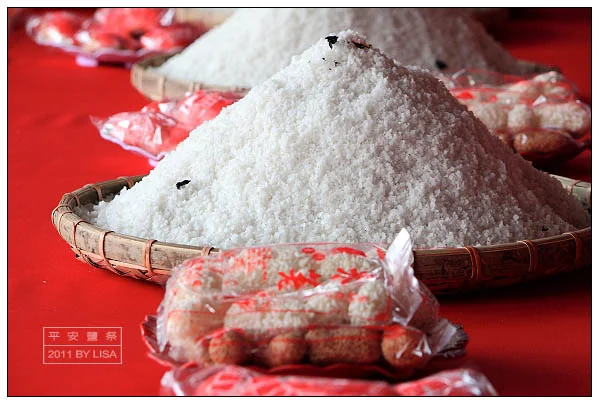
Held around autumn; the 2026 Kunshen Peace Salt Festival takes place on 7–8 November.
Main settings are Jingzaijiao’s tile-paved salt pans and Nankunshen Daitian Temple; the related Beimen arts programme brings performances to local temples.
Salt sets out before sunrise
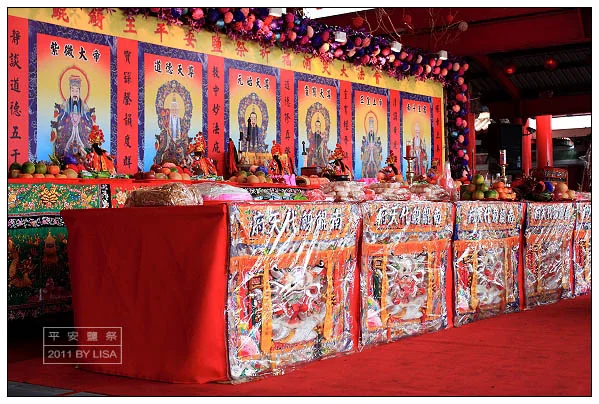
Jingzaijiao marked two hundred years of its salt pans in 2018. Before sunrise, a ritual party placed salt in a palanquin and travelled through local temples toward Nankunshen Daitian Temple. Crystals produced by channelling seawater, sun-drying and evaporation became the centre of a ceremony, linking the working landscape with the Wangye temple.
More than twenty ritual specialists performed the salt-consecration rite in the temple square. The 2018 sequence also included a thanksgiving in which salt was placed on tiles and returned to the sea. Established in 2004, the festival brings together local Wangye belief and salt-industry experience in a contemporary celebration that returns attention to the sea supplying the material.
Before salt could enter a palanquin, water had to move through a carefully arranged workplace. The salt-field education programme explains that tidal seawater enters evaporation ponds, passing from larger to smaller ponds before reaching crystallisation beds. Workers used a treadle waterwheel to move it along. The lagoon also allowed suspended material to settle. Sun and northeast winds mattered, but so did directing water through the right sequence of spaces.
A small pouch remembers a particular year
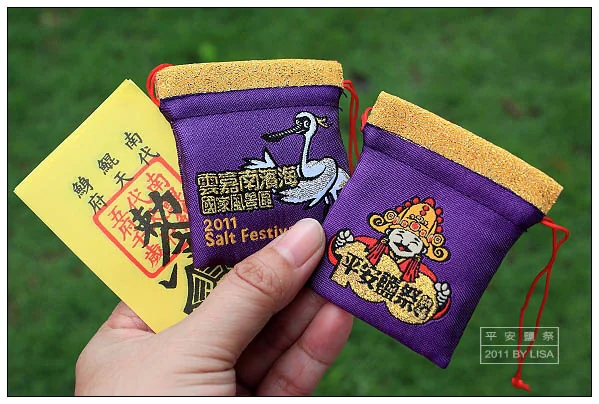
A visitor to Nankunshen in 2011 carried away purple and yellow peace-salt pouches bearing that edition’s designs. Collecting a redemption slip and waiting in line formed part of the visit. Salt moved from a bulk material in the pans to an object small enough to take home, with a date and image that identified the occasion.
White salt on the altar, stalls around the square and a performance stage offered different reasons to stay. Some people queued for blessings, others waited for a show or examined the temple roof. Nankunshen’s layered wooden ceiling incorporates cosmological diagrams and seasonal divisions. After the festival, that craftsmanship remains available to visitors whose memories need not end with the pouch they collected.
Jingzaijiao’s pale surface has a material explanation: fragments of broken tiles were embedded to make the crystallisation beds. The official site describes pieces about six millimetres thick. After crystals formed, raking, carrying and stacking still remained. A pouch hides that change of scale, from a broad working surface to a handful of grains. Looking for the tile pattern and the tools makes the salt’s journey more legible than judging only the height of a white mound.
The educational plan includes an instructor leading participants into designated beds for raking and carrying. It is evidence of a guided teaching format, not permission to enter every plot or a promise of a walk-in class on any day. For a separate visit, ask the operator which areas may be entered and whether a session must be reserved. The festival’s ritual party, a teaching group and an independent visitor each use the site differently.
A recent salt festival remembers a difficult summer
The 2025 organiser’s account gave ‘praying together and drying happiness back into life’ a specific background: the salt country had endured July storm damage. The festival connected six local temples with a gathering at Nankunshen, placing a contemporary difficulty beside the established salt rites. This was that edition’s response, not a claim that the festival began as disaster relief. The year printed on a pouch can therefore carry the circumstances its hosts were living through as well as a design.
The announced ending also changed salt’s scale. Beside the great salt-mound stage, the organiser planned six smaller consecrated mounds for distribution to visitors after the programme. The advertised 2025 peace-salt pouch featured Zhufu Qiansui. From stage to small mound to carried pouch, the programme proposed different forms of shared blessing. These were published arrangements for 2025; another edition can choose a different deity image or method.
Performance makes another connection among temples
The Beimen Wangye arts programme distributes performances among temples. Beginning at Nankunshen in November 2025, it continued to Keliao Baoan, Jingzaijiao Xing’an, Laidong Tai’an, Beimen Yonglong and Sanliaowan Donglong temples through March 2026. These events complement the autumn salt festival while giving each community its own occasion and venue.
The organiser announced 7–8 November for the 2026 Peace Salt Festival, linking Jingzaijiao and Nankunshen. This identifies one edition, not a fixed annual weekend or a daily performance. For another visit, the pans and temple can still be understood together: first trace the material’s production, then its place in worship. Transfers and any ritual participation require their own current arrangements.
Look closer
Compare tiled pans, salt heaps and small ritual pouches to follow the material’s changing use.
Examine the layered temple ceiling and how the square accommodates both altar and stage.
Visiting information
- Timing
- The salt festival is usually in autumn; 7–8 November in 2026. The Wangye arts programme is a separately scheduled series at local temples.
- Venues
- Nankunshen Daitian Temple, 976 Kunjiang, Beimen, Tainan; also Jingzaijiao Tile-Paved Salt Fields in Beimen. Navigate to each site separately.
- Stay and participation
- Allow half to a full day for both places. Main outdoor rites can be watched, while workshops and special sessions have their own registration.
- Arrival and return
- Continue from Xinying TRA Station toward Beimen by road, with local transfers to the temple and salt fields. For evening performances, arrange a vehicle back to Xinying or stay near Beimen.
Look closer at the places in the film
Where the salt comes from
In Beimen, Tainan, begin at Jingzaijiao with the shallow pans and small white salt heaps. Sun, wind and the salt workers’ labour turn brine into crystals. The restored tile-paved fields preserve the setting for this work. The everyday raking sequence shows where the festival’s raw material comes from.
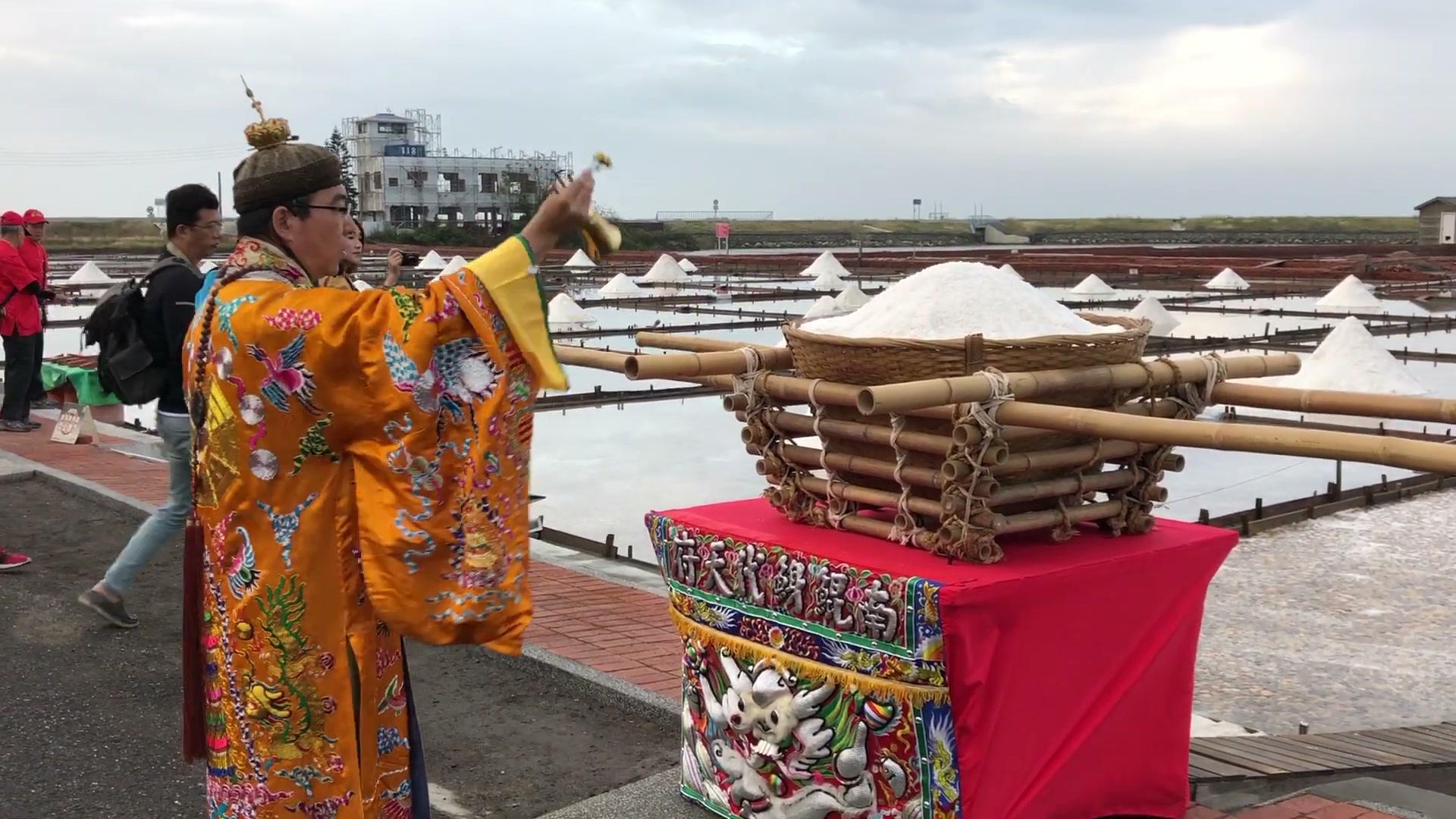
The morning rite at the pans
The 2020 sequence moves to the altar at Jingzaijiao. A priest in gold approaches the bamboo carrying frame and raises a ritual implement beside the salt. The receiving rite marks the passage from the ordinary harvest into the festival.
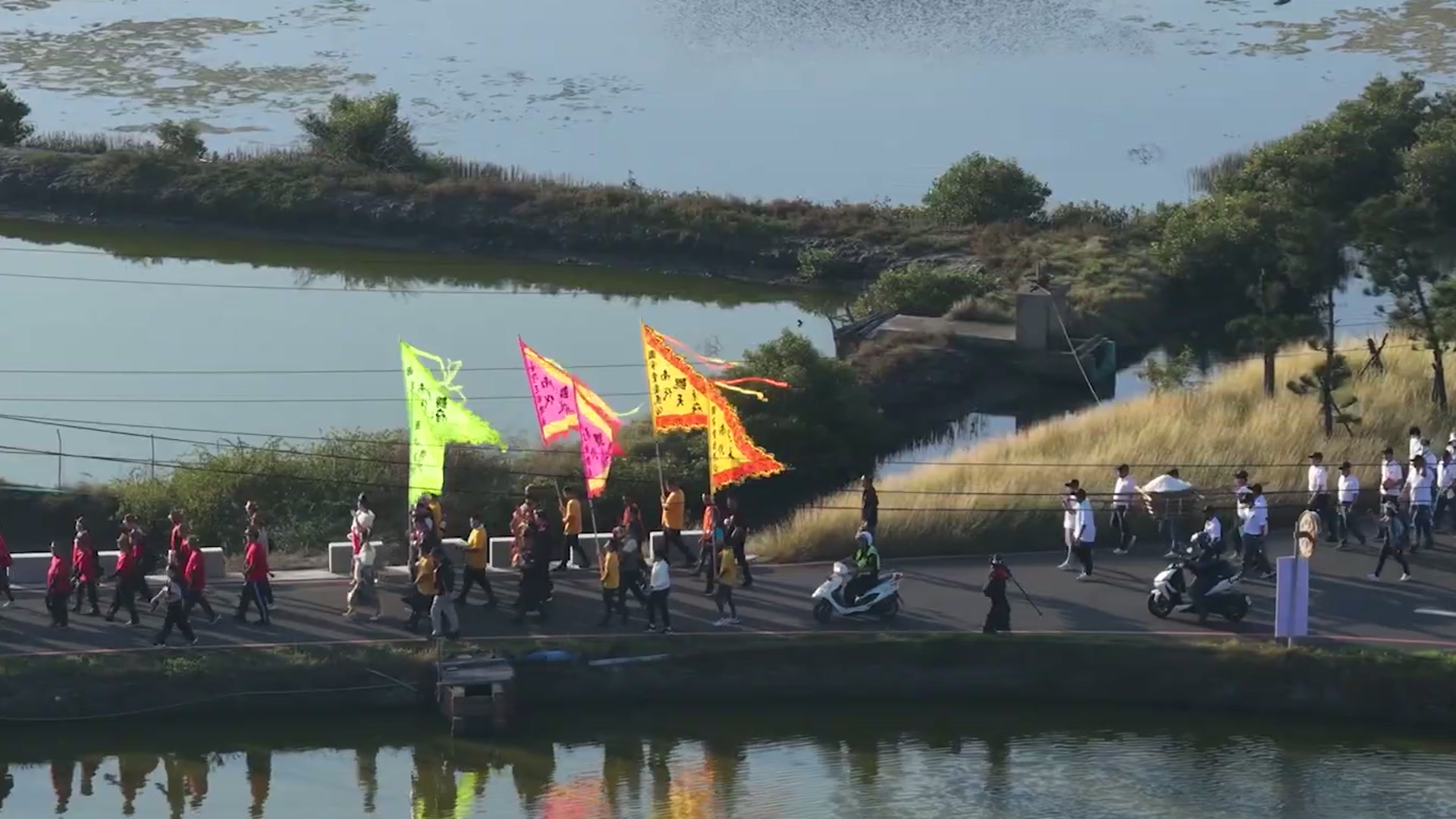
Bearers and cyclists escort the salt
The 2025 record shows a basket raised on carrying poles, banners moving along the water and a group of cyclists joining the escort. The journey links the salt fields and the temple courtyard. At the temple, cyclists add the salt they brought to the main heap.
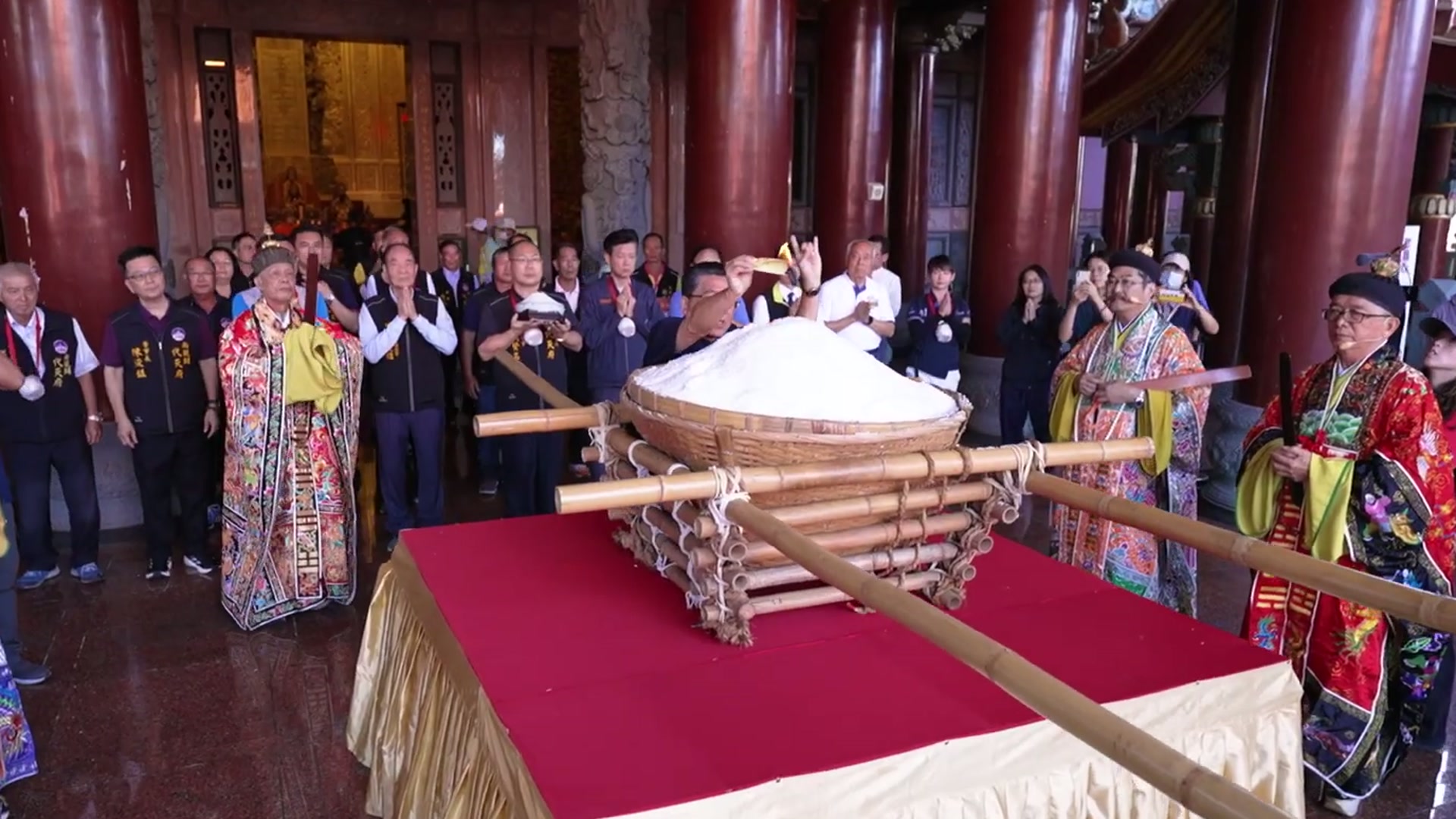
Salt before the Wangye deities
Nankunshen Daitian Temple honours five Wangye deities. In the 2025 blessing rite, a basket of salt enters the hall, and people join the priests in prayer. The large mound outside is also blessed. Red flags placed in it carry people’s wishes for peace and safety.
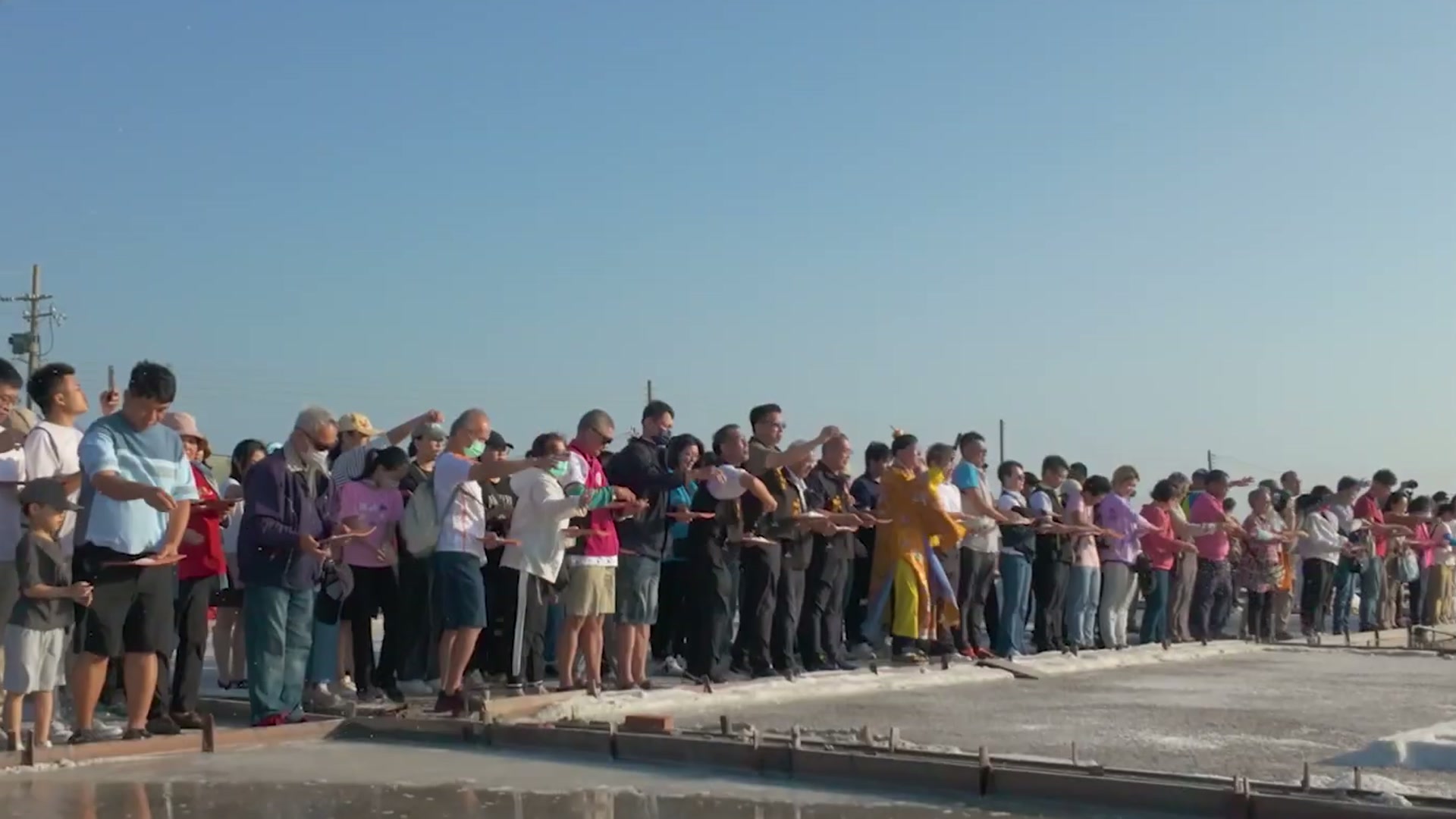
Giving thanks at Jingzaijiao
The last rite returns to Jingzaijiao. In 2025, people followed the priest in scattering some of the blessed salt back to the pans. Visiting the salt fields and the temple offers two views of how this coastal community observes the festival. Check the scenic area’s announcements before planning a visit around a future festival.
Film, article and image sources
The ritual footage comes from the 2020 receiving rite and the 2025 event. Scenic-area footage shows ordinary salt work and the pans. The scenes span multiple editions and do not convey an upcoming schedule.
- SW Coast NSA | 2020 receiving and blessing
- SW Coast NSA | 2025 receiving, escort and blessing
- SW Coast NSA | 2025 return and thanksgiving
- SW Coast NSA | Jingzaijiao Tile-paved Salt Fields
- SW Coast NSA | 2026 festival archive and venues
- 2025 鯤鯓王平安鹽祭精華
- 2020 鯤鯓王平安鹽祭 請鹽儀式
- 井仔腳瓦盤鹽田
1. Archival festival and salt-work records. Editions are distinguished in the article. · exact filming date unverified
2. Archival festival and salt-work records. Editions are distinguished in the article. · exact filming date unverified
3. Archival festival and salt-work records. Editions are distinguished in the article. · exact filming date unverified
4. Archival festival and salt-work records. Editions are distinguished in the article. · exact filming date unverified
5. Archival festival and salt-work records. Editions are distinguished in the article. · exact filming date unverified
Music: 跨海的一段路 (AI-generated instrumental).