
Annual festival
Beigang welcomes Mazu: a town makes room for a homecoming
Palanquin associations, living story floats and everyday prayers connect the annual procession to the streets around Chaotian Temple.
Beigang Yige: Stories in the Street
90 seconds. English captions are part of the film. Optional Traditional Chinese subtitles are available in the player.
From a Beigang night-procession record uploaded on 17 April 2025 and titled for that year. The exact filming date is not independently confirmed. A separate instrumental score replaces the original soundtrack and location audio. This archival film does not announce the current or next festival edition.
Read the complete five-chapter article → · 繁體中文
Complete English captions and Traditional Chinese translation
00:00:00,000 --> 00:00:06,000
Beigang Yige
Stories in the street
北港藝閣
讓故事走上街
00:00:06,000 --> 00:00:11,000
Before the floats,
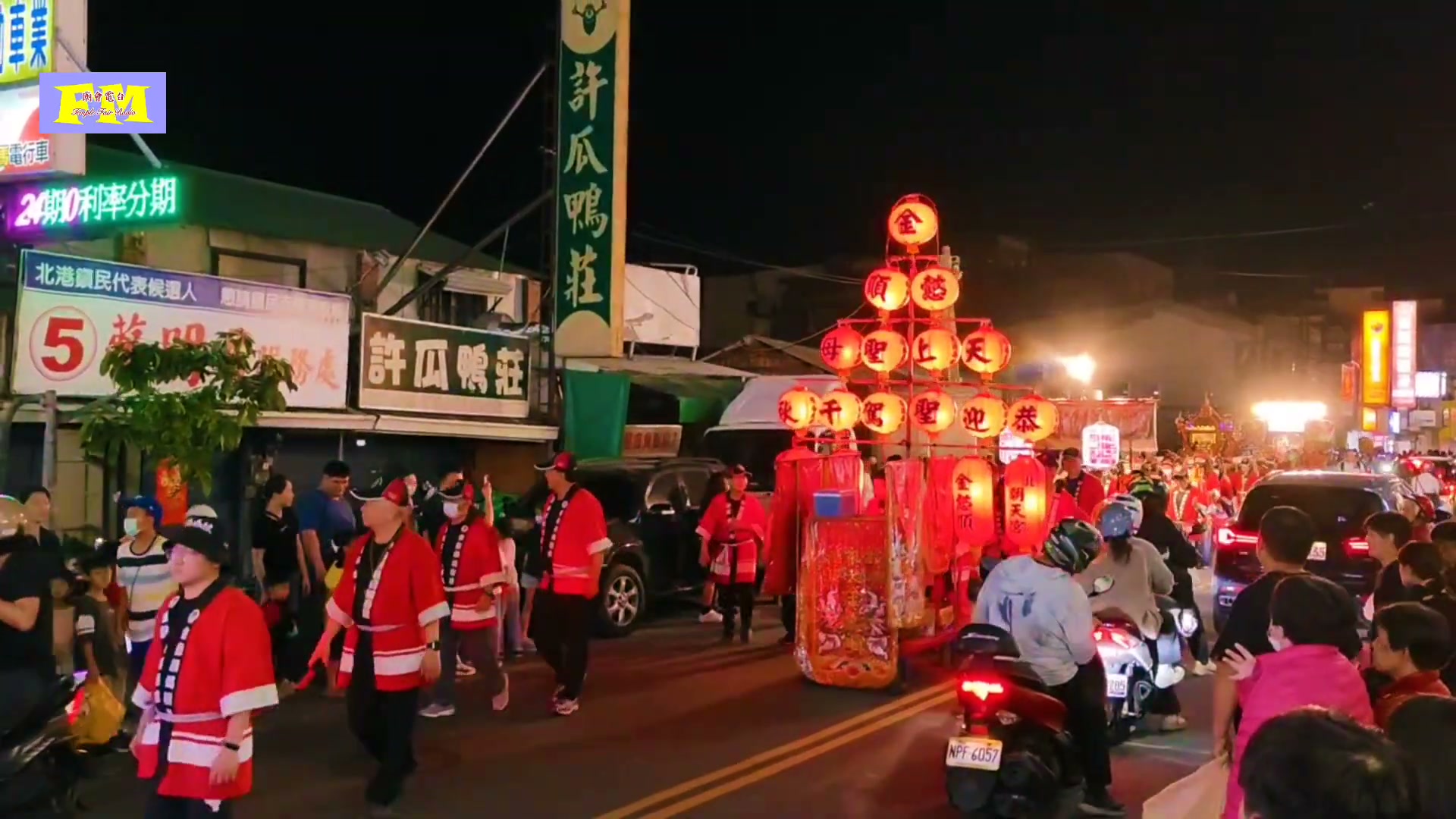
lanterns lead the way.
藝閣到來之前,
燈陣先走進街道。
00:00:11,000 --> 00:00:16,000
Neighbours walk together
through the working town.
街坊並肩前行,
穿過仍在生活的街鎮。
00:00:16,000 --> 00:00:22,000
Then a truck becomes
a moving stage.
接著,一輛車
成為移動的舞臺。
00:00:22,000 --> 00:00:27,000
Children dress as characters
from familiar stories.
孩子換上戲服,
扮演熟悉故事裡的人物。
00:00:27,000 --> 00:00:33,000
Costume, paint and lights
build a world above the road.
服裝、彩繪與燈光,
在街道上方搭起故事。
00:00:33,000 --> 00:00:39,000
Look up at the scene;
then notice the hands below.
抬頭看看布景,
再看下方伸出的雙手。
00:00:39,000 --> 00:00:44,000
A festival passes
ordinary shopfronts.
節慶隊伍,
經過平日熟悉的店面。
00:00:44,000 --> 00:00:50,000
One street holds
performers and onlookers.
同一條街,
容納扮演者與觀禮的人。
00:00:50,000 --> 00:00:55,000
Every float brings
a different scene.
每一座藝閣,
帶來另一個場景。
00:00:55,000 --> 00:01:01,000
Hands reach towards
the passing stage.
一雙雙手,
伸向經過的移動舞臺。
00:01:01,000 --> 00:01:06,000
Sharing 'peace sweets'
is part of the encounter.
分享平安糖,
也是彼此相遇的一部分。
00:01:06,000 --> 00:01:12,000
Keep the road clear
as the next stage arrives.
下一座藝閣到來時,
記得保留通行的空間。
00:01:12,000 --> 00:01:18,000
Stay a while:
the stories keep coming.
多停留一會兒,
街上的故事仍在繼續。
00:01:18,000 --> 00:01:24,000
A familiar street,
seen in a different light.
同一條日常街道,
在燈光下有了不同樣貌。
00:01:24,000 --> 00:01:26,000
Beigang, Yunlin
2025 festival record
雲林北港
2025年祭典紀錄
00:01:26,000 --> 00:01:30,000
Taiwan, Layer by Layer
From story to place
島嶼年輪
從故事認識臺灣,再走進現場
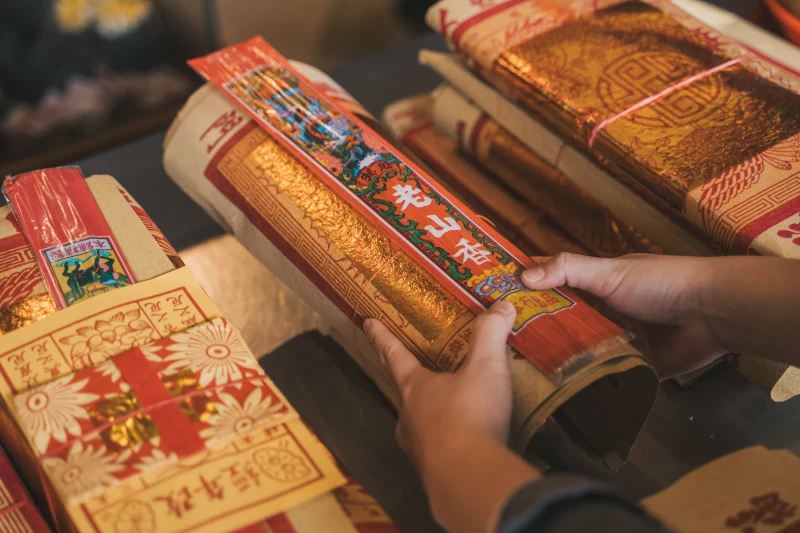
Mazu procession: the nineteenth and twentieth days of the third lunar month; Mazu’s birthday: the twenty-third.
Chaotian Temple is the starting point for understanding palanquin associations, household offerings and decorated floats.
A second New Year for the town
On the nineteenth and twentieth days of the third lunar month, Chaotian Temple’s Mazu procession moves through Beigang. The town calls this gathering a second New Year. The dates precede Mazu’s birthday on the twenty-third, and the procession gives residents and returning relatives a shared occasion to meet. Streets normally used for shopping become routes of reception.
The procession is sustained by named palanquin associations. Jinshunsheng serves the first Mazu, Jinshunan the second and Jinshengfeng the third, alongside other deity associations and ceremonial groups. These names point to lasting responsibilities: caring for a deity’s place in the procession and coordinating the people who carry it. The moving crowd contains a structure of local commitments.
The county’s object record describes a separate old Zumu palanquin dated approximately 1912. Its funding came through an appeal by the association’s chair and contributions from Beigang’s trading groups. The palanquin was therefore a shared investment as well as a vehicle for the deity. This older object should be read separately from later generations of palanquins; the same association name does not mean one unchanged shrine has been carried throughout its history.
Stories travel above the street
Beigang’s yi-ge floats carry living performers in staged scenes. Costumes, scenery and a recognisable story transform a vehicle into a moving stage. Although vehicles have replaced older ways of carrying the displays, the presence of real performers keeps the tradition distinct from a parade of static sculptures. The audience meets a story briefly as it passes, then another arrives.
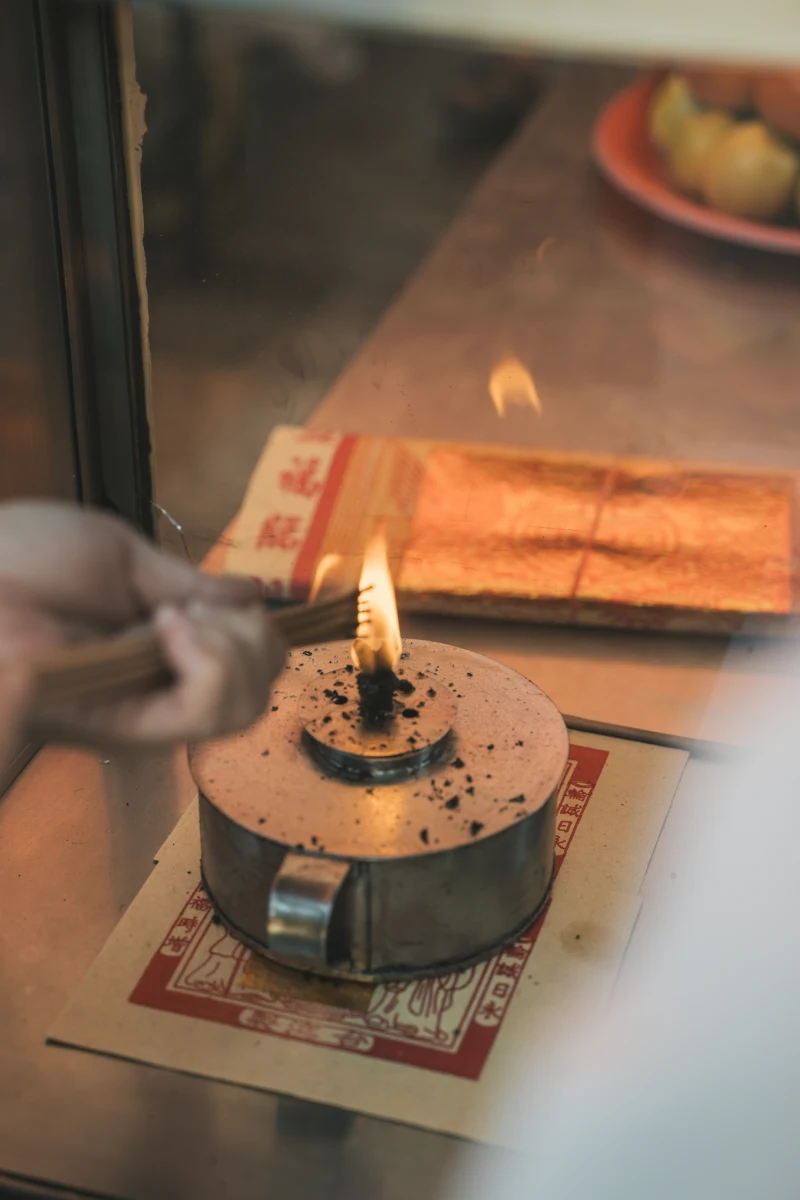
Preparing these scenes connects craft with the social life of the town. The procession also passes businesses supplying ritual paper, incense and food. Around Zhongshan Road, traditional pastry shops and everyday meals share the same streets used by visiting pilgrims. Festival and commerce meet here through practical needs: something to offer, something to eat and something to take home.
A maker and many donors remain in the procession’s background
Yunlin’s heritage record names Beigang craftsman Yen San-tai as the bearer of yi-ge making techniques. It identifies hand construction and living performers as essential features, and also records his use of traditional methods for Chaotian Temple’s third-generation ancestral palanquin. A float’s scenery and a sedan’s structure thus connect to a named maker’s practice. Watching the street parade can begin with a different question: which parts were built, fitted and repaired so that people could carry or inhabit them?
The temple’s own history leaves another trace of collective care. After the 1905 earthquake damaged the main hall and collapsed the Sizhui Pavilion, reconstruction drew donations from across Taiwan, with more than thirty thousand contributors recorded; some names were carved on the surrounding stone railings. This is an earlier rebuilding story, not the festival’s current fundraising account. It gives a reason to slow down beside the temple: the procession uses a place whose repair also depended on many people beyond its immediate streets.
That record identifies a hexagonal form and wood described as gougu wood, measuring 136 centimetres across and 235 centimetres high. It also records the object’s appearance at a southern Taiwan products exhibition in Chiayi during the Taisho period. A ritual object could thus be regarded both as a shrine and as an example of workmanship. Its listed dimensions describe this particular surviving palanquin, not the specifications or public display status of every present-day procession vehicle.
A prayer can fit in two hands
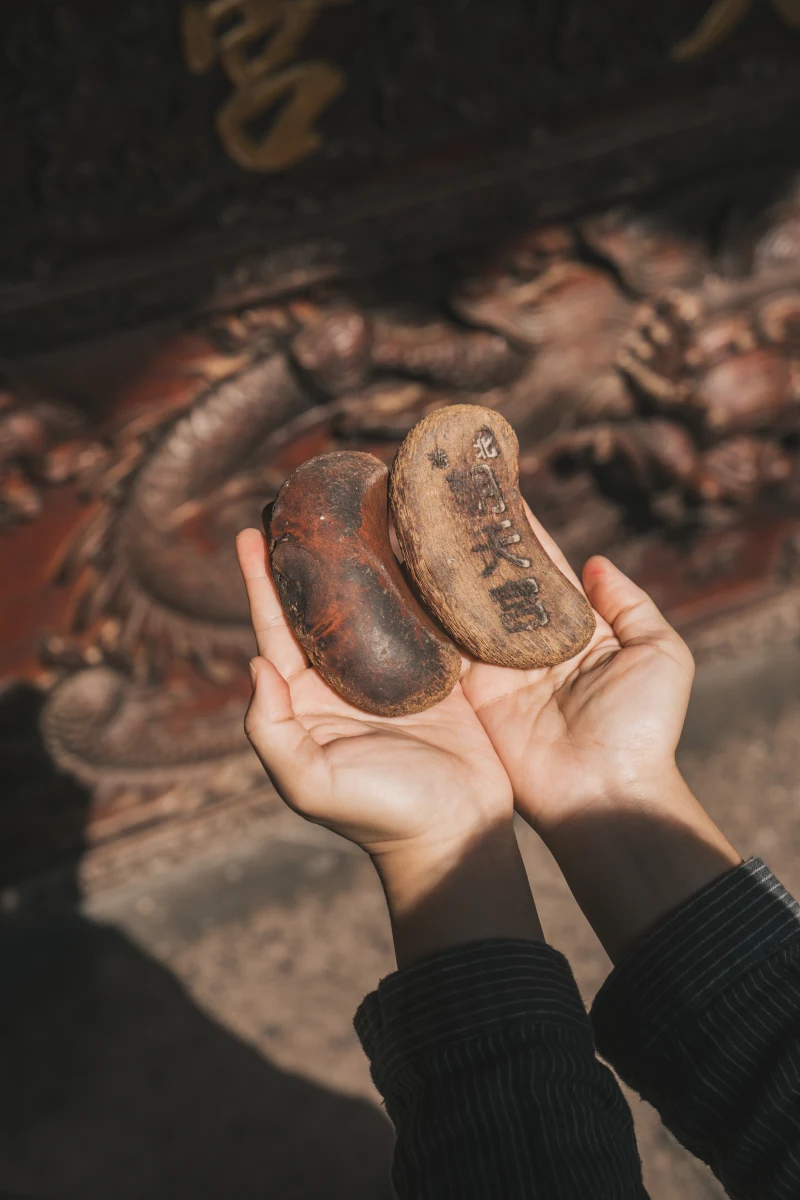
Back inside Chaotian Temple, the scale becomes intimate. Incense is lit, offerings are arranged and divination blocks are held before a question is asked. These objects do not require the great procession to matter. They connect personal concerns to the same Mazu whose palanquin later moves through the town.
A visit can therefore move between the temple and its surrounding shops without treating them as separate attractions. The carvings, the waiting worshippers and the work of preparing offerings all belong to a place in continuous use. During the annual procession that place expands into the streets; on an ordinary day, its connections remain visible in smaller gestures.
Look closer at the places in the film
Begin with the street, then one whole float
Start at the roadside and notice the vehicle, performers and waiting crowd together. Shop signs, intersections and scooters remain in the picture: the festival is taking place in a working town. These night scenes come from a record uploaded in 2025. First read the scale of the street and the complete float, then look more closely at costumes and scenery.
The corresponding article connects the streets around Chaotian Temple with palanquin associations, households and live tableaux. This film concentrates on the floats seen from the roadside. It does not claim to document every Mazu ritual, or identify this particular junction as the temple forecourt.
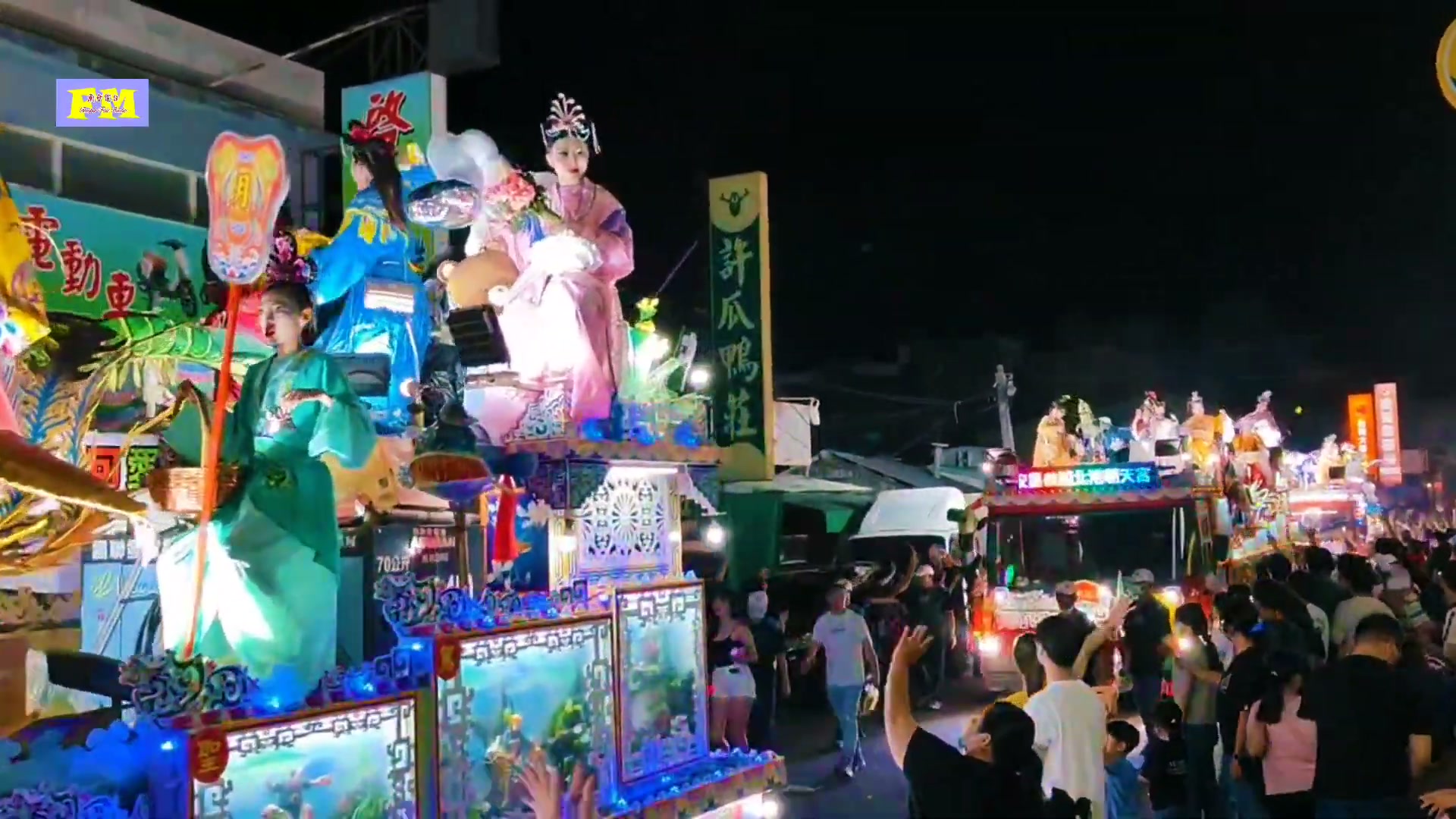
Lanterns and walkers change the rhythm of the street
Between the floats are lantern standards, ceremonial groups and people on foot. Notice who is walking and who is waiting to see how the street accommodates different kinds of work. The slower steps give the bright spectacle a human pace.
Heritage records distinguish the Beigang procession on lunar 3/19–20 from Mazu’s birthday on lunar 3/23. Float sessions and traffic controls depend on that year’s organiser notice; this archival film is not a timetable.
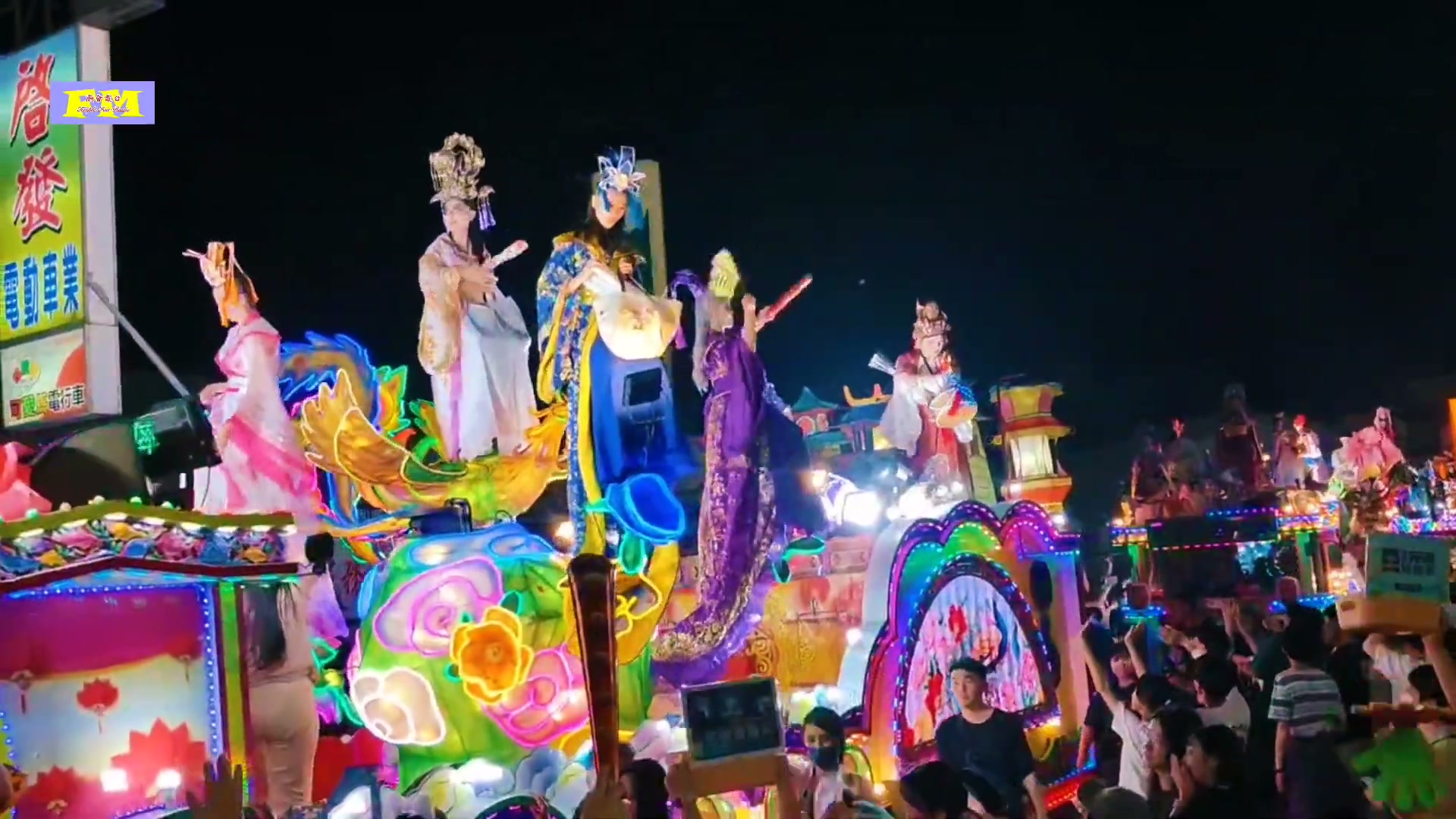
People, costumes and scenery make a moving story
A float is more than a decorative shell. Live performers, sleeves, headdresses, sculpted scenery and lights suggest a story together. Wider views also retain the cab, vehicle and people walking alongside it. A moving stage needs physical work as well as spectacle.
Try reading one float as a whole before choosing a detail: an object in a character’s hand, their position or the scenery around them. The film does not invent identities for every role or attribute the visible construction to an unverified individual craftsperson.
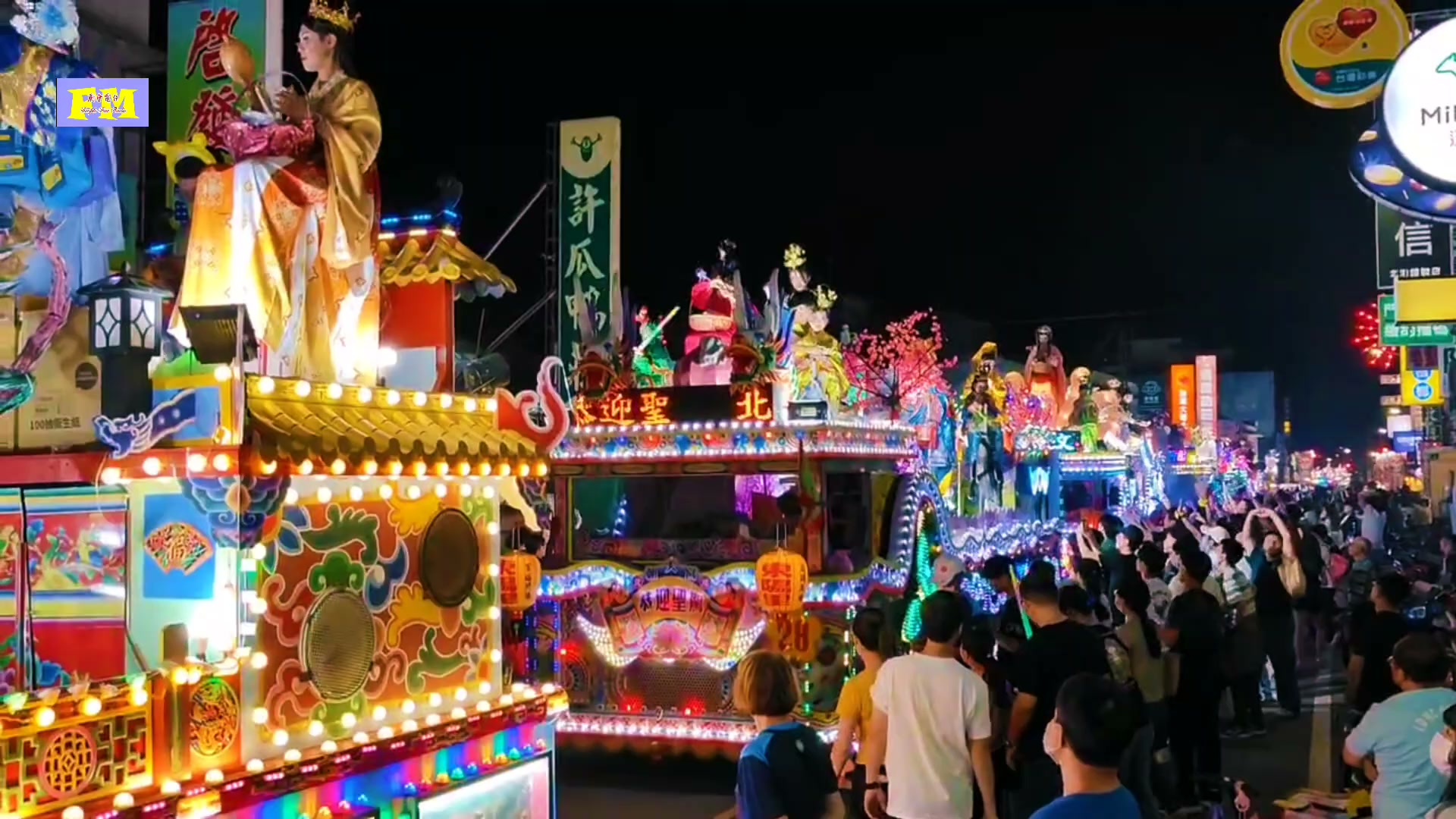
Raised hands connect the crowd and the stage
Heritage documentation describes live performers portraying folk-story characters and sharing sweets associated with wishes for peace. Raised hands and upward glances make the meeting between float and roadside visible: spectators do more than watch a vehicle pass.
Choose a roadside viewing position and preserve space for vehicles, guides and other pedestrians. Stay a little longer for the next float to approach rather than stepping into its path or chasing it along the road.
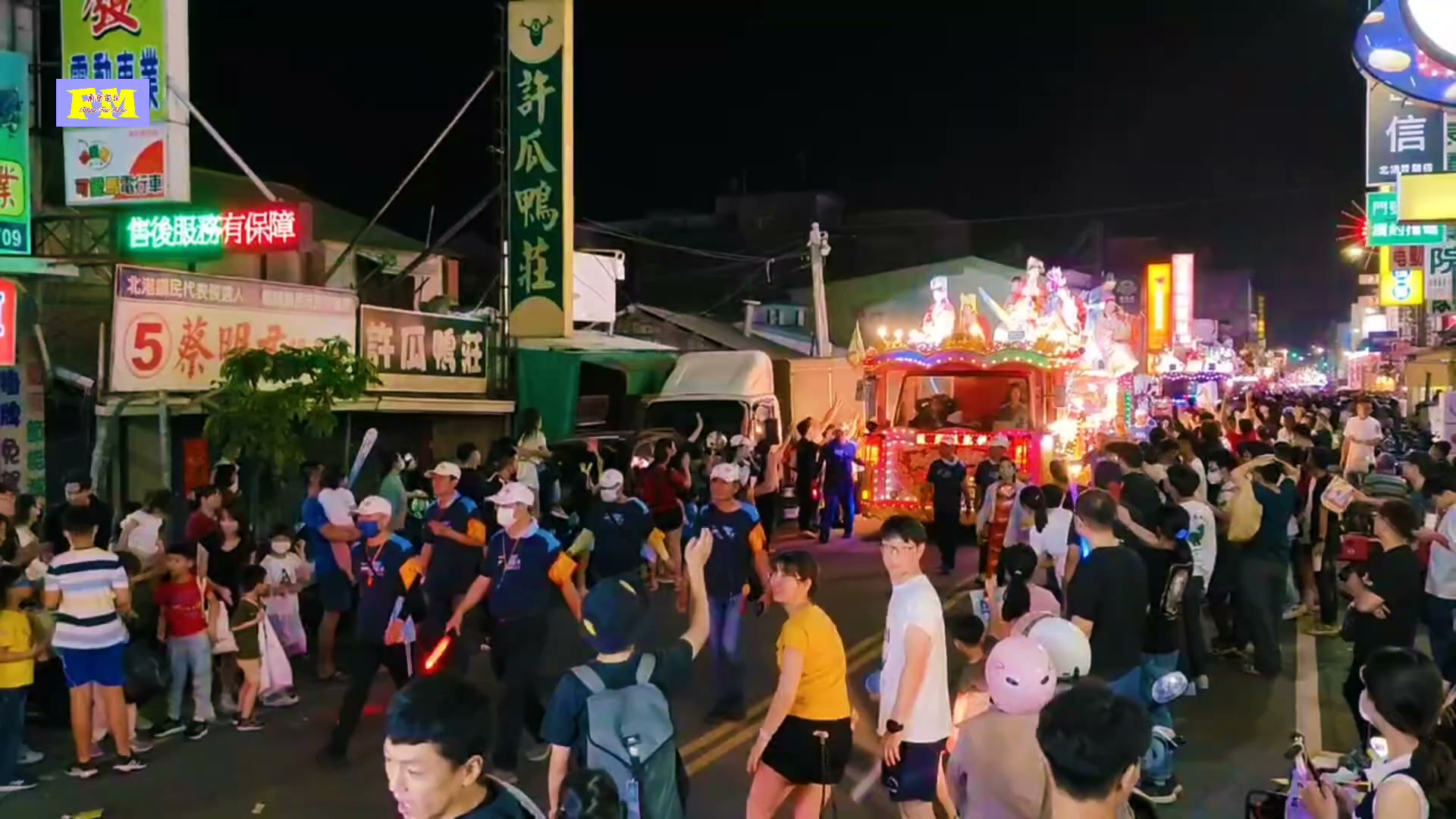
Carry one scene back into everyday Beigang
After one float passes, look back at the street. The moving stage has briefly changed the light on ordinary shops. A visit can leave more than a bright photograph: notice how people make room, look after one another and share the same working street.
Chaotian Temple is at 178 Zhongshan Road, Beigang Township, Yunlin County. Check the temple and local government’s current announcements, and identify a meeting point and return journey outside traffic controls. All five photographs are distinct frames from the same moving-image source used in this film.
Film, article and image sources
From a Beigang night-procession record uploaded on 17 April 2025 and titled for that year. The exact filming date is not independently confirmed. A separate instrumental score replaces the original soundtrack and location audio. This archival film does not announce the current or next festival edition.
- 2025北港朝天宮真人藝閣夜間紀錄;FM標記,現行頻道標籤另存於來源收據
- 文化部文化資產局/國家文化記憶庫:北港朝天宮迎媽祖
- 雲林縣政府/交通部觀光署:北港朝天宮
- 對應正式文章:北港迎媽祖,一座街鎮為相聚騰出位置
1. Visible FM mark retained; current public channel metadata differs from the search label. See source provenance. · 2025
2. Visible FM mark retained; current public channel metadata differs from the search label. See source provenance. · 2025
3. Visible FM mark retained; current public channel metadata differs from the search label. See source provenance. · 2025
4. Visible FM mark retained; current public channel metadata differs from the search label. See source provenance. · 2025
5. Visible FM mark retained; current public channel metadata differs from the search label. See source provenance. · 2025
Music: 跨海的一段路 (AI-generated instrumental).
Look closer
Read the palanquin association names and notice how ritual shops remain part of the same streets.
Visiting information
- Date rule
- Mazu procession: the nineteenth and twentieth days of the third lunar month; Mazu’s birthday: the twenty-third.
- Place
- Chaotian Temple, 178 Zhongshan Road, Beigang Township, Yunlin County.
- Transport
- Bus 7235 links THSR Chiayi Station and Beigang via the Southern Branch of the National Palace Museum; bus 7325 links Chiayi and Beigang. Walk from the Beigang town stops to Zhongshan Road and return to the appropriate opposite-direction stop.
- During the procession
- Leave space for palanquins and floats; choose a meeting point outside the densest temple-front crowd.