
Annual event
Bangka’s Qingshan festival: how a neighbourhood receives its deity
From a night patrol’s route board to the returning palanquin, a migrant faith remains part of Wanhua’s streets.
Bangka Qingshan Festival: From Departure to Return
90 seconds. English captions are part of the film. Optional Traditional Chinese subtitles are available in the player.
Excerpts from departure and return on the same first night, 9 December 2025. Archival footage, not live 2026 coverage or a complete record of the route or three-day festival. An instrumental score replaces the source sound; no programme title or full-screen cards are added.
Read the complete five-chapter article → · 繁體中文
Complete English captions and Traditional Chinese translation
00:00:00,000 --> 00:00:05,000
Bangka Qingshan Festival
From Departure to Return
艋舺青山祭
從出巡走到回廟
00:00:05,000 --> 00:00:11,000
Before the journey,
a palanquin waits inside the temple.
啟程以前,
神轎先在廟裡等候。
00:00:11,000 --> 00:00:16,000
Around the carrying poles,
everyone has a place.
抬桿周圍,
每個人都找好自己的位置。
00:00:16,000 --> 00:00:22,000
Many hands guide it
through the temple doorway.
許多雙手配合,
讓神轎穿過廟門。
00:00:22,000 --> 00:00:28,000
Outside, the neighbourhood
has gathered to see it off.
廟門外,
街坊已聚集送行。
00:00:28,000 --> 00:00:34,000
Follow the carriers
from the forecourt into the street.
沿著抬行者的步伐,
從廟前望向街道。
00:00:34,000 --> 00:00:40,000
In local belief, this patrol
protects the neighbourhood.
在地方信仰中,
暗訪巡行為街坊祈求平安。
00:00:40,000 --> 00:00:46,000
After dark, people gather
for the procession’s return.
入夜以後,
人們再次聚集,等待隊伍回來。
00:00:46,000 --> 00:00:52,000
Leave a passage
for each arriving group.
觀看時留出通道,
讓一支支隊伍依序進入。
00:00:52,000 --> 00:00:58,000
Tall figures rise
above the waiting crowd.
高大的神將,
從等候的人群之上現身。
00:00:58,000 --> 00:01:04,000
Then the palanquin
comes back into view.
接著,
神轎再度出現在眼前。
00:01:04,000 --> 00:01:10,000
Watch the shared effort
behind its movement.
看見神轎移動背後,
眾人共同配合的力量。
00:01:10,000 --> 00:01:16,000
Across the same threshold,
the palanquin returns to the temple.
越過同一道門檻,
神轎回到廟裡。
00:01:16,000 --> 00:01:22,000
The night’s journey
returns to where it began.
這一夜的行程,
回到出發的地方。
00:01:22,000 --> 00:01:27,000
Bangka, Taipei
9 December 2025
臺北艋舺
2025年12月9日紀錄
00:01:27,000 --> 00:01:30,000
Taiwan, Layer by Layer
From story to place
島嶼年輪
從故事認識臺灣,再走進現場
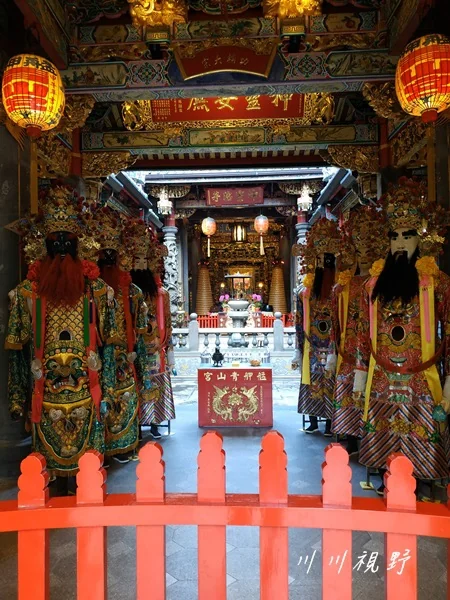
For 2026: southern dark patrol on 28 November, northern patrol on 29 November, and main procession on 30 November; the first day departs at 4 p.m.
The temple on Guiyang Street is the starting point; night patrols and the daytime procession have different ritual purposes.
From Hui’an to Bangka
Migrants from Hui’an in Quanzhou brought the worship of Qingshan Wang to Bangka. Temple traditions associate Ling’an Zunwang with relief from an epidemic, a belief explaining the deity’s protective relationship with the settlement. Night patrols express a judicial role—inspecting the territory—distinct from the celebratory work of a birthday procession.
The temple has changed physically as well. Its front gate, main hall and connecting galleries retain elements of the Shōwa-period rebuilding, while reconstruction of the rear hall in 1979 altered the earlier three-hall, two-courtyard layout. Returning worshippers meet the same institution in a building that, like its neighbourhood, carries successive phases of work.
Order before departure
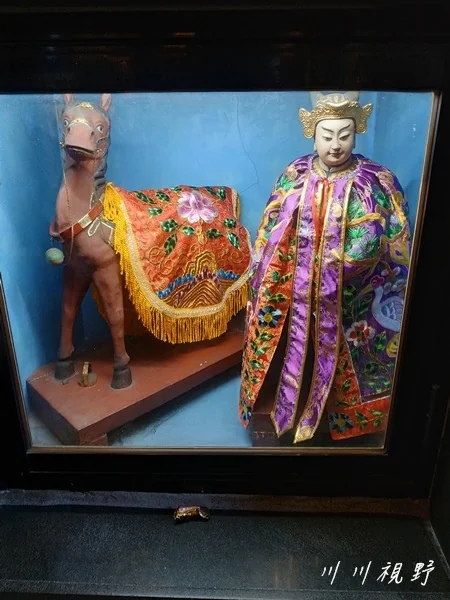
A route board announces the path ahead, with the Earth God leading and generals and palanquins occupying assigned positions. The pre-departure court ritual establishes formal order rather than simply starting once everyone arrives. Everyday street movement temporarily gives way to another sequence, allowing a long procession to retain distinguishable responsibilities.
A first-hand account from a rainy night in 2010 followed a visitor walking from Longshan Temple MRT Station to Guiyang Street, seeing prepared deity figures waiting outside the temple, then moving to Wufu Temple to watch the procession arrive. The sequence distinguishes departure preparations from the successive receptions arranged by temples and offering tables along the route.
In a 2017 interview, group organisers Lin Jiahe and Gao Yufeng described another responsibility: feeding the performers. Gao recalled long walks with little support; Lin regularly asked who needed food. The participants had jobs outside the group and took leave for the festival. Beneath the ceremonial costume was a body that needed care, and a working person making time for the occasion.
A dark patrol is defined by its ritual task, rather than by a requirement to begin after sunset. For 2026, Qingshan Temple announced the southern Wanhua patrol for 28 November, the northern patrol for 29 November and the main procession for 30 November. Its notice sets the first day’s departure at 4 p.m., alongside its explanation that election-day homecomings will bring additional people into the district. The day’s civic timetable and the temple’s preparations therefore meet in the same streets. Arriving for the first departure means seeing people get ready in daylight; waiting until late at night offers a different part of that one patrol.
One deity, several responsibilities
The temple’s history page distinguishes several images of Qingshan Wang. In its account of temple oral knowledge, the Second Ancestor is the principal image taken on festival processions, while the Third Ancestor serves in spirit-writing consultations, particularly matters concerning the dead. The distinction is one of ritual responsibilities, not a series of different gods or a ranking based simply on size.
This changes how the departure can be read. The image appearing in a palanquin has a particular role within a temple that continues to function while it is on the road. The page cautiously describes the Second Ancestor’s possible nineteenth-century date as an inference; that is not a confirmed carving date. Keeping function separate from uncertain age allows the procession and the quieter shrine to remain parts of the same institution.
One night’s waiting, years of returning
On that 2010 night, an older woman followed the palanquin in a wheelchair pushed by her daughter, travelling through Bangka’s streets together. The occasion includes people who wait, accompany and make room, not only the performers at the front. For residents, taking part need not mean standing in the centre of the procession; moving together is another form of participation.
At the return, the palanquin performs its prescribed advances and retreats before the closing sequence. These movements bring the street journey back into the temple and connect the end with the departure. For a casual spectator it may resemble dispersal; for bearers and receiving teams, completing the final order remains part of the responsibility.
Look closer
Identify the route board and the order of participants to understand different responsibilities.
Stay beside one temple along the route and observe reception, passage and the reopening of street movement.
Visiting information
- 2026 dates
- The southern Wanhua dark patrol is on 28 November, the northern patrol on 29 November and the main procession on 30 November. The temple announces a 4 p.m. departure for 28 November only; use each day’s final notice for its other times and traffic controls.
- Venue
- Bangka Qingshan Temple, 218 Section 2, Guiyang Street, Wanhua, Taipei. Telephone 02-2382-2296.
- Visiting
- Public roadside viewing is free. Allow two to three hours for one section of a patrol or procession, keeping the palanquin’s entrance and exit clear.
- Arrival and return
- Walk from Longshan Temple MRT Station toward Xiyuan Road and Guiyang Street. Return via Longshan Temple or Ximen Station; arrange a vehicle if staying beyond late-night rail service.
- Annual pattern
- The two dark patrols fall on the twentieth and twenty-first days of the tenth lunar month, followed by the procession on the twenty-second and the deity’s birthday on the twenty-third. Birthday observances and separate arts programmes have their own arrangements.
Look closer at the places in the film
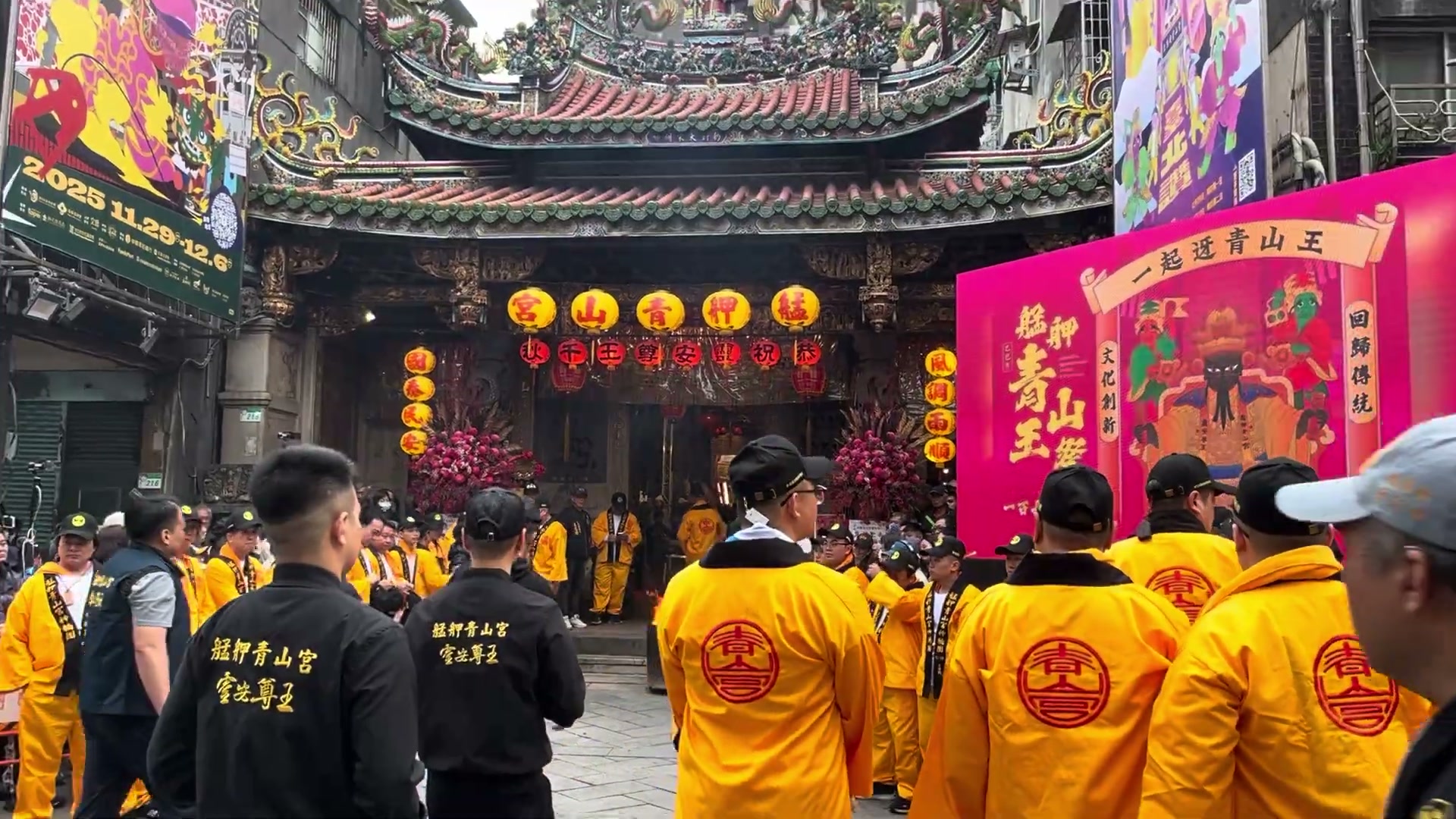
Begin at the temple forecourt
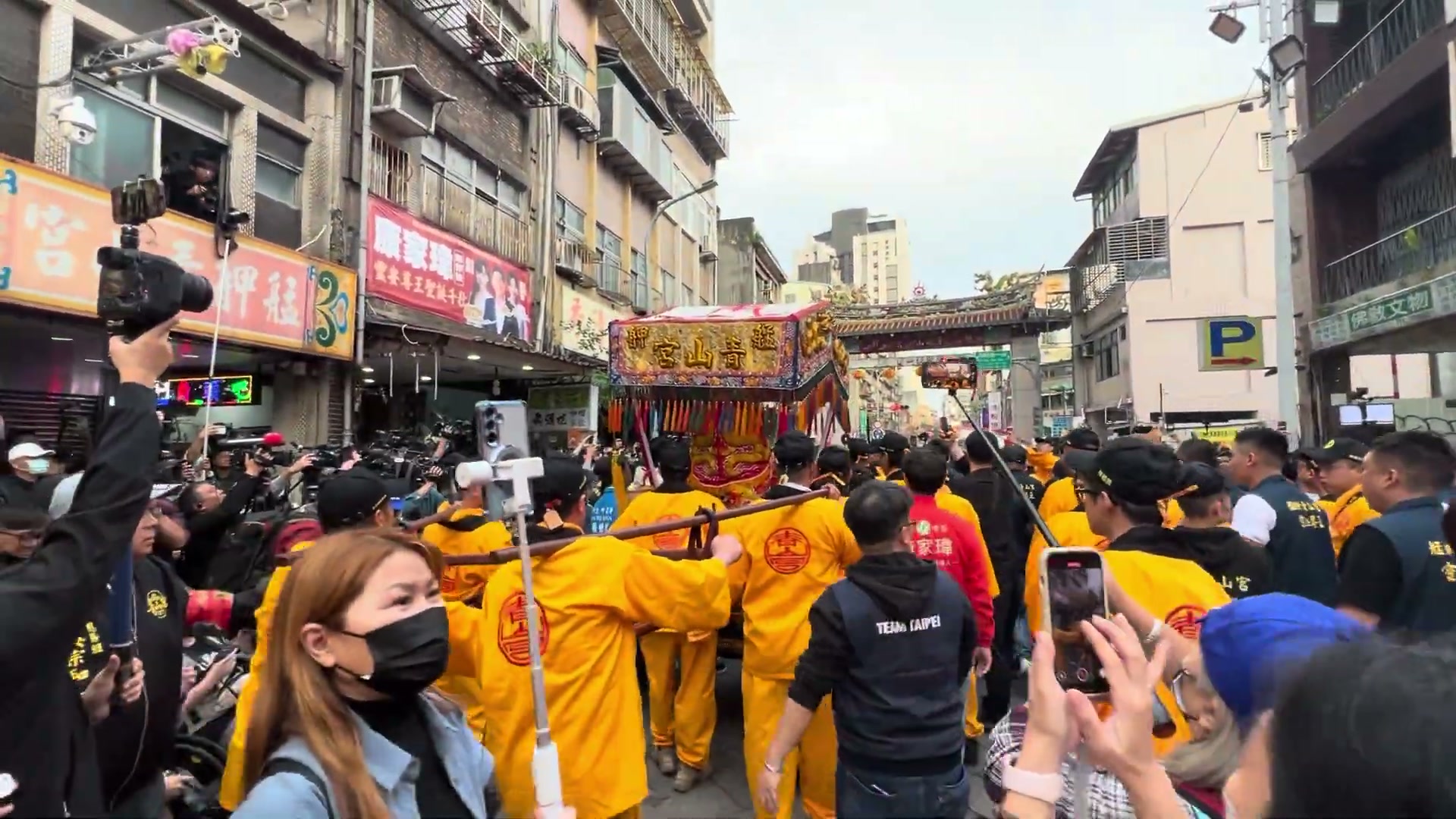
Between the street houses on Guiyang Street, the temple roof, lanterns and gathering teams enter the same view. Begin with that whole scene. Then notice the passage kept open in the forecourt: it helps you understand the work around the procession.
Qingshan Temple honours Lingan Zunwang. Night patrols and the main procession form important parts of its annual festival. This film follows departure and return on 9 December 2025, using two records of the same first day rather than combining different years.
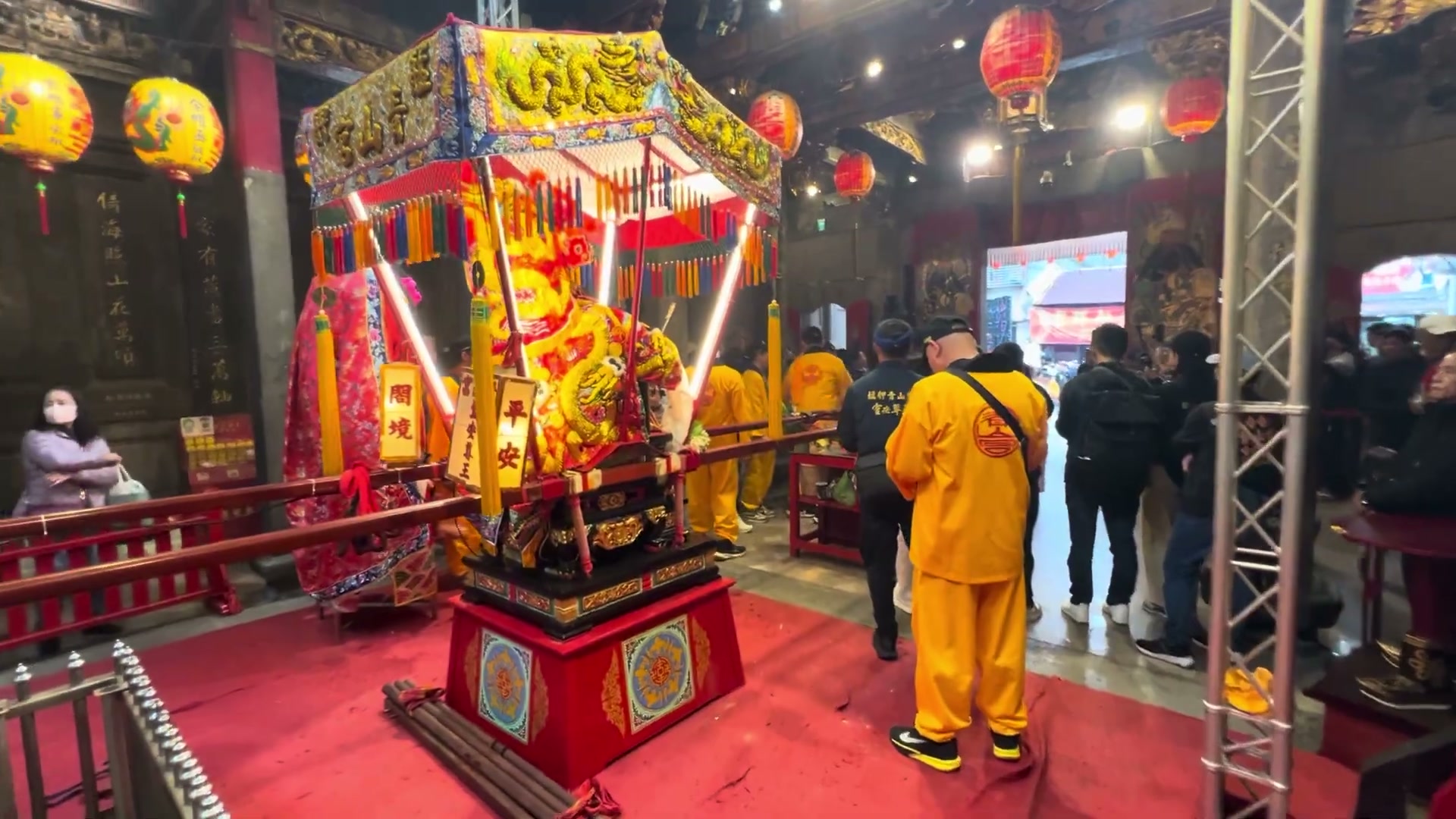
A palanquin and the people around it
Inside the temple, the palanquin’s roof, tassels and carrying poles can be seen together. Shift your attention from decoration to the poles. They give you something concrete to follow as the palanquin crosses the threshold and enters the crowd.
The original record includes much longer periods of preparation and waiting. This edit keeps moments that make the cooperation visible; it does not document every rite. Watch from outside the guided passage instead of moving close to the palanquin.
From the threshold into the street
As the palanquin leaves the entrance, the camera turns towards street houses and spectators. The carrying poles connect the preparation inside with movement outside. Steps, turns and the space made by the crowd all belong to that movement.
In local belief, the night patrol is associated with inspection, protection and peace. These scenes are brief excerpts from the first departure in 2025, rather than a map of every street visited. For a future visit, check that edition’s route and traffic notices.
Make room for the return
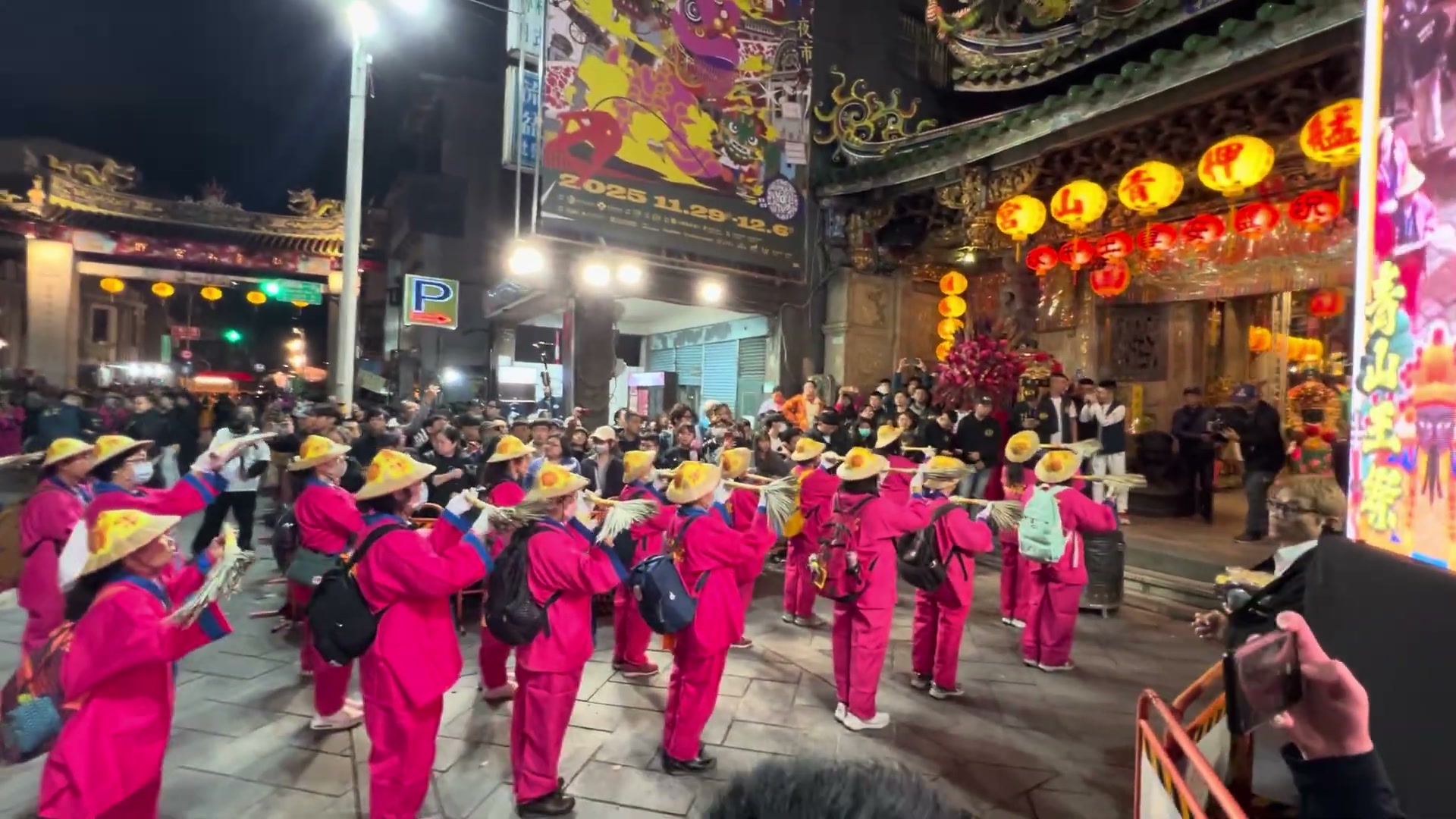
Daylight gives way to the lights outside the temple. Musicians, flags and tall deity figures appear as groups return. Before the main palanquin comes into view, waiting has already changed the forecourt: some people watch, while others guide and receive the arriving teams.
The musicians are visible, but the film uses a separate instrumental score rather than location sound. The creator’s full records offer another way to explore the festival’s actual sound. In person, follow the stewards’ directions and keep clear of the procession passage.
Return through the same entrance
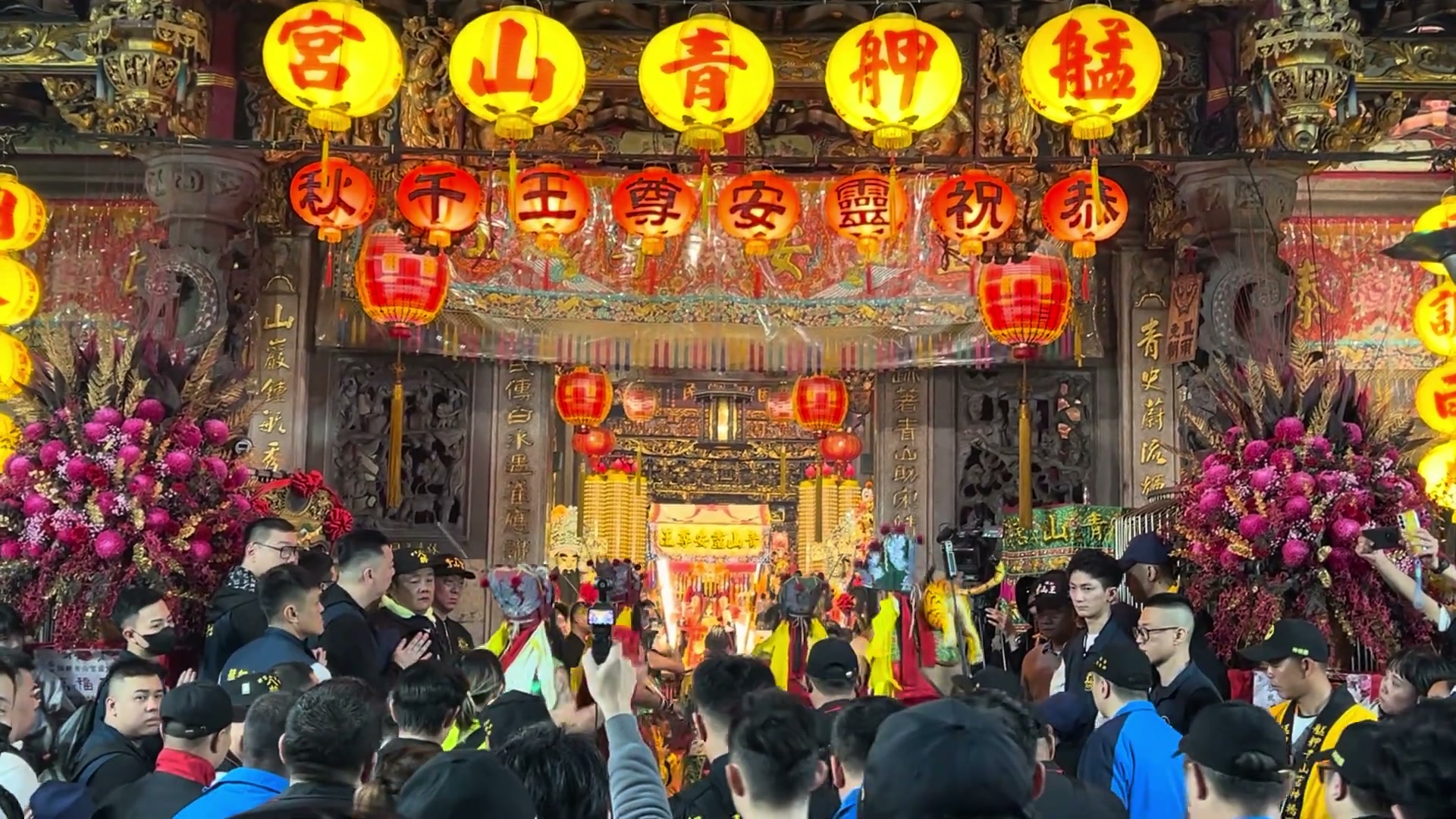
The palanquin appears again, approaches the doorway and returns inside. The film finishes where its journey began. People are still gathered outside: ninety seconds does not mean every part of the festival has ended. It closes one recognisable passage of the first night.
The images are from 9 December 2025. Official notices announce the 2026 patrols and main procession for 28–30 November, but this is not footage of that edition. Before attending, check the organiser’s latest changes, viewing guidance and return transport. An ordinary temple visit is a separate arrangement.
Film, article and image sources
Excerpts from departure and return on the same first night, 9 December 2025. Archival footage, not live 2026 coverage or a complete record of the route or three-day festival. An instrumental score replaces the source sound; no programme title or full-screen cards are added.
- 張哲生|2025年12月9日艋舺青山祭起駕紀錄
- 張哲生|2025年12月9日艋舺青山祭回駕紀錄
- 艋舺青山宮|暗訪暨遶境
- 內政部|艋舺青山宮暗訪暨遶境
- 臺北旅遊網|2026年11月官方活動介紹
- 島嶼年輪|艋舺青山王祭
1. 張哲生 · 2025
2. 張哲生 · 2025
3. 張哲生 · 2025
4. 張哲生 · 2025
5. 張哲生 · 2025
Music: 跨海的一段路 (AI-generated instrumental).