
Cultural story
Bamboo weaving: follow one strip through the object
Rims, feet and open weave reveal how material becomes structure—and how makers give it a new form.
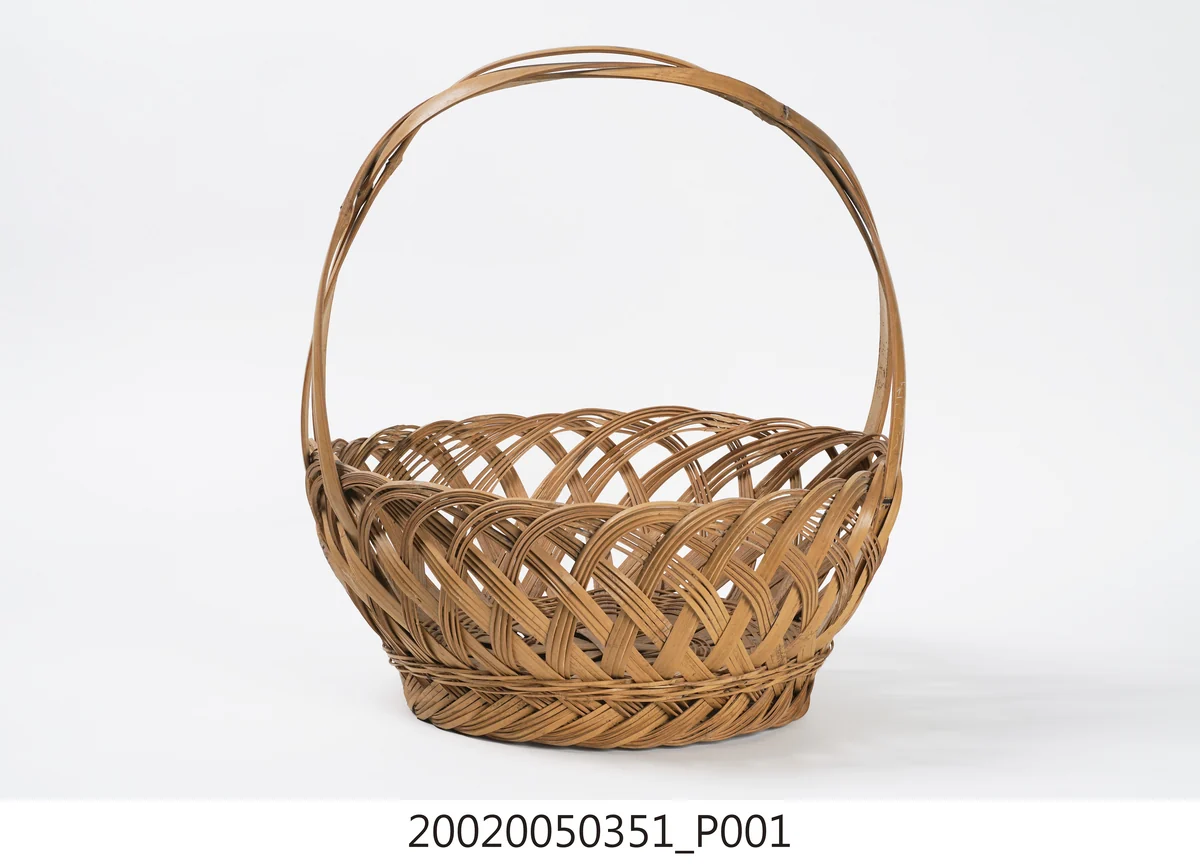
Read the rim, base and junctions before the overall silhouette.
Compare woven structures, lacquered surfaces and the maker’s changing techniques.
Start where the strips meet
A bamboo basket can be read through its connections. Begin at the rim, follow a strip into the body, then look at the base and handle. The pattern is also a way of distributing support. A dense surface, an open lattice and a reinforced edge solve different needs, even when they share the same material.
Long before weaving, bamboo must be selected and prepared into workable strips. Splitting, trimming and making widths consistent change a stem into a material a maker can control. The regularity of a finished pattern is therefore partly the result of preparation that has disappeared from view. Looking closely at the weave brings that early work back into the picture.
Two surfaces in one gourd
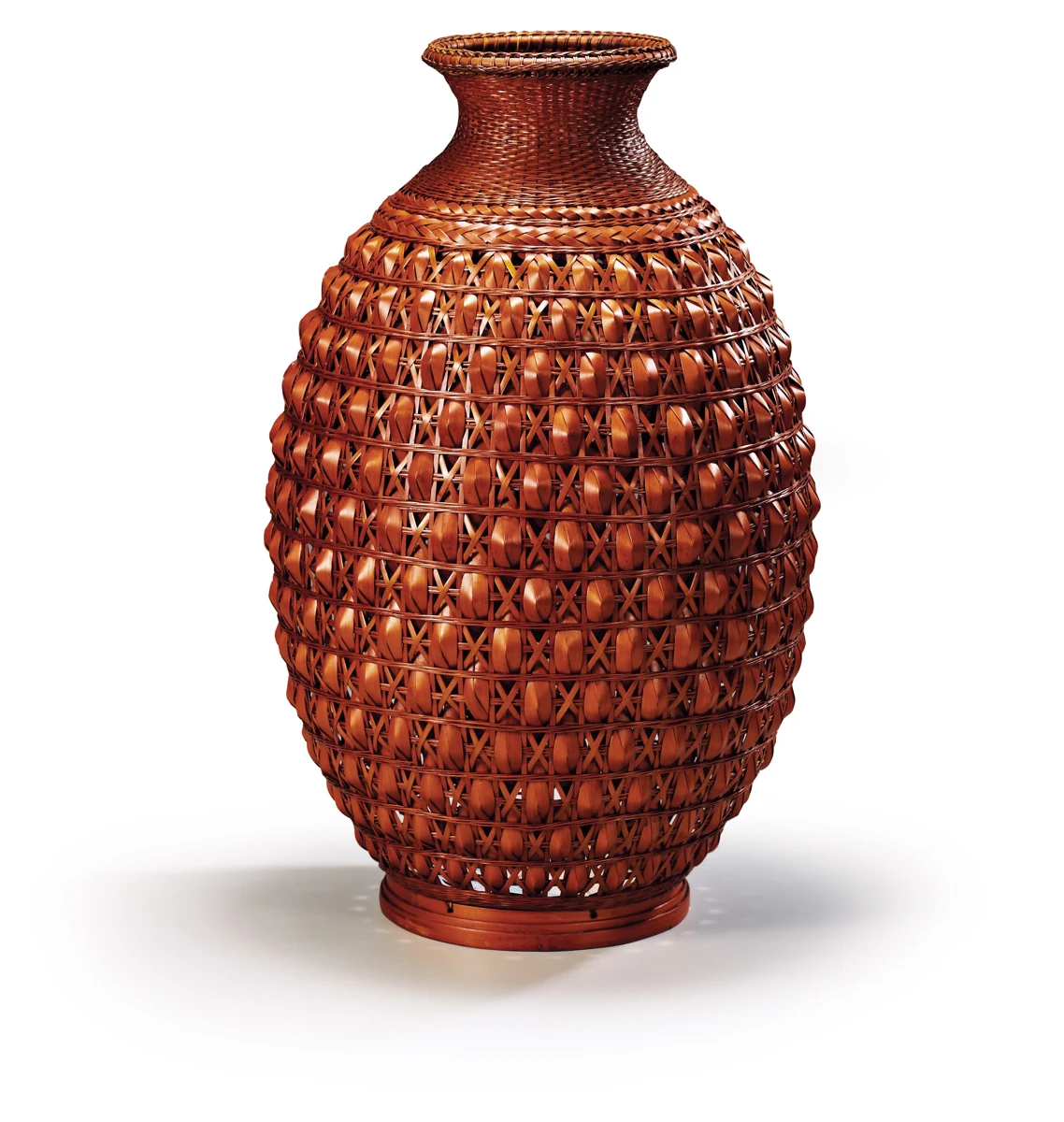
Li Rong-lie’s 2009 Gourd combines bamboo with gauze and lacquer. Some of its woven body remains exposed, while other areas carry the finish. A viewer can move between two surfaces: the pattern of interlaced strips and the treated areas that alter its colour and sheen. The construction is not merely a hidden support for decoration; it remains part of what the work asks us to see.
The NMTH basket numbered 2002.005.0351 makes this division of work visible. Four narrow strips form each group woven around its body and ring foot, with an extra twined band reinforcing their meeting point. Wider strips cross at the base, while three bent strips form the long handle and enter the basket wall. Following those joins shows that the visible pattern, the standing base and the place a hand lifts are connected parts of one object.
Its catalogue also places the basket in a changing market for ordinary containers. As inexpensive, stackable plastic goods spread through Taiwan in the 1960s and 1970s, everyday bamboo baskets became less common. A carefully woven handle therefore belongs not only to a history of skilled hands, but to a household’s choices about cost, storage and convenience. The comparison with a contemporary bamboo artwork begins there: the material remains familiar while the reasons for choosing it can change.
Changing technique changes a working life
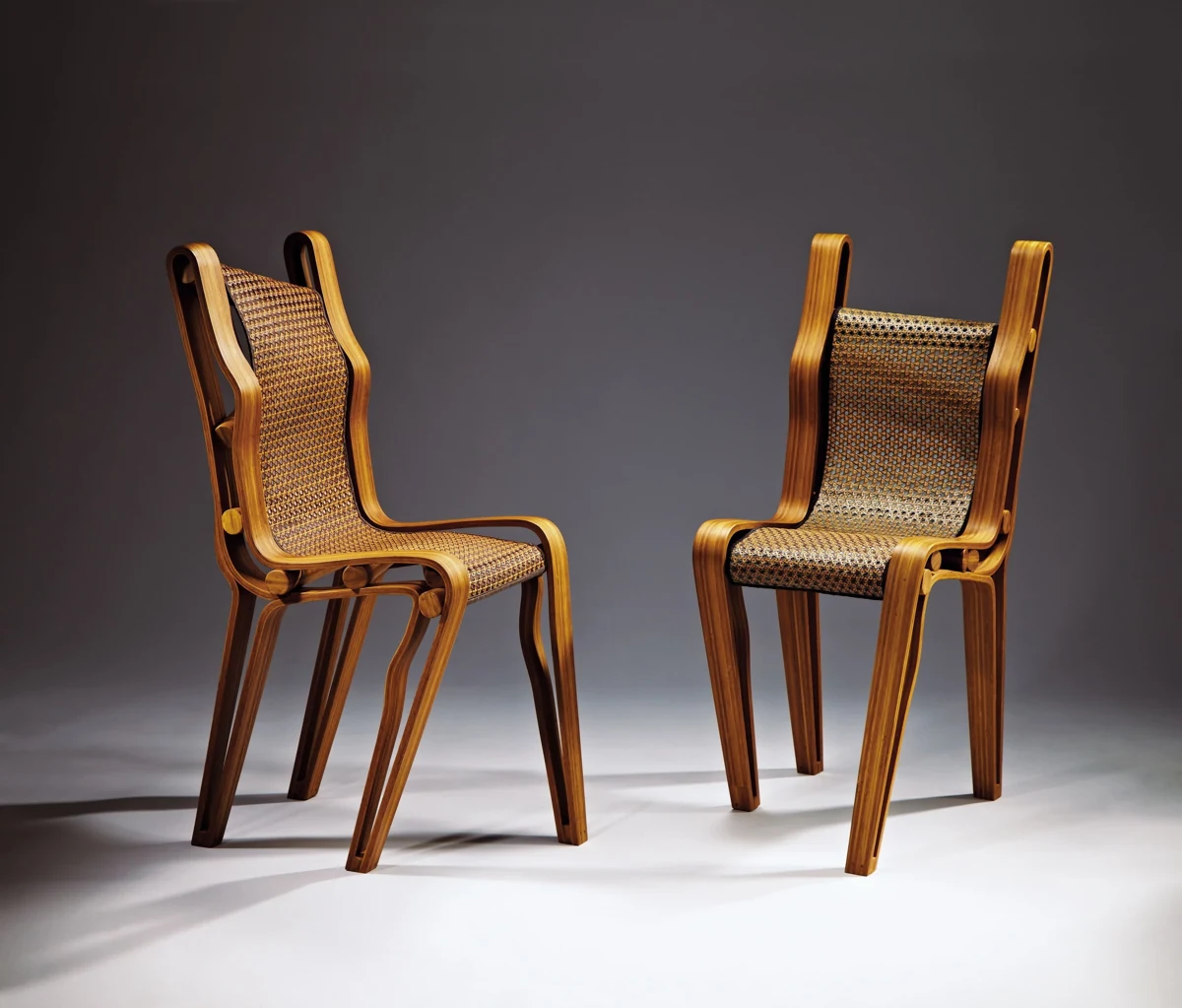
Liu Hsing-tse of Zhushan first learned to work bamboo through lathe-based production, making everyday objects such as pen holders, and later studied weaving with Huang Tu-shan. Changing the way he formed a familiar material brought earlier production experience into contact with another craft vocabulary. His later work could draw on both, rather than treating the new learning as a complete break with his past.
He combines weaving with bent bamboo and turned components for bases or frames. Next time you look at a bamboo object, separate its woven skin from its supporting parts and see how they meet. The work’s outline then becomes evidence of choices—about weight, proportion and joining—rather than an anonymous example of tradition.
Look closer
Choose a rim, base and handle; compare how each part is joined and whether the surface is woven, turned or lacquered.
Visiting information
- Place
- Taiwan Craft Culture Park, 573 Zhongzheng Road, Caotun, Nantou County.
- Visit
- Start with the public exhibitions at the Taiwan Craft Culture Park. Choose a current exhibition before travelling if bamboo is your focus, and book hands-on sessions separately. The NMTH basket and named works discussed here are reading examples, not a guarantee that the same objects are on display in Caotun.
- Getting there
- From Taichung railway station, take Taichung Bus 108 towards Nan Kai University of Technology and get off at Gongyi Zhongxin (Craft Centre).
- Return
- Use the opposite-direction service towards Taichung railway station. Finish the exhibitions with enough time to walk out of the park and reach the return stop.