
Annual pilgrimage
Baishatun Mazu: carrying incense home, carrying a village forward
The pink palanquin draws attention on the road. Behind it, incense carriers, volunteers and village writers keep a journey connected to its coastal home.
Baishatun Mazu Pilgrimage: Walking Together
90 seconds. English captions are part of the film. Optional English and Traditional Chinese CC are available in the player.
Selected from Nan Taipingyang-PNG’s record labelled 9 May 2025, following the Baishatun and Shanbian Mazu pilgrimage north from Changhua towards Qingshui, Taichung. Uploaded 8 June 2025; the filming day is not independently confirmed. These are archival return-journey selections, not a complete itinerary, a homecoming rite at Gongtian Temple, a current route or a future-event announcement. A daylight establishing view precedes selections around first light; the montage is not continuous coverage. Canopy colour is not used to identify individual deities. Instrumental music replaces location sound.
Read the complete five-chapter article → · 繁體中文
Complete English captions and Traditional Chinese translation
00:00:00,000 --> 00:00:05,000
Baishatun Mazu Pilgrimage
Walking Together
白沙屯進香
跟著隊伍走一段
00:00:05,000 --> 00:00:12,000
Streets fill with people
around the palanquin.
神轎周圍,
街道上聚滿了人。
00:00:12,000 --> 00:00:18,000
A palanquin,
carried shoulder to shoulder.
一頂神轎,
由肩膀共同承擔。
00:00:18,000 --> 00:00:23,000
Orange hats fill
the waking streets.
橘色帽子,
出現在甦醒的街道。
00:00:23,000 --> 00:00:27,000
The city opens out
towards roadside greenery.
從城市街道,
走向路旁的綠意。
00:00:27,000 --> 00:00:33,000
A long journey,
seen one step at a time.
一段長路,
從每一步慢慢看。
00:00:33,000 --> 00:00:40,000
Leave a corridor
for the palanquin to pass.
留出一道空間,
讓神轎與轎班通過。
00:00:40,000 --> 00:00:46,000
Watch the poles,
and the hands that steady them.
看長桿,
也看扶穩它的雙手。
00:00:46,000 --> 00:00:52,000
Bearers find a shared pace
beneath the elevated road.
高架道路下,
轎班配合著彼此的步伐。
00:00:52,000 --> 00:00:58,000
Decorated vehicles share
the same narrow road.
裝飾過的車輛,
也在這條窄路之中。
00:00:58,000 --> 00:01:05,000
A pause in the crowd.
A moment to look around.
在人群中停一下,
看看身邊的人。
00:01:05,000 --> 00:01:11,000
Some pause.
Others wait for space to open.
有人暫停,
有人等著空間慢慢打開。
00:01:11,000 --> 00:01:17,000
Gold thread, red cloth,
and a bright canopy.
金色繡線、紅布,
還有明亮的轎頂。
00:01:17,000 --> 00:01:24,000
The route is not fixed.
Follow current temple guidance.
路線並不固定,
依當屆廟方公告與現場引導。
00:01:24,000 --> 00:01:27,000
Archival return-journey views
歷年回鑾途中的紀錄
00:01:27,000 --> 00:01:30,000
Taiwan, Layer by Layer
From story to place
島嶼年輪
從故事認識臺灣,再走進現場
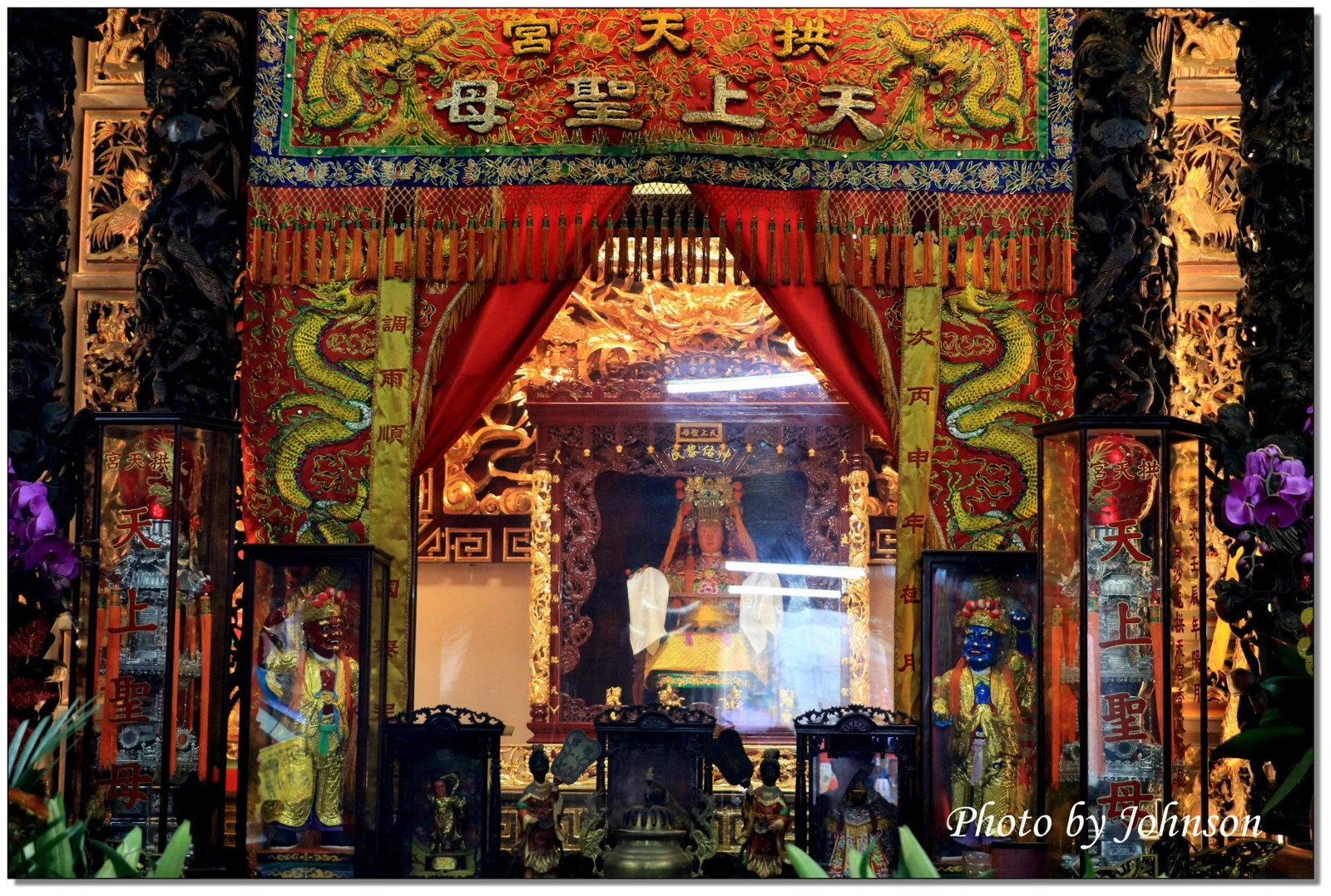
Usually in spring; departure and return dates are chosen by divination each year.
Follow the incense carrier, the exchanges beside the road and the records kept after the journey.
A coastal temple and a road chosen along the way
Gongtian Temple stands in Baishatun, a coastal settlement in Tongxiao. Inside its main hall, Mazu sits amid embroidered curtains and carved wood; outside, shops and the railway connect the shrine to ordinary village life. The annual pilgrimage temporarily stretches that local world south to Chaotian Temple in Beigang. The image that once received worship in villagers’ homes became the focus of a journey much larger than the settlement itself.
Dates are settled through divination, but the path between the two temples is not a fixed sightseeing itinerary. Bearers respond to the palanquin’s movements within the pilgrimage’s religious practice, and followers adjust their walking accordingly. In 2026 the journey began on the night of April 12 and returned on April 20. These dates describe that year’s eight days and seven nights, while the annual rhythm remains a fresh decision made before each departure.
Why the incense must return
Reaching Beigang leads to the central rite of taking sacred incense fire. Registered pilgrims’ names enter the ritual documents; at Chaotian Temple, the rite connects those prayers with the incense placed in the travelling vessel. The vessel is secured for the return journey, and the incense-carrying team shoulders it behind the leading flag. The journey therefore has an object to bring home as well as a destination to reach.
Food and water beside the road make that long walk possible. Support teams need to move with a route that can change: in one documented example from 2023, volunteers relocated their food station when the procession took a different path. For a visitor, this work is as revealing as the palanquin. Someone has cooked, carried and waited before a meal reaches a tired walker; accepting only what is needed leaves that care available for the people still coming.
The sealed container makes the return journey materially different from the outward walk. The local fieldwork account describes the Chaotian Temple abbot placing the transferred fire in the fire vessel and sealing the wooden incense carrier. The religious obligation is to bring that fire home without extinguishing it. The seal therefore marks a task entrusted to particular bearers, rather than a souvenir container that followers can open along the road.
A flexible road still has an order
Baishatun’s local account distinguishes route choice from ritual timing. Divination settles the times for raising the leading flag, seating Mazu in the palanquin, departure, receiving incense fire, return and reopening the incense vessel. Rest stops and roads are not fixed in the same way. A journey can therefore remain open to changes of direction while retaining a defined series of religious acts. For a follower, a route update answers where the procession is, not every question about what stage it has reached.
The leading flag illustrates how that order is maintained. The local account says the flag team follows the principle of advancing rather than turning back. If the palanquin changes direction, the flag bearers take a longer way around to regain the front. What appears to be an unexpected detour can thus be work done to preserve the procession’s internal relationship. Watching the flag and the incense-carrying team alongside Mazu gives a more complete view of the journey’s organisation.
What remains after the procession
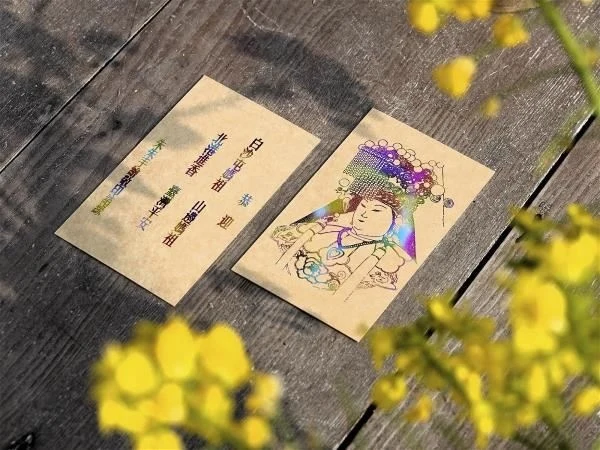
Small gifts circulate among pilgrims as a way of making connections. Hand-drawn Mazu cards, sewn incense pouches and useful everyday objects carry a giver’s thanks into someone else’s bag. Their significance lies in the exchange: a person helped on an earlier journey can return with something to offer on the next. Alongside the large public procession, these modest encounters build a memory that belongs to individual walkers.
Village writers have also made the journey into an accumulating record. The Baishatun fieldwork group began the annual publication Baishadun in 2003; after joining the temple’s cultural team in 2015, it became Baishatun Ma. Hong Jianhua and Lin Xingfu helped sustain accounts of elders, pilgrims and the procession’s minute-by-minute progress. A route that cannot be prescribed beforehand can still be carefully remembered afterwards, giving the next generation more than a spectacular image of a passing palanquin.
Arrival at Gongtian Temple is not the last act. The account describes a village circuit on the following day led by the black-faced Second Mazu, while the returning deity rests behind the shrine's red curtain. On the twelfth day after the return comes opening the incense vessel: the curtain is lifted and the retrieved incense is added to the temple's burners. Long-distance travel, neighbourhood protection and renewed worship thus have separate stages. A future visit still needs the temple's actual dates and access guidance.
Look closer
At the temple, compare the palanquin display with the shoulder poles and carrying frame used on the road.
During the pilgrimage, leave the flag and incense carrier a clear passage; watch from the edge of the moving group.
Visiting information
- When
- Usually spring; 2026 ran April 12–20. Ordinary-day visits begin at Gongtian Temple. The listed 2026 festival programme has ended.
- Place
- Gongtian Temple, No. 8, Baidong Village, Tongxiao Township, Miaoli County.
- Getting there
- Take a Taiwan Railways coastal-line train to Baishatun, then walk through the settlement to Gongtian Temple.
- Return
- For a temple visit, return to Baishatun Station. If joining a walking section, choose a return station near that day’s actual route before setting off.
Look closer at the places in the film
First, see the people on the road
A palanquin and a group of walkers pass below a green slope. At street level, orange hats, backpacks, carrying poles and people waiting beside the road bring that scale close. These ninety seconds follow a selection of shared moments, rather than claim to contain the whole pilgrimage.
Nan Taipingyang-PNG labels the original as a return-journey record dated 9 May 2025 from Changhua towards Qingshui, Taichung. It was uploaded on 8 June 2025. The filming day is the creator’s label, not an independently verified date. A daylight establishing view leads into other selections, rather than continuous coverage.
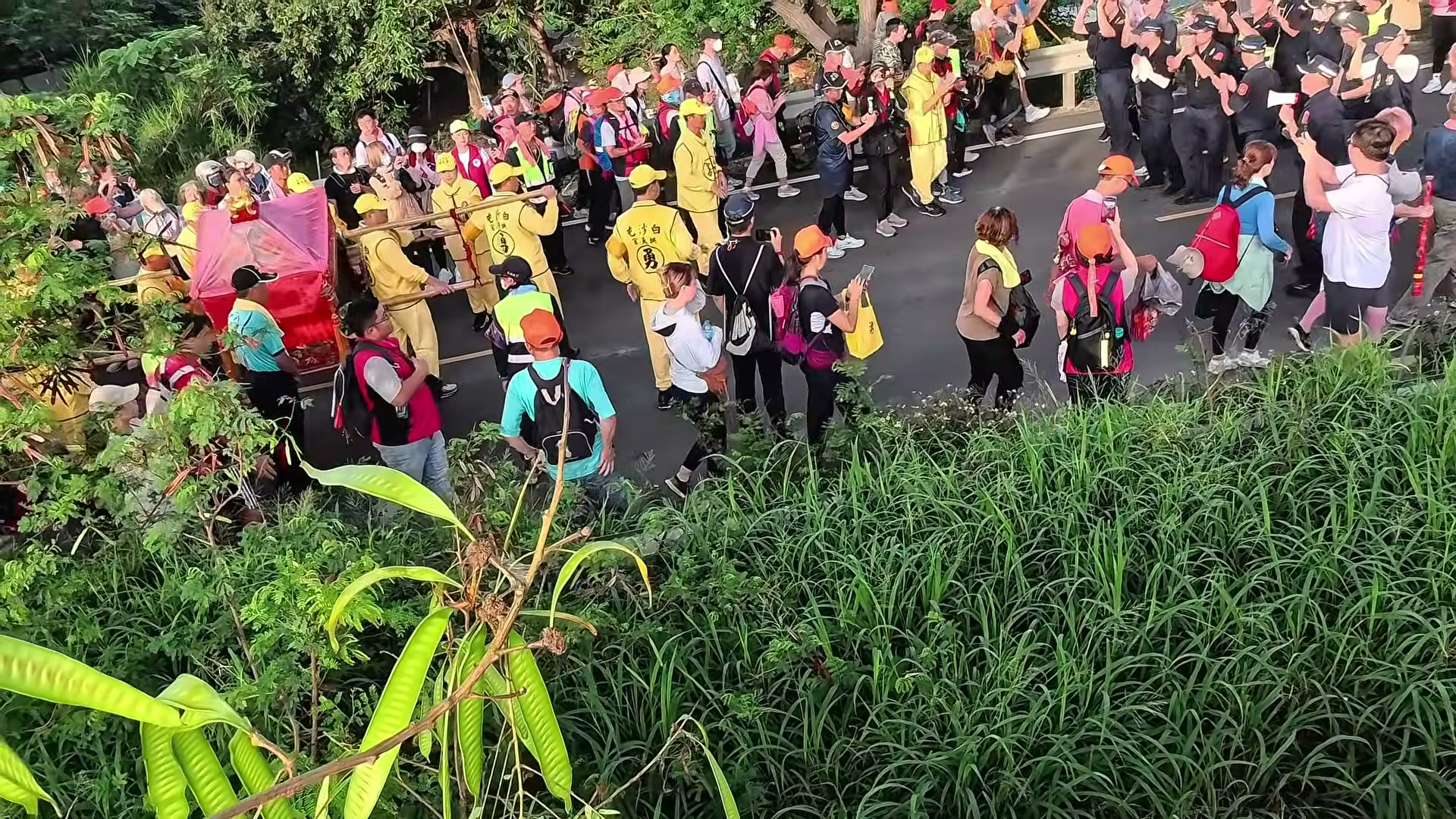
Look along the poles to see a shared weight
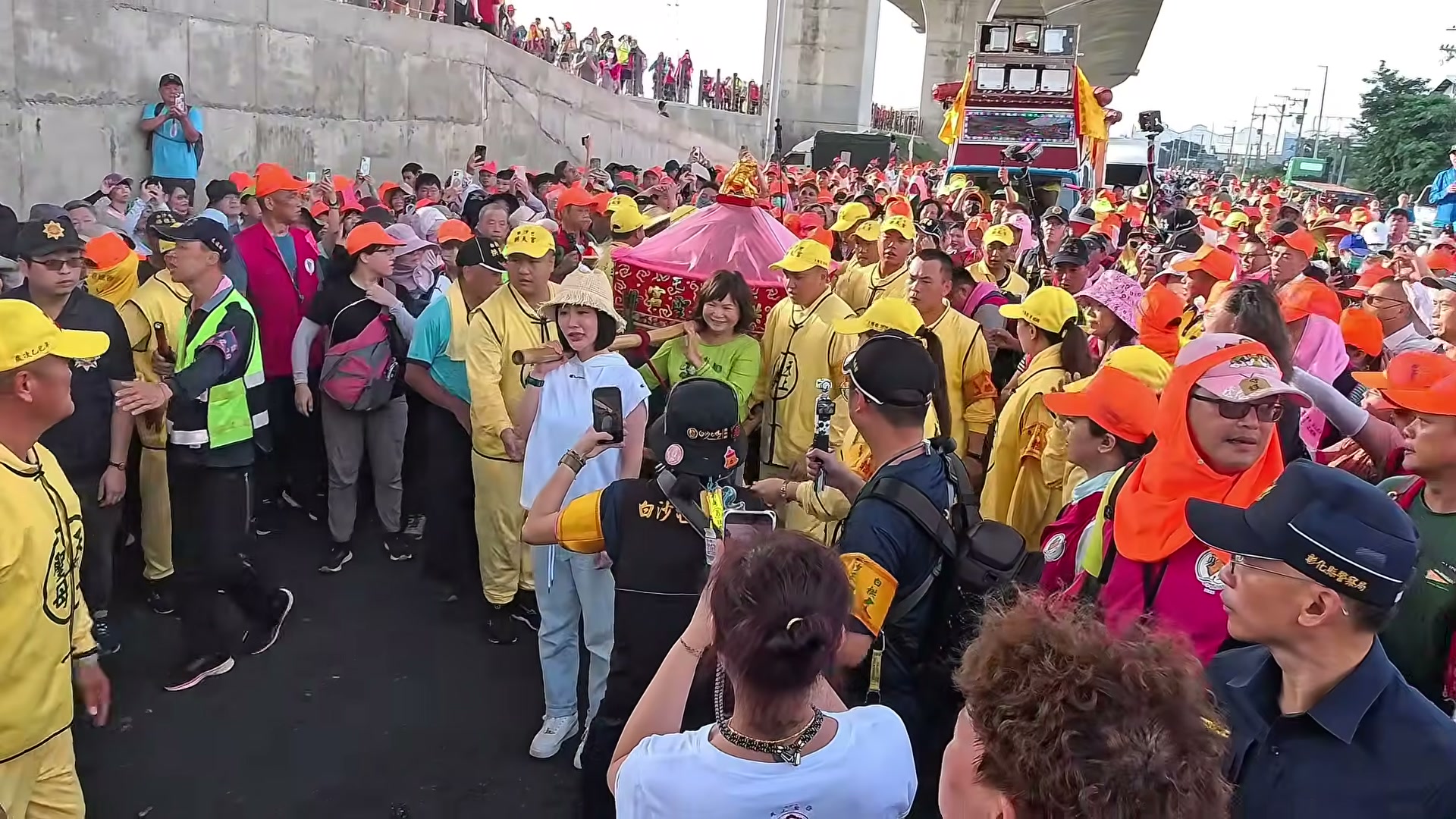
Closer to the palanquin, poles, shoulders and steadying hands become clear. Bearers and people around them make room to pass. From the side, carrying, waiting and yielding are easier to notice than from directly in front.
The Ministry of the Interior’s cultural account describes the tradition of Baishatun and Shanbian Mazu sharing a palanquin on the pilgrimage to Beigang. This edit does not identify deities in individual shots by canopy colour, or label a decorated vehicle as the incense carrier. Observers should leave a corridor for bearers and stewards.
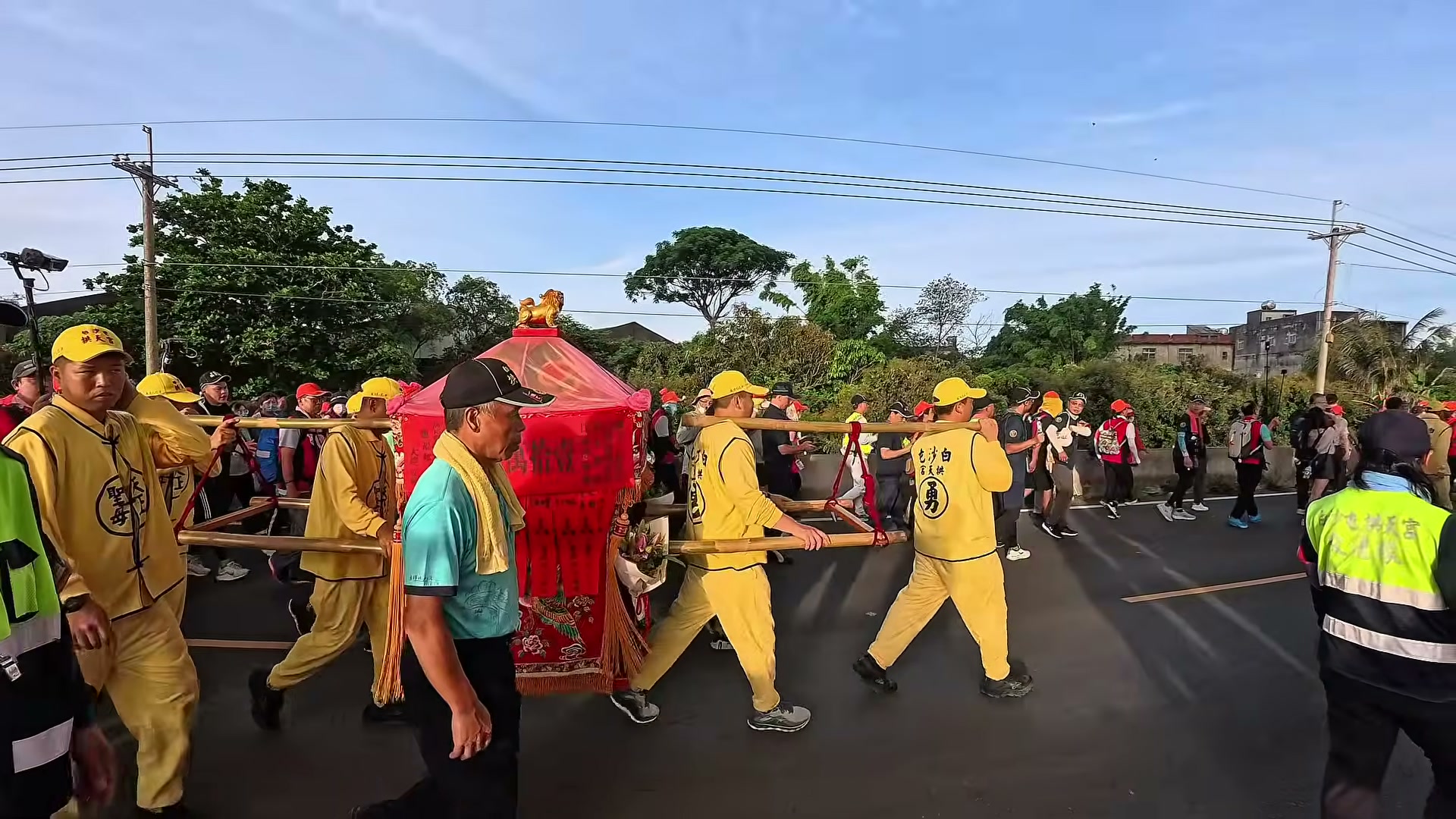
Streets and green edges belong to the journey
Roofs, trees, an elevated road and walking lines share the picture. Shops, vehicles and junctions remain part of the setting. Those changes help the viewer follow a stretch of travel, rather than a sequence of close-ups of the same object.
Temple guidance explains that roadside routing and stops are not a pre-set visitor itinerary. Footage from 2025 cannot establish the present route, a future meeting point or guaranteed access. For an announced pilgrimage, consult official position and traffic updates, follow local stewards and plan a suitable way to leave the walking group and return.
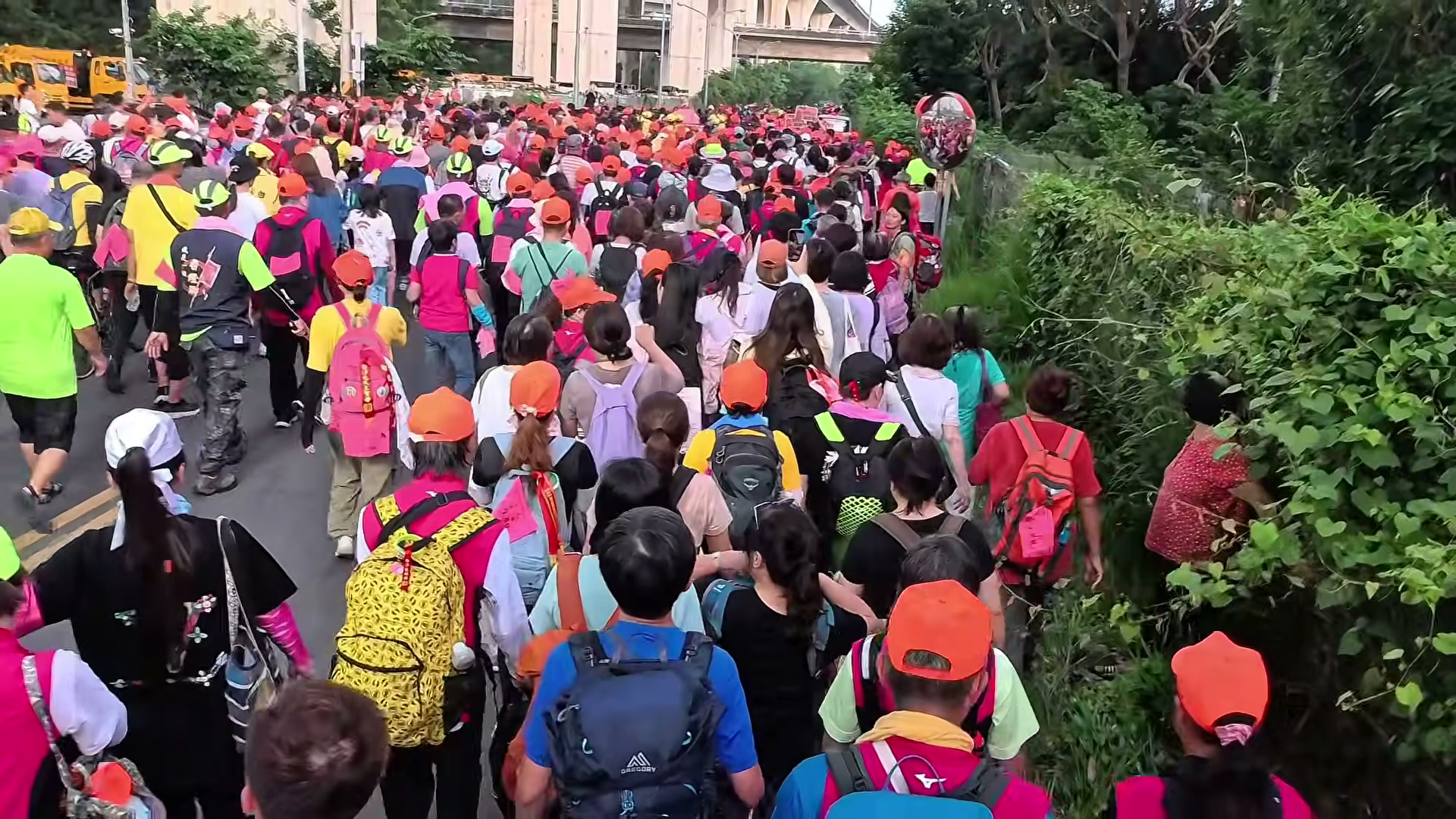
Notice a pause within the crowd
Some people advance, others pause beside the palanquin or wait for an opening. Keeping those different rhythms avoids turning everyone into an uninterrupted marching line. Shared carrying and yielding are visible; food distribution, tea service and the incense rite are not substituted with unrelated shots.
Instrumental music replaces the source sound. Visible drums, loudspeakers and crowd movements should not be mistaken for location audio. Keep your distance when photographing a procession, and do not block it for a close view. Ask before making an individual participant the subject of a portrait.
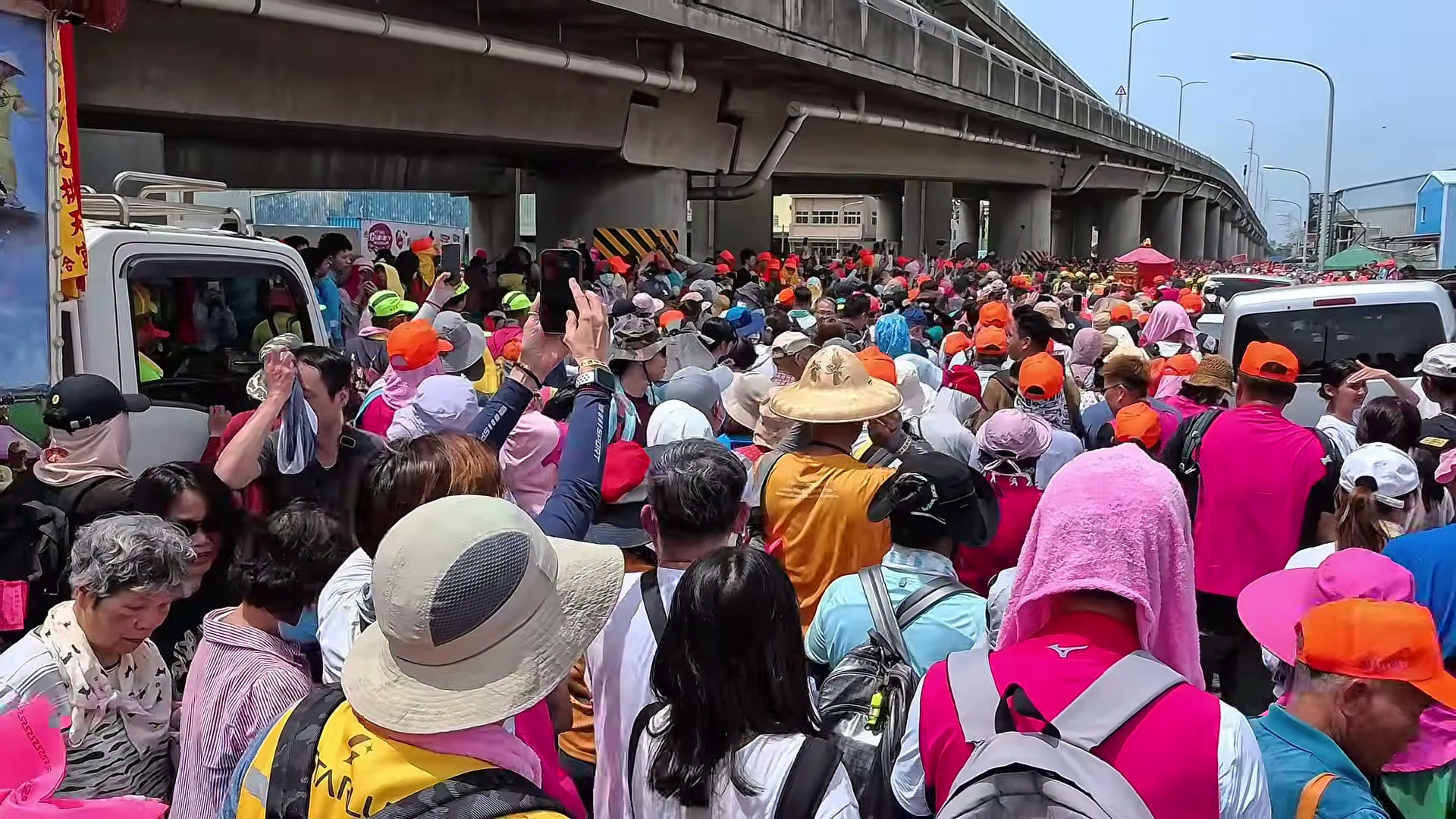
The edit ends while the road continues
The closing view returns to people spread along the street. The procession continues beyond the edit. This is not arrival at Gongtian Temple, the opening of the incense burner, a village circuit or the completion of the pilgrimage. The existing article offers more context for the incense carrier, local records and the purpose of carrying incense home.
The 2026 pilgrimage ran from 12 to 20 April and had ended by this production date. A future edition’s dates and route must not be inferred from that schedule. On ordinary days, visitors can approach Gongtian Temple in Tongxiao on foot from Baishatun railway station, subject to current temple arrangements.
Film, article and image sources
Selected from Nan Taipingyang-PNG’s record labelled 9 May 2025, following the Baishatun and Shanbian Mazu pilgrimage north from Changhua towards Qingshui, Taichung. Uploaded 8 June 2025; the filming day is not independently confirmed. These are archival return-journey selections, not a complete itinerary, a homecoming rite at Gongtian Temple, a current route or a future-event announcement. A daylight establishing view precedes selections around first light; the montage is not continuous coverage. Canopy colour is not used to identify individual deities. Instrumental music replaces location sound.
1. 南太平洋-PNG · source-labelled 2025
2. 南太平洋-PNG · source-labelled 2025
3. 南太平洋-PNG · source-labelled 2025
4. 南太平洋-PNG · source-labelled 2025
5. 南太平洋-PNG · source-labelled 2025
Music: 跨海的一段路 (AI-generated instrumental).