
Cultural story · Food and local life
Baihe lotus season: from a summer flower to an autumn bowl
The pink fields are one stage in a working year shaped by seeds, underground rhizomes and the patience of starch-making.
Baihe Lotus Starch, Shaved into Sunlight
90 seconds · English captions in the film; optional English and Traditional Chinese CC.
Film sources and complete bilingual captions
Real Baihe footage published separately by Lin Tsung-hsun on 12 and 16 October 2020. Exact filming dates were not independently established; the film does not follow one day or one batch.
00:00:00,000 --> 00:00:06,000
Baihe, Tainan
The hands behind lotus starch.
臺南白河
蓮藕粉背後的雙手
00:00:06,000 --> 00:00:08,500
Before the flakes,
a wet mixture.
成為粉片以前,
先是一盆濕潤的漿。
00:00:08,500 --> 00:00:16,000
Lotus pulp moves
through the workshop.
蓮藕漿,
在作業場裡接力。
00:00:16,000 --> 00:00:25,000
Workers add water,
then guide the pulp onward.
加水、攪動,
把藕漿送往下一道工序。
00:00:25,000 --> 00:00:29,500
A rotating separator
sends coarse fibres aside.
轉動的分離機,
把較粗的纖維送到一旁。
00:00:29,500 --> 00:00:33,000
Cloudy liquid flows
into tall vats.
混濁的液體,
流入高高的水缸。
00:00:33,000 --> 00:00:38,000
Here, time is part
of the work.
在這裡,
等待也是工作的一部分。
00:00:38,000 --> 00:00:43,500
A hose carries the mixture
out of the vat.
軟管把漿液,
從水缸送到外面。
00:00:43,500 --> 00:00:49,000
Hands hold the cloth open
as the mixture passes through.
雙手撐開濾布,
讓漿液流過。
00:00:49,000 --> 00:00:52,600
Another mesh catches
what remains.
再一道細網,
留住殘餘的雜質。
00:00:52,600 --> 00:00:59,000
The next stage needs
clean shallow bowls.
下一道工序,
也需要洗淨的淺碗。
00:00:59,000 --> 00:01:05,000
Outside, a blade shaves
the set starch into thin flakes.
來到戶外,刀刃把凝實的澱粉,
刨成薄薄的粉片。
00:01:05,000 --> 00:01:11,000
One bowl turns,
while the other hand scrapes.
一手轉碗,
一手慢慢刨削。
00:01:11,000 --> 00:01:17,000
The work spreads
from one tray to the next.
手裡的工夫,
從這一盤延伸到下一盤。
00:01:17,000 --> 00:01:22,000
Two people lift
one broad drying tray.
兩個人,
共同抬起一面寬大的曬盤。
00:01:22,000 --> 00:01:28,000
Rows of white flakes
open back onto Baihe's fields.
一排排白色粉片,
把視線帶回白河的田野。
00:01:28,000 --> 00:01:30,000
Taiwan, Layer by Layer
島嶼年輪
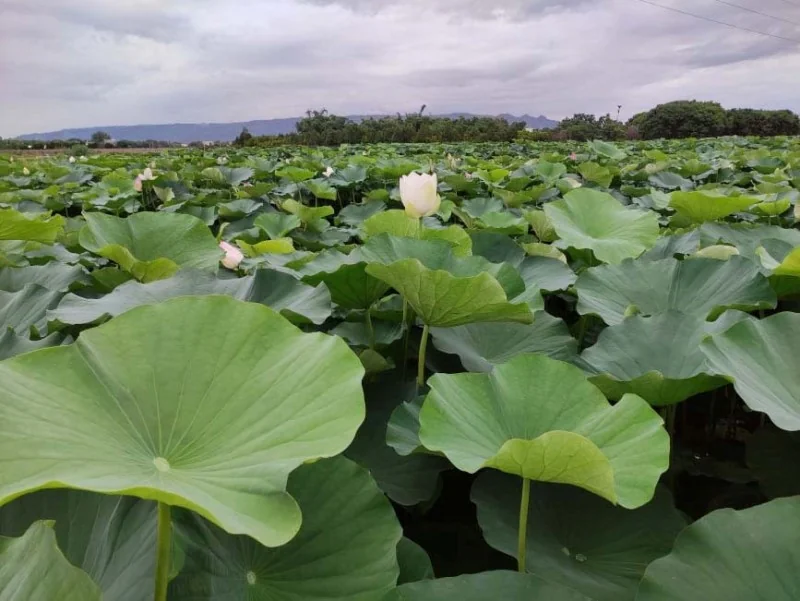
The 2026 tourism calendar listed 1 May–31 July for the lotus season; flowering and individual activities had their own timing.
Look beyond flowers to the crop’s purpose: seeds, edible stems and starch involve different varieties and work.
The field continues after flowering
Summer lotus flowers make Baihe recognisable at a glance. Yet the crop continues working after the petals fall: seeds develop above the water, while the underground rhizome becomes a later harvest. A visitor arriving for the flower season sees a farm at one particular stage. The open blossom is connected to food and to a year of decisions about what that field is intended to produce.
The 2026 season combined flower viewing with local produce and farm experiences. The tourism calendar covered May through July, while the district’s programme continued into late July. That broad season leaves room for different visits: a morning beside the fields, a produce purchase, or a booked activity. They share a farming landscape rather than a single exhibition entrance.
Two growers return to a local crop
Hsieh Wen-hua and Yang Chia-ming had worked in the orchid industry in nearby Houbi before exploring their own farming future. They tried tomatoes, chillies and pumpkins. A 2014 study trip to Japan prompted a more local question: which crop already suited Baihe’s climate and carried a reputation here? The answer led them back to lotus rather than toward another imported novelty.
They learned starch-making from older local growers and studied the uses of different lotus varieties. Jianlian, for example, was valued for seed production. Their choices also included hand-weeding and changes to crop management. Returning home therefore involved learning both a craft and a working relationship with the field; the product would carry those choices beyond the short weeks when visitors came for flowers.
Yang also brought a skill from outside lotus farming. The agricultural extension account records his university training in aquaculture and his use of beneficial-microbe cultivation in preparing liquid fertiliser. Alongside hand weeding, the couple retained vegetation on field banks to reduce rain erosion. Their return was consequently not a simple return to an unchanged older practice: agricultural advice and knowledge from another discipline became part of managing the same familiar crop.
A white powder that takes time
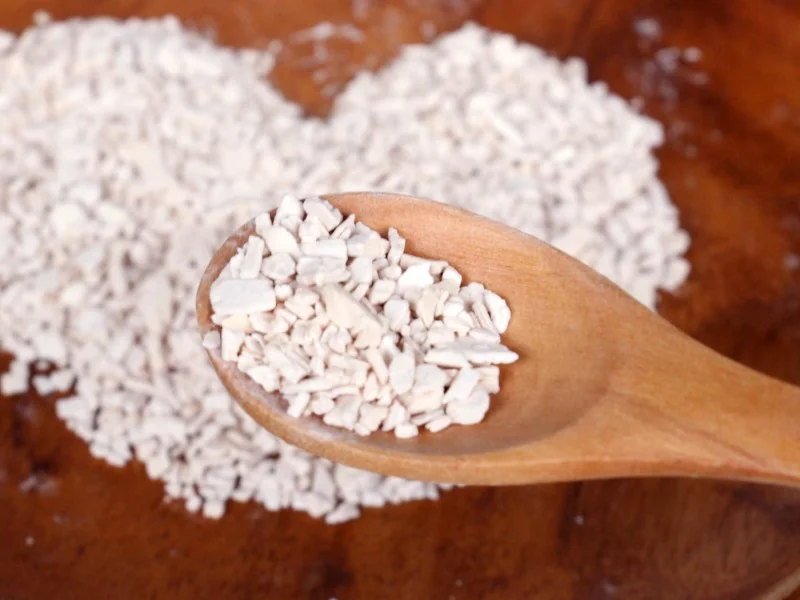
Lotus starch is made through a sequence rather than one act of grinding. Harvested rhizomes are broken down and washed; the liquid is allowed to settle, water is removed, and the starch is shaved and dried in the sun. Waiting and weather sit between the physical jobs. A finished spoonful conceals repeated handling that turns a muddy underground crop into a storable ingredient.
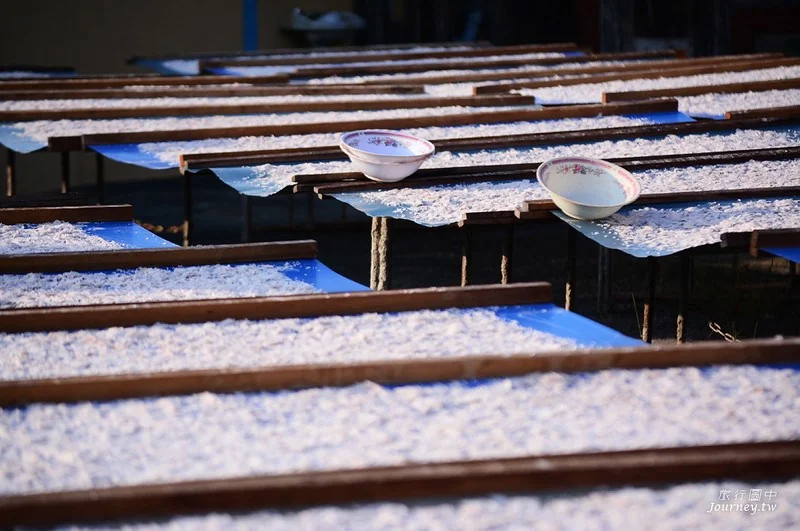
A Baihe autumn travel account records residents scraping dried starch across trays outside their homes. Its photographs show improvised household tools alongside long drying surfaces. This working scene belongs to the later processing season, extending the summer flower story into yards and doorways. Buying lotus products can open a conversation about who grew the crop, how it was processed and which part of the year produced what is on the table.
There is careful work even after drying. The 2020 account describes removing sand and checking the flakes again before packing; roughly ten units of fresh rhizome were needed for one unit of starch. The couple chose 150-gram packets for smaller households and illustrated them with lotus flowers and rhizomes. Yield, cleaning and portion size together explain how a muddy harvest becomes something a household can store. These are recorded choices of this farm, not universal specifications for Baihe starch.
Look closer
Look for the different stages on a plant: bud, open flower and seed head. Stay on the field’s visitor path.
Compare a lotus-seed product with lotus starch; ask about variety and processing rather than expecting all products from one harvest.
Visiting information
- Date rule
- A summer flowering and farming season. The latest completed 2026 calendar listed 1 May–31 July; a new year’s activity dates are set separately by the district and farms.
- Where to begin
- Baihe’s lotus-growing area includes Yufeng and Liantan. The 2026 official event listing used 130 Caodian, Machouhou Village, Baihe District as its address. Choose the field or booked activity first, rather than using that address for every lotus stop.
- Getting there and back
- From TRA Xinying, take the Yellow trunk bus to Baihe Transfer Station, then Yellow 15 for the lotus-viewing stops listed by the district. Match the chosen stop with its return departure before leaving the transfer station. Arrange separate transport for farm appointments away from the bus route.
- Activity and transport information
- Use Baihe District Office’s lotus-season and transport information. Farm workshops use the host’s booking and fee arrangements.
1. Begin among the drying trays
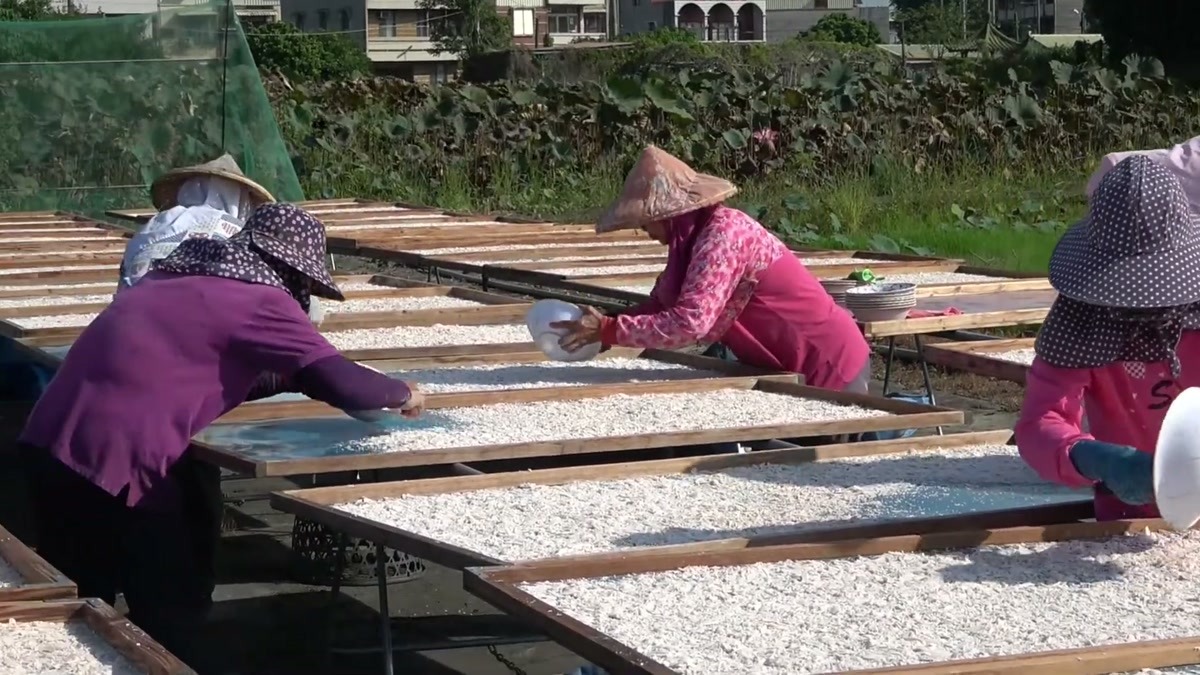
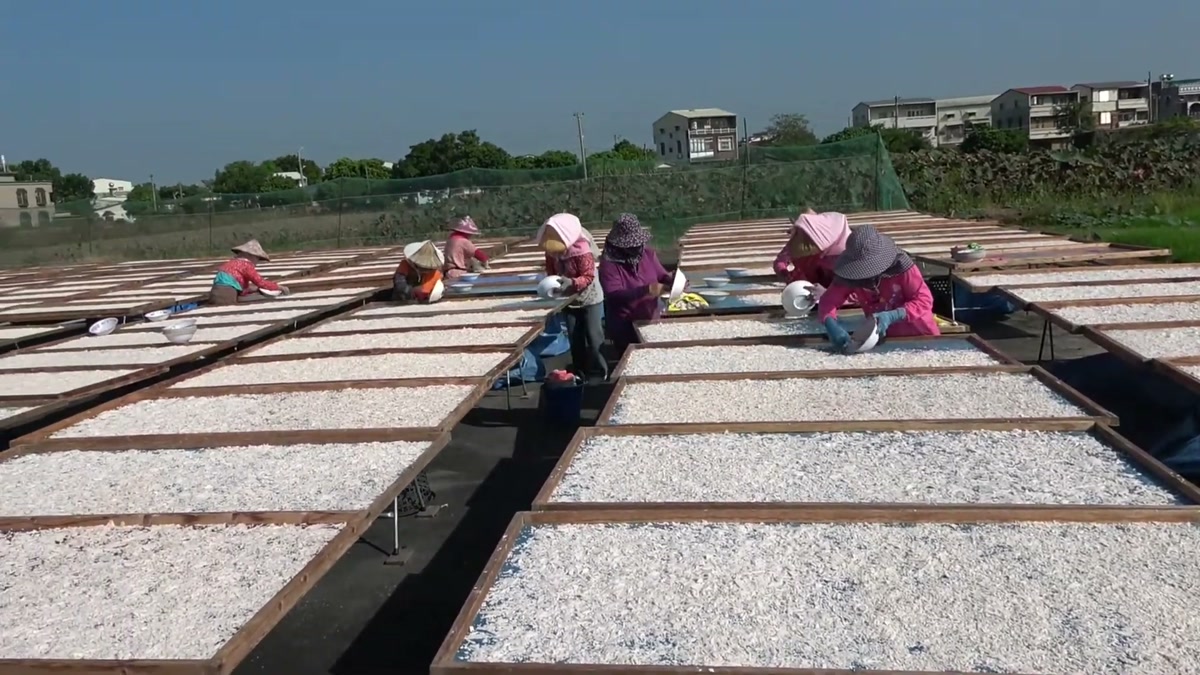
Rows of wooden drying trays turn a working yard in Baihe white. Begin beside the workers in sun hats: shallow bowls in their hands, thin starch flakes in front of them. Lotus flowers bring visitors to this part of Tainan in summer. In the processing season, the same crop has a different place in local life.
Lotus starch comes from the plant’s underground rhizomes. Washing, breaking down, rinsing, settling and drying turn a muddy crop into an ingredient that can be stored. Follow the bowls and the hands through several stages of that work.
2. Water carries the work onward
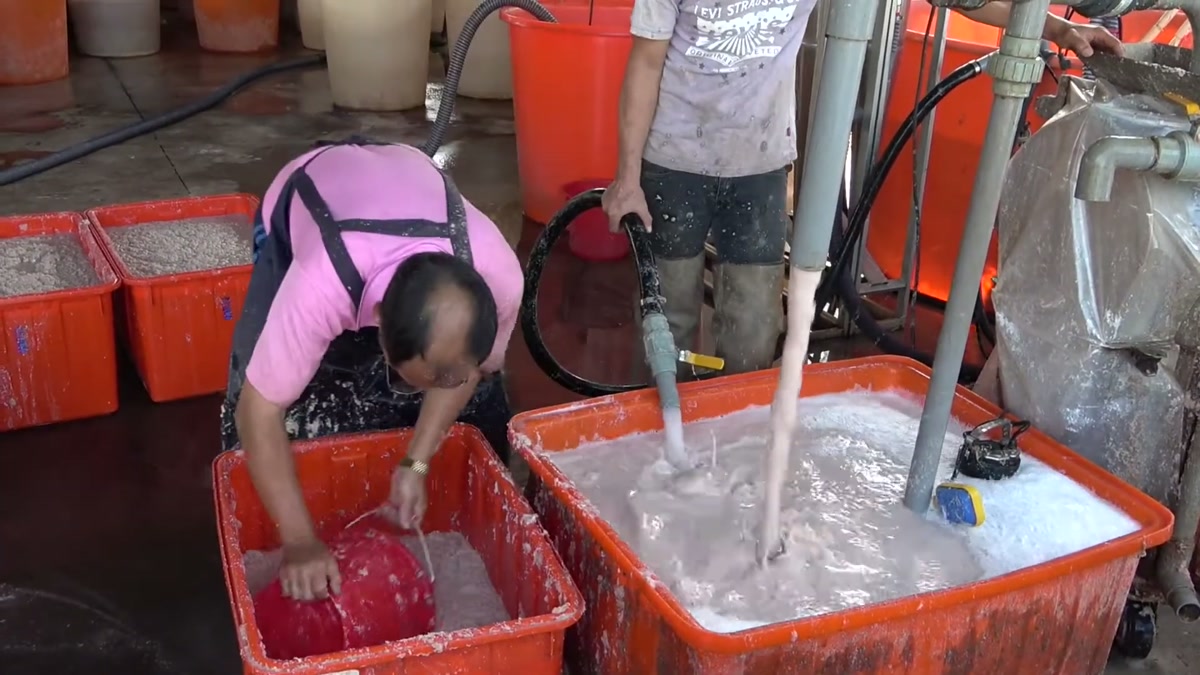
Back at the workshop, the red rectangular trays already contain wet lotus pulp. A worker scoops it with a small bucket while water keeps flowing. Nearby, a machine discharges coarser fibres. Water and practiced movements carry the material between containers and equipment.
This sequence begins with pulp already in process. Harvesting and the breaking down of whole rhizomes are outside the film. Notice how the material changes: coarse fibre, flowing liquid and set starch each call for different handling.
3. Settling is followed by careful filtering
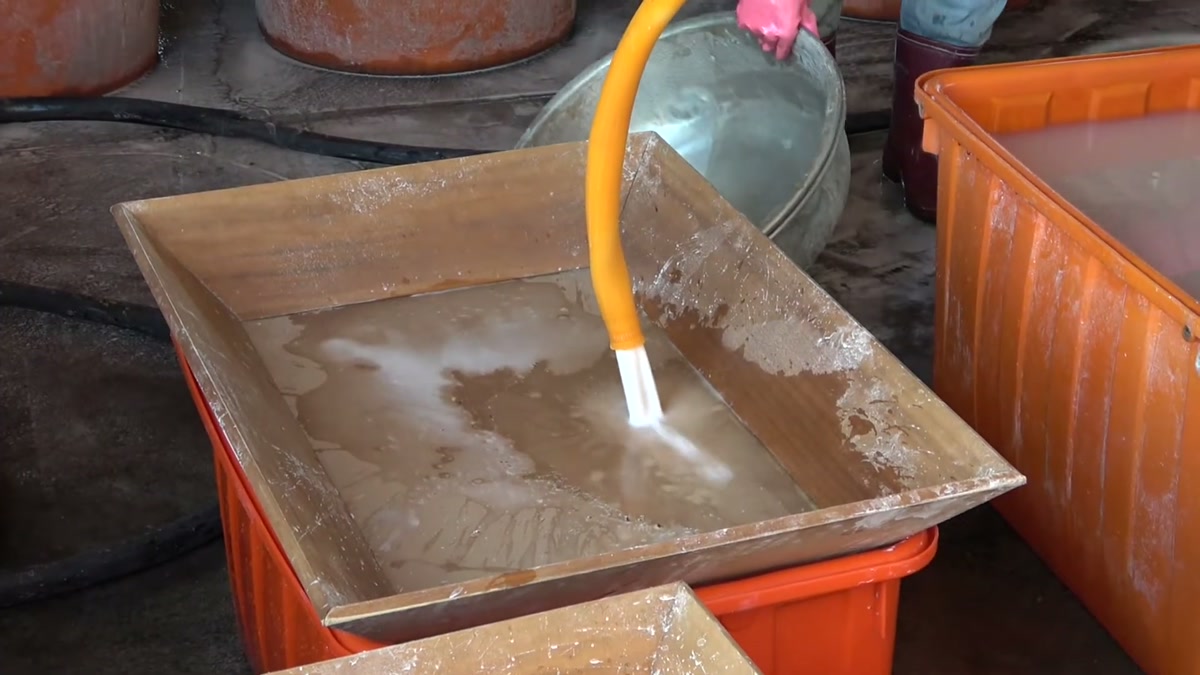
Tall vats stand in rows while the liquid rests. A hose then carries the mixture out. Workers support a round cloth filter and guide liquid across a finer rectangular mesh. Waiting and active handling alternate throughout starch-making.
The Ministry of Agriculture’s Baihe profile treats processing as an important part of this local crop. Filtering reveals work that the finished ingredient tends to hide. A short film can select moments from it; it cannot remove the time the process needs.
4. Turn the bowl, shave the starch
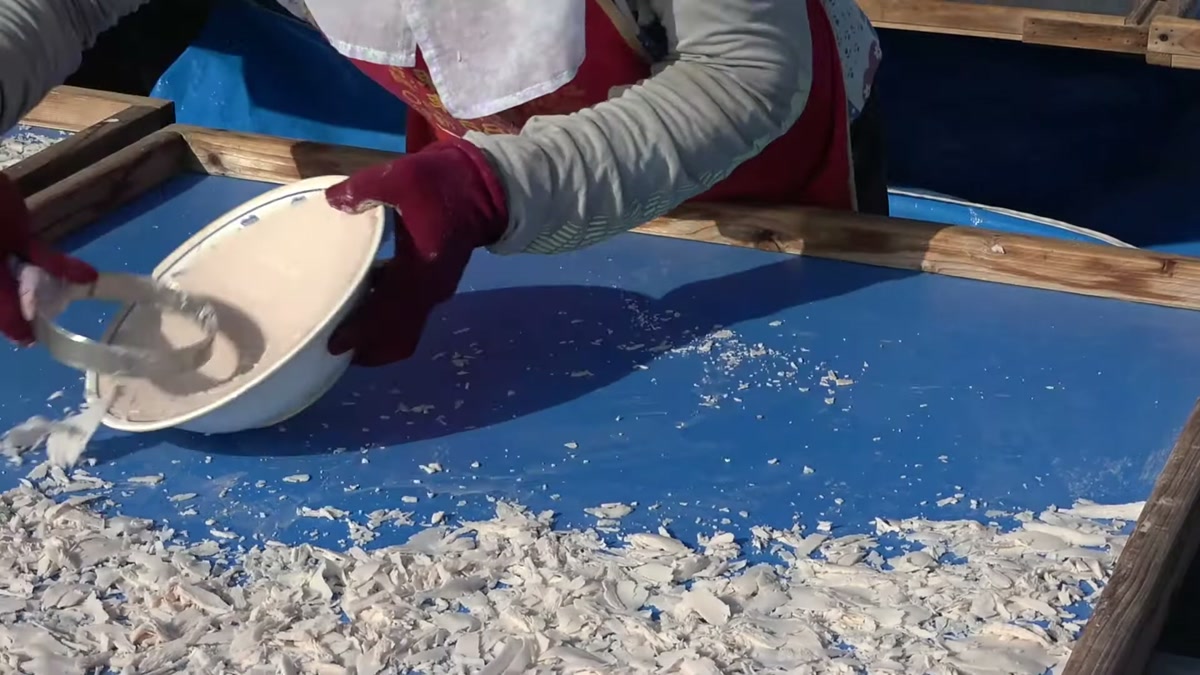
In the workshop, shallow bowls are washed and arranged. Outside, the bowls now hold set starch. Filling, removing water and waiting lie between these stages; the film does not present them as one instant. A blade passes across the surface, dropping pale flakes onto the tray as the wrist keeps changing angle.
A close view makes the scraping rhythm legible. Pull back and the same work is happening across the yard. The flakes depend on many people handling bowls and spreading the material for sun-drying.
5. Return to Baihe with the work in mind
The closing view crosses the drying trays back towards fields and homes. Tainan Travel lists the Baihe Farmers’ Shopping Centre at 385 Sanmin Road, Yongan Village, Baihe District, with lotus starch among its local products. Start at a public sales space, then ask about the season and farms currently receiving visitors.
Drying yards remain workplaces. Confirm access with a host and stay on permitted paths. Summer flower-viewing and the later processing season follow different rhythms. Ask about the season before turning a purchase into a closer visit.
Article, image and music sources
Real Baihe footage published separately by Lin Tsung-hsun on 12 and 16 October 2020. Exact filming dates were not independently established; the film does not follow one day or one batch.
- Ministry of Agriculture: Baihe lotus starch
- Tainan Travel: Baihe Farmers’ Shopping Centre
- Lin Tsung-hsun: rinsing and settling lotus starch in Baihe
- Lin Tsung-hsun: sun-drying lotus starch in Baihe
Two separate records are edited together. The film does not trace one batch from field to finish or show harvesting, whole-rhizome milling, bowl filling or the full waiting periods.
Unidentified workers in the footage are not identified as Hsieh Wen-hua or Yang Chia-ming, the farmers discussed in the original article.
Music: 跨海的一段路 · AI-generated instrumental.