
Cultural place
Baguashan: a Buddha made by a city
Behind Changhua’s familiar Buddha are an interrupted building project, stories inside the statue and generations who have looked back at their city from the hill.
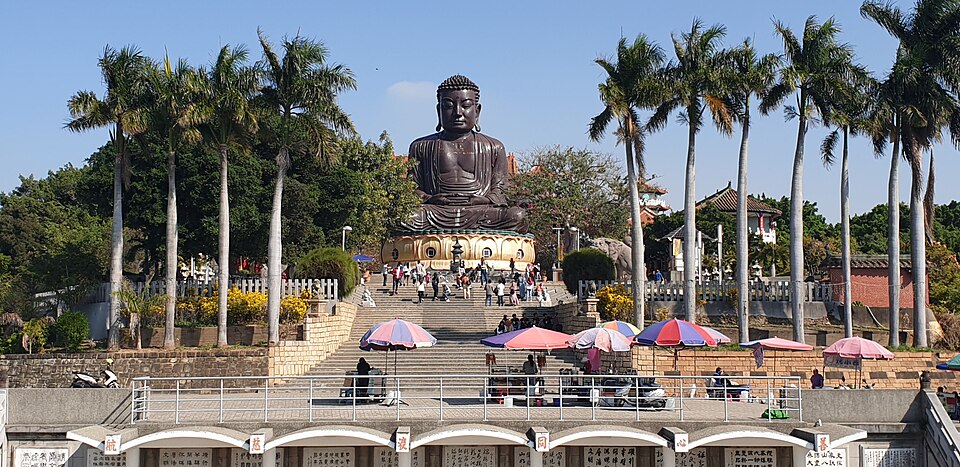
Completed in 1961, the statue combines a religious image with an interior visitors can enter.
The forecourt and calligraphy corridor connect worship with the everyday city below.
A building project that nearly stopped
In 1956, Changhua’s first county magistrate Chen Hsi-ching joined local business and religious figures in promoting a great Buddha for Baguashan. Donations paid for a project that the 1959 flood brought to a halt. A reorganised association resumed fundraising, and the statue was completed in May 1961. Its seemingly permanent presence began with interrupted work and a renewed decision to carry on.
Designer Lin Ching-yao, known as A-Yao-shih, drew on the seated Buddha at Kamakura. Reinforced concrete made a large, inhabitable form possible. The modern material and the older religious model met on a hill already used to oversee Changhua. In 2002 the Buddha and the pair of exposed-aggregate lions in front were registered as historic structures, recognising a postwar landmark within the city’s shared memory.
There is a story inside the silhouette
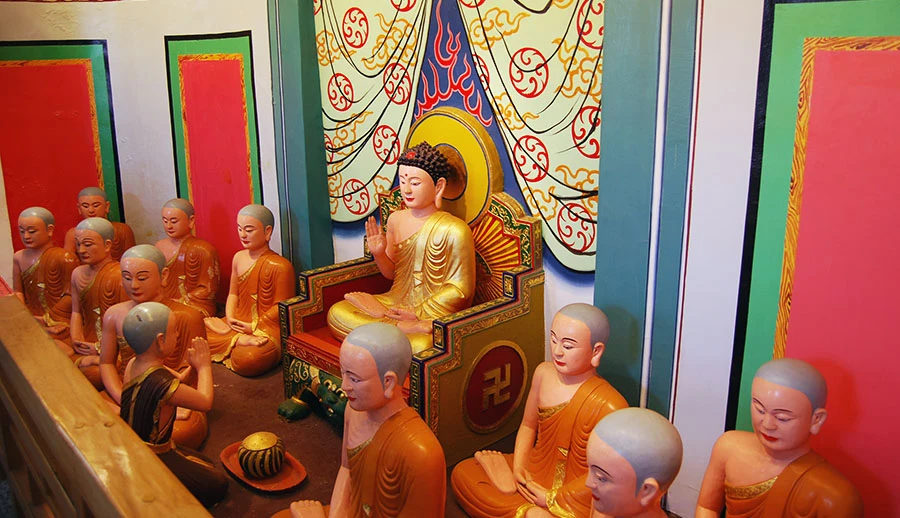
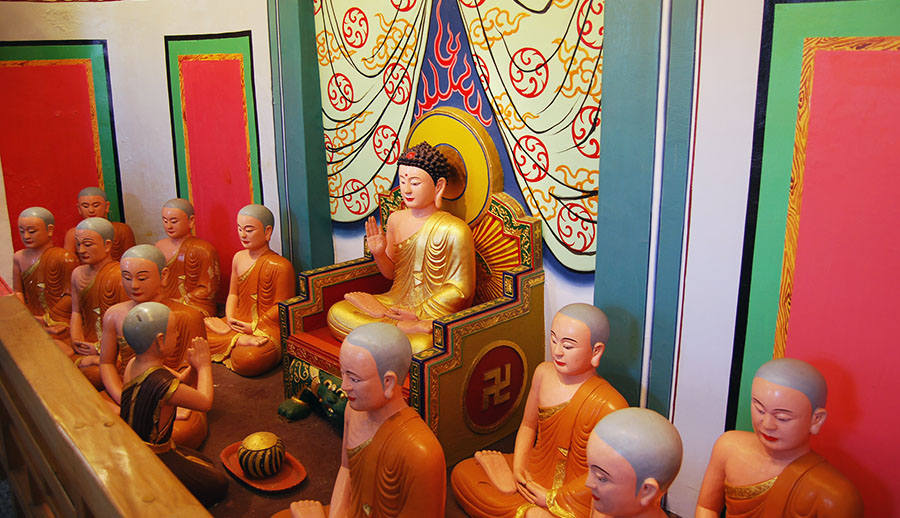
The view from the forecourt gives one complete figure; the doors beside the lotus base reveal a sequence of smaller spaces. The statue contains six levels, beginning with a prayer hall. Sculpted scenes further inside relate episodes in Buddhist tradition, including the prince leaving home and the Buddha teaching. The visitor moves from recognising an outline to following a life told through figures.
The teaching scene gathers listeners around the Buddha. Their positions make the subject readable before a visitor studies the explanation. This is a form of storytelling through bodies and space: a monumental figure seen from the city also shelters intimate scenes that can be approached at human scale. The interior gives the landmark a second rhythm, slower than the photograph taken outside.
Turn around and find Changhua
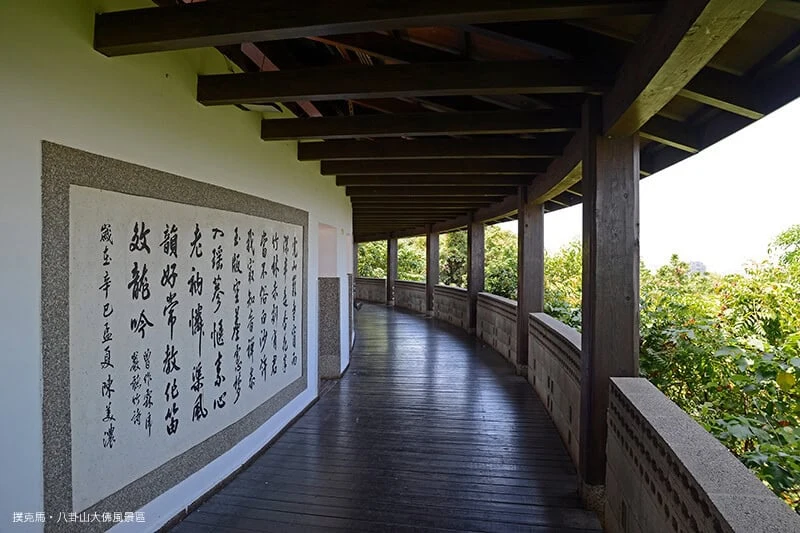
The approach passes rows of Guanyin figures before opening onto Jiulong Square. Beyond the pool, the viewing walkway faces the urban plain. The Buddha and the city can be read in opposite directions from the same place: one draws the eye uphill, the other spreads roofs and streets below. This relationship helps explain why the hill belongs both to worshippers and to residents taking an ordinary outing.
A 2025 walking account records the calligraphy corridor around the square, where inscribed writing accompanies the view. The letters ask for a different kind of attention from a skyline. Together with the temple and the shaded places to pause, they turn the area around a single giant image into several smaller encounters. Leaving time for these spaces reveals how the landmark is used, as well as how it looks.
A landmark still has to keep out the rain
The outline seems permanent, but its surface and interior remain exposed to weather. An official audit follow-up identifies exterior deterioration and internal leakage among the problems addressed by restoration. The re-awarded work was completed on 11 January 2023. Creating the figure in 1961 and keeping it intact more than sixty years later are different tasks. Colour seen from afar, surface condition nearby and spaces inside the figure belong to the same building. Read a photograph’s date alongside the repair chronology: a renewed appearance does not end material ageing. The completion record explains past intervention; it establishes neither today’s condition nor unrestricted interior access.
Look closer
Compare the large outer silhouette with the arrangement of figures in an interior scene.
At the square, turn between the Buddha and the city to notice their spatial relationship.
Visiting information
- Address
- 31 Wenquan Road, Changhua City
- Visit plan
- Allow 1–1.5 hours in daylight for the forecourt, statue and corridor. The outdoor scenic area is open around the clock; access inside the Buddha follows the entrance’s opening notice. Enquiries: 04-7222290.
- Transport and return
- From TRA Changhua Station take a taxi to the Great Buddha entrance on Wenquan Road. Save the same entrance as the return pickup point for the railway station. The forecourt approach includes slopes and steps.
Film & source information
Walking footage was filmed on 2 March 2019 and in 2020 (the latter exact date is unconfirmed). It combines different visits, not one uninterrupted walk. The Buddha-teaching sculpture is a six-second real still photograph from the temple; its capture date is unlisted and it does not promise present-day interior access. Original source audio is unused. Existing instrumental music was mixed separately.
- 何寶 生活誌 · H · Original record
- David Liao大蔚阿昌 · D · Original record
- 八卦山大佛寺 · P · Original record
Instrumental music only; no narration.