
Cultural story · Food and local life
Alishan cherry season: the work beneath a mountain of blossom
Cherry varieties mark successive weeks of spring; a tree-care story reveals how this familiar mountain spectacle is sustained.
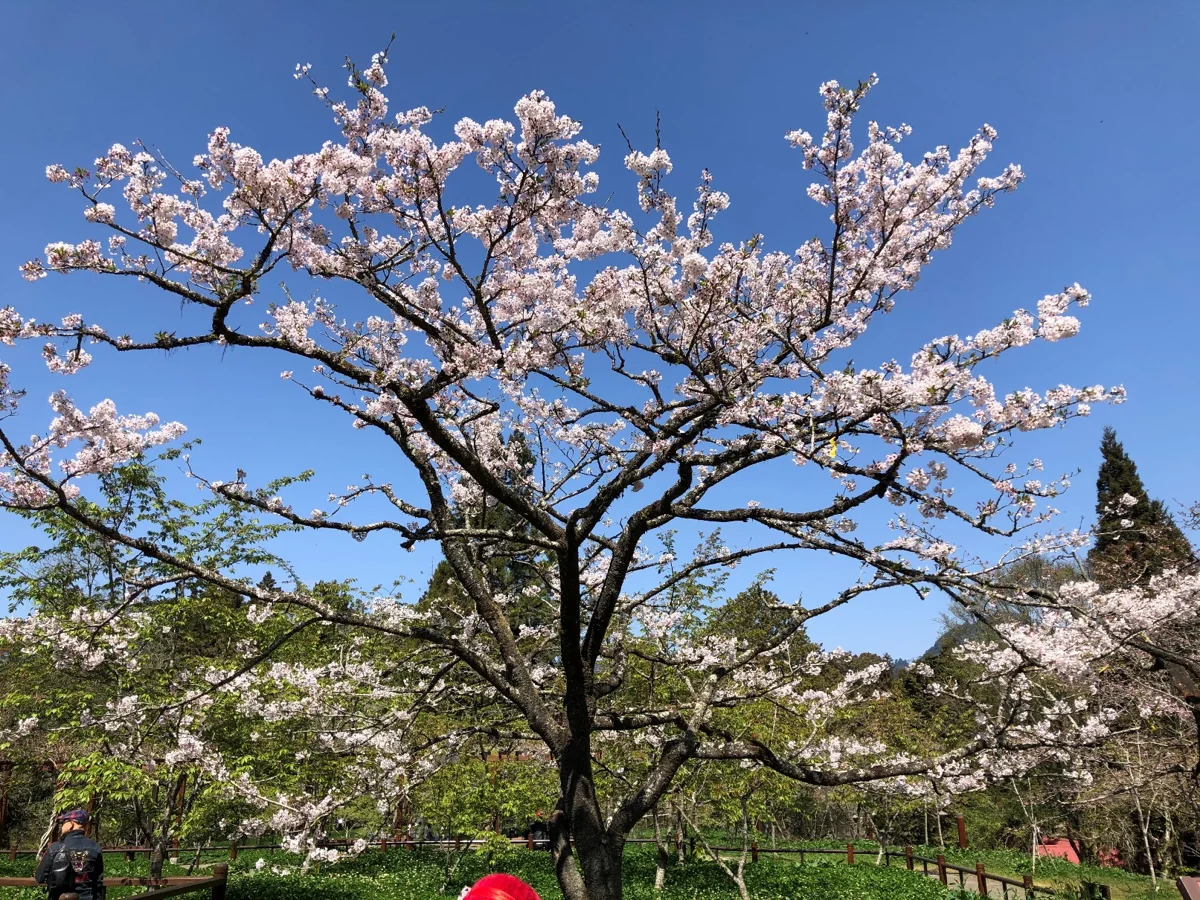
The 2026 advertised season ran from 10 March to 10 April; different varieties flowered in sequence.
Combine Zhaoping’s cherry trees with the Alishan Work Station area, returning to the transport station for the downhill bus.
Spring arrives in several stages
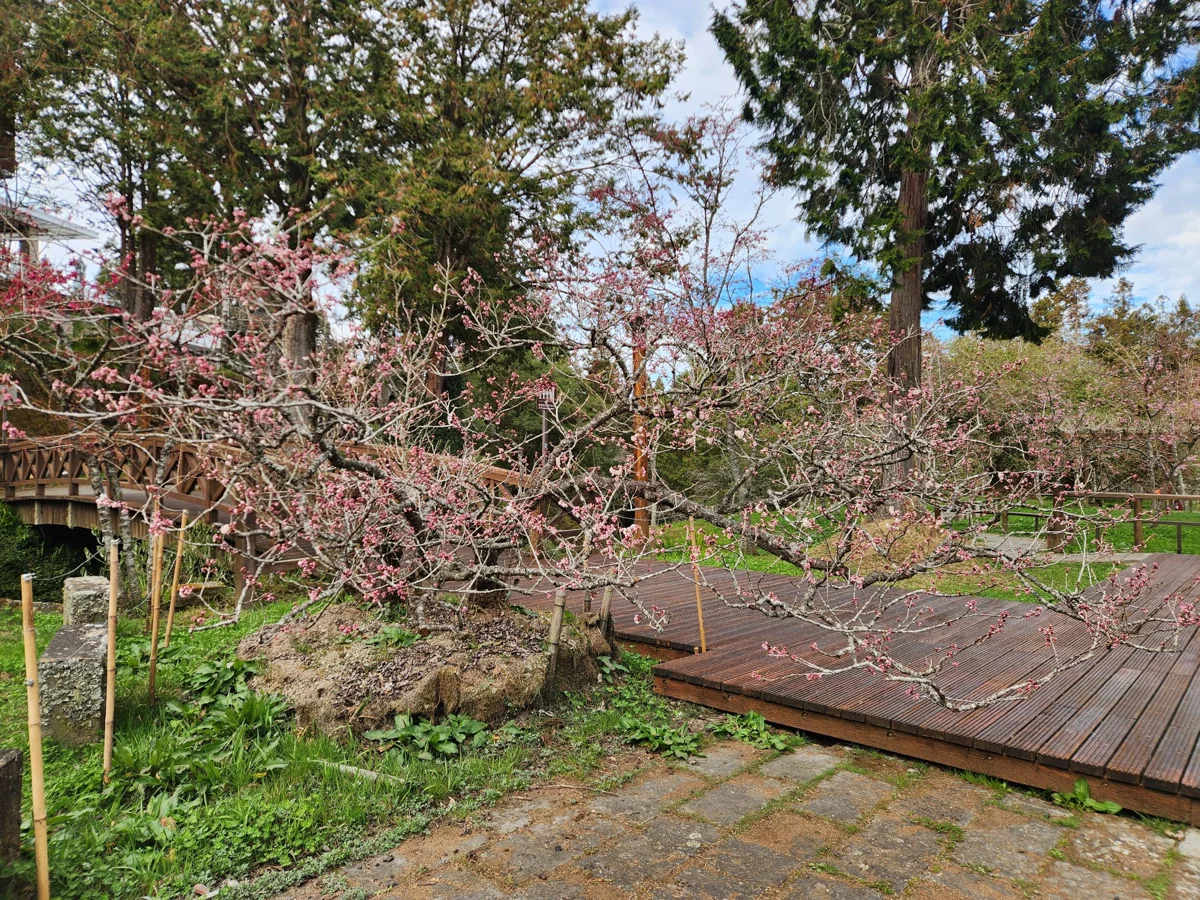
An Alishan flower-season announcement covers a month, but the trees do not share one calendar. In 2026 the park described 31 cherry varieties: Taiwan cherry and Okame began first, followed by later varieties as March and April progressed. The journey changes with the week of arrival. A photograph of a full canopy at one stop tells only one part of the mountain’s spring.
Zhaoping offers one way into that sequence. Tangshi cherry appears around the station area, while the celebrated Somei-yoshino tree by the work station has its own flowering rhythm. Walkways and the railway connect these named places, making a visit more than a search for a single “best” tree. The park’s flower reports are useful for choosing which part of this changing landscape to approach first.
What an old tree needs
The work that supports the blossoms became especially visible when arborist Chan Feng-chun’s team began systematic care in 2019. The humid mountain environment had encouraged witches’ broom disease and decay. Treatment included soil improvement as well as disease management: the condition of the ground mattered alongside the branches that visitors could see.
The forestry agency’s 2022 account compared trees before and after treatment. It recorded improvement after two years but also explained that recovering trees needed time to form flower buds. That interval changes the meaning of a sparse canopy: recovery is a process measured across seasons, while visitors usually see only a short afternoon. The team’s comparison photographs give the flower season a longer timescale.
The forestry agency's account identifies a narrow working window: treatment is carried out during dormancy, after leaves fall and before flowering begins. Soil improvement, guiding roots, treating decay and pruning diseased branches must fit within those months. The flowers that visitors see in spring therefore depend in part on work done when there was no blossom to photograph. The record describes that treatment programme, rather than a promise of the same result for every old tree.
A walk above the roots
A 2021 public workshop explained how shoots from a mother tree could renew a planted landscape. The following year, two century-old cherries outside Alishan House could no longer be retained intact: one was removed, while the other’s base and shoots were kept to cultivate a successor. The care story includes loss as well as recovery, and a decision about which living growth can continue.
The practical response is modest: follow the established paths, leave protected ground around trunks undisturbed, and allow time to move between flowering areas. Alishan’s railway, old trees and young growth can then be read together. The memorable view is still there, but it becomes part of a living landscape whose care continues after the last bus of the day has left.
Treatment also continues after the tools leave. The team checks new rooting and revises its approach through annual follow-ups. In this account, nurturing second-generation trees and treating the older trees occur together. A protective patch of ground can therefore belong to several timescales: this year's root growth, the older trunk's survival and the tree that may eventually succeed it. Viewing from the path allows those less visible stages to remain part of the cherry landscape.
Look closer
Compare flower shapes at two named locations; read the variety label before treating colour differences as flowering stages.
Notice the path edge, root-protection boundary and younger shoots without stepping into the planted ground.
Visiting information
- Date rule
- A spring flowering season, scheduled around local bloom development rather than a lunar date. The 2026 programme ran 10 March–10 April and has ended.
- Visit area
- Alishan National Forest Recreation Area, 59 Zhongzheng Village, Alishan Township, Chiayi County. Start with the visitor information and flower reports, then choose Zhaoping or the work-station area. Park entry and railway tickets are separate.
- Getting there and back
- Take Taiwan Tourist Shuttle 7322 from TRA Chiayi or 7329 from HSR Chiayi; Alishan’s transport-station platforms handle both arrival and departure. Reserve the downhill journey as part of the same plan, allowing time to walk back from the cherry areas. Check the Taiwan Tourist Shuttle timetables.
- Flower reports
- Use the forest recreation website for current flower reports and entry information.