
Cultural story
Keeping an ancestral house in use
At Aliguan in Jiaxian, preparing for the fifteenth day of the ninth lunar month begins with bamboo, thatch and food. The Taivoan community’s annual gathering also carries the patient work of rebuilding a shrine and recovering names for familiar things.
The annual kaixiang rite returns on the fifteenth day of the ninth lunar month.
Ye Chih-li’s local research began with questions about a village temple.
Hunting tools and stored seeds connect ritual to everyday livelihoods.
A question that brought someone home
After returning from military service in 2000, Ye Chih-li encountered questions that neighbours could not readily answer: where had the village temple and its deities come from? Interviews and family records led him into Aliguan’s Taivoan history. What had seemed familiar in childhood became a reason to ask elders for details.
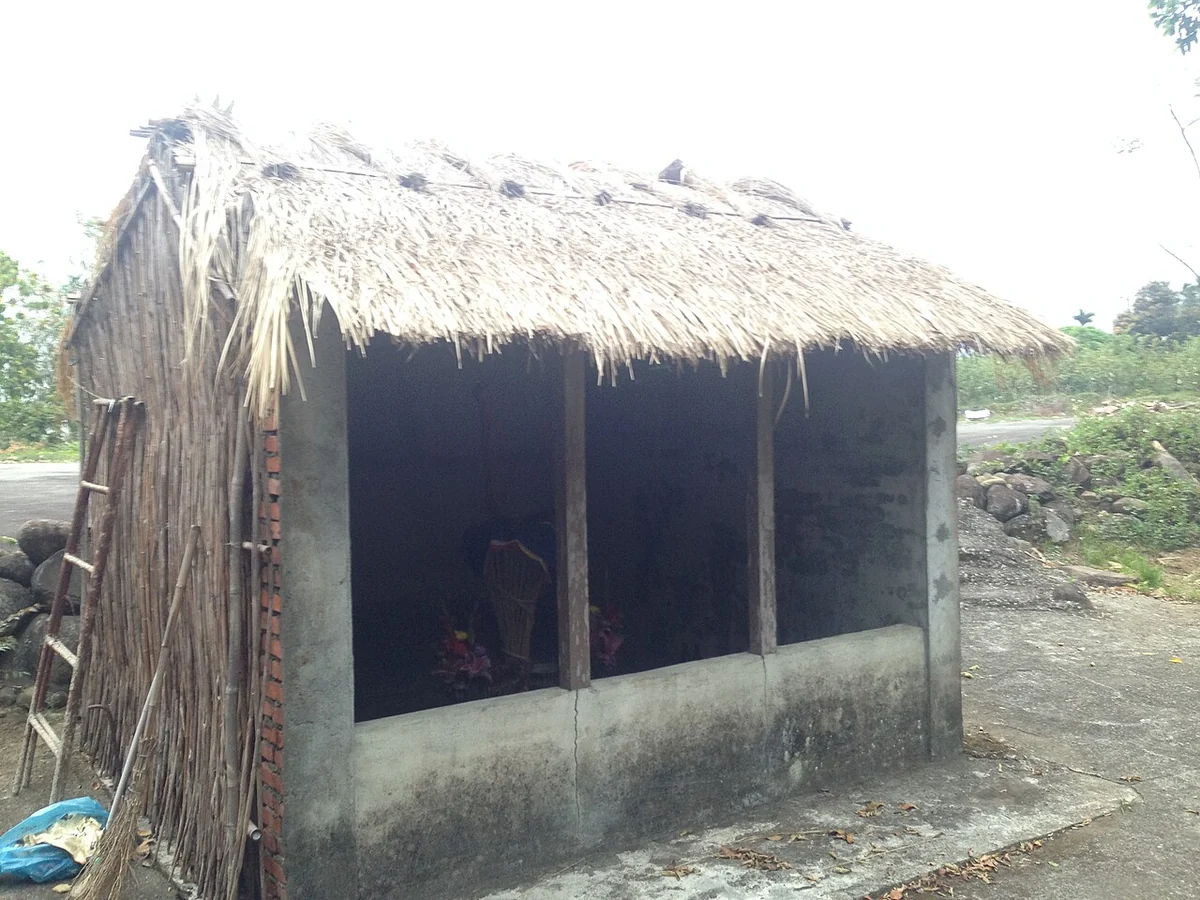
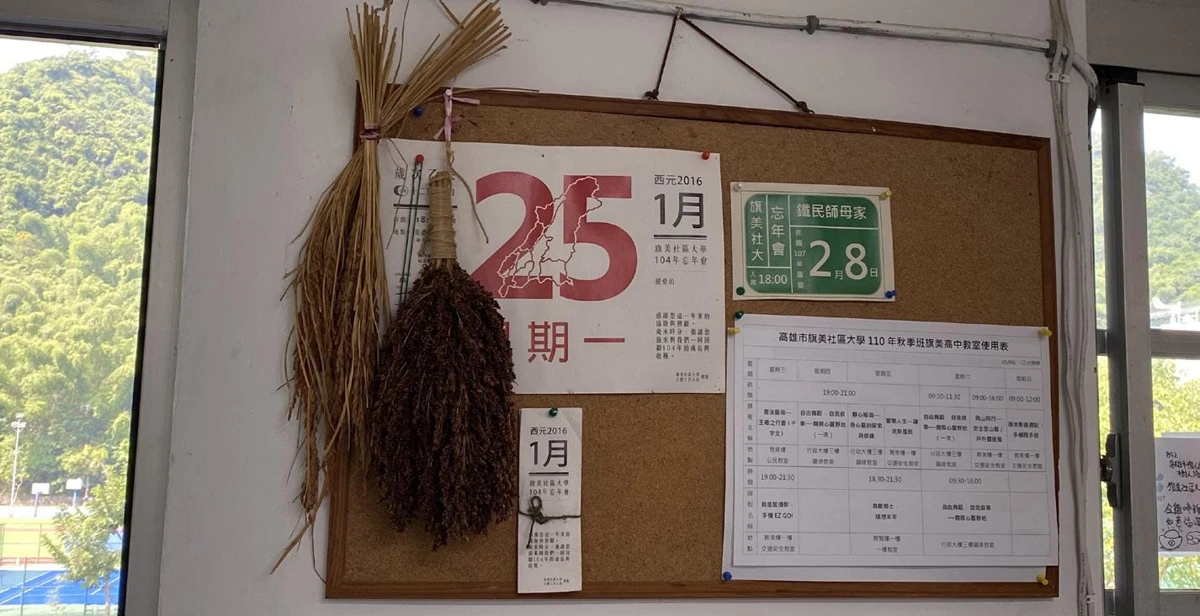
In early 2019 the communal shrine was rebuilt using a thatched roof and areca-trunk walls. Maintaining the ancestors’ house required people who could find materials and work with them. Ye also searched for traditional crops; a dried grain sample known to elders as Da lau preserved a spoken name alongside the plant itself.
The day begins before the singing
On the morning of the fifteenth day of the ninth lunar month, residents prepare bamboo with its fine branches and leaves retained at the top, then raise it before the shrine. Cleaning and arranging the building belong to the same day’s work. By evening, families bring offerings including mai, a glutinous-rice food, together with betel nuts and drink.
Elders lead the traditional songs as people join hands and move together. The 2026 community transmission plan connects learning these songs with making the ritual bamboo structure, renewing roof grass and preparing mai. These are linked responsibilities: knowing a melody alone cannot complete the gathering.
The bamboo fittings have a documented local history. Researcher Chien Wen-min compares Asai Erin's field drawings: East Aliguan's xiangge carries seven bamboo forks, with two bamboo blades beside them and a grass platform, while Liugui's arrangement has five forks. These are historical records of different places, not a specification for what every shrine must display today.
Tools recall a different working year
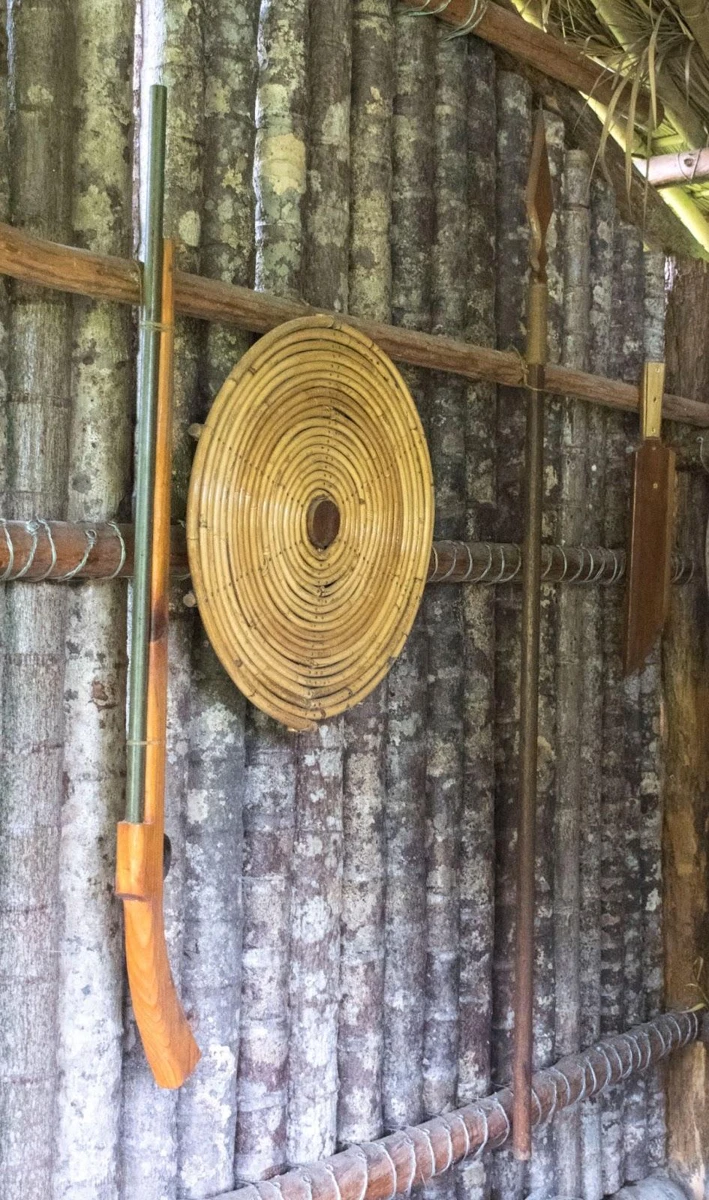
Inside the Aliguan shrine, a knife, spear, shield and firearm are grouped as dao-qiang-pai-chong. Ye explained these objects in 2022 through kaixiang, the reopening of activities after a period focused on cultivation. The knife and spear belong to practical hunting knowledge; the woven shield points to another history of defence.
The old division of the year no longer governs every household’s work. Keeping the objects in the shrine makes that earlier relation between farming, hunting and collective rules available for explanation. A daytime community visit can begin with these materials and the rebuilt house; attending the night gathering follows the hosts’ arrangements.
Liu Pin-hsiung's later Aliguan account connects the xiangge with belief in Taizu's presence. The support therefore does more than hold offerings: its role comes from the community's relationship with the deity. A daytime explanation can distinguish the object, the outdoor pole and the weapons. Older accounts of conflict belong to history; they should not be presented as present-day ritual behaviour or a demonstration for visitors.
Look closer
Compare the roof grass and areca walls with the objects kept inside.
Ask a local guide how mai and the ritual bamboo are prepared.
Visiting information
- Aliguan visit
- Aliguan communal shrine, Guanshan Village, Jiaxian District, Kaohsiung. Ask the Guanshan village office, 07-6751002, to help contact the community before a group visit.
- Nearby museum
- Xiaolin Pingpu Cultural Museum, No. 50 Wuli Road, Jiaxian District. Contact 07-6761168 at least one week ahead for a group guided visit; confirm the fee and session with the museum. It introduces Xiaolin’s history as a separate community.
- Travel and return
- Arrange a vehicle from Jiaxian’s town centre to the confirmed community meeting point, and agree the return time before departure. For night-ritual visits, arrange the late pickup with the host and driver together.